


Top Heat Transfer Film Printers for Global Buyers

Choosing a Heat Transfer Film Printer is not just a matter of comparing advertised speed or purchase price. Global buyers also need to consider the films, inks, and finishing equipment used in their production workflow. A printer that performs well on a supplier’s sample may behave differently with another film or in a humid workshop. Small details matter.

This guide introduces printer types and the practical factors that shape a buying decision, including print quality, production capacity, maintenance access, software compatibility, and local technical support. Buyers should check sample prints, confirm which consumables the machine supports, and ask how service requests are handled in their region. A clear warranty and realistic delivery schedule can matter as much as a long feature list. Look beyond the brochure.

There is no single model suited to every business. A small garment decorator may value a compact footprint and straightforward operation, while a larger print shop may need consistent output across longer shifts. Budget for training, routine parts, and test materials, not only the machine itself. These costs are easy to underestimate. Specifications can also be presented differently by manufacturers, so compare like with like and request written details before ordering. The recommendations in this overview are a starting point, not a substitute for testing equipment against your own artwork, materials, and expected workload.
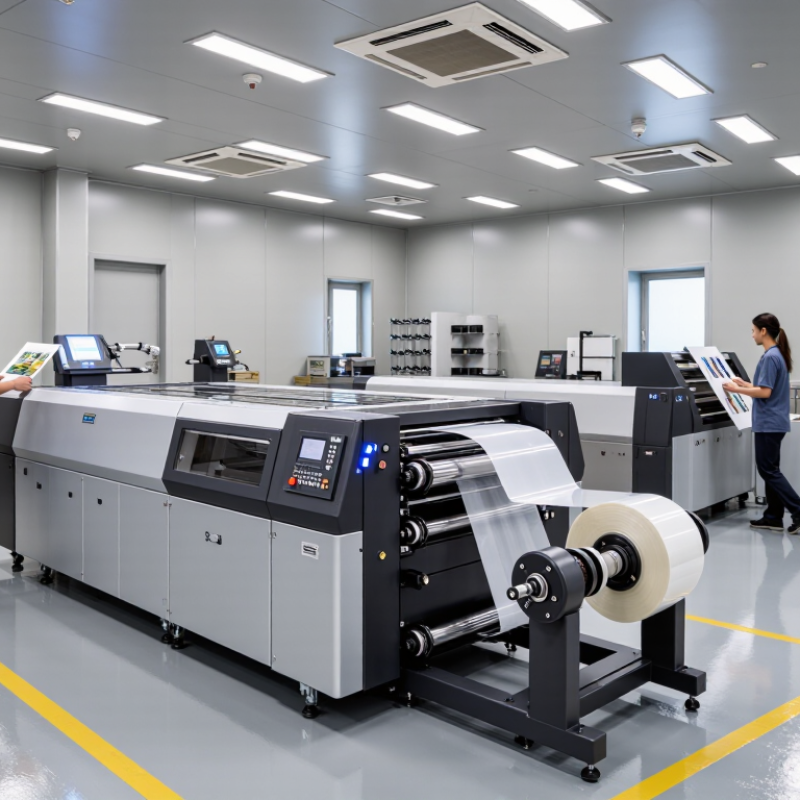
Top Heat Transfer Film Printers for Global Buyers

Understanding Heat Transfer Film Printing Technology

Heat transfer film printing builds an image in layers. A printer lays ink onto a release film, often with a white underlayer for dark fabrics. Adhesive powder is applied, cured, then bonded to the garment under controlled heat and pressure. The film is peeled away after cooling or while warm, depending on its release properties. Small details matter. Too much heat can flatten texture; too little pressure may leave edges lifting. A controlled test patch is more useful than trusting a display sample.

Substrate choice affects the result. Textile Exchange’s Materials Market Report 2023 estimates that polyester made up 54% of global fiber production in 2022, making polyester compatibility important for many buyers. However, blends, coatings, and fabric finishes can change adhesion and color appearance. Smithers’ The Future of Digital Textile Printing to 2027 projected the sector’s value would reach $8.8 billion by 2027, reflecting wider adoption of digital textile workflows. That forecast is not a guarantee of demand for any one transfer method. Buyers should compare film release, adhesive behavior, color consistency, and wash-test results using their own fabrics. One weakness in many evaluations: samples are tested once, not after repeated laundering.


Types of Printers and Their Typical Applications

Heat-transfer film printers serve different production jobs, so buyers should match the machine to the film and substrate. Direct-to-film inkjet systems print artwork onto coated PET film. Operators then apply hot-melt adhesive powder, cure it, and press the design onto fabric. These systems suit short apparel runs, teamwear, and detailed multicolor graphics. Small batches fit well. Check film compatibility and wash performance before ordering.

Wide-format print-and-cut systems produce designs on printable heat-transfer vinyl. Depending on ink and material compatibility, they can make garment graphics, workwear markings, and decorative textile panels. A cutter trims the printed outline, while a heat press bonds the film to fabric. These systems are useful when jobs need distinct names, numbers, or simple shapes. Not every film behaves alike.

The broader digital textile-printing market provides useful context, though it does not measure heat-transfer film printers alone. Grand View Research estimated that market at USD 3.3 billion in 2023 and projected a 12.2% compound annual growth rate from 2024 to 2030. For global buyers, that growth signals expanding digital-printing demand, not guaranteed returns for any single machine. Compare throughput, maintenance access, local service, and consumable availability. A sample test on the intended fabric is still worth the effort.

Top Heat Transfer Film Printers for Global Buyers - Types of Printers and Their Typical Applications

Printer Type How It Works Typical Transfer Material Common Applications Key Advantages Important Considerations
Direct-to-Film (DTF) Printer Prints a color image, usually with a white-ink layer, onto coated PET film. Adhesive powder is applied and cured before the design is heat-pressed onto fabric. Coated PET film with heat-activated adhesive powder T-shirts, hoodies, uniforms, bags, and other cotton, polyester, or blended textiles Works across a broad range of fabric colors and blends; suitable for short runs and detailed, multicolor artwork. Requires powder application, curing, and a heat press. Wash durability depends on ink, film, adhesive, curing, and pressing conditions.
Solvent or Eco-Solvent Wide-Format Printer Uses solvent-based or lower-solvent inks to print graphics on compatible heat-transfer vinyl or printable transfer media. The printed design is cut or trimmed and heat-applied. Printable heat-transfer vinyl or other ink-compatible transfer media Garment graphics, team apparel, names and numbers, and small-to-medium custom orders Can produce vivid graphics on printable media and supports versatile wide-format sign-and-apparel workflows. Media must be matched to the ink and fabric. Some designs require contour cutting, weeding, and careful ventilation during production.
Latex or Resin-Based Wide-Format Printer Prints with water-based latex or resin inks onto compatible printable transfer media; the finished graphic is transferred to fabric using heat and pressure. Printable heat-transfer vinyl or manufacturer-specified transfer media Apparel graphics, sportswear decoration, and short-run customized garments Can support flexible wide-format production and is often selected where water-based ink workflows are preferred. Not every media type is compatible. Check curing requirements, transfer instructions, stretch performance, and fabric suitability before production.
Dye-Sublimation Transfer Printer Prints dye-sublimation ink onto transfer paper. Heat turns the dye into a gas that bonds with polyester fibers or polymer-coated surfaces. Sublimation transfer paper; this process typically uses paper rather than transfer film Polyester apparel, sportswear, flags, soft signage, and polymer-coated promotional products Produces durable, smooth-feeling prints without a separate adhesive layer on suitable substrates. Best suited to white or light-colored polyester and polymer-coated items. It is generally not suitable for untreated cotton.
UV DTF Printer Prints UV-curable inks and adhesive layers onto a transfer film, often using a second film to create a peel-and-apply decal. UV DTF transfer films Decorating hard, smooth items such as glass, metal, plastic, and coated promotional products Can create detailed, full-color decals for objects that are difficult to feed through a printer. Usually applied by pressure rather than heat. It is a film-transfer option, but it is not a conventional heat-transfer process and is generally not intended for garments.
Screen-Printed Transfer System Uses screen printing to build ink layers on transfer paper or film. The prepared transfer is applied to the garment with a heat press. Screen-print transfer paper or specialty transfer film Bulk apparel orders, uniforms, promotional garments, and repeat designs Efficient for larger runs and repeat artwork; can produce opaque graphics with suitable inks and transfer materials. Setup and screen preparation make it less convenient for frequent design changes or very small quantities. Transfer performance depends on the ink and fabric combination.

Key Performance Specifications for Global Buyers

For global buyers, a heat transfer film printer should be judged by usable output, not headline speed alone. Check the maximum print width against common garment sizes and planned production runs. Ask for throughput at the quality setting you will actually use; draft-mode figures can be misleading. Small text and fine line art need consistent detail, especially across long film rolls. Test a sample.

Resolution matters, but so do ink delivery and white-ink handling. Look for a documented maintenance routine, accessible cleaning points, and stable white output after idle periods. A test print can reveal banding, pinholes, or uneven coverage that a specification sheet cannot. The awkward part: maintenance takes time, and no printer removes that workload. Consider whether the curing unit matches your film and ink process, and whether temperature control remains steady during extended runs.

Before ordering across borders, verify the required electrical supply, connection options, software compatibility, and local service access. Confirm whether stated speeds include pauses for cleaning or setup. Request sample files and printed transfers on the materials you expect to use. Compare fine lettering, solid white areas, and wash durability under your own workflow. Specifications are useful, but real samples sometimes tell a less flattering story.

Comparing Leading Heat Transfer Film Printer Options

Choosing a heat transfer film printer starts with the work you expect to produce. For a small shop, a compact roll-to-roll model can handle short runs and limited floor space. Check its usable print width, ink configuration, and film-feed stability. A slight feed wobble can leave visible bands across a large graphic. Small details matter.

Midrange systems often offer wider output and faster production, making them practical for varied daily orders. Some use multiple printheads to increase throughput, but head count alone does not guarantee consistent results. Compare sample prints for fine text, solid color areas, and white-ink coverage. Also ask how often routine cleaning is needed. Test it yourself.

High-output machines suit continuous production, especially when paired with compatible drying or curing equipment. They may reduce handling time, but require more space and a larger maintenance budget. Ask suppliers for realistic speeds on your film type, not just peak figures. I would not treat advertised speed as a promise; actual jobs often run slower. Review local service access, replacement-part availability, and operator training before deciding. A lower purchase price can feel attractive, yet downtime may erase the savings.

Evaluating Suppliers, Compliance, and After-Sales Support

Top Heat Transfer Film Printers for Global Buyers
Evaluating Suppliers, Compliance, and After-Sales Support

A printer sample can look sharp under showroom lights yet behave differently during a full production shift. Ask suppliers for test prints using your film, fabric, and transfer settings. Check edge detail, color consistency, adhesion, and output speed. Request a written specification, not just a sales estimate. A low price can hide costly downtime. Small details matter.

Compliance depends on where the machine will be installed and used. Ask for applicable safety documentation, electrical specifications, and clear maintenance instructions. Confirm that manuals and warning labels are available in a language your operators understand. Requirements vary by market, so verify documents with qualified local advisers. Do not assume a certificate covers every configuration. This part can feel tedious, but it is worth checking.

Tips: Get after-sales terms in writing. Ask how quickly support responds, which parts are stocked, and whether remote troubleshooting is available. Clarify warranty exclusions and training costs before ordering. Keep a record of setup settings and service requests. A supplier’s answer to a basic repair question can reveal how support may feel later.

Top Heat Transfer Film Printers: Supplier Evaluation Framework

Suggested buyer-defined weighting for comparing suppliers—not measured market or supplier performance data.

Prioritize print quality and compliance, then assess delivery reliability and after-sales support. Verify applicable requirements for each destination market, such as REACH obligations in the EU, and request current documentation and service terms from each supplier.

Powder Coat Booths

For those larger-sized parts, or smaller quantity runs, we have 2 independent powder coat booths and ovens. The quality, durability and affordability of today’s powder coating finishes make this the process of choice for world-class companies.

Powder coating advantages over other forms of coating are many. Materials used in the Powder coating process can be metals and non-metals that come in a multitude of thicknesses, textures, colors, etc. Another of Powder coating’s biggest advantages over conventional coatings is its ability to create finishes in many different textures. Powder Coating Booths allow us the ability to apply these advantages to large products.

Wet Paint Line

Tri-State Fabricators runs a full-service conveyor line for painting. Wet painting can provide protection or decoration to many different part styles. From start to finish, every project is easier to undergo random and point-based inspection by our skilled painting team.

Advantages to our Wet Paint Line are these lines start with product prep and ends with a thorough inspection of a high quality finished product. Our ability to complete large and small projects with a superior finish and doing so in a timely and economical fashion. This passes along the savings in production to our customers. When powder coating ins not an option, our Wet Paint Line gets the job done right the first time.

Wet Paint Booths

When the parts get big and heavy we roll-out our custom paint racks and oversize booth. By utilizing our partnerships with all the major paint brands, we can match virtually any color with wet paint.

The advantages of having access to a Wet Paint Booth are many. Large projects of many different shapes can be loaded into the booth. The Wet Paint Booth offers an environment that is much more controlled than a typical parts painting operation.

Not only are they used because of their controlled environment, but they’re are also advantageous when it comes to applying paint to parts that are needed in industries that require specialty coatings such as medical, aerospace, etc.

Military CARC

Our military forces have some very high standards when it comes to the finish of their vehicles and equipment. From the first pre-treatment step to final coat, it takes a great deal of knowledge and experience to protect the men and women of our armed forces. They deserve only the best, and Tri-State Fabricators provides it.

All of our processes are closely monitored by our staff and management teams. Both of which are highly trained in the processes of metal fabrication and finishing. Tri-State Fabricators’ goal is to always fully satisfy each and every customer, including the military. We will always put a 110% into what we do.

Glass-Bead Blasting

Abrasive media blasting is an excellent way to remove old paint, rust, and increase the paint/powder adhesion. Glass beads produce a much smoother and brighter finish than angular abrasives; leaving the part clean yet without any dimensional change. Chemically inert and environmentally friendly, we can recycle our beads approximately 30 times; making them a more preferred method of metal cleaning or surface finishing.

Advantages to Glass Bead Blasting are many. Glass bead blast media is used when a project is needing rough surfaces need to become smooth for applications of coatings such as paint. It is typically used to clean paint and rust from a product surface without deforming the surface it is being used on. Overall, compared to many other blasting media, Glass Bead Blasting is a very economical choice and those savings are always passed on to our customers.

Part Washing

Tri-State Fabricators utilize a zinc phosphate wash to clean and etch the material to ensure the best paint adhesion possible. The unique design of our 3-stage wash system does the work like a 5-stage. From Cleaning and rinsing to conversion coating and post-treatment, Our Part Washing process is a complete service and works throughout the fabrication service and the finishing service.

Along with the previously mentioned benefits, Curing is a vital chemical reaction that leaves the product finish hard and relatively safe from mild abrasion and aggressive corrosion. This process can be done in more than one way; ambient air-dry or in curing ovens at temps that exceed 240°.

Burn-Off Oven

From fixing paint mistakes (someone else’s of course) to simply cleaning our paint line hooks, our burn-off oven is put to good use. After a quick burn-off, a little clean up, and a fresh coat of paint, your parts will look better than new.

Why does our Burn-Off Oven work so well? Because super heating the air around parts turns the materials into ashes. From paint and powder coatings to rubber and machining oils, high temps do the job without degrading the integrity of the part.

Masking

Masking is a vital part of producing high quality products. We have die-cut masking patterns to protect machined surfaces as well as a wide range of plugs and caps to protect threaded holes and bolts. We provide permanent and temporary masking.

Masking allows the selected sections of a product to be protected from a fabrication or finishing service. This can be with both chemicals when etching and tapes, paints when only finishing just a section of the product. Masking is great in aiding the customization process of a project.

Screen Printing

Screen printing is a photographic process that transfers artwork onto a porous nylon screen which allows colored ink to flow through the screen and be deposited on an aluminum or plastic component. We can generally have just about any design created onto a screen for your parts.

Some of the advantages of Screen Printing are, brand recognition for your business displaying on your products, assembly instructions, product warnings/hazards, etc. Tri-State Fabricators produces Screen Printing of the highest quality so you know it’s durable.

Metal Finishing

Metal Finishing is the art of treating the exterior portion of product, often metal but can also be made of other materials, so that the surface is clean and free of any debris. Then the process of applying coats or either paint of powder coat takes place. This coating process improves the quality of the product in both appearance and resistance to wear and corrosion.

Tri-State Fabricators, Inc., understands that a project typically isn’t complete until a high-quality finish has been added to your product. This is why our painting and powder coating teams continuously inspect the products throughout the Metal Finishing process.
