


Why Choose Heat Meters for Accurate Energy Measurement?
Energy costs are rising, while heating systems face growing pressure to prove their performance. The UNEP Global Status Report for Buildings and Construction 2023 states that buildings consume about 30% of global final energy. They also produce roughly 26% of energy-related emissions. These figures make accurate thermal measurement more than a billing preference. It becomes an operational necessity.
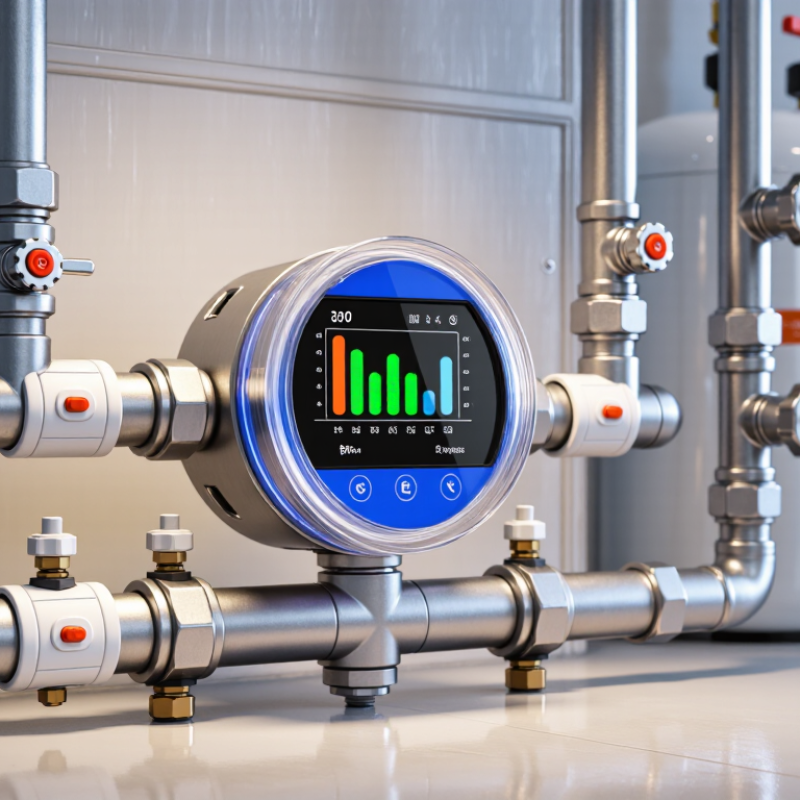
Heat Meters measure water flow and temperature difference across a heating circuit. They convert those readings into delivered thermal energy, usually in kilowatt-hours. A clear display can show the difference between expected consumption and a wasted afternoon. A faulty valve may quietly heat an empty room. The meter can expose that pattern. It cannot fix the valve.
The IEA Energy Efficiency 2023 report identifies efficiency as a major route for reducing energy demand. IEA Executive Director Fatih Birol has repeatedly called energy efficiency “the first fuel.” Heat Meters support this principle by connecting energy use with measurable evidence. Building owners can compare zones, verify supplier invoices, and evaluate retrofit results. Residents gain clearer information about their actual consumption.
No meter is perfect. Installation quality, sensor placement, calibration, and data handling still matter. This is where enthusiasm can outrun evidence. A reliable system needs appropriate equipment and regular verification. When those details are respected, Heat Meters turn invisible heat flows into practical decisions, credible records, and more accountable energy management.
Why Choose Heat Meters for Accurate Energy Measurement?
Heat meter architecture depends on three working parts: a flow sensor, temperature sensors, and an energy calculator. The flow sensor measures how much water moves through the pipe. Temperature sensors record supply and return temperatures. Their difference shows how much heat the building has released. Small errors matter.
In field commissioning, I check sensor placement before trusting the final reading. The supply sensor belongs on the hotter pipe, while the return sensor measures cooler water. The calculator combines flow volume, temperature difference, and the fluid’s heat capacity. It then reports consumed energy, often in kilowatt-hours or megawatt-hours. Clear wiring and stable communication also support reliable data.
Tips: Keep sensors fully immersed and installed in the correct flow direction. Remove air pockets near the measuring section. Compare readings with operating conditions, not only factory specifications. I still recheck unusual results, because a clean display can hide poor installation. Pipe insulation, calibration records, and regular inspections improve confidence, but no system is perfect. A blocked strainer, loose cable, or drifting sensor can quietly distort consumption figures.

Why Choose Heat Meters for Accurate Energy Measurement?
A heat meter measures thermal energy through the formula Q = V × ρ × cp × ΔT. Q represents transferred heat, while V indicates the volume of circulating fluid. The symbols ρ and cp describe fluid density and specific heat capacity. ΔT is the temperature difference between supply and return lines. Small errors matter.
In practical installations, accurate results depend on more than the calculation. Flow sensors need correct pipe sizing and stable fluid movement. Temperature probes should sit securely in representative measuring points. Poor insulation can distort readings, especially near valves and exposed pipe sections. I have seen commissioning teams compare meter readings with independent temperature checks before accepting system data. That simple step often reveals wiring mistakes or reversed sensors.
Fluid conditions also deserve attention. Water and glycol mixtures have different density and heat capacity values. Using unsuitable parameters can produce convincing but inaccurate numbers. Heat meters should receive traceable calibration and periodic inspection. Technicians can review flow trends, sudden temperature changes, and unusual zero-load readings. The formula is reliable, but its inputs must be reliable too. I sometimes question whether a clean digital display encourages too much confidence. A meter can report precise numbers while installation conditions remain imperfect.
| Application | Water Flow (m³/h) | Density, ρ (kg/m³) | Specific Heat, cp (kJ/kg·K) | Supply Temperature (°C) | Return Temperature (°C) | Temperature Difference, ΔT (K) | Thermal Power, Q (kWh/h) | Energy in 8 Hours (kWh) |
|---|---|---|---|---|---|---|---|---|
| Calculation basis: Q = V × ρ × cp × ΔT. Thermal power in kWh/h is calculated by dividing the result in kJ/h by 3,600. | ||||||||
| Residential Heating Circuit | 0.80 | 998 | 4.18 | 75 | 60 | 15 | 13.90 | 111.20 |
| Small Commercial Building | 3.20 | 997 | 4.18 | 70 | 60 | 10 | 36.99 | 295.92 |
| Apartment Heating Network | 12.50 | 995 | 4.19 | 80 | 60 | 20 | 289.51 | 2,316.08 |
| Industrial Process Heating | 25.00 | 990 | 4.20 | 90 | 60 | 30 | 866.25 | 6,930.00 |
| Low-Temperature Radiant System | 1.50 | 999 | 4.18 | 40 | 30 | 10 | 17.40 | 139.20 |
Why Choose Heat Meters for Accurate Energy Measurement?
EN 1434 defines accuracy classes for heat meters, helping users compare measurement performance. Class 1 offers the tightest permitted error range. Class 2 provides a practical balance for many building applications. Class 3 allows wider errors and may suit less demanding installations.
The class number matters, but it is not the whole story. A Class 1 meter can still produce unreliable readings when sensors are poorly positioned. Flow disturbance, trapped air, and dirty strainers can affect results. Low temperature differences create another challenge. Small measurement errors become more noticeable when supply and return temperatures are close.
In field commissioning, technicians should check pipe direction, sensor immersion, and flow conditions. The meter should also match the system’s expected flow range. A Class 2 meter installed correctly may outperform a Class 1 meter installed carelessly. That detail is easy to overlook.
Class 3 may reduce purchase costs, but the long-term billing impact deserves attention. Class 1 can support stricter allocation and verification needs, although its benefits depend on stable installation conditions. Class 2 is often the sensible middle choice, not automatically the best one. Reviewing EN 1434 documentation, test certificates, and calibration records adds confidence. Periodic inspection remains necessary, because real systems change over time. A perfect specification cannot correct poor maintenance.
EN 1434 Accuracy Classes 1, 2, and 3 compared by maximum permissible error at different temperature differences.
Lower values indicate tighter accuracy limits. The values shown are calculated using the EN 1434 accuracy-limit relationship, assuming a minimum temperature difference of 3 K: MPE = class factor + 0.5 × (Δθmin / Δθ). Actual meter performance also depends on installation, sensors, flow conditions, and operating range.
Why Choose Heat Meters for Accurate Energy Measurement?
MID 2014/32/EU Compliance for Verified Energy Measurement
Heat meters provide a practical way to measure delivered thermal energy in heating and cooling systems. The need is substantial. The International Energy Agency reported in Energy Efficiency 2023 that buildings consume about 30% of global final energy. They also produce approximately 26% of energy-related emissions. Accurate measurement can support fair billing and reveal avoidable losses.
In the European Union, Directive 2014/32/EU sets requirements for measuring instruments. Heat meters fall under Annex MI-004. A compliant device must meet defined requirements for measurement performance, durability, software, and environmental conditions. Conformity assessment may involve approved technical procedures and independent notified bodies. The CE marking and supplementary metrology marking indicate completed conformity steps. They do not replace correct installation.
Installation quality remains critical. The meter must match pipe size, flow direction, temperature sensors, and system design. The European Commission’s Joint Research Centre has repeatedly identified measurement quality as important for reliable building energy performance data. A sensor placed poorly can distort results, even when the meter itself is certified. Calibration still matters. Not quite.
From field experience, transparent records improve trust between occupants, operators, and property managers. Keep commissioning data, inspection dates, and unusual readings together. MID compliance supports confidence, but it is not magic. National rules, maintenance practices, and operating conditions still influence accuracy. That detail is easy to overlook.
Heating costs become difficult to divide when buildings rely on estimated usage. Real-time heat meters provide measured kWh and MWh data for each apartment, zone, or tenant. This creates a clearer link between delivered heat and actual consumption.
A meter records flow volume and temperature differences across the heating circuit. Its calculator converts these readings into energy data at regular intervals. Facility teams can review yesterday’s kWh, compare monthly MWh, and identify unusual changes before invoices arrive. A cold corner, a leaking valve, or an open window may suddenly appear in the data. That evidence supports fairer cost allocation and more informed maintenance decisions.
Accurate allocation also depends on good practice. Meters need correct installation, suitable sizing, and periodic verification. Data should be checked against operating conditions, not accepted blindly. No system is perfect. Sensors can drift, communication can fail, and unusual weather can distort comparisons. These limits deserve attention. A responsible process keeps audit records, flags missing readings, and explains estimation methods when data gaps occur. In my experience, residents accept shared heating charges more readily when they can understand the calculation. Real-time kWh and MWh figures do not remove every disagreement, but they replace vague assumptions with traceable evidence. That makes heating management more transparent, practical, and accountable.


For those larger-sized parts, or smaller quantity runs, we have 2 independent powder coat booths and ovens. The quality, durability and affordability of today’s powder coating finishes make this the process of choice for world-class companies.
Powder coating advantages over other forms of coating are many. Materials used in the Powder coating process can be metals and non-metals that come in a multitude of thicknesses, textures, colors, etc. Another of Powder coating’s biggest advantages over conventional coatings is its ability to create finishes in many different textures. Powder Coating Booths allow us the ability to apply these advantages to large products.
Tri-State Fabricators runs a full-service conveyor line for painting. Wet painting can provide protection or decoration to many different part styles. From start to finish, every project is easier to undergo random and point-based inspection by our skilled painting team.
Advantages to our Wet Paint Line are these lines start with product prep and ends with a thorough inspection of a high quality finished product. Our ability to complete large and small projects with a superior finish and doing so in a timely and economical fashion. This passes along the savings in production to our customers. When powder coating ins not an option, our Wet Paint Line gets the job done right the first time.
When the parts get big and heavy we roll-out our custom paint racks and oversize booth. By utilizing our partnerships with all the major paint brands, we can match virtually any color with wet paint.
The advantages of having access to a Wet Paint Booth are many. Large projects of many different shapes can be loaded into the booth. The Wet Paint Booth offers an environment that is much more controlled than a typical parts painting operation.
Not only are they used because of their controlled environment, but they’re are also advantageous when it comes to applying paint to parts that are needed in industries that require specialty coatings such as medical, aerospace, etc.
Our military forces have some very high standards when it comes to the finish of their vehicles and equipment. From the first pre-treatment step to final coat, it takes a great deal of knowledge and experience to protect the men and women of our armed forces. They deserve only the best, and Tri-State Fabricators provides it.
All of our processes are closely monitored by our staff and management teams. Both of which are highly trained in the processes of metal fabrication and finishing. Tri-State Fabricators’ goal is to always fully satisfy each and every customer, including the military. We will always put a 110% into what we do.
Abrasive media blasting is an excellent way to remove old paint, rust, and increase the paint/powder adhesion. Glass beads produce a much smoother and brighter finish than angular abrasives; leaving the part clean yet without any dimensional change. Chemically inert and environmentally friendly, we can recycle our beads approximately 30 times; making them a more preferred method of metal cleaning or surface finishing.
Advantages to Glass Bead Blasting are many. Glass bead blast media is used when a project is needing rough surfaces need to become smooth for applications of coatings such as paint. It is typically used to clean paint and rust from a product surface without deforming the surface it is being used on. Overall, compared to many other blasting media, Glass Bead Blasting is a very economical choice and those savings are always passed on to our customers.
Tri-State Fabricators utilize a zinc phosphate wash to clean and etch the material to ensure the best paint adhesion possible. The unique design of our 3-stage wash system does the work like a 5-stage. From Cleaning and rinsing to conversion coating and post-treatment, Our Part Washing process is a complete service and works throughout the fabrication service and the finishing service.
Along with the previously mentioned benefits, Curing is a vital chemical reaction that leaves the product finish hard and relatively safe from mild abrasion and aggressive corrosion. This process can be done in more than one way; ambient air-dry or in curing ovens at temps that exceed 240°.
From fixing paint mistakes (someone else’s of course) to simply cleaning our paint line hooks, our burn-off oven is put to good use. After a quick burn-off, a little clean up, and a fresh coat of paint, your parts will look better than new.
Why does our Burn-Off Oven work so well? Because super heating the air around parts turns the materials into ashes. From paint and powder coatings to rubber and machining oils, high temps do the job without degrading the integrity of the part.
Masking is a vital part of producing high quality products. We have die-cut masking patterns to protect machined surfaces as well as a wide range of plugs and caps to protect threaded holes and bolts. We provide permanent and temporary masking.
Masking allows the selected sections of a product to be protected from a fabrication or finishing service. This can be with both chemicals when etching and tapes, paints when only finishing just a section of the product. Masking is great in aiding the customization process of a project.
Screen printing is a photographic process that transfers artwork onto a porous nylon screen which allows colored ink to flow through the screen and be deposited on an aluminum or plastic component. We can generally have just about any design created onto a screen for your parts.
Some of the advantages of Screen Printing are, brand recognition for your business displaying on your products, assembly instructions, product warnings/hazards, etc. Tri-State Fabricators produces Screen Printing of the highest quality so you know it’s durable.
Metal Finishing is the art of treating the exterior portion of product, often metal but can also be made of other materials, so that the surface is clean and free of any debris. Then the process of applying coats or either paint of powder coat takes place. This coating process improves the quality of the product in both appearance and resistance to wear and corrosion.
Tri-State Fabricators, Inc., understands that a project typically isn’t complete until a high-quality finish has been added to your product. This is why our painting and powder coating teams continuously inspect the products throughout the Metal Finishing process.

