


Buying a heat lamination machine can feel like comparing identical metal boxes. The quoted heat lamination machine price, however, rarely tells the whole story. Capacity, heating accuracy, roller design, and after-sales support can change the real cost within months.
This guide presents seven practical tips for evaluating a machine before payment. It considers working width, laminating speed, film compatibility, temperature control, energy use, warranty terms, and supplier reliability. A 650-millimeter machine may suit classroom posters, while a wider unit may be necessary for commercial signage. The difference is visible on the factory floor. Small rollers, uneven heating, or slow warm-up can create bubbles and wasted film.
Ask for clear specifications, test videos, and a written quotation. Confirm whether installation, spare rollers, delivery, and training are included. Check service records and customer feedback from businesses with similar workloads. A supplier who answers technical questions precisely usually deserves more confidence than one offering vague discounts.
The lowest price is not always the best value. It may exclude shipping or essential accessories. That mistake is common. Still, even experienced buyers can overlook electricity consumption or local repair access. A careful comparison should calculate purchase cost, operating cost, maintenance, and expected production volume. These figures make the decision more realistic.
Prices also vary by region, brand, automation level, and order quantity. No single figure applies to every workshop. Use the seven tips as a practical checklist, but verify every claim before signing. A reliable machine should match your materials, workload, budget, and long-term service expectations.
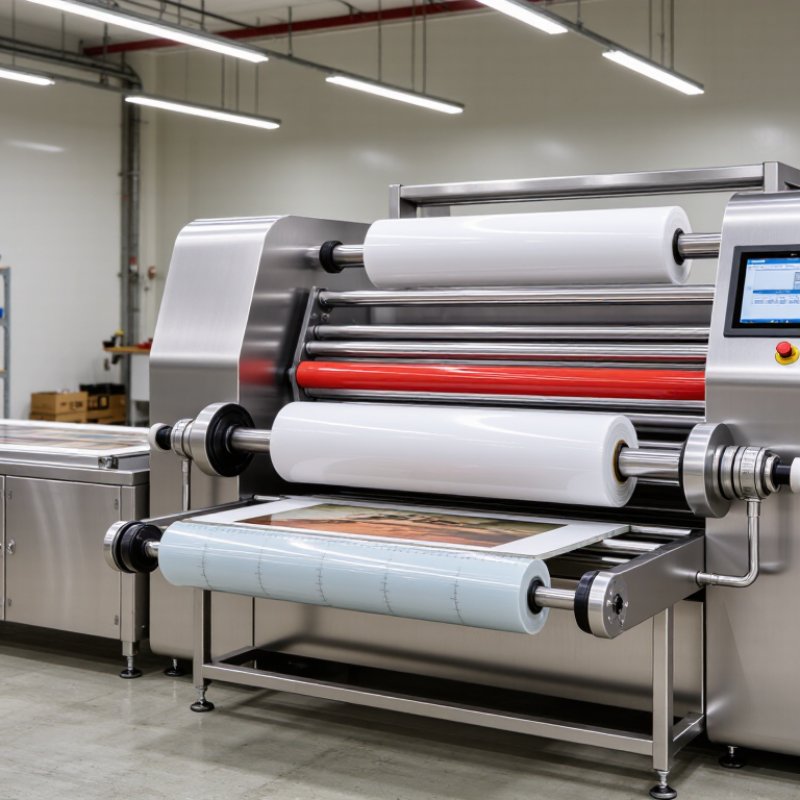
The price of a heat lamination machine depends on more than its heating system. Working width, laminating speed, and daily workload strongly affect the initial cost. A compact unit for occasional posters may cost less than a wide machine built for continuous production. However, cheaper equipment can create uneven pressure or longer warming times.
Heat control matters. Accurate temperature settings help protect photographs, labels, and sensitive printed materials. Roller quality also matters because weak rollers may cause bubbles, wrinkles, or inconsistent bonding. Not always obvious. Ask about temperature stability, pressure adjustment, and maximum material thickness before comparing prices.
Construction affects service life. Metal frames, replaceable rollers, and accessible heating parts usually increase the purchase price. They may reduce repair delays later. Installation, shipping, operator training, and electrical requirements can add unexpected expenses. One practical mistake is comparing only the equipment invoice. I have seen buyers overlook maintenance costs, then reconsider the purchase after several months. A realistic budget should include energy use, replacement parts, cleaning supplies, and downtime. Safety features, such as insulated surfaces and emergency controls, also influence value. The most expensive option is not automatically the most reliable. Check technical specifications, warranty terms, service response, and published performance data from trustworthy sources.

Comparing machine types matters more than reading the initial price. A roll-to-roll laminator suits continuous film work and higher production volume. A flatbed model handles signs, sheets, and irregular materials with better control. During inspections, check the roller width, heating zones, pressure adjustment, and maximum working speed. A low purchase price can hide weak temperature stability.
Tip 1: Match the machine to your materials. Thin film may need gentle pressure, while thick boards require stronger rollers and slower movement.
Tip 2: Ask for actual warm-up time. Waiting twenty minutes before every job can reduce daily output.
Tip 3: Compare power consumption, not only the motor rating. Insulation quality and standby controls affect operating costs.
Operating features should be tested with real samples. Examine edge alignment, bubble formation, surface marks, and cooling time. Digital temperature displays are useful, but sensor accuracy matters more. Request maintenance instructions and replacement-part costs before ordering. I once focused too heavily on maximum speed and overlooked feeding control. That mistake created more waste than expected. Small details matter.
Tip 4: Calculate film waste from trial runs.
Tip 5: Confirm whether one operator can load and adjust the machine safely.
Tip 6: Check noise, ventilation needs, and emergency stopping functions.
Tip 7: Compare warranty coverage with technical support response times.
A cheaper machine may become costly when troubleshooting is slow.
Capacity should match your real production rhythm, not your best month. Estimate daily sheets, peak orders, operator breaks, and setup time. A compact machine may suit small batches, while continuous production needs wider rollers and faster heating. Speed alone can mislead. A machine rated for high output may create bottlenecks if loading remains manual.
Tip 1: Compare working width, heating speed, and adjustable line speed together. Check whether the machine handles your largest sheet without trimming.
Tip 2: Test several materials before purchasing. Paper, printed film, synthetic sheets, and thicker boards can require different temperatures and pressure. Ask for sample trials using your actual media. A glossy finish can hide weak adhesion.
Material options affect both price and daily reliability. Hot lamination usually needs stable temperature control and suitable adhesive film. Cold lamination may reduce heat exposure, but it can demand careful pressure adjustment. Consider film thickness, roll diameter, core size, and replacement availability. I once underestimated roll changes; the lost minutes became a weekly production cost. That was a useful mistake.
Tip 3: Request a written capacity estimate based on your material and working width.
Tip 4: Inspect roller alignment and pressure adjustment in person, if possible.
Tip 5: Calculate energy use, film waste, maintenance, and operator training beside the purchase price. Cheap equipment is not always economical. A small buffer in capacity is sensible, though buying far beyond current demand may leave expensive features unused.
A heat lamination machine price is only the starting figure. Buyers should budget for freight, unloading, installation, wiring, and commissioning. A machine needing three-phase power may require a new breaker panel. Pneumatic systems can also need an air compressor, dryer, and filters.
Energy costs deserve careful calculation. The U.S. Energy Information Administration reported an average industrial electricity price of 7.74 cents per kilowatt-hour in 2023. A 12-kilowatt machine running 2,000 hours annually would consume about 24,000 kilowatt-hours. That equals roughly 1,858 dollars before demand charges. Actual usage will vary. My estimate could still be optimistic. Heating cycles, standby time, and rejected rolls can change the result.
Consumables often become the larger expense. Include film, adhesive layers, cores, trimming waste, and packaging materials. Labor matters too. PMMI’s 2024 State of the Industry report identifies workforce pressure as a continuing packaging-equipment concern. Operators may need paid training, setup time, and safety instruction. Maintenance budgets should cover heating elements, temperature sensors, belts, rollers, and calibration. Keep spare parts on site when downtime is costly. OSHA’s lockout and servicing guidance may also require documented procedures and employee training. Software updates, ventilation, floor reinforcement, insurance, and disposal fees are easy to overlook. A spreadsheet with low, expected, and high usage cases is more honest than one attractive quotation.
Heat lamination machine price should never be judged by the quotation alone. A cheaper machine may hide unstable temperature control, slow warm-up, or expensive rollers. The U.S. Department of Energy reports that motor-driven systems consume more than 70% of industrial electricity. Therefore, compare heater efficiency, motor load, and standby consumption. Ask suppliers for measured output, not optimistic estimates.
Tip 1: Request three itemized quotations. Check machine body, installation, training, spare parts, and shipping separately. Tip 2: Verify supplier experience with your film thickness and daily production volume. Tip 3: Inspect a live demonstration using your actual material. I would not trust sample videos alone.
Warranty wording matters more than warranty length. Tip 4: Confirm whether coverage includes rollers, heaters, sensors, and labor. Tip 5: Ask who pays for replacement shipping and on-site service. PMMI’s 2024 packaging industry research highlights labor availability and operational efficiency as major investment concerns. A responsive technician can protect production when one sensor fails at midnight.
Tip 6: Calculate five-year ownership cost, including electricity, maintenance, rejected sheets, and downtime. Tip 7: Request references from similar factories. Smithers’ 2024 packaging market analysis emphasizes efficiency and material performance as continuing industry priorities. My own comparison would include energy data, service response time, and parts availability. Price still matters. It just should not lead the decision.
| No. | Buyer Evaluation Tip | Key Data to Compare | Indicative Market Benchmark | Supplier Questions | Long-Term Value Indicator |
|---|---|---|---|---|---|
| 1 | Compare the Machine Category Before Comparing Prices | Machine format, maximum film width, heating method, and intended workload | Desktop pouch machines: approximately US$100–500 A3 roll-to-roll machines: approximately US$1,500–6,000 Industrial wide-format systems: approximately US$8,000–30,000+ | Is the quotation for a pouch, roll-to-roll, or industrial machine? Are stand, laminating shafts, and foot pedal included? | A correctly sized machine avoids paying for unused capacity or replacing an undersized unit within one to three years. |
| 2 | Verify Real Production Capacity | Maximum laminating width, operating speed, warm-up time, and duty cycle | Common operating speeds range from approximately 0.5–5 m/min for small and mid-range equipment; warm-up time is often 5–20 minutes. | Is the quoted speed measured under production conditions or at the maximum setting without material? What is the recommended continuous operating time? | Usable throughput should match daily volume with at least 20–30% spare capacity for peaks and setup losses. |
| 3 | Check Material and Film Compatibility | Film thickness, substrate types, maximum paper thickness, temperature range, and roller design | Many general-purpose machines support films around 24–250 microns and operating temperatures of approximately 60–140°C; actual limits vary by model. | Can the machine process thermal film, low-temperature film, digital prints, synthetic sheets, and laminated documents without silvering or curling? | Broader compatibility reduces film waste, rework, and the need for a second machine when product requirements change. |
| 4 | Evaluate Supplier Documentation and Testing | User manual, electrical specifications, safety documentation, sample output, and factory acceptance test | A professional quotation should state voltage, power consumption, dimensions, net weight, included accessories, delivery terms, and acceptance criteria. | Can the supplier provide a video or sample using your actual paper, ink, and film? Are installation and operator-training instructions included? | Documented testing lowers commissioning risk and makes future troubleshooting faster and less expensive. |
| 5 | Read Warranty Terms in Detail | Warranty duration, covered components, response time, labor coverage, exclusions, and return procedure | A 12-month parts-and-manufacturing-defect warranty is common; stronger offers may provide 18–24 months for selected components. | Does coverage include heating elements, temperature controllers, motors, rollers, and control boards? Who pays shipping for warranty parts? | A clear warranty with defined response times is more valuable than a longer warranty with broad exclusions. |
| 6 | Calculate Total Cost of Ownership | Purchase price, freight, import charges, electricity, maintenance, spare parts, film waste, and downtime | Electricity demand commonly ranges from approximately 0.5–5 kW, depending on machine size. Budget an annual maintenance reserve of roughly 3–8% of purchase price. | What are the recommended replacement intervals for rollers, heating elements, belts, and bearings? Are spare parts stocked locally or shipped internationally? | A machine with a slightly higher purchase price can deliver better value if it reduces waste, downtime, and service costs. |
| 7 | Secure Service, Payment, and Delivery Protection | Service response time, spare-parts availability, payment milestones, lead time, packaging, and delivery inspection | Typical lead times may range from 2–8 weeks, depending on configuration and availability. Critical spare parts should ideally be available within 7–14 days. | Is remote technical support available? Can the contract include pre-shipment inspection, shock-resistant packaging, installation support, and a written replacement policy? | Reliable after-sales support protects production continuity and can extend useful service life beyond 5–8 years with proper maintenance. |


For those larger-sized parts, or smaller quantity runs, we have 2 independent powder coat booths and ovens. The quality, durability and affordability of today’s powder coating finishes make this the process of choice for world-class companies.
Powder coating advantages over other forms of coating are many. Materials used in the Powder coating process can be metals and non-metals that come in a multitude of thicknesses, textures, colors, etc. Another of Powder coating’s biggest advantages over conventional coatings is its ability to create finishes in many different textures. Powder Coating Booths allow us the ability to apply these advantages to large products.
Tri-State Fabricators runs a full-service conveyor line for painting. Wet painting can provide protection or decoration to many different part styles. From start to finish, every project is easier to undergo random and point-based inspection by our skilled painting team.
Advantages to our Wet Paint Line are these lines start with product prep and ends with a thorough inspection of a high quality finished product. Our ability to complete large and small projects with a superior finish and doing so in a timely and economical fashion. This passes along the savings in production to our customers. When powder coating ins not an option, our Wet Paint Line gets the job done right the first time.
When the parts get big and heavy we roll-out our custom paint racks and oversize booth. By utilizing our partnerships with all the major paint brands, we can match virtually any color with wet paint.
The advantages of having access to a Wet Paint Booth are many. Large projects of many different shapes can be loaded into the booth. The Wet Paint Booth offers an environment that is much more controlled than a typical parts painting operation.
Not only are they used because of their controlled environment, but they’re are also advantageous when it comes to applying paint to parts that are needed in industries that require specialty coatings such as medical, aerospace, etc.
Our military forces have some very high standards when it comes to the finish of their vehicles and equipment. From the first pre-treatment step to final coat, it takes a great deal of knowledge and experience to protect the men and women of our armed forces. They deserve only the best, and Tri-State Fabricators provides it.
All of our processes are closely monitored by our staff and management teams. Both of which are highly trained in the processes of metal fabrication and finishing. Tri-State Fabricators’ goal is to always fully satisfy each and every customer, including the military. We will always put a 110% into what we do.
Abrasive media blasting is an excellent way to remove old paint, rust, and increase the paint/powder adhesion. Glass beads produce a much smoother and brighter finish than angular abrasives; leaving the part clean yet without any dimensional change. Chemically inert and environmentally friendly, we can recycle our beads approximately 30 times; making them a more preferred method of metal cleaning or surface finishing.
Advantages to Glass Bead Blasting are many. Glass bead blast media is used when a project is needing rough surfaces need to become smooth for applications of coatings such as paint. It is typically used to clean paint and rust from a product surface without deforming the surface it is being used on. Overall, compared to many other blasting media, Glass Bead Blasting is a very economical choice and those savings are always passed on to our customers.
Tri-State Fabricators utilize a zinc phosphate wash to clean and etch the material to ensure the best paint adhesion possible. The unique design of our 3-stage wash system does the work like a 5-stage. From Cleaning and rinsing to conversion coating and post-treatment, Our Part Washing process is a complete service and works throughout the fabrication service and the finishing service.
Along with the previously mentioned benefits, Curing is a vital chemical reaction that leaves the product finish hard and relatively safe from mild abrasion and aggressive corrosion. This process can be done in more than one way; ambient air-dry or in curing ovens at temps that exceed 240°.
From fixing paint mistakes (someone else’s of course) to simply cleaning our paint line hooks, our burn-off oven is put to good use. After a quick burn-off, a little clean up, and a fresh coat of paint, your parts will look better than new.
Why does our Burn-Off Oven work so well? Because super heating the air around parts turns the materials into ashes. From paint and powder coatings to rubber and machining oils, high temps do the job without degrading the integrity of the part.
Masking is a vital part of producing high quality products. We have die-cut masking patterns to protect machined surfaces as well as a wide range of plugs and caps to protect threaded holes and bolts. We provide permanent and temporary masking.
Masking allows the selected sections of a product to be protected from a fabrication or finishing service. This can be with both chemicals when etching and tapes, paints when only finishing just a section of the product. Masking is great in aiding the customization process of a project.
Screen printing is a photographic process that transfers artwork onto a porous nylon screen which allows colored ink to flow through the screen and be deposited on an aluminum or plastic component. We can generally have just about any design created onto a screen for your parts.
Some of the advantages of Screen Printing are, brand recognition for your business displaying on your products, assembly instructions, product warnings/hazards, etc. Tri-State Fabricators produces Screen Printing of the highest quality so you know it’s durable.
Metal Finishing is the art of treating the exterior portion of product, often metal but can also be made of other materials, so that the surface is clean and free of any debris. Then the process of applying coats or either paint of powder coat takes place. This coating process improves the quality of the product in both appearance and resistance to wear and corrosion.
Tri-State Fabricators, Inc., understands that a project typically isn’t complete until a high-quality finish has been added to your product. This is why our painting and powder coating teams continuously inspect the products throughout the Metal Finishing process.

