What Is a Handheld Infrared Sensor and How Does It Work?

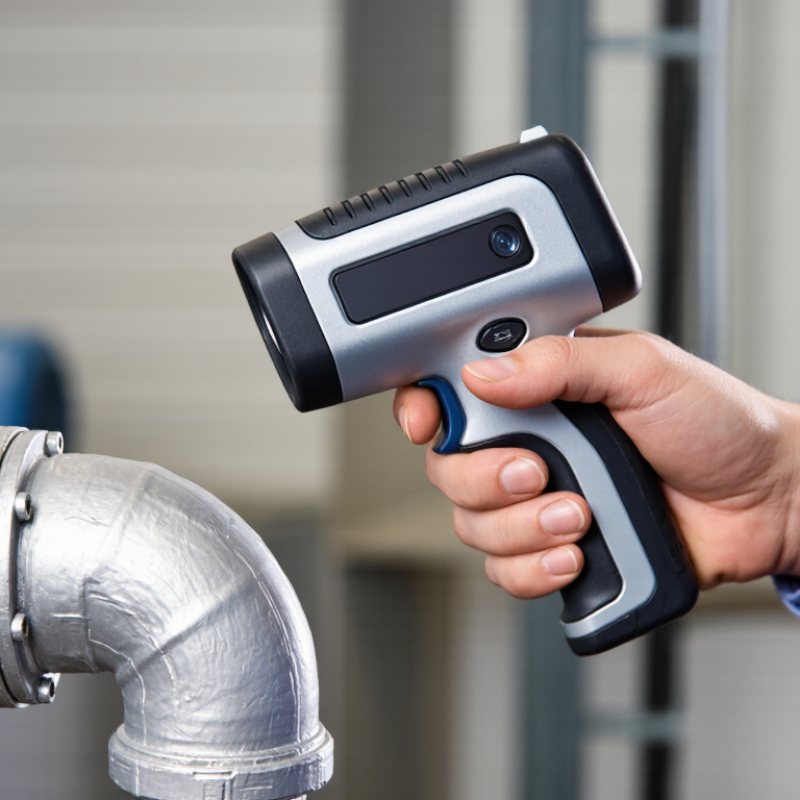
A Handheld Infrared Sensor is a compact instrument that detects infrared radiation without requiring physical contact. It may resemble a small meter, scanner, or pistol-shaped device. Inside, an infrared detector receives invisible thermal energy from a target surface. The sensor then converts that energy into an electrical signal and displays a temperature, movement, distance, or material-related reading.

A useful starting point. In practical use, an operator points the device at a pipe, motor housing, electrical panel, or human-made object. The sensor measures radiation within a defined infrared wavelength range. Its processor interprets that signal using calibration data and environmental assumptions. Emissivity matters greatly. A dull painted surface usually gives more dependable readings than polished metal. Distance, viewing angle, dust, steam, and reflected heat can also change the result.

Reliable operation requires more than pressing a trigger. Experienced technicians check the measurement range, target size, battery condition, and calibration status. They also compare unusual readings with contact thermometers or other approved instruments when accuracy matters. A handheld device can reveal a hot bearing quickly, but it does not explain the underlying fault. That distinction is easy to miss. Readings may appear precise while remaining affected by surface conditions or poor aiming. This article examines the sensor’s main components, detection process, practical applications, and important limitations. It also considers safe handling and responsible interpretation, because infrared measurements support decisions rather than replace professional judgment.
What Is a Handheld Infrared Sensor and How Does It Work?

Definition and Basic Components of a Handheld Infrared Sensor

A handheld infrared sensor is a portable device that detects infrared radiation without physical contact. Infrared energy exists beyond visible red light and comes from warm objects, surfaces, or active transmitters. In temperature-sensing models, the device converts detected radiation into an estimated surface temperature. The reading is conditional. Distance, surface texture, reflected heat, and airflow can influence the result.

Its basic components work as a compact measurement chain. An infrared detector receives energy through a small optical window or lens. A filter helps limit unwanted wavelengths. Signal-conditioning circuits then strengthen and stabilize the weak electrical response. A microprocessor interprets that signal using calibration data and selected measurement settings. The screen shows the result, while buttons or a trigger control scanning and recording. A battery, protective housing, and internal temperature sensor support portable operation.

In practical inspections, I hold the sensor steadily and keep the target centered. A shiny metal surface may reflect nearby heat instead of showing its own temperature. That is an easy mistake. Checking emissivity settings and repeating the measurement from different distances improves confidence. Still, a handheld infrared sensor does not reveal hidden internal temperatures. Dust on the lens, changing room conditions, or a wide measurement area can create misleading readings. Careful users record the surface condition and compare results with another reliable method when accuracy matters.

How Infrared Radiation Is Detected and Converted into Signals

What Is a Handheld Infrared Sensor and How Does It Work?

A handheld infrared sensor detects invisible radiation emitted by warm objects. Every object above absolute zero releases some infrared energy. The sensor collects this energy through a small optical window. A lens focuses the radiation onto a detector inside the device. The detector then changes incoming infrared energy into a tiny electrical response.

The internal circuit measures this response and compares it with calibration data. A processor converts the electrical signal into a temperature reading or another useful value. The display may show degrees, signal strength, or an alert. Emissivity matters because shiny metal can reflect surrounding heat. Distance and viewing angle also affect accuracy. A warm pipe may look cooler if the sensor sees too much background. Readings are not perfect. Even careful users can misinterpret a surface.

Tips: Keep the lens clean and dry. Hold the sensor at the recommended distance. Avoid measuring through ordinary glass, which can block or distort infrared radiation. Let the device adjust to the surrounding temperature before demanding precise results. Test it against a known reference when accuracy is important. Small handling errors matter.

The Step-by-Step Working Process of Handheld Infrared Sensors

What Is a Handheld Infrared Sensor and How Does It Work?

A handheld infrared sensor detects invisible radiation released by objects. Every object above absolute zero emits infrared energy. The device gathers this energy through a lens or optical window. A filter separates useful wavelengths from surrounding light. Then, a thermopile, pyroelectric detector, or microbolometer converts radiation into an electrical signal. The process is quiet.

The signal passes through an amplifier and a digital converter. Internal software compares the reading with calibration references. It also considers ambient temperature, target distance, and surface emissivity. A screen then shows a temperature, image, or alarm value. According to the Grand View Research Infrared Sensor Market Report, the global market was valued at about USD 1.2 billion in 2022. Its projected growth reflects wider use in maintenance, healthcare, building inspection, and automation.

Real measurements are less tidy. A reflective metal pipe may mirror a nearby hot surface. Dust, steam, glass, and an incorrect distance-to-spot ratio can distort results. Experienced technicians often scan slowly, compare nearby surfaces, and verify unusual readings with contact measurements. The U.S. Department of Energy notes that infrared inspections can reveal hidden building heat loss, but proper interpretation remains essential. MarketsandMarkets projects the infrared sensor market to reach roughly USD 1.7 billion by 2028, with growth near 7% annually. That forecast suggests stronger adoption, not perfect accuracy. A sensor can report precisely. The operator may still misunderstand the scene.

What Is a Handheld Infrared Sensor and How Does It Work?

A handheld infrared sensor detects infrared radiation emitted or reflected by an object. Its optics collect the radiation, an infrared detector converts it into an electrical signal, and internal electronics process the signal into a temperature or measurement result.

The chart shows the peak emission wavelength predicted by Wien’s displacement law: λmax = 2898 ÷ T, where λmax is measured in micrometres and T is the absolute temperature in kelvin. Human-body-temperature objects peak near 9.3 μm, which falls within the long-wave infrared range commonly used by thermal sensors.

Major Types and Applications of Handheld Infrared Sensors

A handheld infrared sensor detects energy outside visible light and converts it into a measurable signal. Most models use thermopile, pyroelectric, or photoelectric elements. Thermopile devices measure heat from surfaces. Pyroelectric sensors respond to changing infrared radiation. Active infrared units emit a beam and measure its reflection.

The major types serve different field needs. Handheld infrared thermometers check surface temperature on motors, pipes, food equipment, and electrical panels. Thermal imaging sensors create heat maps, helping technicians locate overloaded connections or moisture-related cold areas. Infrared gas detectors identify absorption patterns from selected gases. Reflective sensors measure distance, movement, or object presence. Each type needs a different calibration method.

Demand is rising. Fortune Business Insights reports that the global thermal imaging market reached about USD 4.68 billion in 2023 and may reach USD 8.07 billion by 2030. MarketsandMarkets also projects continued growth in infrared sensor applications through 2028, driven by industrial monitoring, automotive systems, and security inspection. These figures cover broader markets, not handheld devices alone. That distinction matters.

A practical inspection begins with surface condition, distance, and emissivity settings. Shiny metal can produce misleading readings. Glass can block or reflect infrared energy. Field technicians should compare suspicious readings with contact measurements when possible. No handheld reading is automatically trustworthy. Batteries, lens cleanliness, airflow, and calibration records can change the result. The tool helps reveal patterns, but human judgment still decides whether a warm spot indicates danger or normal operation.


Key Benefits, Limitations, and Selection Considerations

A handheld infrared sensor measures thermal radiation without touching the target. Inside, an optical system focuses emitted infrared energy onto a detector. The device then converts that signal into a temperature reading. In field inspections, this non-contact method helps check hot bearings, electrical panels, pipes, and food surfaces quickly. It also reduces contact with moving, contaminated, or hard-to-reach equipment.

The main benefit is speed. Many readings take less than a second. Portable designs support maintenance teams working across large facilities. However, infrared sensors measure surface temperature, not internal temperature. Reflective metal, steam, dust, and strong airflow can distort results. Emissivity settings matter too. A shiny pipe may display a convincing but inaccurate number.

A quick reading can still be wrong. I have found that repeating measurements from different angles improves confidence, although it never replaces proper calibration.

Selection should match the working environment. Check temperature range, accuracy, response time, distance-to-spot ratio, and adjustable emissivity. A narrow measurement spot is valuable when inspecting small terminals or localized hot spots. For outdoor or washdown areas, consider housing protection and screen readability. Data logging can support maintenance records, but only when timestamps and calibration status remain clear. Choose a model with traceable calibration if results guide safety decisions or process control. Do not select the highest range automatically; excessive range can reduce useful resolution near normal operating temperatures.

Powder Coat Booths

For those larger-sized parts, or smaller quantity runs, we have 2 independent powder coat booths and ovens. The quality, durability and affordability of today’s powder coating finishes make this the process of choice for world-class companies.

Powder coating advantages over other forms of coating are many. Materials used in the Powder coating process can be metals and non-metals that come in a multitude of thicknesses, textures, colors, etc. Another of Powder coating’s biggest advantages over conventional coatings is its ability to create finishes in many different textures. Powder Coating Booths allow us the ability to apply these advantages to large products.

Wet Paint Line

Tri-State Fabricators runs a full-service conveyor line for painting. Wet painting can provide protection or decoration to many different part styles. From start to finish, every project is easier to undergo random and point-based inspection by our skilled painting team.

Advantages to our Wet Paint Line are these lines start with product prep and ends with a thorough inspection of a high quality finished product. Our ability to complete large and small projects with a superior finish and doing so in a timely and economical fashion. This passes along the savings in production to our customers. When powder coating ins not an option, our Wet Paint Line gets the job done right the first time.

Wet Paint Booths

When the parts get big and heavy we roll-out our custom paint racks and oversize booth. By utilizing our partnerships with all the major paint brands, we can match virtually any color with wet paint.

The advantages of having access to a Wet Paint Booth are many. Large projects of many different shapes can be loaded into the booth. The Wet Paint Booth offers an environment that is much more controlled than a typical parts painting operation.

Not only are they used because of their controlled environment, but they’re are also advantageous when it comes to applying paint to parts that are needed in industries that require specialty coatings such as medical, aerospace, etc.

Military CARC

Our military forces have some very high standards when it comes to the finish of their vehicles and equipment. From the first pre-treatment step to final coat, it takes a great deal of knowledge and experience to protect the men and women of our armed forces. They deserve only the best, and Tri-State Fabricators provides it.

All of our processes are closely monitored by our staff and management teams. Both of which are highly trained in the processes of metal fabrication and finishing. Tri-State Fabricators’ goal is to always fully satisfy each and every customer, including the military. We will always put a 110% into what we do.

Glass-Bead Blasting

Abrasive media blasting is an excellent way to remove old paint, rust, and increase the paint/powder adhesion. Glass beads produce a much smoother and brighter finish than angular abrasives; leaving the part clean yet without any dimensional change. Chemically inert and environmentally friendly, we can recycle our beads approximately 30 times; making them a more preferred method of metal cleaning or surface finishing.

Advantages to Glass Bead Blasting are many. Glass bead blast media is used when a project is needing rough surfaces need to become smooth for applications of coatings such as paint. It is typically used to clean paint and rust from a product surface without deforming the surface it is being used on. Overall, compared to many other blasting media, Glass Bead Blasting is a very economical choice and those savings are always passed on to our customers.

Part Washing

Tri-State Fabricators utilize a zinc phosphate wash to clean and etch the material to ensure the best paint adhesion possible. The unique design of our 3-stage wash system does the work like a 5-stage. From Cleaning and rinsing to conversion coating and post-treatment, Our Part Washing process is a complete service and works throughout the fabrication service and the finishing service.

Along with the previously mentioned benefits, Curing is a vital chemical reaction that leaves the product finish hard and relatively safe from mild abrasion and aggressive corrosion. This process can be done in more than one way; ambient air-dry or in curing ovens at temps that exceed 240°.

Burn-Off Oven

From fixing paint mistakes (someone else’s of course) to simply cleaning our paint line hooks, our burn-off oven is put to good use. After a quick burn-off, a little clean up, and a fresh coat of paint, your parts will look better than new.

Why does our Burn-Off Oven work so well? Because super heating the air around parts turns the materials into ashes. From paint and powder coatings to rubber and machining oils, high temps do the job without degrading the integrity of the part.

Masking

Masking is a vital part of producing high quality products. We have die-cut masking patterns to protect machined surfaces as well as a wide range of plugs and caps to protect threaded holes and bolts. We provide permanent and temporary masking.

Masking allows the selected sections of a product to be protected from a fabrication or finishing service. This can be with both chemicals when etching and tapes, paints when only finishing just a section of the product. Masking is great in aiding the customization process of a project.

Screen Printing

Screen printing is a photographic process that transfers artwork onto a porous nylon screen which allows colored ink to flow through the screen and be deposited on an aluminum or plastic component. We can generally have just about any design created onto a screen for your parts.

Some of the advantages of Screen Printing are, brand recognition for your business displaying on your products, assembly instructions, product warnings/hazards, etc. Tri-State Fabricators produces Screen Printing of the highest quality so you know it’s durable.

Metal Finishing

Metal Finishing is the art of treating the exterior portion of product, often metal but can also be made of other materials, so that the surface is clean and free of any debris. Then the process of applying coats or either paint of powder coat takes place. This coating process improves the quality of the product in both appearance and resistance to wear and corrosion.

Tri-State Fabricators, Inc., understands that a project typically isn’t complete until a high-quality finish has been added to your product. This is why our painting and powder coating teams continuously inspect the products throughout the Metal Finishing process.



