What Is an Ultrafiltration Membrane Supplier in China?
An Ultrafiltration Membrane Supplier China may be a membrane manufacturer, an exporter, or a trading company. The label alone does not tell buyers who controls production or provides technical support. A useful assessment looks beyond a catalogue and asks how the supplier handles membrane selection, quality checks, and service after delivery.
Ultrafiltration membranes separate suspended solids and many larger particles from water, but performance depends on the application. Pore-size ratings, operating pressure, water quality, and cleaning methods all matter. A membrane that performs well in a test can behave differently when feedwater changes. Details matter.
For example, buyers can ask for product specifications, documented test methods, and guidance on pretreatment and membrane cleaning. They should also clarify whether stated flux values apply to a defined temperature and test condition. Without that context, comparing two products can be misleading. That point is easy to miss.
This guide explains what the supplier term means and how to evaluate a company with practical questions. It considers manufacturing capability, technical documentation, communication, and application fit. No single certificate or sales claim proves that a product suits every project. We should be cautious about broad promises, including this one: supplier information is only useful when its limits are clear. A careful review helps buyers make a better-informed choice.
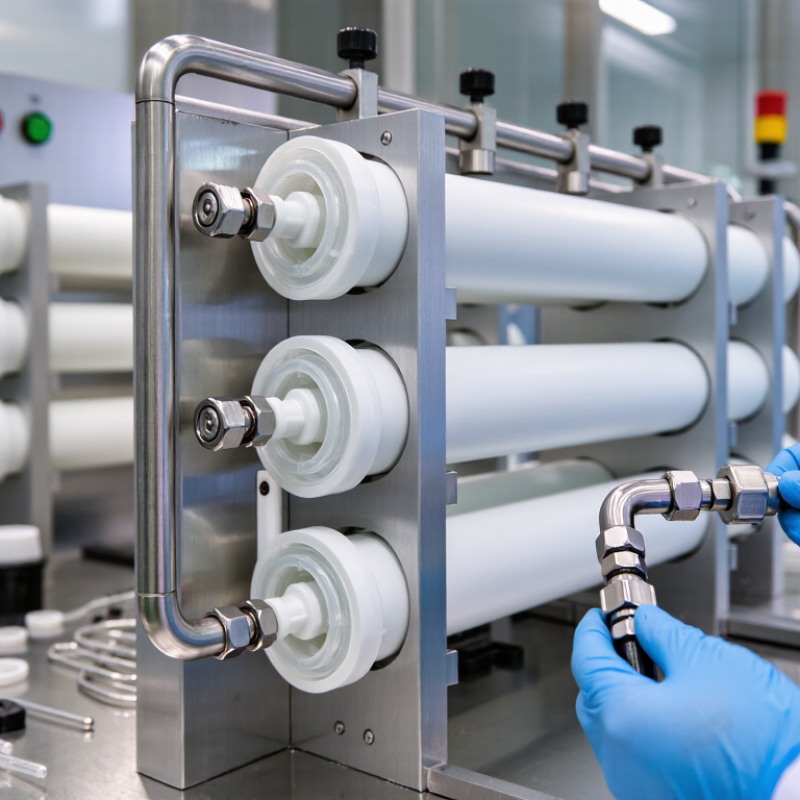
Definition and Core Role of an Ultrafiltration Membrane Supplier in China
An ultrafiltration membrane supplier in China is a company that manufactures, assembles, or sources membranes and related filtration modules. Its core role is to match a membrane’s material, pore range, and module design to a customer’s water-treatment needs. Ultrafiltration typically retains suspended solids, fine particles, and many microorganisms while allowing much of the water and dissolved salts to pass. Details matter.
A capable supplier explains practical choices, such as hollow-fiber or flat-sheet formats, operating pressure, cleaning methods, and expected flow. It should provide clear specifications and test information, not just a product brochure. For example, a plant treating turbid surface water may need different pretreatment and cleaning guidance than a facility processing relatively clear feedwater. Quality checks may include module dimensions, integrity testing, and performance measurements under stated conditions.
The supplier’s role can continue after delivery through installation guidance, troubleshooting, and replacement-part support. Still, supplier data cannot predict every operating condition. Buyers should compare test methods and, where possible, evaluate samples using their own water. One point is easy to miss: a membrane that performs well in a laboratory may need adjustments in a full-scale system. Reliable decisions depend on transparent evidence and a careful fit between membrane specifications and the actual application.
What Is an Ultrafiltration Membrane Supplier in China?
An ultrafiltration membrane supplier sources or manufactures membranes and helps customers select products suited to their treatment requirements. Core responsibilities commonly include specification matching, quality testing, technical support, and supply coordination.
Indicative UF Membrane Pore-Size Ranges
The ranges below are typical examples, not universal specifications; actual values vary by product and measurement method.
Membrane Types and Products Offered by Chinese Suppliers
Chinese ultrafiltration membrane suppliers offer several formats for water-treatment systems. Common options include hollow-fiber, flat-sheet, and tubular membranes, made from materials such as PVDF or PES. Hollow fibers fit many membrane modules and provide a large filtration area in a compact space. Flat sheets are often used in submerged systems, while tubular designs can handle feeds with more suspended solids. Details matter.
Suppliers may provide membrane elements, housings, manifolds, and complete skid-mounted units. Product sheets should state nominal pore size, operating pressure, temperature limits, and recommended cleaning conditions. These figures help buyers compare options, but they do not guarantee performance with every feedwater. A cloudy sample in a test tank may behave differently from a steady production stream. Pilot testing can reveal fouling tendencies and cleaning needs before a full installation. Ask how the supplier checks fiber integrity and tracks batch quality. A catalog cannot settle everything. The right membrane depends on water chemistry, operating conditions, and maintenance capacity; sometimes, the first specification needs revisiting.
How Suppliers Support Ultrafiltration System Design and Operation
What Is an Ultrafiltration Membrane Supplier in China?
How Suppliers Support Ultrafiltration System Design and Operation
A capable ultrafiltration membrane supplier contributes more than membrane modules. The supplier helps match membrane material, pore structure, and system layout to the actual feed water. For a surface-water plant, that means checking seasonal turbidity, algae, and temperature—not just a laboratory sample. These details affect pretreatment, operating flux, and cleaning frequency.
Good design support should include pilot testing, hydraulic calculations, and clear operating limits. The U.S. EPA’s Membrane Filtration Guidance Manual (2005) specifies that direct integrity testing must have sensitivity of at least 3-log removal. Suppliers can help operators select suitable test methods and plan routine checks. They should also explain what to do when pressure rises or filtrate quality shifts. The manual’s benchmark is useful, but it does not replace site-specific validation.
During operation, practical guidance matters. Operators need understandable instructions for backwashing, chemical cleaning, membrane preservation, and troubleshooting. A supplier may review logged transmembrane pressure and flow data to spot fouling trends early. Still, recommendations can miss real plant conditions; feed water changes, and operating teams may not follow ideal schedules. Ask for pilot records, documented assumptions, and technical support after commissioning. A polished proposal alone proves little.
Manufacturing Standards and Quality Checks for Ultrafiltration Membranes
What Is an Ultrafiltration Membrane Supplier in China?
Manufacturing Standards and Quality Checks for Ultrafiltration Membranes
A reliable ultrafiltration membrane supplier in China should provide traceable production records, not just a product sheet. Buyers can ask how polymer batches, casting conditions, and module assembly are controlled. For hollow-fiber membranes, checks may include fiber diameter, wall thickness, potting quality, and visible defects. Small inconsistencies matter. A weak seal can undermine an otherwise sound membrane.
Manufacturing systems are often assessed against ISO 9001 quality-management requirements, while product performance needs separate verification. Ask for test methods, sample sizes, and acceptance limits for clean-water flux, rejection, and pressure resistance. Results should identify the test temperature and feed-water conditions; flux values without context are difficult to compare. ASTM D6908 provides practices for integrity testing of water-treatment membrane systems, though factory sampling cannot replace checks after installation.
For drinking-water applications, the U.S. EPA’s 2005 Membrane Filtration Guidance Manual links pathogen-removal credit to challenge testing and ongoing integrity testing. This is a useful reference for evaluating a supplier’s validation documents, not a substitute for local requirements. Request recent batch records and independent test reports where available. A candid supplier should explain failed tests and corrective actions. Paperwork can look neat; real production is less tidy.
Key Factors for Evaluating a Chinese Ultrafiltration Membrane Supplier
What Is an Ultrafiltration Membrane Supplier in China?
A Chinese ultrafiltration membrane supplier manufactures or sources membrane modules and supports their application in water treatment. Evaluating one takes more than comparing prices. Ask for membrane material, module dimensions, operating limits, and documented test results. The U.S. EPA’s Membrane Filtration Guidance Manual describes ultrafiltration membranes as typically having pore sizes around 0.01–0.1 micrometers. That range is a useful reference, not a guarantee of performance. Feedwater and system design matter.
Check how the supplier verifies quality. Request batch records, test methods, and traceability from raw material to finished module. Ask for evidence on turbidity or particle removal under conditions close to your own. A brief factory visit can reveal practical details: clean assembly areas, labeled components, and controlled storage. Small things count. Also review pressure limits, chemical compatibility, cleaning guidance, and replacement availability. A polished brochure is not test data.
Pilot results are valuable, especially when feedwater varies seasonally. Compare operating pressure, flux, recovery, and cleaning frequency over a realistic trial period. Ask who handles technical support and how quickly they respond to a membrane failure. I would not treat one successful sample test as proof of long-term reliability; that shortcut is tempting, but weak. The EPA manual offers useful technical context, while supplier-specific evidence must confirm the actual product and process.





