


Top Fire Box Manufacturers for Global Buyers

Choosing a Fire Box manufacturer involves more than comparing prices or polished product photographs. Global buyers need dependable construction, clear technical documents, consistent production, and realistic delivery commitments. A firebox may sit behind masonry or inside a metal surround, so small differences in dimensions and installation requirements can create costly delays. Details matter.

The International Energy Agency’s 2023 Buildings report states that buildings account for about 30% of global final energy use and 26% of energy-related emissions. These figures cover the entire building sector, not fireboxes alone. Still, they underline why buyers should examine combustion performance, materials, and installation guidance rather than relying on appearance. Ask manufacturers for applicable test reports, product specifications, warranty terms, and guidance for local installation requirements. Verify that documents match the exact model being quoted.

This guide introduces Fire Box manufacturers serving international buyers and the practical questions worth asking before placing an order. Compare firebox dimensions, steel thickness, finish options, packaging, production capacity, and spare-parts support. Check whether the supplier can explain how each model is tested and maintained. A responsive sales team helps, but it cannot replace verifiable records. And no shortlist is perfect: factory audits, freight costs, and communication across time zones can complicate even careful sourcing. Use the comparisons as a starting point, then confirm key claims directly with each manufacturer.
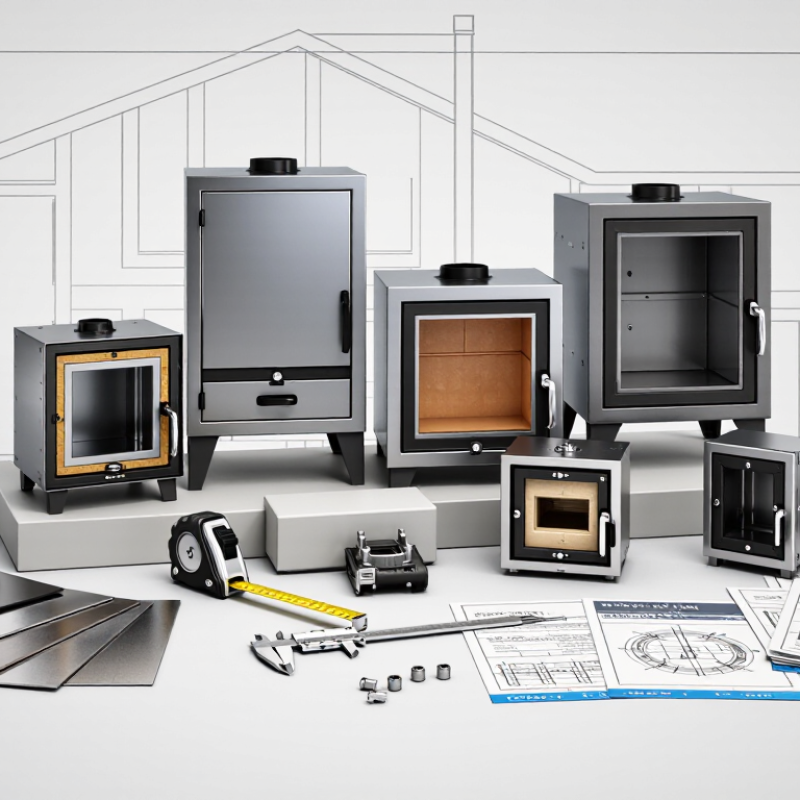
Top Fire Box Manufacturers for Global Buyers

Fire Boxes: Definition, Purpose, and Main Types

A fire box is an enclosure or access point for fire-protection equipment; it does not usually put out a fire by itself. Its purpose is practical: keep equipment visible, protected from routine damage, and quick to reach. A cabinet beside a corridor may hold a hose or extinguisher, while an outdoor enclosure can protect a fire department connection. Access matters. A locked, blocked, or poorly marked box can delay use when seconds count.

Common types include fire hose cabinets, extinguisher cabinets, fire department connection cabinets, and fire alarm call boxes. Hose cabinets store hoses and fittings; extinguisher cabinets keep portable units accessible while limiting accidental knocks. Connection cabinets protect the fittings firefighters use to supply a building’s sprinkler or standpipe system. Alarm call boxes, where installed, let occupants or passersby report an emergency. The boundary between “fire box” types is not always tidy, so buyers should check the equipment list and installation drawings.

The need for accessible protection is underscored by NFPA’s 2024 Home Structure Fires report: U.S. fire departments recorded an annual average of 344,600 home structure fires from 2018 to 2022, with 2,770 deaths and 11,250 injuries. These figures describe home fires, not the effectiveness of cabinets. Still, they highlight why clear access and maintenance matter. Check door swing, mounting height, signage, and exposure to water or impact. Labels matter. A box can look ready while containing the wrong equipment.


Materials, Design Features, and Performance Requirements

A dependable fire box starts with materials suited to its fuel and operating conditions. Carbon steel heats quickly, while cast iron holds heat longer but adds weight. Stainless steel can resist corrosion, though grade and thickness matter. In high-heat areas, a replaceable refractory lining helps protect the outer shell. Small details matter. Check weld consistency, door alignment, handle clearance, and the fit of rope seals; a slightly uneven door can cause unwanted air leakage.

Design affects both control and maintenance. Adjustable air inlets should move smoothly, and ash access should be practical without awkward tools. For global buyers, compare documented test results, material specifications, and production checks rather than relying on appearance alone. Performance requirements vary with fuel, installation, and local conditions. Ask manufacturers how they assess heat output, combustion stability, and emissions for the intended configuration. A polished catalog is not proof of consistent production; request clear inspection records. Some specifications may still leave questions.

Tips: Confirm internal dimensions and wall thickness in writing. Request close-up photos of seams and seals, plus guidance on routine inspection. Measure twice. A small mismatch can complicate installation.

Standards and Certifications for International Markets

Top Fire Box Manufacturers for Global Buyers

Fire-box performance depends on the test standard, product type, and market requirements. UL 72 and EN 1047-1 are examples of standards used to assess fire resistance, but their test methods and classifications differ. A rating under one standard does not automatically prove equivalent performance under another. Check the certificate and test report for the exact model, size, and tested contents. Small changes can matter.

Tips: Ask for reports from an accredited testing laboratory, and confirm that the certificate is current. Check the rating label. A general conformity mark alone may not demonstrate fire resistance. Importers should also verify documentation and acceptance requirements with local regulators, insurers, or qualified testing bodies before ordering.

In practical sourcing, paperwork deserves the same attention as the steel shell and door seal. Confirm whether the stated protection covers paper documents, digital media, or both; these may require different test criteria. Keep installation instructions and certificate copies with purchasing records. Requirements can be unclear, and I would not rely on a sales sheet alone. A direct review with the supplier can reveal gaps before shipment.

Top Fire Box Manufacturers for Global Buyers - Standards and Certifications for International Markets
Standard or reference Typical market relevance What it evaluates Common classification or meaning What buyers should verify
UL 72
Fire Test of Record Protection Equipment
Frequently specified in the United States and encountered in international procurement. Fire-resistance performance of equipment designed to protect records and other contents. Classes include 350, 150, and 125, indicating the applicable maximum interior-temperature category during the test. The appropriate class depends on the contents being protected. Confirm the tested class and duration, and check that the exact model appears in the relevant independent certification or listing records.
EN 1047-1
Secure storage units — Classification and methods of test for resistance to fire
Commonly referenced in European and international tenders for fire-resistant storage. Fire resistance of data cabinets and diskette inserts, with classifications for different types of stored material. Examples include S 60 P and S 120 P for paper, and S 60 DIS and S 120 DIS for data media. The number identifies the test duration in minutes. Match the suffix to the contents: a paper classification should not be assumed to protect data media to the same level.
EN 15659
Light fire storage units
A European reference for light fire storage units intended primarily for paper documents. Fire resistance of light fire storage units under the standard’s specified test conditions. LFS 30 P and LFS 60 P indicate 30- and 60-minute classifications for paper protection. Check that the product is classified under EN 15659 and confirm the specific LFS rating; it is not a substitute for a data-media classification.
NT Fire 017
Fire resistance testing for protective storage
A Nordic-origin test method that may also be referenced in international purchasing specifications. Fire protection performance for storage of paper documents and, in applicable classifications, data media. Classifications may include ratings such as 60P or 120P for paper and separate DIS ratings for data media; the suffix identifies the intended content category. Request the complete test or certification record and verify the tested duration and content category for the exact model.
EN 1143-1
Secure storage units — Requirements, classification and methods of test for resistance to burglary
Used in European and international specifications where burglary resistance is also required. Resistance to burglary attacks, not fire resistance. A security grade under this standard addresses burglary resistance; it does not establish a fire-resistance rating. If both fire and burglary protection are required, verify separate evidence for each performance claim.
ISO 9001
Quality management systems
Internationally used quality-management standard across many manufacturing sectors. An organization’s quality-management system; it does not test the fire performance of a particular fire box. A quality-system certification is not a product fire-resistance classification. Treat it as supplementary supplier information, not as proof that a model has passed a fire test.
CE or UKCA marking
Regulatory marking, where applicable
Relevant to applicable product legislation in the European Union or Great Britain. Indicates conformity with applicable legislation for a product; by itself, it is not a universal fire-safe test rating. The marking alone does not specify a fire-test standard, duration, or protected-content category. Ask which legislation and technical evidence apply, and request the separate fire-test documentation for the product.

Buyer note: Fire ratings are not interchangeable across standards. Always check the exact model, tested configuration, rating duration, intended contents, and current supporting documentation.

How to Evaluate Fire Box Manufacturers and Suppliers

Evaluating firebox manufacturers starts with evidence, not polished product photos. Ask for independent test reports covering the exact model, materials, and installation conditions.

NFPA’s Home Heating Fires report estimates that U.S. fire departments responded to 44,210 home heating-equipment fires each year from 2016 to 2020. The report also records an annual average of 480 deaths.

These figures do not measure firebox performance alone, but they show why documented safety matters.

Inspect the steel grade, plate thickness, weld consistency, door fit, and insulation around the firebox. Request traceable material records and production inspection results. Check that certification applies to the model being quoted, not merely a similar product. Ask how the supplier controls dimensional changes between samples and mass production. Small gaps matter. So do clearances. Installation instructions should specify approved fuels, ventilation needs, and maintenance intervals.

A factory audit can reveal how parts are checked, labeled, and protected from moisture during shipping. Compare warranty terms and replacement-part availability, especially for baffles, liners, and seals. Then speak with buyers who have used the unit through a full heating season.

One limitation: a clean factory visit cannot predict every installation problem. I would treat supplier claims as starting points, not proof.

Comparing Leading Manufacturers for Global Buyers

Comparing Leading Manufacturers for Global Buyers

Choosing a fire box manufacturer involves more than comparing prices or exterior dimensions. Buyers should examine the steel thickness, door fit, hinge movement, and quality of welds. On a sample unit, check whether the lid closes evenly and the seal sits continuously around the opening. Small gaps matter.

Manufacturers may differ in testing, production consistency, and documentation. Ask for test reports that identify the tested model, conditions, and performance limits. Confirm that materials and finishes suit the destination climate, especially where humidity or salt air can accelerate corrosion. A clear answer is useful; a vague promise is not. Details matter.

Also compare lead times, replacement-part access, packaging, and quality checks before shipment. Request photos from production and inspect a pre-production sample when practical. A polished sample can still hide uneven production across a large order. This is where comparison gets less tidy: the lowest quote may omit inspection or packaging details, while a higher quote may not guarantee better consistency. Buyers should record specifications in writing and check that quotations describe the same product.

Article Source:

Powder Coat Booths

For those larger-sized parts, or smaller quantity runs, we have 2 independent powder coat booths and ovens. The quality, durability and affordability of today’s powder coating finishes make this the process of choice for world-class companies.

Powder coating advantages over other forms of coating are many. Materials used in the Powder coating process can be metals and non-metals that come in a multitude of thicknesses, textures, colors, etc. Another of Powder coating’s biggest advantages over conventional coatings is its ability to create finishes in many different textures. Powder Coating Booths allow us the ability to apply these advantages to large products.

Wet Paint Line

Tri-State Fabricators runs a full-service conveyor line for painting. Wet painting can provide protection or decoration to many different part styles. From start to finish, every project is easier to undergo random and point-based inspection by our skilled painting team.

Advantages to our Wet Paint Line are these lines start with product prep and ends with a thorough inspection of a high quality finished product. Our ability to complete large and small projects with a superior finish and doing so in a timely and economical fashion. This passes along the savings in production to our customers. When powder coating ins not an option, our Wet Paint Line gets the job done right the first time.

Wet Paint Booths

When the parts get big and heavy we roll-out our custom paint racks and oversize booth. By utilizing our partnerships with all the major paint brands, we can match virtually any color with wet paint.

The advantages of having access to a Wet Paint Booth are many. Large projects of many different shapes can be loaded into the booth. The Wet Paint Booth offers an environment that is much more controlled than a typical parts painting operation.

Not only are they used because of their controlled environment, but they’re are also advantageous when it comes to applying paint to parts that are needed in industries that require specialty coatings such as medical, aerospace, etc.

Military CARC

Our military forces have some very high standards when it comes to the finish of their vehicles and equipment. From the first pre-treatment step to final coat, it takes a great deal of knowledge and experience to protect the men and women of our armed forces. They deserve only the best, and Tri-State Fabricators provides it.

All of our processes are closely monitored by our staff and management teams. Both of which are highly trained in the processes of metal fabrication and finishing. Tri-State Fabricators’ goal is to always fully satisfy each and every customer, including the military. We will always put a 110% into what we do.

Glass-Bead Blasting

Abrasive media blasting is an excellent way to remove old paint, rust, and increase the paint/powder adhesion. Glass beads produce a much smoother and brighter finish than angular abrasives; leaving the part clean yet without any dimensional change. Chemically inert and environmentally friendly, we can recycle our beads approximately 30 times; making them a more preferred method of metal cleaning or surface finishing.

Advantages to Glass Bead Blasting are many. Glass bead blast media is used when a project is needing rough surfaces need to become smooth for applications of coatings such as paint. It is typically used to clean paint and rust from a product surface without deforming the surface it is being used on. Overall, compared to many other blasting media, Glass Bead Blasting is a very economical choice and those savings are always passed on to our customers.

Part Washing

Tri-State Fabricators utilize a zinc phosphate wash to clean and etch the material to ensure the best paint adhesion possible. The unique design of our 3-stage wash system does the work like a 5-stage. From Cleaning and rinsing to conversion coating and post-treatment, Our Part Washing process is a complete service and works throughout the fabrication service and the finishing service.

Along with the previously mentioned benefits, Curing is a vital chemical reaction that leaves the product finish hard and relatively safe from mild abrasion and aggressive corrosion. This process can be done in more than one way; ambient air-dry or in curing ovens at temps that exceed 240°.

Burn-Off Oven

From fixing paint mistakes (someone else’s of course) to simply cleaning our paint line hooks, our burn-off oven is put to good use. After a quick burn-off, a little clean up, and a fresh coat of paint, your parts will look better than new.

Why does our Burn-Off Oven work so well? Because super heating the air around parts turns the materials into ashes. From paint and powder coatings to rubber and machining oils, high temps do the job without degrading the integrity of the part.

Masking

Masking is a vital part of producing high quality products. We have die-cut masking patterns to protect machined surfaces as well as a wide range of plugs and caps to protect threaded holes and bolts. We provide permanent and temporary masking.

Masking allows the selected sections of a product to be protected from a fabrication or finishing service. This can be with both chemicals when etching and tapes, paints when only finishing just a section of the product. Masking is great in aiding the customization process of a project.

Screen Printing

Screen printing is a photographic process that transfers artwork onto a porous nylon screen which allows colored ink to flow through the screen and be deposited on an aluminum or plastic component. We can generally have just about any design created onto a screen for your parts.

Some of the advantages of Screen Printing are, brand recognition for your business displaying on your products, assembly instructions, product warnings/hazards, etc. Tri-State Fabricators produces Screen Printing of the highest quality so you know it’s durable.

Metal Finishing

Metal Finishing is the art of treating the exterior portion of product, often metal but can also be made of other materials, so that the surface is clean and free of any debris. Then the process of applying coats or either paint of powder coat takes place. This coating process improves the quality of the product in both appearance and resistance to wear and corrosion.

Tri-State Fabricators, Inc., understands that a project typically isn’t complete until a high-quality finish has been added to your product. This is why our painting and powder coating teams continuously inspect the products throughout the Metal Finishing process.
