Gas Mig Welder Tips for Beginners How to Choose and Use?
In the evolving world of welding technology, the gas MIG welder has emerged as a popular choice for both novices and experienced welders. According to a recent report by the American Welding Society, MIG welding accounts for approximately 30% of all welding processes used in various industries. This statistic highlights the significance of mastering this technique. However, many beginners often overlook fundamental aspects when choosing and using a gas MIG welder.
Industry expert Dr. Alex Thompson, a leading figure in welding education, emphasizes the importance of understanding equipment specifications. He states, "A well-informed choice of a gas MIG welder can drastically improve your efficiency and skill." This insight pushes aspiring welders to conduct thorough research about features like gas types, wire feed rates, and power settings before making a purchase. In this landscape, it becomes clear that beginners must balance enthusiasm with critical knowledge.
Moreover, while many resources exist, there are gaps in practical training. It’s common for newcomers to focus solely on equipment selection but neglect essential techniques. Engaging with local welding communities can provide valuable hands-on experience. Ultimately, understanding both the theory and practice of using a gas MIG welder will pave the way for successful welding endeavors.
Gas Mig Welder Basics: Understanding the Fundamental Principles
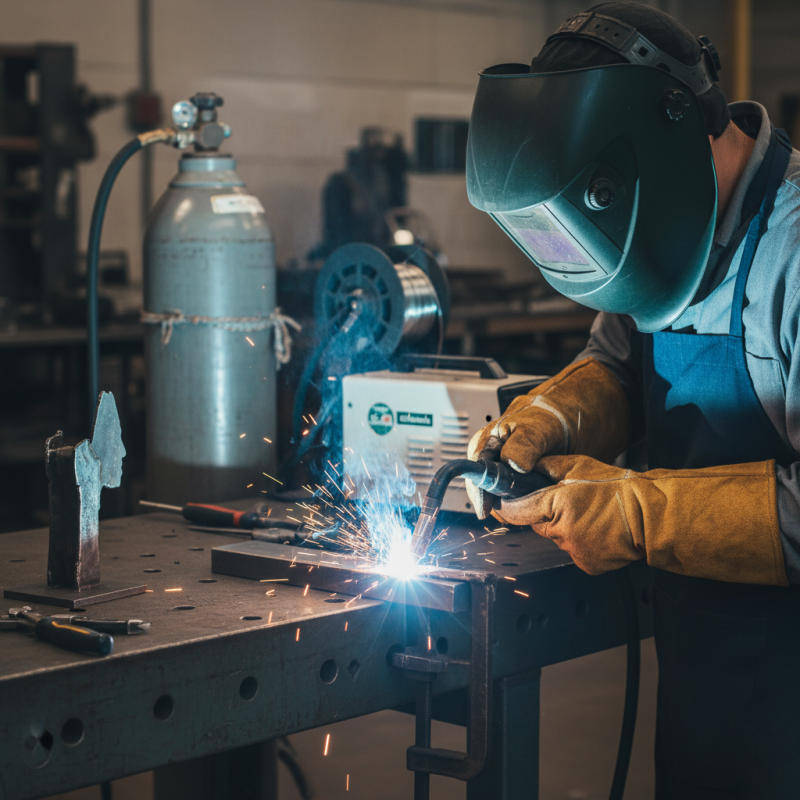
Gas MIG welding is a popular choice for beginners. Understanding the fundamental principles is crucial for effective use. MIG stands for Metal Inert Gas. It uses a continuous wire feed to create the weld. The process involves an electric arc between the wire and the metal. This makes it easier to handle for newcomers.
Here are some tips to keep in mind. Always adjust your settings based on the material thickness. A thinner metal requires less voltage and wire feed speed. Practice with scrap materials first. It’s vital to find the right technique that suits you. Keep the welding gun at a steady angle. This ensures a consistent bead.
Don’t overlook safety measures. Wear gloves and a welding helmet. The bright light can be blinding. Also, ensure proper ventilation. Fumes can be harmful. Mistakes will happen during your learning process. Reflect on what went wrong and adjust accordingly. Consistent practice will lead to improvement over time.
Selecting the Right Gas Mixture for Optimal Welding Performance
Choosing the right gas mixture is crucial for optimal welding performance. Understanding how different gases affect the weld is essential for beginners. Argon and carbon dioxide are common choices. Argon provides cleaner welds, while carbon dioxide enhances penetration.
Mixing these gases can offer a balance. A common mixture is 75% argon and 25% carbon dioxide. This combination allows for good bead appearance and penetration depth. Beginners should experiment with different ratios. Not every mix works well for every application. Sometimes the results might surprise you, and not in a good way.
Pay attention to your settings. Miscalculations with gas flow can lead to issues. Too much gas can create turbulence; too little can result in contamination. Regularly check your equipment. Poor maintenance can lead to subpar welding. It's a learning process filled with trial and error. Take notes on what works and what doesn’t. This reflection helps improve your skills over time.
Essential MIG Welder Equipment: Tools Every Beginner Needs
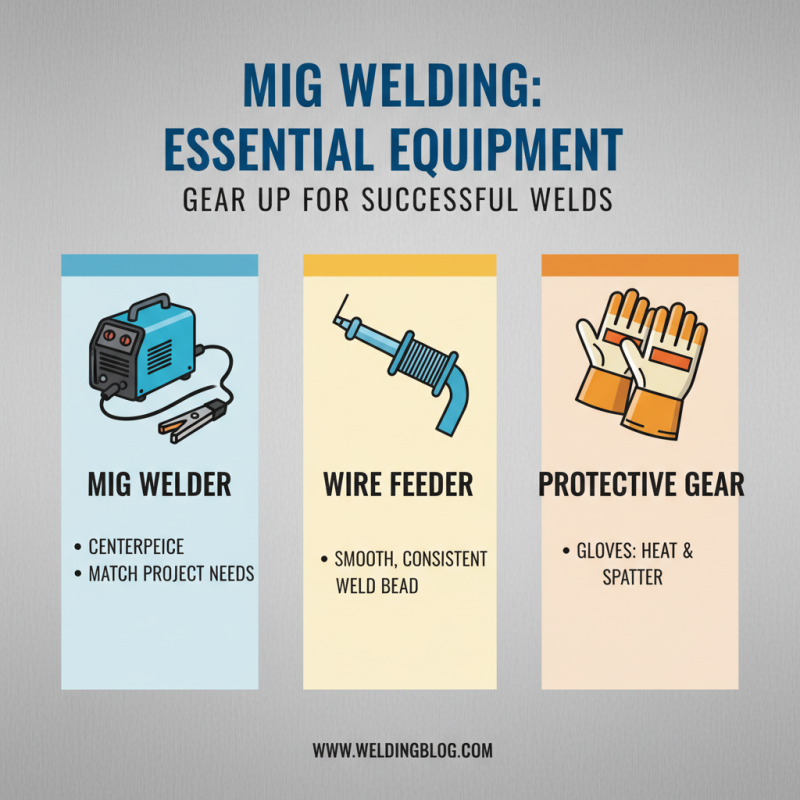
When diving into MIG welding, having the right equipment is crucial. A good MIG welder is the centerpiece of your setup. Look for one that fits your project needs. An adequate wire feeder is also essential. It ensures a smooth and consistent weld bead. Don't forget gloves, especially ones designed for welding. They protect your hands from heat and spatter.
Additional tools are often overlooked. A proper helmet is necessary. It shields your eyes from bright arcs and sparks. Invest in a pair of strong pliers for wire cutting and handling. You might need a brush to clean up your welds. A clamp for holding pieces in position can save you frustration. As a beginner, adapting to your tools takes time. It’s easy to fumble as you learn. Practice will improve your coordination and technique.
Lastly, remember safety gear is a must. Keep your workspace organized. This reduces hazards and distractions. You’ll make mistakes, and that’s okay. Every error is a learning opportunity. Embrace the process and enjoy creating!
Techniques for Efficient Gas MIG Welding: Step-by-Step Guide
Gas MIG welding can seem daunting for beginners. However, using effective techniques makes the process easier. Start by preparing your workspace. Ensure proper ventilation. Clear any clutter around your welding area. This setup enables a safe and efficient working environment.
Next, focus on your welding technique. Hold the MIG gun at a consistent angle. A 15-degree angle works well. Maintain a distance of about 1/4 inch from the workpiece. This helps achieve even weld penetration. Practice moving the gun smoothly. A steady hand is critical. Don't rush; speed can lead to mistakes. If you notice uneven beads, slow down. Reflecting on your early welds is essential. Identify areas for improvement.
Finally, always check your settings. Voltage and wire feed speed need adjustment based on material thickness. Experiment to find the best combination. It’s okay to make mistakes; this is part of learning. Review your work often and make adjustments as necessary. Gathering feedback from others can also be beneficial. Each welding project builds your skills over time.
Safety Precautions: Protecting Yourself While Welding with Gas MIG
When using a gas MIG welder, safety should always be your first priority. Start with protective gear. Wear a welding helmet with the correct shade. This minimizes eye strain and protects against sparks. Don gloves that are durable and heat-resistant. Ensure that your clothing is made of non-flammable materials. This helps prevent accidental burns from sparks or heat.
Ventilation is crucial while welding. Working in a well-ventilated area reduces the risk of inhaling harmful fumes. It can be challenging to find such spaces but essential for health. If outside, consider weather conditions. Wind can introduce dust and debris that affects your work. Be aware of your surroundings, especially if welding near flammable materials. A small oversight can lead to serious consequences.
It’s often tempting to rush through safety checks to start welding. This impulsiveness can lead to accidents. Regularly check your equipment for leaks or malfunctions. Taking a moment to inspect can save you from a larger problem later. Reflect on the environment and your actions to improve safety. Each session offers lessons learned, some more critical than others.
Gas Mig Welder Tips for Beginners How to Choose and Use? - Safety Precautions: Protecting Yourself While Welding with Gas MIG
| Tip |
Description |
Safety Precaution |
Recommended Gear |
| Choosing the Right Welder |
Consider your project needs, material thickness, and welding type. |
Ensure proper ventilation to avoid fumes. |
Welding helmet, gloves, and safety glasses. |
| Setting the Right Voltage |
Adjust the voltage based on material and thickness for ideal arcs. |
Keep flammable materials away from your workspace. |
Fire extinguisher and non-flammable clothing. |
| Practice on Scrap Metal |
Gain confidence by welding on scrap material before the actual project. |
Use a protective shield or curtain for nearby workers. |
Safety apron and durable gloves. |
| Maintaining Your Equipment |
Regularly check and clean your welder for optimal performance. |
Disconnect power before maintenance. |
Basic tool kit and cleaning supplies. |
| Understanding Gas Flow |
Adjust gas flow to get a stable, quality weld. |
Check for gas leaks regularly. |
Gas flow meter and leak detection spray. |