


Top 10 Gas Density Indicators for Global Buyers

For global buyers, gas density is more than a specification on a laboratory report. It affects custody transfer, pipeline capacity, storage calculations, burner performance, and equipment selection. This is why reliable Gas Density Indicators deserve careful review before any purchase decision.

Dr. Michael L. Huber, a thermophysical-property researcher at the U.S. National Institute of Standards and Technology, has stated, “Accurate thermophysical property data are critical to the design and operation of energy systems.” His view reflects a practical truth: density readings must be traceable, repeatable, and linked to clear operating conditions.

A dependable indicator should show the measurement principle, pressure range, temperature range, gas composition, and calibration method. For example, a reading taken at 20°C and one atmosphere cannot be compared casually with a reading taken inside a high-pressure pipeline. Small differences can influence flow estimates and commercial calculations.

Look for documented uncertainty.

Also check response time.

The Top 10 Gas Density Indicators for Global Buyers will examine these details through a purchasing lens. It will compare sensor technologies, installation requirements, digital outputs, maintenance needs, and supplier documentation. It will also consider field realities, such as vibration, moisture, changing gas mixtures, and limited access to calibration services.

No indicator is perfect. A low-cost model may appear attractive, yet weak documentation can create expensive uncertainty. Even advanced equipment can produce questionable results when sampling is poor or compensation settings are incorrect. Buyers should challenge impressive specifications and request evidence from real operating environments.

That caution may seem less convenient. It is still necessary. Reliable selection begins with measurable performance, transparent limitations, and independent verification.
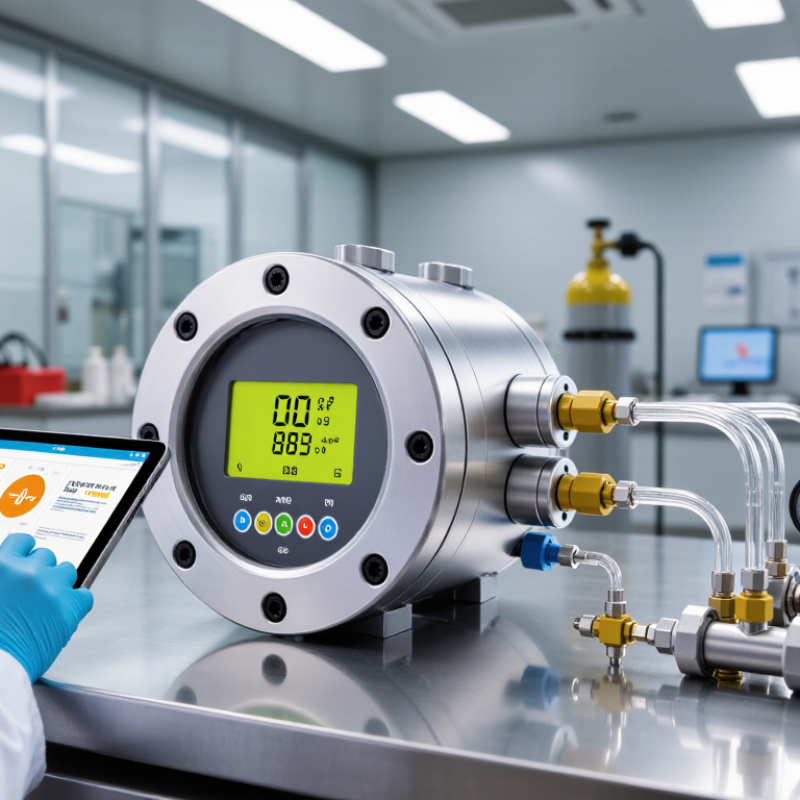
Top 10 Gas Density Indicators for Global Buyers

Gas Density: Definition, Units, and Importance for Global Buyers

Top 10 Gas Density Indicators for Global Buyers

Gas density describes how much mass occupies a specific volume of gas. It is commonly reported in kilograms per cubic meter (kg/m³) or grams per liter (g/L). Relative density, also called specific gravity, compares a gas with air and has no unit. Buyers should review molecular weight, pressure, temperature, compressibility factor, purity, and reference conditions. These details shape the actual density value. A number without conditions is incomplete.

Density affects storage capacity, pipeline flow, compressor selection, shipping calculations, and custody-transfer measurement. The remaining indicators include density at standard conditions, operating density, altitude effects, and measurement uncertainty.

For example, a gas reading at 20°C and 1 bar may differ noticeably from one at 0°C and 1 atmosphere. A neat datasheet can still mislead. I have found that missing reference conditions create avoidable purchasing questions. This is not always obvious.

Tips: Ask suppliers to state temperature, absolute pressure, gas composition, test method, and uncertainty. Compare values only when conditions match. Check whether “standard” means 0°C, 15°C, or another local convention. Request recent laboratory data for critical applications. Keep the calculation basis in your purchasing file. It saves time later. Density alone is not enough; flow, energy content, and purity may matter more for the final decision.


How Gas Density Is Measured Under Standard and Operating Conditions

Top 10 Gas Density Indicators for Global Buyers

Gas density changes with temperature, pressure, composition, and moisture content. Buyers should compare measurements under identical reference conditions. Standard density usually uses a defined base temperature and pressure, such as 15°C and 101.325 kPa. Some contracts use different values. Check the specification carefully.

Operating density describes gas inside the actual pipeline or vessel. It may be much higher than standard density because pressure increases. Use the real-gas equation: density equals pressure multiplied by molecular weight, divided by compressibility, gas constant, and temperature. The compressibility factor, or Z, matters greatly at high pressure. Ten useful indicators include standard density, operating density, relative density, pressure, temperature, molecular weight, Z-factor, water content, composition, and measurement uncertainty.

A calibrated densitometer can provide direct readings under flowing conditions. Gas chromatography helps verify molecular weight and composition. Flow computers then convert operating values to standard volumes. Units must remain consistent, especially kilograms per cubic metre and standard cubic metres. I have seen neat spreadsheets hide mismatched base conditions. That error can affect custody calculations and equipment sizing. Calibration records, traceable standards, and sampling procedures strengthen technical confidence. Still, no instrument is perfect. Turbulence, condensation, leaks, or delayed sampling can distort results. Ask for raw data, test temperature, pressure, calibration date, and stated uncertainty before accepting a density figure.

The Top 10 Gas Density Indicators and Their Practical Meaning

Top 10 Gas Density Indicators for Global Buyers
The Top 10 Gas Density Indicators and Their Practical Meaning

Gas density shows how much mass occupies a given volume. For buyers, it affects transport, metering, storage, and equipment selection. Relative density compares gas with air, while molecular weight helps estimate composition and handling behavior. Standard density uses fixed reference conditions, but operating density changes with pressure and temperature. These differences matter during contract review. A value measured at 15°C may not match a value measured at 20°C. Pressure is critical.

Compressibility factor, or Z-factor, reveals how closely gas behavior follows ideal assumptions. A low Z-factor can change calculated volume and billing results. Gas gravity supports pipeline calculations and flow estimates. Composition indicators, including methane, carbon dioxide, nitrogen, and heavier hydrocarbons, explain density changes.

Dew point is also practical. It warns buyers when liquids may form during cooling or pressure reduction. Wobbe-related data can support combustion assessment, although it is not a direct density measurement. Lower density is not automatically better. The application decides.

Tips: Request density at both reference and operating conditions. Check the test method, calibration date, pressure, and temperature. Compare laboratory results with meter data. Small mismatches deserve attention. In field reviews, inconsistent sampling often creates bigger errors than the instrument itself. Keep gas composition records for every shipment. A single density figure may look precise, yet still hide uncertainty.

Comparing Density Data Across Suppliers, Grades, and Regions

Top 10 Gas Density Indicators for Global Buyers

Comparing density data across suppliers, grades, and regions requires more than reading one figure. Gas density changes with temperature, pressure, composition, and measurement method. Buyers should compare values at identical reference conditions. A supplier reporting 0.72 kg/m³ at 15°C cannot be directly compared with 0.70 kg/m³ at 0°C. The difference may reflect conditions, not quality. Check the units.

For reliable purchasing, request the density value, reference temperature, reference pressure, relative density, gas composition, compressibility factor, moisture content, inert-gas content, test method, and measurement uncertainty. These ten indicators reveal how the number was produced. A calibrated meter supports routine checks, while an independent laboratory report provides stronger verification. Certificates should also identify the production batch and testing date. Regional documents may use different standard conditions, creating avoidable confusion.

Grade differences deserve close attention. Methane-rich gas usually shows different density behavior from gas containing more heavier hydrocarbons. Moisture and nitrogen can also shift the result. Small variations matter when buyers calculate storage volume, energy content, or transport quantities. However, density alone cannot confirm commercial value. My own comparison process would still leave room for doubt, especially when suppliers round figures too aggressively. Rechecking raw data is sometimes slow, but a neat spreadsheet can hide a weak measurement. Temperature records, calibration dates, and laboratory notes should remain visible during supplier evaluation.

Using Density Indicators to Evaluate Quality, Safety, and Purchase Risk

Top 10 Gas Density Indicators for Global Buyers

Using Density Indicators to Evaluate Quality, Safety, and Purchase Risk

Gas density is more than a specification on a product sheet. It can reveal composition changes, filling problems, and hidden purchasing risks. Buyers should review density at a stated temperature and pressure, because values can shift significantly during transport and storage.

Ten indicators deserve close attention: reference density, relative density, compressibility factor, operating pressure, temperature stability, gas composition, moisture level, contaminant content, measurement repeatability, and calibration traceability. Compare the supplier’s data with an independent laboratory report when possible. A small density deviation may indicate a quality issue, but it may also result from different testing conditions.

Check the numbers carefully.

In practical inspections, record cylinder temperature, pressure, sampling time, and equipment condition. These details help explain unusual results. Density consistency across several containers is often more useful than one attractive test value. A reliable supplier should provide clear methods, test dates, uncertainty data, and relevant safety documentation.

I have found that purchase risk often grows when density data looks overly simple. “Within range” is not enough. Buyers should ask which range, measured how, and under what conditions. Some reports may lack full traceability, and even experienced teams can overlook that weakness. Use density as one decision tool, not as proof of quality by itself. Combine it with composition testing, packaging checks, delivery records, and a documented acceptance process.

Top 10 Gas Density Indicators for Global Buyers - Using Density Indicators to Evaluate Quality, Safety, and Purchase Risk

Reference basis: Density values are approximate at 0°C and 1 atm for pure gases. Relative gas density is calculated against dry air at the same conditions. Actual shipment and process values may vary with temperature, pressure, purity, and moisture.
No. Gas Formula Density at 0°C
(kg/m³)
Relative Density
vs. Air
Typical Physical Behavior Quality-Control Indicator Safety and Purchase-Risk Interpretation
1 Hydrogen H₂ 0.0899 0.07 Extremely light; rises and disperses rapidly in open areas. A measured density above the expected value may indicate heavier impurities or incorrect temperature/pressure compensation. Highly flammable and easily ignited. Verify purity, leak-tight packaging, cylinder pressure, and certified hazardous-gas handling.
2 Helium He 0.1785 0.14 Very light and non-flammable; rapidly disperses upward. Density can help screen for air, nitrogen, or other heavier-gas contamination when corrected to reference conditions. Non-flammable but can displace oxygen in enclosed areas. Confirm purity grade, moisture limits, and fill quantity.
3 Methane CH₄ 0.7168 0.55 Lighter than air; disperses upward in well-ventilated spaces. Density deviations may indicate nitrogen, carbon dioxide, water vapor, or other hydrocarbon content. Highly flammable. Check composition, methane number where relevant, water content, odorization requirements, and pressure basis.
4 Ammonia NH₃ 0.769 0.59 Normally lighter than air at reference conditions; highly soluble in water. Density is a screening value only; water content and concentration must be verified separately because ammonia readily absorbs moisture. Toxic, corrosive, and flammable within a defined concentration range. Confirm container compatibility, valve condition, and safety documentation.
5 Nitrogen N₂ 1.2506 0.97 Nearly the same density as air; movement depends strongly on ventilation and temperature. Useful for detecting significant oxygen, argon, or hydrocarbon contamination, but density alone cannot establish high purity. Non-flammable and chemically inert under normal conditions, but an oxygen-deficient atmosphere may develop. Verify oxygen and moisture specifications.
6 Carbon Monoxide CO 1.250 0.97 Approximately air-neutral in density; can accumulate according to airflow and temperature. Density is not a reliable purity test because it is close to nitrogen and air; use certified composition analysis. Highly toxic, odorless, and flammable. Require specialized detection, documented analysis, and strict segregation from oxidizers.
7 Air Mixture 1.293 1.00 Reference gas for relative-density comparisons. A useful baseline for checking instrument calibration and calculating relative density; composition varies with humidity and location. Not a substitute for certified process gas. Humidity and contaminants can change measured density and create procurement disputes.
8 Oxygen O₂ 1.429 1.105 Slightly heavier than air; may collect in low or poorly ventilated areas. Density can flag major dilution with nitrogen or air, but oxygen purity requires an oxygen analyzer and moisture testing. Non-flammable but strongly supports combustion. Keep away from oil, grease, sparks, and incompatible packaging materials.
9 Propane C₃H₈ 1.967 1.52 Heavier than air; leaked gas can accumulate in low areas and drains. Density can help screen for excess butane, methane, nitrogen, or other LPG components; full composition analysis is required for specification compliance. Highly flammable and heavier-than-air. Confirm odorization, vapor pressure, cylinder integrity, and transport classification.
10 Carbon Dioxide CO₂ 1.977 1.53 Significantly heavier than air; tends to collect in pits, tanks, and enclosed spaces. A density result outside the expected range may indicate nitrogen, oxygen, air, or hydrocarbon contamination; water content must also be checked. Non-flammable but an asphyxiation hazard at elevated concentrations. Check purity, moisture, odor, cylinder weight, and ventilation requirements.
Buyer’s verification rule: Density should be used as a screening indicator, not as the sole acceptance criterion. Before purchase, compare the supplier’s certificate of analysis with the agreed reference temperature, absolute pressure, purity, moisture, filling quantity, packaging standard, and applicable transport regulations.

Powder Coat Booths

For those larger-sized parts, or smaller quantity runs, we have 2 independent powder coat booths and ovens. The quality, durability and affordability of today’s powder coating finishes make this the process of choice for world-class companies.

Powder coating advantages over other forms of coating are many. Materials used in the Powder coating process can be metals and non-metals that come in a multitude of thicknesses, textures, colors, etc. Another of Powder coating’s biggest advantages over conventional coatings is its ability to create finishes in many different textures. Powder Coating Booths allow us the ability to apply these advantages to large products.

Wet Paint Line

Tri-State Fabricators runs a full-service conveyor line for painting. Wet painting can provide protection or decoration to many different part styles. From start to finish, every project is easier to undergo random and point-based inspection by our skilled painting team.

Advantages to our Wet Paint Line are these lines start with product prep and ends with a thorough inspection of a high quality finished product. Our ability to complete large and small projects with a superior finish and doing so in a timely and economical fashion. This passes along the savings in production to our customers. When powder coating ins not an option, our Wet Paint Line gets the job done right the first time.

Wet Paint Booths

When the parts get big and heavy we roll-out our custom paint racks and oversize booth. By utilizing our partnerships with all the major paint brands, we can match virtually any color with wet paint.

The advantages of having access to a Wet Paint Booth are many. Large projects of many different shapes can be loaded into the booth. The Wet Paint Booth offers an environment that is much more controlled than a typical parts painting operation.

Not only are they used because of their controlled environment, but they’re are also advantageous when it comes to applying paint to parts that are needed in industries that require specialty coatings such as medical, aerospace, etc.

Military CARC

Our military forces have some very high standards when it comes to the finish of their vehicles and equipment. From the first pre-treatment step to final coat, it takes a great deal of knowledge and experience to protect the men and women of our armed forces. They deserve only the best, and Tri-State Fabricators provides it.

All of our processes are closely monitored by our staff and management teams. Both of which are highly trained in the processes of metal fabrication and finishing. Tri-State Fabricators’ goal is to always fully satisfy each and every customer, including the military. We will always put a 110% into what we do.

Glass-Bead Blasting

Abrasive media blasting is an excellent way to remove old paint, rust, and increase the paint/powder adhesion. Glass beads produce a much smoother and brighter finish than angular abrasives; leaving the part clean yet without any dimensional change. Chemically inert and environmentally friendly, we can recycle our beads approximately 30 times; making them a more preferred method of metal cleaning or surface finishing.

Advantages to Glass Bead Blasting are many. Glass bead blast media is used when a project is needing rough surfaces need to become smooth for applications of coatings such as paint. It is typically used to clean paint and rust from a product surface without deforming the surface it is being used on. Overall, compared to many other blasting media, Glass Bead Blasting is a very economical choice and those savings are always passed on to our customers.

Part Washing

Tri-State Fabricators utilize a zinc phosphate wash to clean and etch the material to ensure the best paint adhesion possible. The unique design of our 3-stage wash system does the work like a 5-stage. From Cleaning and rinsing to conversion coating and post-treatment, Our Part Washing process is a complete service and works throughout the fabrication service and the finishing service.

Along with the previously mentioned benefits, Curing is a vital chemical reaction that leaves the product finish hard and relatively safe from mild abrasion and aggressive corrosion. This process can be done in more than one way; ambient air-dry or in curing ovens at temps that exceed 240°.

Burn-Off Oven

From fixing paint mistakes (someone else’s of course) to simply cleaning our paint line hooks, our burn-off oven is put to good use. After a quick burn-off, a little clean up, and a fresh coat of paint, your parts will look better than new.

Why does our Burn-Off Oven work so well? Because super heating the air around parts turns the materials into ashes. From paint and powder coatings to rubber and machining oils, high temps do the job without degrading the integrity of the part.

Masking

Masking is a vital part of producing high quality products. We have die-cut masking patterns to protect machined surfaces as well as a wide range of plugs and caps to protect threaded holes and bolts. We provide permanent and temporary masking.

Masking allows the selected sections of a product to be protected from a fabrication or finishing service. This can be with both chemicals when etching and tapes, paints when only finishing just a section of the product. Masking is great in aiding the customization process of a project.

Screen Printing

Screen printing is a photographic process that transfers artwork onto a porous nylon screen which allows colored ink to flow through the screen and be deposited on an aluminum or plastic component. We can generally have just about any design created onto a screen for your parts.

Some of the advantages of Screen Printing are, brand recognition for your business displaying on your products, assembly instructions, product warnings/hazards, etc. Tri-State Fabricators produces Screen Printing of the highest quality so you know it’s durable.

Metal Finishing

Metal Finishing is the art of treating the exterior portion of product, often metal but can also be made of other materials, so that the surface is clean and free of any debris. Then the process of applying coats or either paint of powder coat takes place. This coating process improves the quality of the product in both appearance and resistance to wear and corrosion.

Tri-State Fabricators, Inc., understands that a project typically isn’t complete until a high-quality finish has been added to your product. This is why our painting and powder coating teams continuously inspect the products throughout the Metal Finishing process.
