What is Flexible Intramedullary Nails and How Do They Work?
Flexible Intramedullary Nails have emerged as a significant advancement in orthopedic surgery. These devices are designed to stabilize fractured bones through minimally invasive techniques. According to a report by the American Academy of Orthopaedic Surgeons, the use of intramedullary nails has increased by 30% over the past decade. This reflects the growing acceptance of innovative methods in fracture management.
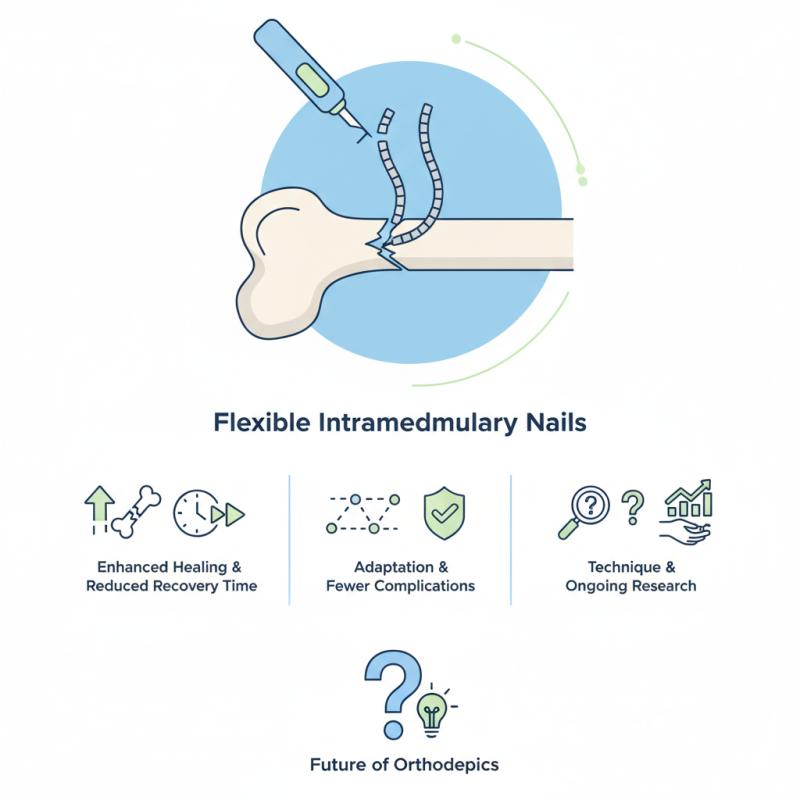
The advantages of Flexible Intramedullary Nails include enhanced healing and reduced recovery time. These devices adapt well to the bone’s natural curvature. Studies have shown that patients using these nails experience fewer complications compared to traditional fixation methods. However, some challenges remain. Proper insertion technique is critical. Surgeons must ensure that the nails are correctly placed to avoid potential issues.
Patient outcomes can vary. While many benefit from this technology, some face complications. A recent study highlighted a 15% reoperation rate for certain fracture types. This indicates the need for further research and training. The orthopedic community continues to explore ways to optimize the use of Flexible Intramedullary Nails. Ultimately, ongoing clinical feedback will shape the future of this promising approach.
Definition and Overview of Flexible Intramedullary Nails
Flexible intramedullary nails are a surgical tool used to stabilize bone fractures. They are commonly employed in pediatric orthopedic surgery. These nails are designed to be inserted into the medullary cavity of long bones, providing internal support.
The primary advantage of flexible intramedullary nails is their ability to allow natural bone healing. They are made from biocompatible materials, which reduces the risk of rejection. However, their flexibility can make proper placement challenging. Surgeons must be skilled to navigate the intricate anatomy of the bone. If not positioned correctly, this can lead to complications such as malunion or nonunion.
This technique is less invasive compared to traditional methods. It usually requires smaller incisions, which may lead to quicker recovery. Patients often experience less pain post-surgery. Nonetheless, flexibility in the nails can sometimes lead to issues during weight bearing.
Balancing stability and flexibility remains a crucial consideration for orthopedic specialists.
Applications of Flexible Intramedullary Nails in Orthopedic Surgery
Flexible intramedullary nails provide an innovative solution in orthopedic surgery. They are primarily used for fractures of long bones, particularly in children and adolescents. The design of these nails allows for minimal invasiveness. Surgeons can better align fractured bone segments. This method leads to quicker recovery and less pain for patients.
One application is in treating femur fractures. Inserting a flexible nail can stabilize the fracture without extensive surgery. However, it requires precise placement. If misaligned, complications can arise, such as improper healing or pain. The surgeon’s experience plays a crucial role in success.
Another area of application is in treating tibial fractures. Flexible nails can provide strong yet elastic support. This elasticity helps accommodate natural bone growth. Still, the visibility of the nail on X-rays can be a concern. Surgeons must weigh the benefits against potential drawbacks. Overall, while flexible intramedullary nails are effective, they come with challenges that require careful consideration.
Applications of Flexible Intramedullary Nails in Orthopedic Surgery
Mechanism of Action: How Flexible Intramedullary Nails Function
Flexible intramedullary nails, often used in orthopedic surgery, play a crucial role in bone fixation. Their design allows them to adapt to the natural curvature of bones. This adaptability reduces the risk of complications during surgery. The nails are typically made from biocompatible materials. This ensures they work well with the body.
The mechanism of action involves precise placement within the medullary canal of the bone. Once inserted, the flexible nature allows the nails to stabilize fractures by distributing loads evenly. This minimizes stress concentration at fracture sites. These nails are particularly effective in treating pediatric fractures, where bone remodeling is essential. However, achieving optimal placement can be challenging, and inaccuracies may lead to complications.
While the benefits are clear, some challenges exist. Surgeons need to consider the patient’s anatomy meticulously. Misalignment could result in nonunion or malunion of fractures. The learning curve for using these nails can be steep. Continuous training and practice are vital. Despite these potential setbacks, flexible intramedullary nails remain a valuable tool in modern orthopedic practices.
Benefits and Advantages of Using Flexible Intramedullary Nails
Flexible intramedullary nails have transformed the approach to treating fractures. These devices are inserted into the medullary cavity of long bones. They provide stabilization while allowing for natural bone healing. Many surgeons prefer them due to their versatility and minimal invasiveness. This technique can reduce complications associated with external fixators.
One major benefit of flexible intramedullary nails is their ability to support a wide range of fractures. This makes them applicable in various clinical scenarios. They help maintain axial alignment, which is crucial for proper recovery. Moreover, the flexible nature of these nails allows for some movement. This is important, as it can lead to better healing outcomes in certain types of fractures. Patients often experience less pain than with rigid fixation methods.
Despite the advantages, there are challenges to consider. Surgical technique requires skill and precision. Not all patients or fractures are suitable for this method. Surgeons must critically evaluate each case. This approach encourages a more holistic understanding of fracture management. Overall, while flexible intramedullary nails offer many benefits, careful consideration is essential. Fracture healing can be unpredictable, necessitating ongoing assessment.
Potential Risks and Complications Associated with Flexible Intramedullary Nails
Flexible intramedullary nails are designed to stabilize long bone fractures. Despite their advantages, there are potential risks and complications to consider. Studies indicate that complications can arise in 10-30% of cases, depending on the patient’s condition and the fracture type.
One common issue is malunion or nonunion, which occurs when the bone fails to heal properly. According to the Journal of Orthopaedic Trauma, nearly 20% of patients may face healing complications with flexible nails. Infection is another risk, although it happens in only 1-3% of cases. However, when it does occur, it can necessitate further surgery.
Tips: Always discuss risks with your surgeon. Understanding the potential for complications is crucial. Regular follow-ups can catch issues early. Moreover, proper post-operative care is vital. Avoid stress on the affected area, and adhere to rehabilitation protocols to minimize risks. Every case is unique, and individual outcomes can vary significantly. Reflect on personal health, lifestyle, and adherence to advice for better healing.
What is Flexible Intramedullary Nails and How Do They Work? - Potential Risks and Complications Associated with Flexible Intramedullary Nails
| Aspect | Description |
| Definition | Flexible intramedullary nails are specially designed rods inserted into the medullary cavity of bones to stabilize fractures. |
| Function | They provide internal fixation and allow for proper alignment of fractured bone during healing. |
| Indications | Used primarily for long bone fractures in children and young adults, particularly in the femur and tibia. |
| Advantages | Minimally invasive, promotes quicker recovery, preserves blood supply to the bone. |
| Potential Risks | Infection, delayed union or nonunion of fractures, malunion, and hardware failure. |
| Complications | Nail migration, nerve or vessel injury, and postoperative pain or discomfort. |
| Postoperative Care | Includes physical therapy, monitoring for complications, and ensuring adequate healing environments. |





