Top 10 Flexible Coupling Options for Your Industry Needs?
In today's industrial landscape, the demand for efficiency and precision has never been greater. Flexible Coupling serves as a vital component in numerous applications, linking shafts and absorbing misalignment. This crucial device minimizes wear and tear, enhancing the lifespan of machinery. Various industries, from manufacturing to automotive, utilize Flexible Couplings to optimize their operations.
Understanding the diverse types of Flexible Couplings is essential. Each option caters to specific needs, making your choice significant. Some may excel in shock absorption while others provide greater torque transmission. This variety can be overwhelming. It's important to evaluate each option carefully. Some couplings may not fit your requirements in the long run.
As you navigate the world of Flexible Coupling, consider your industry’s unique challenges. The right choice can vastly improve productivity. However, missteps can lead to costly downtimes. With the information presented, you'll be equipped to make informed decisions in selecting the best Flexible Coupling for your operational needs.
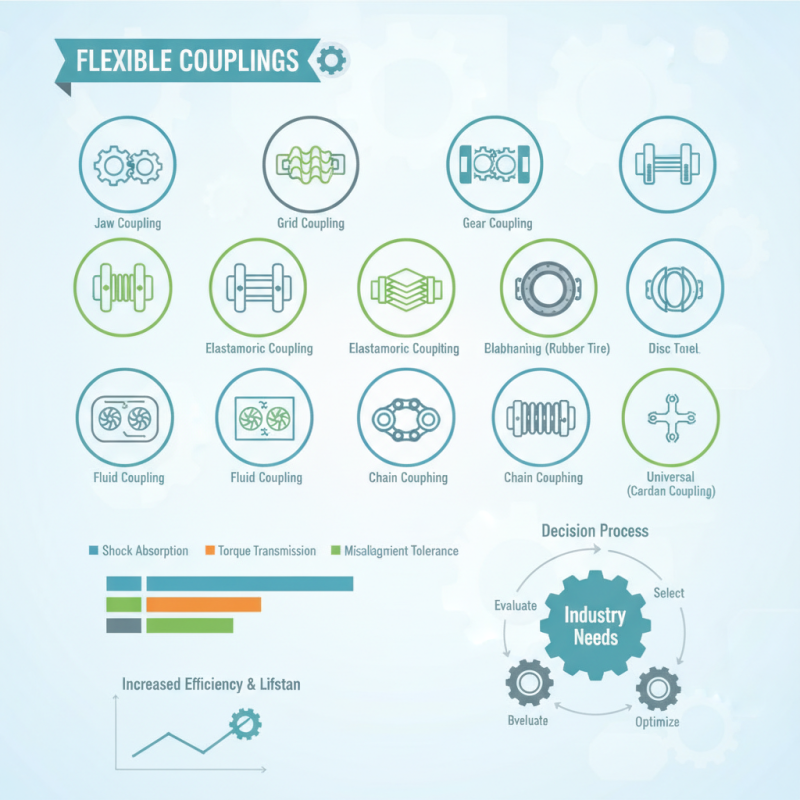
Understanding Flexible Couplings and Their Importance in Various Industries
Flexible couplings serve as critical components across various industries, ensuring smooth operations in machinery. These couplings absorb misalignments and vibrations, allowing for more efficient power transmission. According to a recent report by The Freedonia Group, the demand for flexible couplings is projected to grow by 5% annually, highlighting their increasing significance in sectors like manufacturing and automotive.
In industries like energy and transportation, the role of flexible couplings cannot be understated. They minimize wear and tear on machinery, extending equipment life. In fact, studies suggest that proper coupling selection can reduce operational downtime by up to 30%. Such data underscores the need for companies to thoroughly evaluate their coupling options based on specific demands and applications.
Despite the advantages, some firms experience challenges with coupling failures. Issues can arise from misalignment or incorrect installation. Addressing these situations requires experience and a meticulous approach to maintenance. Engineers must frequently assess the conditions of these components to avoid performance degradation, reinforcing the importance of expert guidance in selection and application.
Types of Flexible Couplings and Their Specific Applications
Flexible couplings play a crucial role in various industries. They connect shafts while accommodating misalignment, vibration, and axial movement. This adaptability enhances machinery performance and longevity. In manufacturing, for example, single and double-disc couplings are popular. They provide excellent torque transmission and absorb shock loads, making them ideal for high-speed applications.
Safety is essential in industrial environments. Studies show that misalignment can reduce equipment lifespan by up to 30%. Therefore, using appropriate flexible couplings can mitigate risks. In the oil and gas sector, elastomeric couplings absorb vibrations effectively. They reduce noise and protect sensitive equipment. A report indicated that proper coupling selection can improve system efficiency by over 20%.
Different applications require tailored coupling solutions. In the water treatment industry, specifically, jaw couplings are used. They handle moderate misalignment while providing flexibility. However, they may wear out faster in harsher conditions. Balancing performance and durability can be challenging. The right coupling can significantly impact operation stability and maintenance costs.
Top 10 Flexible Coupling Options for Your Industry Needs
| Coupling Type | Material | Torque Rating (Nm) | Max RPM | Applications |
| Jaw Coupling | Aluminum | 150 | 3000 | Pumps, Industrial Gearboxes |
| Disc Coupling | Stainless Steel | 200 | 5000 | Servo Motors, Robotics |
| Rubber Coupling | Rubber/Metal | 100 | 2000 | Fans, Compressors |
| Oldham Coupling | Plastic/Aluminum | 80 | 4000 | Office Equipment, Light Duty Motors |
| Helical Coupling | Cast Iron | 250 | 1500 | Conveyors, Heavy Machinery |
| Cam Coupling | Steel | 300 | 2500 | Agricultural Equipment |
| Flexible Beam Coupling | Stainless Steel | 150 | 6000 | Medical Devices |
| Chain Coupling | Steel | 500 | 1200 | Mining, Construction |
| Sleeve Coupling | Aluminium | 350 | 3000 | Textile Machines |
| Tire Coupling | Rubber | 60 | 900 | Light Duty Applications |
Key Factors to Consider When Choosing Flexible Couplings
When selecting flexible couplings, several key factors should guide your decision. The material of the coupling plays a vital role in its performance. Common materials include rubber, plastic, and metal. Each material has distinct properties. For instance, rubber couplings absorb vibrations well, while metal options are best for high torque applications. Assessing the operating environment is also crucial. Conditions like temperature, humidity, and exposure to chemicals can affect coupling life.
Another important aspect is the alignment of shafts. Misalignment can lead to premature wear and failure. Using a coupling designed for your specific misalignment type ensures reliability. Additionally, your application’s speed and load capacity matter significantly. High-speed applications need couplings that can handle dynamic loads efficiently.
Consulting with a knowledgeable supplier can help clarify these considerations. They can provide insights based on experience. However, remember that no coupling is perfect for every situation. Regular assessments of existing couplings can spotlight inefficiencies and potential upgrades. It’s essential to remain open to feedback and adapt as necessary, ensuring optimal performance for your specific industrial needs.
Top 10 Flexible Coupling Options and Their Unique Features
Flexible couplings are essential components in various industries. They connect shafts while accommodating misalignments and reducing vibration. Choosing the right coupling can significantly impact machinery performance.
Among the top options are disc, jaw, and bellows couplings. Disc couplings provide high torque and precise alignment. They excel in high-speed applications, but may face challenges in extreme conditions. Jaw couplings are user-friendly and shock-absorbing, making them ideal for general-purpose use. However, their performance may degrade under excessive loads. Bellows couplings offer flexibility and torsional stiffness, suitable for applications requiring precise motion control. They can be susceptible to fatigue over time.
According to a 2022 industry report, the flexible coupling market is expected to grow by 4.5% annually. This growth highlights the increasing importance of adaptable solutions in industrial machinery. Proper selection of couplings influences maintenance costs and operational efficiency. Industry professionals must consider factors like load capacity and environmental conditions to avoid costly downtime.
Top 10 Flexible Coupling Options for Your Industry Needs
This chart illustrates the torque capacity of the top 10 flexible coupling options available in the market, showcasing their distinct performance capabilities suitable for various industrial applications.
Future Trends and Innovations in Flexible Coupling Technologies
Future trends in flexible coupling technologies are reshaping industries. Advancements in materials are driving innovation. Lightweight composites and advanced polymers provide enhanced performance. These materials handle stress better and last longer, making them ideal for demanding applications.
Integrating smart technology is another key trend. Sensors embedded in couplings offer real-time data. This data helps predict failures and optimize maintenance schedules. However, the complexity of installation and the cost of technology can be challenging. Balancing these factors is crucial for businesses adopting these innovations.
Sustainability is also becoming a priority. Manufacturers are working to reduce waste and lower energy consumption. Eco-friendly materials are being explored, yet they often struggle with performance and durability. Industry leaders must collaborate to address these issues and push for a greener future in coupling solutions.





