


Finding the best China Pipe Elbow supplier requires more than comparing prices on a product page. A reliable choice begins with technical evidence, factory capability, and consistent communication. The supplier should understand ASME B16.9, B16.28, EN, DIN, and other relevant standards. Material grades must match the application. Carbon steel, stainless steel, alloy steel, and special metals behave differently under pressure, heat, and corrosion.
L. S. Nayyar, author of Piping Handbook, offered a practical reminder: “Quality in piping depends on sound design, suitable materials, and controlled fabrication.” That principle fits every Pipe Elbow purchase. Ask for mill test certificates, dimensional inspection records, heat treatment details, and pressure-testing procedures. Review the elbow radius, wall thickness, bevel condition, and surface finish. Small dimensional errors can create difficult alignment problems during installation.
A polished website proves little. Factory photographs can also mislead. Request recent inspection reports, production videos, and customer references. If possible, arrange a third-party factory audit. Check whether the supplier controls welding, forming, cutting, marking, packing, and final inspection internally. Confirm lead times in writing. Clarify packaging for long-distance shipping. Moisture, impact, and poor labeling can damage otherwise compliant fittings.
There is no perfect supplier. Some buyers focus too heavily on the lowest quotation and regret the decision later. A better evaluation compares total risk, not just unit cost. The strongest supplier combines traceable materials, accurate dimensions, stable production, responsive engineers, and honest documentation. Even then, verify the first shipment carefully. Mistakes happen. Good procurement leaves room to learn.
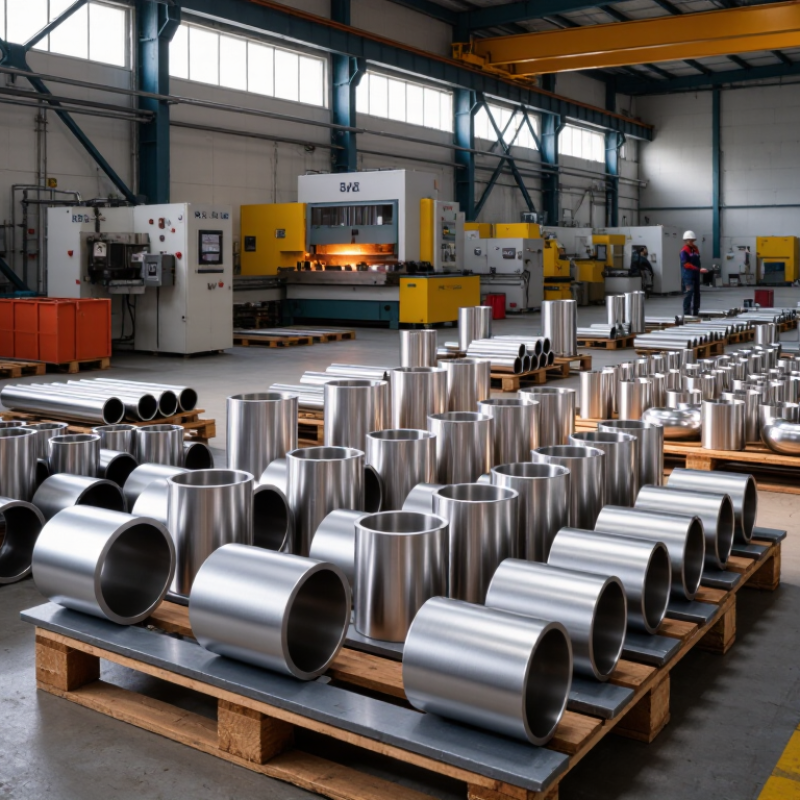
Define the elbow scope before comparing suppliers. ASME B16.9 covers factory-made wrought butt-welding fittings from NPS ½ to NPS 48. This range includes common 45° and 90° elbows, but not every pressure class or material grade. Confirm outside diameter, wall thickness, bend radius, end preparation, and dimensional tolerances. A supplier should provide current drawings and a traceable material test report for each heat.
Market data can guide your search, but it should not replace technical checks. Grand View Research estimated the global pipe fittings market at approximately USD 16 billion in 2023, with continued growth expected through 2030. Published estimates differ, which is worth noting. Ask suppliers to explain their testing capacity, not only their export volume. Review hydrostatic or nondestructive testing procedures, welding qualifications, furnace records, and inspection reports. EN 10204 Type 3.1 certificates can strengthen traceability when the project requires documented material control. Request sample records before placing a large order.
Tips: Match NPS with the actual pipe schedule. Check whether “seamless” means certified seamless. Measure one sample yourself. It sounds basic, but errors happen. Confirm packing details, marking, heat numbers, and corrosion protection in writing. A reliable supplier should accept a third-party inspection and identify any limitation openly. If a quotation lists only “ASME elbow,” pause and ask questions. That description is incomplete.

When choosing a China pipe elbow supplier, compare metallurgy before comparing price. Material is the first filter.
ASTM A234 WPB carbon-steel elbows suit many water, air, oil, and general process lines. ASTM A234 requires WPB fittings to meet a minimum 485 MPa tensile strength and 250 MPa yield strength. These figures support pressure design, but they do not prove corrosion resistance.
316L stainless elbows are normally specified under ASTM A403, not ASTM A234. Their low carbon content reduces sensitization risk after welding. Molybdenum also improves resistance to chloride attack. Yet 316L is not immune to pitting, especially in warm, stagnant brine.
A supplier should provide heat-number traceability, chemical analysis, mechanical results, and dimensional records to ASME B16.9. Ask for positive material identification and ferrite checks when process risk justifies them. This detail matters.
The NACE IMPACT study estimated global corrosion costs at US$2.5 trillion annually, about 3.4% of global GDP. That figure makes cheap carbon steel a poor bargain in chloride service. Conversely, stainless steel can be wasteful in dry, non-corrosive utility lines.
Ask the supplier to match the elbow schedule, radius, end preparation, and design temperature. Confirm whether the quote covers pickling, passivation, testing, and export documentation.
A practical warning: “316L” on a label is not enough. Review the mill test certificate against the purchase specification. I would also question unclear heat numbers, inconsistent wall thickness, and unusually low prices. The comparison is not always clean; service chemistry should decide it.
Dimension verification should begin before comparing prices. Ask for the applicable standard, drawing, and inspection record. ASME B16.9:2022 specifies dimensions and tolerances for factory-made wrought butt-welding fittings. MSS SP-75 may apply to high-strength fittings. Do not accept “standard size” as a complete answer.
Check the schedule, radius, wall thickness, and end geometry separately. ASME B36.10M:2022 lists NPS 4 Schedule 40 pipe at 6.02 mm wall thickness. Schedule 80 increases it to 8.56 mm. The difference affects welding preparation and pressure design.
For an NPS 4 long-radius elbow, the center-to-end dimension is commonly 152 mm. Confirm this against the selected standard and drawing. Short-radius dimensions differ substantially. They are not interchangeable.
Request measured values from several pieces, not one sample. A coordinate measuring report can verify centerline radius, squareness, bevel angle, and ovality.
Ask for material test reports, heat numbers, and calibrated inspection equipment records. ISO 9001:2015 supports controlled processes, but certification does not prove every elbow is dimensionally correct. I have seen acceptable certificates paired with poorly matched bevels. That assumption can fail. Include dimensional acceptance criteria in the purchase order. Small errors become expensive during field fit-up. Supplier experience matters, but documented measurements matter more.
Finding the best China pipe elbow supplier requires more than comparing prices and catalog photos.
Begin with a quality audit. Ask for a current ISO 9001 certificate and verify its scope, validity, and issuing body. The certificate should cover manufacturing activities, not only office procedures. Request EN 10204 Type 3.1 inspection documents for each relevant batch. These records should state chemical composition, mechanical results, dimensions, and test standards. Generic certificates are weak evidence.
Heat traceability is equally important. Each elbow should carry a heat number linked to the material certificate, production record, and final inspection report. During a factory visit, compare markings on elbows with packing lists and laboratory documents. Check how staff handle mixed heats, rework, and rejected pieces. Small gaps often reveal larger control problems. I have seen neat paperwork fail when markings were copied incorrectly. That detail deserves attention.
Tips:
Ask for a sample traceability package before placing an order. Review one complete heat from raw material to shipment. Confirm wall thickness at several points, especially near the bend. Request calibration records for gauges and test equipment. Keep written acceptance criteria. Supplier claims are useful, but physical evidence is better. Be careful with perfect answers; reliable manufacturers can explain limitations and corrective actions clearly.
How to Find the Best China Pipe Elbow Supplier?
A reliable supplier should pass more than a catalogue check. Request the minimum order quantity, monthly capacity, and recent production schedule in writing. A low MOQ may help small projects, but unstable capacity can create repeated delays. Ask for heat numbers, material certificates, dimensional reports, and pressure-test records. For standard elbows, compare compliance with ASME B16.9 or the relevant project specification. ISO 9001 certification is useful, but it cannot replace product-level inspection.
Lead time needs evidence. The World Bank Logistics Performance Index 2023 evaluated 139 economies across customs, infrastructure, shipment, and tracking performance. Use its findings as a reminder to examine the entire delivery route, not only factory promises. UNCTAD reports that more than 80% of global merchandise trade by volume moves by sea. Therefore, check port distance, booking options, export documents, and contingency plans. Ask for shipment records covering at least the past twelve months. Verify dates against bills of lading, packing lists, or customs data where possible.
Test the supplier with a small, clearly specified order. Review weld appearance, wall thickness, bevel quality, hardness, and hydrostatic results. One overlooked detail can become expensive. I would also compare rejection rates, not just prices. This is where many buyers become too optimistic. A polished audit report may hide inconsistent subcontracting. Speak with the quality manager directly, and request corrective-action records for previous nonconformities.
Anonymized supplier evaluation benchmark for carbon steel, stainless steel, and alloy steel pipe elbows
| Supplier Profile | Typical Materials | Available Sizes | Minimum Order Quantity | Monthly Production Capacity | Standard Lead Time | Testing and Quality Documents | Export Experience | Customization Capability | Commercial Evaluation Score |
|---|---|---|---|---|---|---|---|---|---|
| Supplier A | Carbon steel Stainless steel | DN15–DN600 ½–24 in | 100 pieces per size | 350–450 metric tons/month | 25–35 days | Mill test certificate, dimensional inspection, hydrostatic test, PMI available on request | More than 8 years Regular container shipments | Custom wall thickness, bevels, coatings, and markings | 9.1/10 |
| Supplier B | Carbon steel Low-temperature steel | DN25–DN500 1–20 in | 200 pieces per size | 500–650 metric tons/month | 20–30 days | EN 10204 3.1 certificate, tensile test, hardness test, hydrostatic test, batch traceability | More than 10 years Experience with EPC projects | Strong capability for large-volume standard fittings | 9.0/10 |
| Supplier C | Stainless steel Duplex stainless steel | DN15–DN400 ½–16 in | 50 pieces per size | 180–250 metric tons/month | 35–45 days | PMI, intergranular corrosion test, tensile test, dimensional report, heat-number traceability | More than 6 years Small and medium export orders | Excellent for corrosion-resistant and non-standard fittings | 8.7/10 |
| Supplier D | Carbon steel Alloy steel | DN50–DN800 2–32 in | 300 pieces per size | 700–900 metric tons/month | 30–40 days | Ultrasonic testing, radiographic testing through approved laboratories, hydrostatic test, MTC | More than 12 years Documented multi-region shipments | Strong large-diameter and heavy-wall production capability | 9.3/10 |
| Supplier E | Stainless steel Nickel alloy | DN15–DN300 ½–12 in | 25 pieces per size | 90–140 metric tons/month | 45–60 days | PMI, chemical composition report, solution annealing records, visual and dimensional inspection | More than 5 years Primarily project-based exports | High flexibility for small batches and special materials | 8.4/10 |
| Supplier F | Carbon steel Galvanized steel | DN20–DN350 ¾–14 in | 500 pieces per size | 900–1,200 metric tons/month | 18–28 days | Dimensional inspection, coating-thickness test, hydrostatic test, standard MTC | More than 9 years High-volume distributor orders | Best suited to standardized products and repeat orders | 8.6/10 |
| Supplier G | Stainless steel High-alloy steel | DN15–DN600 ½–24 in | 100 pieces per size | 220–320 metric tons/month | 40–50 days | Third-party inspection accepted, PMI, tensile test, hardness test, surface-finish inspection | More than 7 years Regular shipments to industrial markets | Good for polished, pickled, and customized surface finishes | 8.8/10 |
Evaluation note: MOQ, production capacity, lead time, testing scope, and export records should be verified with current quotations, factory audits, recent inspection reports, product samples, and shipping documentation before placing an order.


For those larger-sized parts, or smaller quantity runs, we have 2 independent powder coat booths and ovens. The quality, durability and affordability of today’s powder coating finishes make this the process of choice for world-class companies.
Powder coating advantages over other forms of coating are many. Materials used in the Powder coating process can be metals and non-metals that come in a multitude of thicknesses, textures, colors, etc. Another of Powder coating’s biggest advantages over conventional coatings is its ability to create finishes in many different textures. Powder Coating Booths allow us the ability to apply these advantages to large products.
Tri-State Fabricators runs a full-service conveyor line for painting. Wet painting can provide protection or decoration to many different part styles. From start to finish, every project is easier to undergo random and point-based inspection by our skilled painting team.
Advantages to our Wet Paint Line are these lines start with product prep and ends with a thorough inspection of a high quality finished product. Our ability to complete large and small projects with a superior finish and doing so in a timely and economical fashion. This passes along the savings in production to our customers. When powder coating ins not an option, our Wet Paint Line gets the job done right the first time.
When the parts get big and heavy we roll-out our custom paint racks and oversize booth. By utilizing our partnerships with all the major paint brands, we can match virtually any color with wet paint.
The advantages of having access to a Wet Paint Booth are many. Large projects of many different shapes can be loaded into the booth. The Wet Paint Booth offers an environment that is much more controlled than a typical parts painting operation.
Not only are they used because of their controlled environment, but they’re are also advantageous when it comes to applying paint to parts that are needed in industries that require specialty coatings such as medical, aerospace, etc.
Our military forces have some very high standards when it comes to the finish of their vehicles and equipment. From the first pre-treatment step to final coat, it takes a great deal of knowledge and experience to protect the men and women of our armed forces. They deserve only the best, and Tri-State Fabricators provides it.
All of our processes are closely monitored by our staff and management teams. Both of which are highly trained in the processes of metal fabrication and finishing. Tri-State Fabricators’ goal is to always fully satisfy each and every customer, including the military. We will always put a 110% into what we do.
Abrasive media blasting is an excellent way to remove old paint, rust, and increase the paint/powder adhesion. Glass beads produce a much smoother and brighter finish than angular abrasives; leaving the part clean yet without any dimensional change. Chemically inert and environmentally friendly, we can recycle our beads approximately 30 times; making them a more preferred method of metal cleaning or surface finishing.
Advantages to Glass Bead Blasting are many. Glass bead blast media is used when a project is needing rough surfaces need to become smooth for applications of coatings such as paint. It is typically used to clean paint and rust from a product surface without deforming the surface it is being used on. Overall, compared to many other blasting media, Glass Bead Blasting is a very economical choice and those savings are always passed on to our customers.
Tri-State Fabricators utilize a zinc phosphate wash to clean and etch the material to ensure the best paint adhesion possible. The unique design of our 3-stage wash system does the work like a 5-stage. From Cleaning and rinsing to conversion coating and post-treatment, Our Part Washing process is a complete service and works throughout the fabrication service and the finishing service.
Along with the previously mentioned benefits, Curing is a vital chemical reaction that leaves the product finish hard and relatively safe from mild abrasion and aggressive corrosion. This process can be done in more than one way; ambient air-dry or in curing ovens at temps that exceed 240°.
From fixing paint mistakes (someone else’s of course) to simply cleaning our paint line hooks, our burn-off oven is put to good use. After a quick burn-off, a little clean up, and a fresh coat of paint, your parts will look better than new.
Why does our Burn-Off Oven work so well? Because super heating the air around parts turns the materials into ashes. From paint and powder coatings to rubber and machining oils, high temps do the job without degrading the integrity of the part.
Masking is a vital part of producing high quality products. We have die-cut masking patterns to protect machined surfaces as well as a wide range of plugs and caps to protect threaded holes and bolts. We provide permanent and temporary masking.
Masking allows the selected sections of a product to be protected from a fabrication or finishing service. This can be with both chemicals when etching and tapes, paints when only finishing just a section of the product. Masking is great in aiding the customization process of a project.
Screen printing is a photographic process that transfers artwork onto a porous nylon screen which allows colored ink to flow through the screen and be deposited on an aluminum or plastic component. We can generally have just about any design created onto a screen for your parts.
Some of the advantages of Screen Printing are, brand recognition for your business displaying on your products, assembly instructions, product warnings/hazards, etc. Tri-State Fabricators produces Screen Printing of the highest quality so you know it’s durable.
Metal Finishing is the art of treating the exterior portion of product, often metal but can also be made of other materials, so that the surface is clean and free of any debris. Then the process of applying coats or either paint of powder coat takes place. This coating process improves the quality of the product in both appearance and resistance to wear and corrosion.
Tri-State Fabricators, Inc., understands that a project typically isn’t complete until a high-quality finish has been added to your product. This is why our painting and powder coating teams continuously inspect the products throughout the Metal Finishing process.

