Top EVA Puzzle Mats for Home Gym and Kids?
Choosing the right EVA Puzzle Mats can make a home gym safer, quieter, and more comfortable for children. The best option depends on how the space is used, not only on price or appearance. A playroom may need soft cushioning, rounded edges, and easy cleaning. A workout area may require firmer support for dumbbells, stretching, or bodyweight exercises.
This guide compares practical features that matter in real homes. We will examine thickness, density, surface texture, water resistance, odor, connection strength, and floor coverage. A mat that feels soft under bare feet may compress too easily under heavy equipment. A thicker design is not always better. It can also create unstable footing during balance exercises. Small details matter.
Safety comes before decoration.
Reliable buying advice should consider manufacturer information, material testing, and long-term user experience. Parents may notice crumbs inside the puzzle seams, while gym users may find sweat trapped beneath poorly fitted tiles. These problems are easy to overlook in product photos. We will also discuss cleaning routines, edge pieces, storage, and possible chemical odors after unpacking. However, no mat is perfect for every room. Some recommendations may favor durability over comfort, and that trade-off deserves honest reflection. By comparing these details carefully, readers can find EVA Puzzle Mats that suit children, workouts, or both.
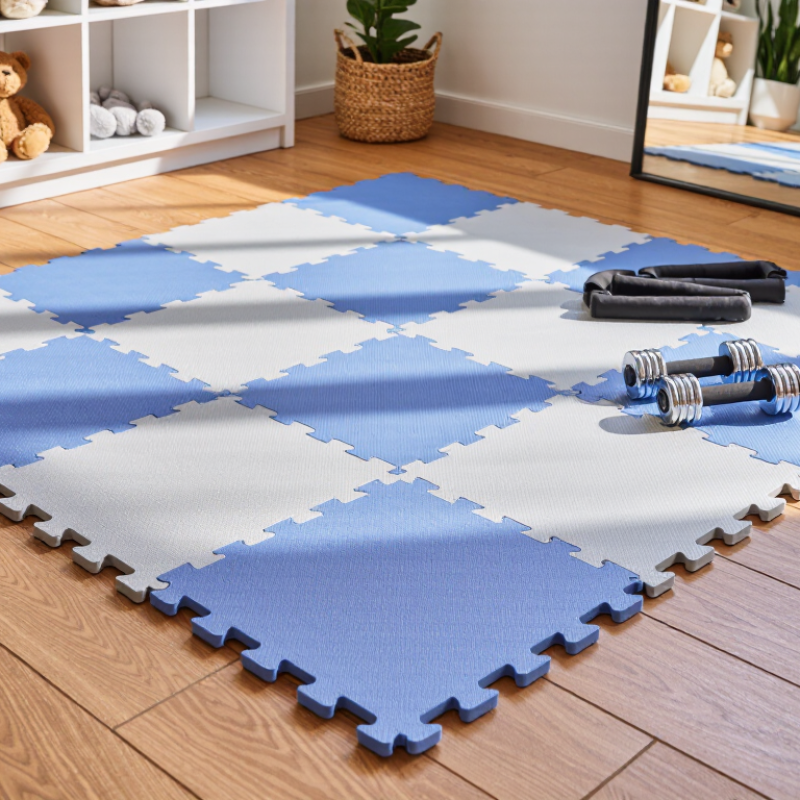
EVA Puzzle Mat Fundamentals: Foam Density, Thickness, and Interlocking Design
Choosing an EVA puzzle mat for a home gym or children’s play area requires more than checking its color. Foam density affects firmness, durability, and comfort. Higher-density EVA usually resists dents better under benches, dumbbells, and repeated foot traffic. Softer foam may feel pleasant for crawling, stretching, or floor play, but it can compress under heavy equipment.
Thickness also changes the mat’s performance. A thinner option can suit light exercise and playrooms with stable flooring. Thicker tiles provide more cushioning for knees and reduce the feel of hard subfloors. However, extra thickness does not automatically mean better protection. Dense, well-formed foam may outperform a thicker but weakly compressed tile. I have found that a sample test reveals more than packaging claims. Press it with a thumb, place a loaded chair on it, and inspect the recovery later.
Interlocking design deserves close attention. Tight teeth reduce shifting and prevent small gaps where crumbs, dust, or moisture can collect. Loose connections become frustrating during workouts, especially when tiles separate under lateral movement. For children, smooth edges and a stable surface matter more than decorative patterns. Measure twice. Cut once. That old advice still helps around corners and doorways. One weakness remains easy to miss: some mats can retain odor after unpacking, so ventilation before use is sensible. Check the floor underneath occasionally, because trapped moisture may affect certain surfaces.
Top EVA Puzzle Mats for Home Gym and Kids
EVA puzzle mat fundamentals depend on foam density, thickness, and interlocking design. The chart shows representative midpoint specifications commonly used for different indoor applications; values are presented without company or brand data.
Thicker and denser EVA foam generally provides greater cushioning and resistance to compression. For children’s play areas, softer low-density foam is commonly preferred, while free-weight and high-impact training benefit from higher density and thicker tiles. Interlocking edges should fit tightly and remain easy to disassemble for cleaning or storage.
Home Gym Protection: Comparing 10–25 mm Thickness for Exercise Impact
Choosing EVA puzzle mats for a home gym starts with impact, not appearance. Thickness changes how the floor feels under knees, dumbbells, and children’s play. A 10 mm mat suits stretching, yoga, light bodyweight training, and carpeted rooms. It offers modest cushioning while preserving balance during squats. However, repeated jumping may transmit vibration through the floor. I noticed this difference when landing near a table; thinner tiles felt firm but less forgiving.
At 15–20 mm, EVA foam absorbs more impact and feels warmer on concrete. This range works well for kettlebells, resistance workouts, and family spaces with moderate activity. It can reduce noise, though it is not soundproof. A 25 mm surface provides the strongest cushioning among these options. It is useful for floor exercises, children’s tumbling, and controlled low-height drops. Yet thicker foam may compress under heavy equipment and make balance exercises harder. My judgment is not perfect: mat density, tile joints, and subfloor quality can matter as much as thickness.
Tips: Place mats on a clean, level surface and lock the edges tightly. Test one tile under your heaviest movement before covering the room. Use a separate protective layer beneath sharp equipment feet. Keep EVA away from prolonged heat and sunlight, which can cause curling or odor. Check the surface regularly; a soft spot or widening seam deserves attention.
Performance Metrics: Slip Resistance, Shock Absorption, and VOC Emissions
Choosing EVA puzzle mats for a home gym or children’s play area requires more than checking thickness. Slip resistance deserves practical testing. Walk across the mat in clean socks, bare feet, and training shoes. A textured surface may feel secure, yet sweat or spilled water can change its grip quickly. I prefer mats that remain stable during squats, step-ups, and children’s running games. Still, no household test replaces a controlled laboratory measurement.
Shock absorption affects comfort, noise, and floor protection. A thicker mat can soften jumping and reduce vibration, but excessive softness may make balance exercises harder. Place a filled water bottle or light weight on the surface for several hours. Deep, persistent dents suggest weak recovery. For heavier equipment, check the manufacturer’s tested impact data rather than relying on thickness alone. My own drop tests are useful, but they are not perfectly consistent. The weight, height, and subfloor can change the result.
VOC emissions deserve equal attention, especially in bedrooms, nurseries, and poorly ventilated rooms. A strong odor is a warning sign, not scientific proof. Look for independent emissions testing, clear material information, and production dates when available. Air out new mats in a shaded, ventilated space before use. Avoid placing them near heaters, since warmth can increase odor release. Children may spend hours close to the floor. That detail matters. Performance claims should be read carefully, because slip resistance, cushioning, and low emissions rarely peak in the same design.
Top EVA Puzzle Mats by Use Case, Tile Size, Cleaning, and Durability
Top EVA Puzzle Mats for Home Gym and Kids?
Use case should guide the mat, not color or price. The IHRSA 2024 Global Report recorded 72.9 million US fitness facility members in 2023. Home training remains practical, especially for weights, stretching, and children’s play. For light exercise and playrooms, 10–12 mm EVA tiles usually provide enough cushioning. High-impact workouts need thicker tiles, preferably 15–20 mm, with tighter interlocking edges.
Tile size changes the installation experience. Twelve-inch tiles fit around furniture and corners, but create more seams. Twenty-four-inch tiles install faster and feel more stable. Large 36-inch tiles look cleaner, though replacing one damaged section becomes harder.
I have found that textured surfaces hide small marks better. They can also collect dust. That trade-off is easy to overlook.
Cleaning affects durability. The U.S. Environmental Protection Agency advises following label directions and avoiding unnecessary chemical exposure during routine cleaning. Use diluted mild soap, a damp cloth, and complete drying. Do not soak the joints. Moisture trapped underneath may encourage odors and weaken adhesive-free flooring over time. The International Organization for Standardization’s ISO 105-A02 color-change scale reminds buyers that appearance testing is separate from structural performance. A darker mat may look newer, but it is not automatically tougher. ASTM impact-attenuation testing can help assess protective performance, yet household use still varies. My imperfect rule is simple: inspect seams monthly, rotate tiles occasionally, and replace pieces that curl.





