


Buying Titanium Sheets requires more than comparing price per kilogram. Grade, thickness, surface condition, certification, and delivery reliability can change the final cost significantly. The U.S. Geological Survey’s Mineral Commodity Summaries 2024 describes titanium as a strategically important material used in aerospace, chemical processing, medical equipment, and energy applications. That broad demand creates varied supply conditions. It also makes supplier verification essential.
This guide, “10 Tips for Buying Titanium Sheets,” focuses on practical decisions made before purchase orders are approved. ASTM B265 provides recognized requirements for titanium and titanium alloy sheet, plate, and strip. However, an ASTM reference alone does not guarantee that a sheet suits your project. Confirm the exact grade, such as commercially pure titanium or Grade 5 Ti-6Al-4V. Review the mill test report, chemical composition, mechanical properties, heat treatment, and lot traceability. Small details matter. A missing tolerance can cause expensive cutting problems.
Market forecasts from organizations such as the International Titanium Association and Grand View Research indicate continued demand across aerospace, medical, and industrial sectors. Forecasts differ by region and methodology, so they should guide planning, not replace technical judgment. A low quotation may hide longer lead times, inconsistent flatness, or weak documentation. That mistake is common. Packaging deserves attention too; exposed edges can arrive scratched after a long shipment. Check supplier experience, inspection procedures, certificates, minimum order quantities, and return terms. These ten tips will help buyers compare Titanium Sheets with clearer evidence, fewer assumptions, and a more realistic view of total ownership cost.
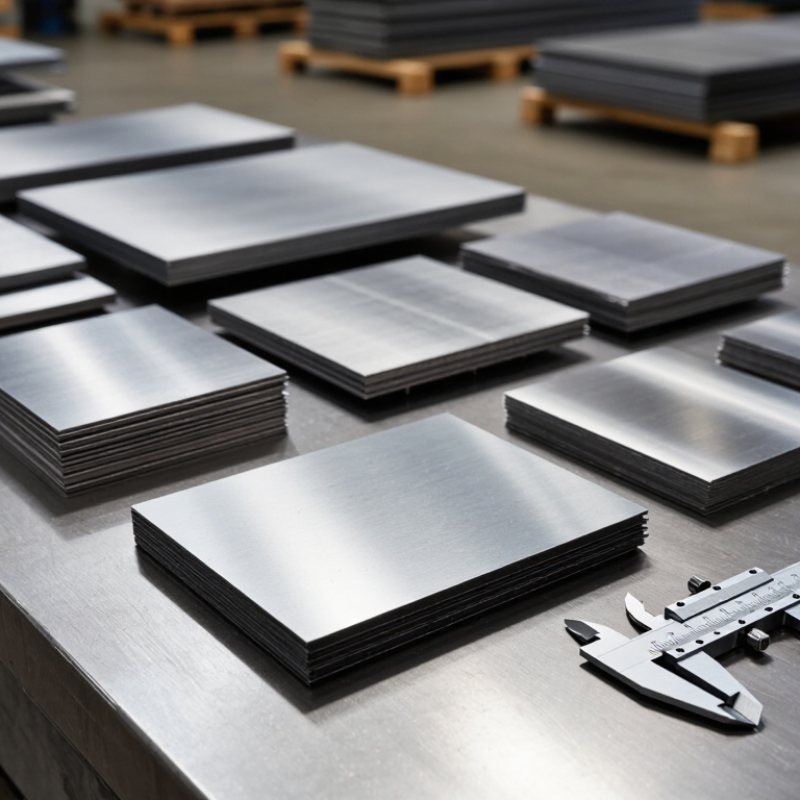
Define the titanium sheet grade before comparing prices. Commercially pure grades suit many corrosion-resistant, moderate-strength applications. Alloyed grades provide higher strength but may require tighter control during forming and welding. Confirm the applicable specification, such as ASTM or an equivalent national standard, with your engineer and supplier.
Describe the real service conditions in measurable terms. Include temperature, load, chemical exposure, pressure, sheet thickness, and forming method. A heat exchanger may prioritize corrosion resistance, while an aircraft bracket may need strength and fatigue performance. Do not rely on the phrase “titanium sheet” alone. Ask for the mill test certificate, chemical composition, mechanical properties, dimensions, and surface condition.
Check whether the selected grade matches fabrication requirements. Some sheets can spring back during bending, and poor tooling may mark the surface. Welding also demands suitable procedures and contamination control. Small details matter.
I have seen buyers choose a strong grade for a low-load enclosure, then face unnecessary forming problems. The decision looked reasonable on paper. It was not fully tested against production reality. Review prototypes, bend samples, and tolerance limits before approving a large order. Also question unclear terms such as “aerospace quality” unless they are linked to a verifiable standard, inspection plan, and traceable documentation.

10 Tips for Buying Titanium Sheets?
Sheet dimensions deserve more attention than the nominal size. Measure length, width, and squareness against your drawing, not only the supplier’s catalogue. ASTM B265 establishes requirements for titanium and titanium-alloy sheet, but buyers still need to confirm the exact grade, temper, and delivery condition. A 1,000 mm sheet may lose usable area after trimming. That detail can change your cutting plan.
Thickness affects weight, forming, welding, and machining costs. Request measured values, not just the stated thickness. Tolerances should cover thickness, flatness, edge condition, and length or width variation. The 2024 International Titanium Association market overview identifies aerospace as roughly half of titanium demand, where traceability and repeatable dimensions are critical. Industrial buyers should therefore request heat numbers, inspection records, and applicable test results. Small paperwork gaps become expensive later.
Surface finish needs a clear definition. “Mill finish” is not a sufficient purchasing description. Ask whether the sheet is pickled, polished, blasted, or mechanically finished, and specify the acceptable roughness range. ASTM B600 describes cleaning practices for titanium surfaces, while ASTM E8 supports tensile testing of metallic materials. A bright surface can still hide scratches, embedded particles, or edge cracking. I have learned this the hard way. Inspect under angled light, measure several points, and photograph defects before fabrication. Do not assume a tighter tolerance is always better; it may increase cost without improving the finished part.
Estimated mass of a 1,000 × 2,000 mm titanium sheet at common nominal thicknesses. Values are calculated using a titanium density of 4.506 g/cm³ and are intended for purchasing and handling estimates.
When buying titanium sheets, confirm the required grade, sheet length and width, nominal thickness, permitted thickness and dimensional tolerances, edge condition, flatness, and surface finish. Actual mass may vary because of manufacturing tolerances, cutting allowances, and the selected titanium grade. Request the applicable material standard, such as ASTM B265, together with a mill test certificate.
When buying titanium sheets, compare performance rather than price alone.
Grade selection affects strength, corrosion resistance, and weight. Check the required yield strength, tensile strength, elongation, and service temperature. A mill certificate should verify chemistry, thickness, and mechanical results.
Missing paperwork creates unnecessary risk.
For demanding structures, strength-to-weight ratio matters.
Titanium is lighter than steel, but not every grade performs equally. A thinner sheet may reduce mass, yet it can deform during forming or vibration. Ask whether the sheet will be welded, bent, machined, or exposed to fatigue.
Surface condition matters too.
Scratches, scale, and uneven thickness can complicate fabrication. Measure several points, not just one.
Corrosion resistance depends on the environment.
Saltwater, chlorides, acids, and high temperatures require different assessments. A corrosion-resistant grade can still fail when contamination or poor welding introduces weak areas. Request relevant test data and review the supplier’s inspection process.
Do not trust a polished surface alone. It looks convincing.
Consider tolerances, flatness, edge quality, and delivery condition.
Packaging should prevent dents and contact with unsuitable metals. Cost estimates should include cutting, forming, testing, and waste. I would also compare a heavier sheet against a thinner option through a simple load calculation. The cheapest choice may demand more support later.
That judgment is not always perfect, so document assumptions and ask an experienced engineer to challenge them.
When buying titanium sheets, certification is more than paperwork. Ask for the original mill test report, heat number, grade, thickness, and delivery condition. The document should match the packing label and etched identification on the sheet. ASTM B265 is a useful reference for titanium and titanium alloy plate, sheet, and strip requirements.
Testing must fit the application. Request chemical analysis, tensile strength, elongation, hardness, and dimensional results. Aerospace or pressure-related work may also require ultrasonic inspection and stronger traceability. The USGS 2025 Mineral Commodity Summaries reports global titanium sponge production above 200,000 metric tons in 2024. Large output does not guarantee consistent sheet quality. Every heat still needs verification. A portable alloy analyzer can catch a wrong grade, but it cannot replace laboratory testing.
Supplier reliability deserves equal attention. Check whether certificates come from an accredited laboratory and whether the quality system follows ISO 9001. The ISO Survey 2023 recorded more than one million ISO 9001 certificates worldwide, so certification alone is not proof of performance. Ask for recent test samples, nonconformance records, corrective-action examples, and traceability procedures. Call the listed laboratory if results look unusually perfect. I have seen buyers trust clean documents too quickly. That mistake is expensive. Confirm lead times, packaging, storage conditions, and replacement terms in writing. A slightly higher price may prevent rejected sheets, production delays, and uncertain material history.
| No. | Buying Tip | What to Verify | Acceptable Evidence or Requirement | Common Risk or Warning Sign |
|---|---|---|---|---|
| 1 | Confirm the titanium grade | Check whether the sheet is commercially pure titanium, such as Grade 1 or Grade 2, or an alloy such as Grade 5 (Ti-6Al-4V). | The purchase order, product label, and material certificate should show the exact grade and applicable specification. | A description such as “pure titanium” or “aerospace titanium” without a grade designation is insufficient for material control. |
| 2 | Specify the governing standard | Identify the standard covering titanium sheet or plate, dimensions, chemical composition, mechanical properties, and delivery condition. | Use a clearly stated specification, such as ASTM B265 or an equivalent national or international standard, when appropriate for the application. | A quotation that lists only thickness and size may omit essential requirements for chemistry, heat treatment, and testing. |
| 3 | Request a complete material certificate | Review the heat number, grade, product form, dimensions, chemical analysis, mechanical results, and applicable specification. | A certificate such as EN 10204 Type 3.1 is commonly used for documented manufacturer inspection and test results; project requirements may require a different level. | Certificates with missing heat numbers, copied values, inconsistent dimensions, or no issuing organization should be treated cautiously. |
| 4 | Check chemical composition | Verify titanium content and controlled elements such as aluminum, vanadium, iron, oxygen, nitrogen, carbon, and hydrogen, according to the selected grade. | Compare reported values with the limits in the specified material standard. For critical work, request laboratory-backed analysis. | Portable X-ray fluorescence can help identify many alloying elements but is not sufficient by itself for accurately measuring light elements such as oxygen, nitrogen, carbon, or hydrogen. |
| 5 | Verify mechanical properties | Check tensile strength, yield strength, elongation, and condition such as annealed or solution-treated, where applicable. | Test results should meet the selected specification and be linked to the same heat and product batch. Tensile testing is commonly performed using ASTM E8/E8M or an equivalent method. | Using typical grade values instead of heat-specific test results can conceal nonconforming or incorrectly processed material. |
| 6 | Inspect thickness and flatness | Measure thickness at multiple points and verify length, width, squareness, flatness, and edge condition. | Acceptance limits should come from the ordered standard, drawing, or agreed inspection plan rather than an informal supplier tolerance. | Measurements taken at only one location may miss localized thinning, waviness, or out-of-square edges. |
| 7 | Examine surface quality | Look for scratches, laps, cracks, pits, oxidation, discoloration, edge damage, and embedded contamination. | Define the required finish, surface-cleanliness level, repair limitations, and visual acceptance criteria before shipment. | Deep scratches or repaired defects may reduce the usable thickness and can become stress concentrators during forming or service. |
| 8 | Match testing to application risk | Determine whether the application requires ultrasonic, dye penetrant, dimensional, bend, or other supplementary inspection. | For internal discontinuity screening, ultrasonic inspection may be specified using an applicable method such as ASTM B594. Test extent and acceptance level must be agreed in advance. | “Tested” without naming the method, sampling plan, or acceptance criteria does not provide meaningful quality assurance. |
| 9 | Maintain heat and batch traceability | Ensure the heat number on the sheet, packaging, certificate, inspection report, and invoice is consistent. | Permanent or durable identification should remain readable through receiving inspection and controlled storage. | Unmarked or mixed-batch material makes it difficult to isolate a defect, prove compliance, or complete a future audit. |
| 10 | Assess supplier reliability and delivery controls | Review quality-system certification, inspection capability, manufacturing or sourcing transparency, packaging, lead time, and nonconformance handling. | Request a current quality certificate, sample documentation, inspection records, written replacement terms, and evidence of controlled storage and protective packaging. | Unclear origin, pressure to waive inspection, unusually low pricing, repeated delivery changes, or vague replacement commitments are significant warning signs. |
Note: Final acceptance criteria should always be based on the applicable material standard, engineering drawing, purchase order, and intended service conditions.
Titanium sheet purchasing is rarely decided by the kilogram price alone. The USGS Mineral Commodity Summaries 2025 reports 100% U.S. net import reliance for titanium sponge. That exposure can affect availability, currency, and delivery risk.
Request quotes using the same grade, thickness, width, length, surface condition, and tolerance. Ask whether the sheet is stocked or produced after ordering. A stocked 2 mm sheet may ship quickly, while a custom 6 mm sheet may require melting, rolling, testing, and certification. Compare landed cost, including packaging, freight, duties, insurance, and inspection. The lowest quote can still become expensive.
Fabrication details must be agreed before purchase. Confirm bend radius, cutting method, weld requirements, flatness, and allowable edge damage. Titanium often needs controlled cutting and shielding gas, which changes labor costs. The European Commission’s 2023 Critical Raw Materials assessment lists titanium metal as strategic, reinforcing the value of secure sourcing and traceability. Require heat numbers, mill test reports, chemical analysis, and mechanical results. Check whether certificates match the actual lot.
Delivery terms deserve careful reading. Define the ship date, arrival estimate, Incoterm, split-shipment policy, and responsibility for customs delays. Use strong protective packaging, especially for thin sheets with easily marked surfaces. One practical mistake is trusting a verbal lead-time promise. Put it in writing. A spreadsheet helps, but it can miss production queues and port congestion. No checklist removes every risk.


For those larger-sized parts, or smaller quantity runs, we have 2 independent powder coat booths and ovens. The quality, durability and affordability of today’s powder coating finishes make this the process of choice for world-class companies.
Powder coating advantages over other forms of coating are many. Materials used in the Powder coating process can be metals and non-metals that come in a multitude of thicknesses, textures, colors, etc. Another of Powder coating’s biggest advantages over conventional coatings is its ability to create finishes in many different textures. Powder Coating Booths allow us the ability to apply these advantages to large products.
Tri-State Fabricators runs a full-service conveyor line for painting. Wet painting can provide protection or decoration to many different part styles. From start to finish, every project is easier to undergo random and point-based inspection by our skilled painting team.
Advantages to our Wet Paint Line are these lines start with product prep and ends with a thorough inspection of a high quality finished product. Our ability to complete large and small projects with a superior finish and doing so in a timely and economical fashion. This passes along the savings in production to our customers. When powder coating ins not an option, our Wet Paint Line gets the job done right the first time.
When the parts get big and heavy we roll-out our custom paint racks and oversize booth. By utilizing our partnerships with all the major paint brands, we can match virtually any color with wet paint.
The advantages of having access to a Wet Paint Booth are many. Large projects of many different shapes can be loaded into the booth. The Wet Paint Booth offers an environment that is much more controlled than a typical parts painting operation.
Not only are they used because of their controlled environment, but they’re are also advantageous when it comes to applying paint to parts that are needed in industries that require specialty coatings such as medical, aerospace, etc.
Our military forces have some very high standards when it comes to the finish of their vehicles and equipment. From the first pre-treatment step to final coat, it takes a great deal of knowledge and experience to protect the men and women of our armed forces. They deserve only the best, and Tri-State Fabricators provides it.
All of our processes are closely monitored by our staff and management teams. Both of which are highly trained in the processes of metal fabrication and finishing. Tri-State Fabricators’ goal is to always fully satisfy each and every customer, including the military. We will always put a 110% into what we do.
Abrasive media blasting is an excellent way to remove old paint, rust, and increase the paint/powder adhesion. Glass beads produce a much smoother and brighter finish than angular abrasives; leaving the part clean yet without any dimensional change. Chemically inert and environmentally friendly, we can recycle our beads approximately 30 times; making them a more preferred method of metal cleaning or surface finishing.
Advantages to Glass Bead Blasting are many. Glass bead blast media is used when a project is needing rough surfaces need to become smooth for applications of coatings such as paint. It is typically used to clean paint and rust from a product surface without deforming the surface it is being used on. Overall, compared to many other blasting media, Glass Bead Blasting is a very economical choice and those savings are always passed on to our customers.
Tri-State Fabricators utilize a zinc phosphate wash to clean and etch the material to ensure the best paint adhesion possible. The unique design of our 3-stage wash system does the work like a 5-stage. From Cleaning and rinsing to conversion coating and post-treatment, Our Part Washing process is a complete service and works throughout the fabrication service and the finishing service.
Along with the previously mentioned benefits, Curing is a vital chemical reaction that leaves the product finish hard and relatively safe from mild abrasion and aggressive corrosion. This process can be done in more than one way; ambient air-dry or in curing ovens at temps that exceed 240°.
From fixing paint mistakes (someone else’s of course) to simply cleaning our paint line hooks, our burn-off oven is put to good use. After a quick burn-off, a little clean up, and a fresh coat of paint, your parts will look better than new.
Why does our Burn-Off Oven work so well? Because super heating the air around parts turns the materials into ashes. From paint and powder coatings to rubber and machining oils, high temps do the job without degrading the integrity of the part.
Masking is a vital part of producing high quality products. We have die-cut masking patterns to protect machined surfaces as well as a wide range of plugs and caps to protect threaded holes and bolts. We provide permanent and temporary masking.
Masking allows the selected sections of a product to be protected from a fabrication or finishing service. This can be with both chemicals when etching and tapes, paints when only finishing just a section of the product. Masking is great in aiding the customization process of a project.
Screen printing is a photographic process that transfers artwork onto a porous nylon screen which allows colored ink to flow through the screen and be deposited on an aluminum or plastic component. We can generally have just about any design created onto a screen for your parts.
Some of the advantages of Screen Printing are, brand recognition for your business displaying on your products, assembly instructions, product warnings/hazards, etc. Tri-State Fabricators produces Screen Printing of the highest quality so you know it’s durable.
Metal Finishing is the art of treating the exterior portion of product, often metal but can also be made of other materials, so that the surface is clean and free of any debris. Then the process of applying coats or either paint of powder coat takes place. This coating process improves the quality of the product in both appearance and resistance to wear and corrosion.
Tri-State Fabricators, Inc., understands that a project typically isn’t complete until a high-quality finish has been added to your product. This is why our painting and powder coating teams continuously inspect the products throughout the Metal Finishing process.

