Essential Equipment for Starting a Successful Chicken Farm?
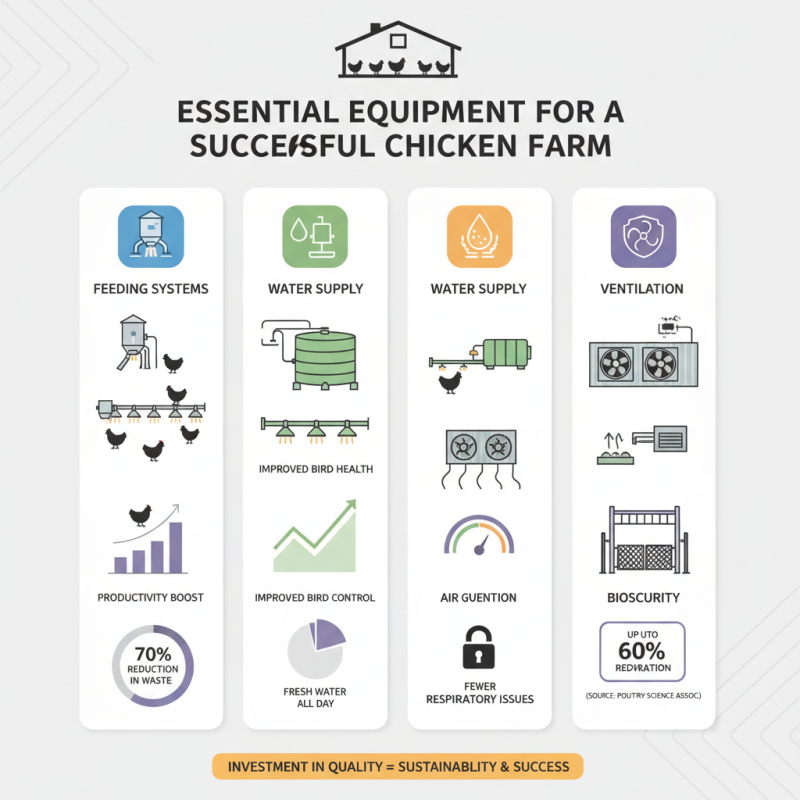
Starting a successful chicken farm requires critical investment in essential Equipment for chicken farm operations. According to industry reports, the poultry market is projected to reach over $350 billion by 2025, driven by increasing demand for protein-rich foods. An effective chicken farm needs proper feeding systems, water supply, and ventilation. These tools not only enhance productivity but also ensure the health and welfare of the birds.
Proper equipment also plays a vital role in biosecurity. A survey from the Poultry Science Association indicates that up to 60% of poultry farms faced disease outbreaks due to inadequate facilities. This highlights the need for attention to detail in equipment selection. Farmers must invest in reliable systems that safeguard their flock and yield quality produce.
However, the initial costs can be daunting. Many new farmers struggle with choosing the right equipment, balancing quality against budget. Understanding each piece's function can feel overwhelming. Reflecting on experiences shared by established farmers, it becomes clear that investing in high-quality equipment is not just a choice but a necessity for sustainability and success.
Essential Equipment for Starting a Successful Chicken Farm: An Overview
Starting a successful chicken farm requires careful planning and essential equipment. According to a recent industry report, the poultry market is expected to grow by 4.4% annually until 2025. To meet this demand, farmers must invest in crucial tools. These include adequate housing, feeding systems, and reliable water sources. Proper housing protects chickens from predators and environmental stresses.
**Tip**: Consider using insulation materials in housing to regulate temperature. This can enhance your flock's health.
Feeding equipment is also vital for productivity. Automatic feeders can reduce labor costs and ensure consistent feed supply. Additionally, maintaining high-quality water systems is crucial. Access to clean water prevents diseases and promotes growth. Statistics reveal that proper hydration can increase egg production by 10-15%.
**Tip**: Regularly check and clean water systems. Stagnant water can foster harmful bacteria.
In this competitive marketplace, selecting the right equipment can be a challenge. Farms require equipment that fits their unique environment and flock size. Uncertainties, such as fluctuating prices and supply chain issues, can complicate these choices. Reflecting on the specific needs of your farm can lead to more informed decisions. Understanding local regulations is also essential, as they may influence equipment options.
Selecting the Right Coops: Types and Dimensions for Optimal Space Use
When starting a chicken farm, selecting the right coops is crucial. The size and design of the coop directly impact the health and productivity of your flock. According to the American Poultry Association, a standard guideline suggests a minimum of 4 square feet per chicken in the coop. This ensures adequate space for movement and prevents stress-related issues.
Different coop types serve various needs. Mobile coops, or tractors, allow farmers to rotate their chickens through pastures. This method improves soil quality and offers fresh forage. However, these coops may require more labor to maintain. Traditional stationary coops provide stability. Yet, they can lead to overgrazed areas if not managed properly.
Dimensions also play a role in optimizing space. High ceilings can promote better air circulation. Ventilation is vital in preventing respiratory disease. Industry reports indicate that around 80% of poultry health issues stem from poor housing conditions. Investing time in coop design is critical, even if the perfect configuration may take several trials to achieve. Each farm is unique, and what works for one may not work for another. Experimentation and observation will lead to the best outcomes for your specific situation.
Feeding Systems: Importance of Nutrition and Feed Types in Poultry Farming
When starting a chicken farm, nutrition plays a crucial role in the health and productivity of the birds. Choosing the right feed type is essential. Different age groups of chickens have varying nutritional needs. For example, chicks require a high-protein starter feed to support their rapid growth, while layers need a feed richer in calcium for strong eggshells.
Feeding systems also influence how effectively chickens receive nutrition. Some farms use automated feeders, ensuring consistent access to feed. This can reduce labor costs and improve efficiency. However, without proper management, automated systems may lead to overfeeding or imbalanced diets. Regular monitoring of feed consumption is necessary.
An overlooked aspect is feed ingredient quality. Many farmers may choose cheaper alternatives, but this can backfire. Subpar ingredients may lead to health issues in chickens. It's essential to ask where the feed comes from and to understand its composition. Investing in high-quality nutrition can improve overall flock health and productivity.
Essential Equipment for Starting a Successful Chicken Farm: Feeding Systems
This chart illustrates the percentage distribution of various types of feed commonly used in poultry farming, highlighting the importance of nutrition in chicken farming operations.
Water Supply Solutions: Ensuring Clean and Adequate Water for Chickens
When starting a chicken farm, ensuring a reliable water supply is critical. Chickens require sufficient water for growth, health, and egg production. Studies show that a layer of hens can consume up to 2 liters of water daily. This is essential for effective digestion and overall performance.
Water quality directly influences chicken health. Contaminated water can lead to disease outbreaks, affecting productivity. For example, colibacillosis and salmonellosis are linked to poor water sanitation. Farmers should regularly test water sources for pathogens and chemical contaminants. Maintaining clean, fresh water reduces stress on chickens and leads to better weight gain and higher egg yield.
Various water supply solutions exist. A gravity-fed system is effective for small farms. It ensures a steady flow without requiring electricity. Larger operations might benefit from automated drinkers. These systems reduce labor needs and minimize water wastage. However, farmers must regularly inspect and maintain these systems. Frequent checks help prevent leaks and ensure clean water delivery. Ultimately, understanding water needs and implementing appropriate solutions can make a significant difference in the success of a chicken farm.
Climate Control: Tools for Maintaining Ideal Conditions in Chicken Housing
Climate control is critical for any chicken farm. Maintaining optimal conditions can enhance chicken health and productivity significantly. Research indicates that ideal temperatures for chickens range between 70 to 75°F (21 to 24°C). Deviations can affect feeding behavior and egg production. Inadequate ventilation can lead to ammonia buildup, which is harmful to both hens and human workers.
Effective tools like fans and heaters are essential for temperature regulation. A study from the Poultry Science Journal shows that proper climate management can lead to a 15% increase in egg yields. Automated systems can help maintain consistent temperatures and humidity levels. However, integrating technology can be challenging. Farmers might need training to use advanced systems effectively. The initial setup cost is another factor to consider.
Humidity levels also play a critical role. Ideal humidity should be around 50% to 70%. High humidity can lead to respiratory issues in chickens. On the other hand, low humidity can cause dehydration and stress. Regular monitoring is vital. Simple measures like moisture-absorbing materials can make a difference. Balancing these elements requires constant attention and adjustment. The road to a successful chicken farm is paved with careful climate management.





