Why Choose Electric Chip Fryers for Commercial Kitchens?
Commercial kitchens are judged by the plate, but operators also watch energy bills, service interruptions, and consistency during a rush. Electric Chip Fryers can help make cooking temperatures easier to control, especially when staff are preparing repeated batches beside a busy pass. A steady thermostat matters. So does recovery time after a basket of chilled chips enters the oil.
ENERGY STAR reports that certified commercial fryers are about 35% more energy-efficient than standard models, based on its commercial fryer guidance. That figure is a useful benchmark, not a promise of identical savings in every kitchen. Actual results depend on fryer size, workload, oil management, and operating habits. The National Restaurant Association’s 2024 State of the Restaurant Industry report projected U.S. restaurant and foodservice sales at $1.1 trillion, underscoring the scale of a sector where small operating efficiencies can matter. Still, a lower energy figure alone does not settle the buying decision. Operators should compare usable vat capacity, recovery performance, cleaning access, and available electrical supply before choosing a unit. A fryer that is awkward to drain or slow during peak service can create its own costs. That detail is easy to miss in a specification sheet. Electric models are not automatically the right fit for every kitchen, either. This guide examines where they offer practical advantages, what to check before purchase, and which trade-offs deserve a closer look. The numbers help. The kitchen decides.
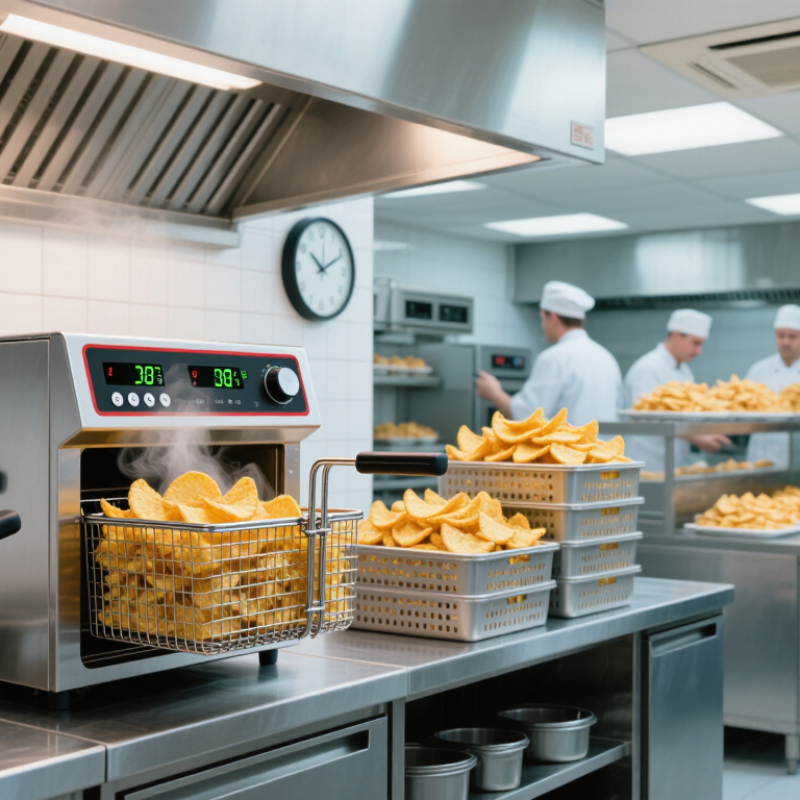
What Is an Electric Chip Fryer?
An electric chip fryer is a commercial appliance that heats cooking oil with an electrically powered element. The oil sits in a metal tank, and food is lowered into it in a wire basket. A thermostat monitors the temperature and switches the element on or off to maintain the selected setting. Simple in principle.
Many models have a drain tap, a removable basket, and a cool zone beneath the heating element where crumbs can collect. These details matter during a busy shift: crumbs left in hot oil can darken and affect the next batch. Some fryers use immersed elements; others heat the tank differently, so cleaning procedures vary. Operators should follow the equipment instructions rather than assume every unit works the same way.
In a commercial kitchen, fryer capacity is often described by oil volume or basket load. Those figures do not tell the whole story. A large batch of cold, wet chips can lower the oil temperature, and recovery time affects how quickly the next batch cooks. In practice, that number can mislead. Check the available electrical supply, counter or floor space, drainage, and ventilation before choosing a unit. It is easy to focus on output and overlook the daily work of filtering oil and cleaning the tank.
Why Choose Electric Chip Fryers for Commercial Kitchens? — What Is an Electric Chip Fryer?
An electric chip fryer uses electric heating elements to heat cooking oil. The chart shows exact Celsius-to-Fahrenheit conversions for common temperature settings; the right setting depends on the food and recipe.
How Electric Chip Fryers Work
How Electric Chip Fryers Work
An electric chip fryer converts electrical energy into heat through elements positioned in or beneath the oil tank. As the elements warm the oil, a temperature sensor monitors conditions and signals the controls to reduce or restore power. The fryer does not heat continuously at full strength. It cycles to keep the oil near the set temperature. That steady rhythm matters. The exact design varies, so operators should check the unit’s instructions rather than assume every fryer behaves alike.
When a basket of chips enters the oil, the temperature drops. The elements then work to bring it back up, though a heavily loaded basket may take longer. Small batches usually cook more evenly and place less strain on temperature recovery. Watch the oil, not just the display. A reading can seem reassuring while the oil is old, the tank is overloaded, or the elements need cleaning. Some fryers include a cooler area near the tank base, where crumbs can settle instead of burning quickly. This helps, but it is not a substitute for regular cleaning, careful filling, and sensible temperature settings.
Key Benefits for Commercial Kitchens
Electric chip fryers offer consistent temperature control and practical workflow benefits. A calibrated thermostat helps staff maintain the set oil temperature during busy service. This matters when successive baskets of chilled or freshly cut chips enter the vat. Stable heat can support more even browning, though batch size and food moisture still affect results. No fryer fixes poor preparation.
Electric models may be easier to install where gas connections are unavailable, depending on the kitchen’s electrical capacity. Straightforward controls can help new staff learn settings and recovery routines quickly. Some units have timers, drain taps, or removable elements that simplify routine cleaning. Check the details.
Filtration and daily cleaning still take time, while electricity costs vary with local rates and usage. A well-sized fryer can free up a range burner during a rush. But an undersized vat may create queues, and an oversized one can waste energy during quiet periods.
Measure counter space, expected portions per hour, and available power before choosing. Real kitchens get crowded; allow room for baskets and safe oil handling.
Common Commercial Uses of Electric Chip Fryers
Why Choose Electric Chip Fryers for Commercial Kitchens?
Common Commercial Uses of Electric Chip Fryers
Electric chip fryers suit kitchens that serve fried sides throughout the day. In cafés and diners, staff can cook portions of chips alongside burgers, sandwiches, or breakfast plates. A consistent thermostat helps maintain the selected oil temperature as batches are added, though recovery time varies by fryer size and workload.
Busy pubs, food counters, and quick-service kitchens often rely on them for repeat orders. A staff member can lower a basket, set a timer, and drain the chips over the fryer before seasoning them. Keep portions manageable. Overfilling slows cooking and can leave chips greasy or uneven. That small mistake is easy to make during a rush.
They also work in school, workplace, and care-facility kitchens where menus may call for predictable portions at set service times. For catering, a fryer can support a limited fried-food menu, provided the site has suitable power, ventilation, and safe oil-handling procedures. Check the manufacturer’s capacity guidance and clean the unit on schedule. Real kitchens get hectic; maintenance can slip, and that needs attention.
Factors to Consider When Choosing an Electric Chip Fryer
Why Choose Electric Chip Fryers for Commercial Kitchens?
Factors to Consider When Choosing an Electric Chip Fryer
Choosing an electric chip fryer starts with the menu and the busiest hour, not just the tank size. Estimate portions per 15-minute service window, then check the fryer’s oil capacity and recovery time. If the oil temperature drops sharply after a basket goes in, chips may cook unevenly and service can slow. Measure twice.
Energy performance is worth comparing, but test conditions matter. The U.S. Department of Energy’s Commercial Cooking Equipment Technology Assessment reported cooking efficiencies near 83% for electric fryers and 50% for gas models. Those figures indicate potential, not guaranteed savings in every kitchen. Actual consumption depends on batch size, idle time, set temperature, and maintenance. A single efficiency number can mislead.
Check available electrical supply before ordering; a high-capacity unit may need circuit upgrades. Look for precise thermostat controls, accessible drain valves, and removable components that staff can clean safely. Consider filtration too: cleaner oil can support consistent results and reduce waste, though it adds a task to the shift. Compare warranties and service access as well. A fryer that suits your counter but cannot keep up with lunch rushes is a poor fit.





