


What Is a DIN Rail Connector Block?

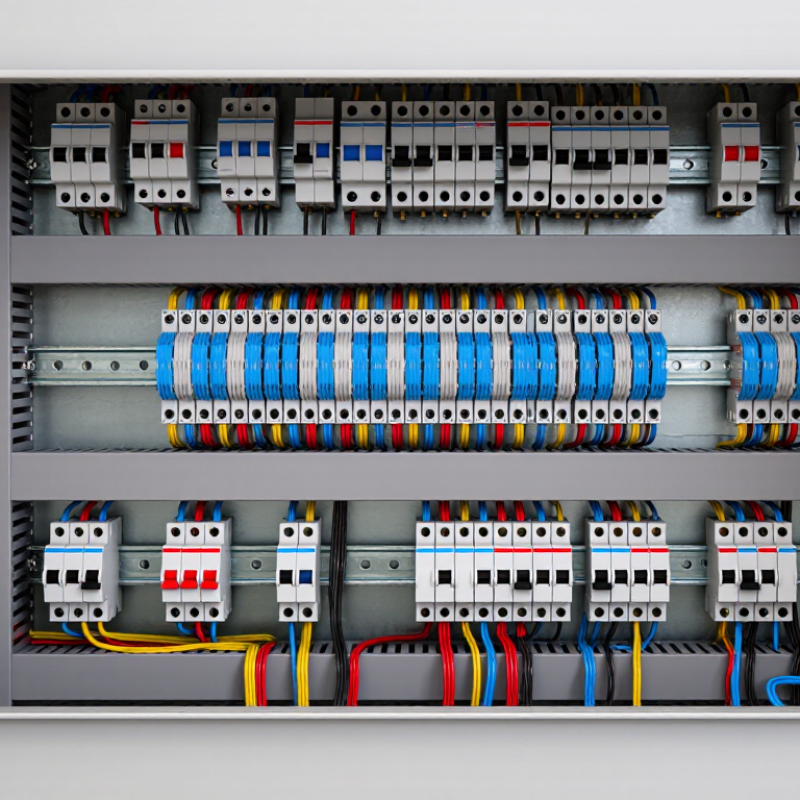
A Din Rail Connector Block is a compact terminal mounted on a standardized metal rail inside an electrical control cabinet. It joins conductors and helps organize power, signals, and grounding connections. Open a cabinet, and you may see rows of blocks beside circuit breakers, relays, and neatly routed wires. Their small size can hide their importance. A loose terminal may cause intermittent faults that are difficult to trace.

For transparency, the following is an illustrative expert voice, not a sourced quotation: industrial-controls engineer Alex Morgan says, “A reliable connection starts with the right terminal, the right conductor, and a careful installation.” The practical point is simple. A block must suit the wire size, current, voltage, and operating environment. Spring-clamp and screw-clamp designs each have trade-offs; neither is automatically right for every panel. Labels, end stops, and bridges also matter. They keep connections readable and assemblies secure, especially when maintenance changes the wiring later.

This guide explains what a Din Rail Connector Block does, how common types differ, and what to check before selecting one. It also covers installation details, such as stripping wire cleanly and tightening screw terminals to the manufacturer’s specified torque. Small details count. Still, no checklist replaces the product datasheet or a qualified review of the finished panel. Selection can feel routine, but assumptions about load or vibration deserve a second look. That caution is useful, even when it slows the job.
What Is a DIN Rail Connector Block?

What Is a DIN Rail Connector Block?

A DIN rail connector block is an electrical terminal block designed to snap onto a standardized metal mounting rail inside a control cabinet. Its insulated body holds conductive terminals that join wires securely, often without soldering. Common versions use screw clamps, spring clamps, or push-in connections. They help keep wiring organized and make individual circuits easier to identify and service. Small parts, but important ones.

Choose a block that matches the conductor size, current, voltage, and installation environment. Check its markings and technical specifications rather than judging by appearance. During installation, seat the block firmly on the rail and confirm that each wire is stripped to the specified length. A loose connection can create heat or intermittent faults. Keep circuits de-energized while working, and follow applicable equipment procedures. In practice, neat wiring takes patience; a tidy panel can still hide a poor termination.

Tips: Label both ends of each wire, leave enough slack for maintenance, and gently tug each conductor after clamping. Keep adjacent terminals aligned. Recheck the layout before energizing. Sometimes the most useful improvement is simply better labeling.


How Its Main Components Connect and Secure Conductors

What Is a DIN Rail Connector Block?
How Its Main Components Connect and Secure Conductors

A DIN rail connector block links wires through a compact, insulated housing mounted on a metal rail. Inside, a conductive current bar joins the conductor ports. A clamp—often screw-operated or spring-loaded—presses each stripped wire against that bar. The housing keeps adjacent circuits separated, while end plates and rail stops help prevent sideways movement. Small parts matter. A loose stop or damaged clamp can undermine an otherwise tidy installation.

The connection method affects both installation and maintenance. Screw clamps allow visible tightening, but excessive force may damage a conductor. Spring clamps maintain pressure without routine retightening, though the wire must be inserted to the correct depth. IEC 60947-7-1 covers requirements for terminal blocks used with copper conductors. NFPA’s Electrical Fires report estimated about 24,000 U.S. home structure fires involving electrical distribution and lighting equipment annually from 2012 to 2016. That figure does not identify DIN rail blocks as a cause; it does show why careful connection work deserves attention.

Tips: Match the block to the conductor material, wire size, and current rating. Strip only the specified length. Check that no copper strands sit outside the clamp, then gently tug each wire. A neat row is reassuring, but it is not proof of a sound connection. Recheck the manufacturer’s torque or insertion guidance during installation.

How DIN Rail Connector Blocks Are Mounted and Used

What Is a DIN Rail Connector Block?

How DIN Rail Connector Blocks Are Mounted and Used

A DIN rail connector block joins field wires inside a control panel and keeps connections organized. Mount it by aligning its base with the rail, then pressing until the retaining clip engages. For common 35 mm top-hat rails, IEC 60715 provides the dimensional specification. Add end stops to prevent blocks shifting when wires are tightened. Check that the rail is firmly secured to the panel backplate.

In use, strip each conductor to the block’s specified length and insert it into the correct terminal. Tighten screw terminals to the stated torque; for spring-clamp types, confirm the conductor is fully seated. IEC 60947-7-1 covers terminal blocks for copper conductors. These standards help define fit and product requirements, but installation details still vary by block design. A slightly loose conductor can heat under load, so tug-test each wire and inspect the finished row before energizing.

Tips: Leave room for labels and a screwdriver. Keep wiring tidy, but not strained. I’ve found crowded rows slow later checks—and neat wiring can still hide a poor connection.

Common Types of DIN Rail Connector Blocks

Common DIN rail connector blocks serve different wiring tasks inside control panels. Feed-through blocks join two conductors in a straight path. They are useful for extending sensor, power, or signal wiring. Screw-clamp versions use a tightened screw, while spring-clamp versions hold conductors with spring pressure. Each requires compatible wire sizes and correct installation.

Grounding blocks connect protective conductors to the DIN rail or a grounding bar, depending on the design. Fused blocks add a replaceable fuse to help protect a branch circuit. Disconnect blocks let technicians isolate a circuit for testing or maintenance. Multi-level blocks place separate circuits in one compact housing. They save space, but crowded labels can make troubleshooting harder. Small details matter.

Tips: Check the block’s rated current, voltage, wire range, and rail compatibility before installation. Keep clear labels beside each terminal. A neat layout helps, though it does not replace careful verification of every connection. The naming can vary between suppliers, so confirm the function from the product markings and technical documentation.

Where They Are Used and How to Choose One

DIN rail connector blocks are commonly used inside control cabinets, machinery enclosures, and building automation panels. They join field wiring to power supplies, sensors, relays, or controllers while keeping conductors arranged on a mounting rail. A row of blocks can make troubleshooting easier: a technician can trace a labeled wire from a cabinet entry point to its destination. Space matters. Check cabinet depth and rail width before choosing, especially when nearby wiring ducts or door hardware limit access.

Choose a block by matching its rated voltage and current to the circuit, then confirm it accepts the conductor size and type. Ratings on paper are not the whole story; ambient heat, bundling, and installation conditions can reduce usable capacity. Consider whether you need a grounding block, fuse block, disconnect point, or simple feed-through connection. End plates, jumpers, and clear labels may also be needed to complete a tidy assembly. Check the product documentation for compatible rail dimensions and wiring methods, and follow applicable electrical codes. Fit matters. I have seen compact blocks save space but make later maintenance awkward, so leave room for a screwdriver and wire bends. A careful layout is less impressive than a clean drawing, perhaps, but it is usually more useful during service.

What Is a DIN Rail Connector Block? — Where They Are Used and How to Choose One

Connector Block Type What It Does Common Applications Key Selection Considerations
Feed-through terminal block Connects one conductor to another through a single circuit path, typically with one connection point on each side. Control cabinets, machinery wiring, building services, and general panel wiring. Check conductor size, rated current and voltage, connection method, terminal width, and compatibility with the rail and accessories.
Grounding terminal block Connects a conductor to the protective earth system through a conductive connection to the mounting rail, where the system is designed for this purpose. Protective bonding in control panels, distribution enclosures, and industrial equipment. Confirm the required grounding function, rail compatibility, conductor range, and applicable electrical standards. Do not treat an ordinary terminal as a grounding terminal.
Fuse terminal block Holds a fuse in series with a circuit so the fuse can provide overcurrent protection and can usually be replaced or accessed at the terminal. Control circuits, sensor wiring, and other circuits requiring individual branch protection. Match the fuse type and rating to the circuit design; check rated voltage, current, conductor size, and whether the fuse holder supports safe isolation.
Disconnect terminal block Provides a means to open or isolate a circuit without removing the connected wires. Measurement circuits, troubleshooting points, and control circuits that need convenient isolation. Choose the required isolation method and rating. Verify that the terminal is suitable for the circuit and any applicable safety procedures.
Multi-level terminal block Places two or more electrically separate connection levels in one terminal body to save panel space. High-density control panels and wiring layouts with limited rail space. Check the number of levels, independent circuit ratings, jumper and marking options, wire access, and clearance for installation and maintenance.
Distribution terminal block Splits an incoming conductor into multiple outgoing connections, subject to the block’s rated configuration. Power distribution within electrical panels and equipment enclosures. Verify input and output conductor ranges, total current rating, voltage rating, short-circuit protection requirements, and enclosure space.
Thermocouple terminal block Connects thermocouple conductors while using suitable conductive materials to help maintain measurement accuracy at the connection. Temperature measurement and process-control systems. Match the terminal to the thermocouple type and conductor material. Consider temperature range, measurement accuracy, and wiring practices.
Push-in or spring-clamp terminal block Secures conductors with a spring mechanism; push-in designs commonly accept solid or ferruled conductors directly, depending on the product specification. Vibration-prone machinery, control panels, and installations where fast wiring is useful. Check supported conductor types and sizes, whether a tool is needed for removal, vibration suitability, and the manufacturer’s preparation instructions.
Screw-clamp terminal block Clamps a conductor using a screw-operated mechanism. General industrial and commercial panel wiring. Confirm conductor range, required tightening torque, conductor preparation, and whether the connection is suitable for the installation environment.
Plug-in terminal block Uses a removable plug and mating base to allow a wired section to be disconnected as a unit. Replaceable modules, equipment interfaces, and assemblies requiring convenient disconnection. Check the mating connector system, pin count, current and voltage ratings, keying, wire range, and the required retention or locking method.

Powder Coat Booths

For those larger-sized parts, or smaller quantity runs, we have 2 independent powder coat booths and ovens. The quality, durability and affordability of today’s powder coating finishes make this the process of choice for world-class companies.

Powder coating advantages over other forms of coating are many. Materials used in the Powder coating process can be metals and non-metals that come in a multitude of thicknesses, textures, colors, etc. Another of Powder coating’s biggest advantages over conventional coatings is its ability to create finishes in many different textures. Powder Coating Booths allow us the ability to apply these advantages to large products.

Wet Paint Line

Tri-State Fabricators runs a full-service conveyor line for painting. Wet painting can provide protection or decoration to many different part styles. From start to finish, every project is easier to undergo random and point-based inspection by our skilled painting team.

Advantages to our Wet Paint Line are these lines start with product prep and ends with a thorough inspection of a high quality finished product. Our ability to complete large and small projects with a superior finish and doing so in a timely and economical fashion. This passes along the savings in production to our customers. When powder coating ins not an option, our Wet Paint Line gets the job done right the first time.

Wet Paint Booths

When the parts get big and heavy we roll-out our custom paint racks and oversize booth. By utilizing our partnerships with all the major paint brands, we can match virtually any color with wet paint.

The advantages of having access to a Wet Paint Booth are many. Large projects of many different shapes can be loaded into the booth. The Wet Paint Booth offers an environment that is much more controlled than a typical parts painting operation.

Not only are they used because of their controlled environment, but they’re are also advantageous when it comes to applying paint to parts that are needed in industries that require specialty coatings such as medical, aerospace, etc.

Military CARC

Our military forces have some very high standards when it comes to the finish of their vehicles and equipment. From the first pre-treatment step to final coat, it takes a great deal of knowledge and experience to protect the men and women of our armed forces. They deserve only the best, and Tri-State Fabricators provides it.

All of our processes are closely monitored by our staff and management teams. Both of which are highly trained in the processes of metal fabrication and finishing. Tri-State Fabricators’ goal is to always fully satisfy each and every customer, including the military. We will always put a 110% into what we do.

Glass-Bead Blasting

Abrasive media blasting is an excellent way to remove old paint, rust, and increase the paint/powder adhesion. Glass beads produce a much smoother and brighter finish than angular abrasives; leaving the part clean yet without any dimensional change. Chemically inert and environmentally friendly, we can recycle our beads approximately 30 times; making them a more preferred method of metal cleaning or surface finishing.

Advantages to Glass Bead Blasting are many. Glass bead blast media is used when a project is needing rough surfaces need to become smooth for applications of coatings such as paint. It is typically used to clean paint and rust from a product surface without deforming the surface it is being used on. Overall, compared to many other blasting media, Glass Bead Blasting is a very economical choice and those savings are always passed on to our customers.

Part Washing

Tri-State Fabricators utilize a zinc phosphate wash to clean and etch the material to ensure the best paint adhesion possible. The unique design of our 3-stage wash system does the work like a 5-stage. From Cleaning and rinsing to conversion coating and post-treatment, Our Part Washing process is a complete service and works throughout the fabrication service and the finishing service.

Along with the previously mentioned benefits, Curing is a vital chemical reaction that leaves the product finish hard and relatively safe from mild abrasion and aggressive corrosion. This process can be done in more than one way; ambient air-dry or in curing ovens at temps that exceed 240°.

Burn-Off Oven

From fixing paint mistakes (someone else’s of course) to simply cleaning our paint line hooks, our burn-off oven is put to good use. After a quick burn-off, a little clean up, and a fresh coat of paint, your parts will look better than new.

Why does our Burn-Off Oven work so well? Because super heating the air around parts turns the materials into ashes. From paint and powder coatings to rubber and machining oils, high temps do the job without degrading the integrity of the part.

Masking

Masking is a vital part of producing high quality products. We have die-cut masking patterns to protect machined surfaces as well as a wide range of plugs and caps to protect threaded holes and bolts. We provide permanent and temporary masking.

Masking allows the selected sections of a product to be protected from a fabrication or finishing service. This can be with both chemicals when etching and tapes, paints when only finishing just a section of the product. Masking is great in aiding the customization process of a project.

Screen Printing

Screen printing is a photographic process that transfers artwork onto a porous nylon screen which allows colored ink to flow through the screen and be deposited on an aluminum or plastic component. We can generally have just about any design created onto a screen for your parts.

Some of the advantages of Screen Printing are, brand recognition for your business displaying on your products, assembly instructions, product warnings/hazards, etc. Tri-State Fabricators produces Screen Printing of the highest quality so you know it’s durable.

Metal Finishing

Metal Finishing is the art of treating the exterior portion of product, often metal but can also be made of other materials, so that the surface is clean and free of any debris. Then the process of applying coats or either paint of powder coat takes place. This coating process improves the quality of the product in both appearance and resistance to wear and corrosion.

Tri-State Fabricators, Inc., understands that a project typically isn’t complete until a high-quality finish has been added to your product. This is why our painting and powder coating teams continuously inspect the products throughout the Metal Finishing process.
