Top 10 Differences Between Roller Coasters and Ferris Wheels?
When exploring amusement parks, two iconic rides often come to mind: the roller coaster and ferris wheel. Each offers a unique experience, catering to different preferences and thrill levels. Roller coasters are known for their speed and gravity-defying drops, delivering an adrenaline rush like no other. In contrast, the ferris wheel promises a gentle rise, allowing riders to enjoy panoramic views at a relaxed pace.
Both rides have distinct engineering designs. The roller coaster’s intricate tracks are crafted to maximize excitement. Meanwhile, the ferris wheel features large, circular frames that provide stability. Safety is paramount in both cases, with manufacturers adhering to strict regulations. Despite this, the experiences can be quite different. Riders must consider their comfort levels when choosing between the thrill of a roller coaster and the serene ride on a ferris wheel.
It’s fascinating how these rides symbolize contrasting emotions. A roller coaster evokes exhilaration and excitement, while a ferris wheel offers a sense of calm and connection. Each has its loyal fan base, reflecting personal preferences in the world of amusement parks. Understanding these differences can enhance the experience for every visitor.
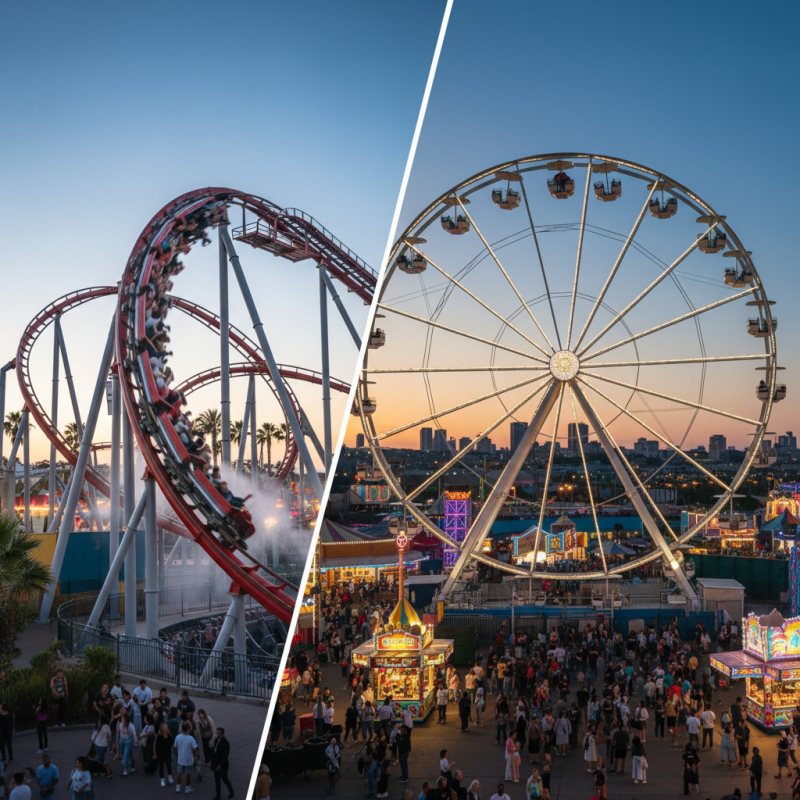
Key Structural Differences: Roller Coasters vs. Ferris Wheels
Roller coasters and Ferris wheels are two beloved amusement rides. However, they differ significantly in their structural designs. Roller coasters feature tracks made of steel or wood, allowing for high-speed twists and drops. According to the International Association of Amusement Parks and Attractions (IAAPA), roller coasters can reach speeds of over 75 miles per hour. In contrast, Ferris wheels utilize a vertical rotating wheel structure. Their main material is typically steel and they emphasize gentle motion rather than speed.
The safety features of these rides also set them apart. Roller coasters require complex systems like lap bars and harnesses to secure riders during thrilling maneuvers. Data from ride safety reports indicate that mechanical failures are less common in Ferris wheels, which rely on simpler mechanics and rotational stability. With an average height of 150 feet, modern Ferris wheels provide stunning views, while roller coasters often exceed 200 feet, creating a different kind of adrenaline experience.
These structural differences lead to unique experiences for riders. Roller coasters are often designed for thrill-seekers, providing a rush of excitement. Ferris wheels offer a more relaxed environment, suitable for families. This distinction in purpose and design is essential when choosing an amusement experience. Both rides have their merits, and understanding their differences can enhance a visit to an amusement park.
Speed and Thrill Factor: The Experience of Ride Types
When comparing roller coasters and Ferris wheels, speed and thrill factor are vital. roller coasters offer rapid acceleration, steeper drops, and sharp turns. Riders often experience intense adrenaline rushes. Reports indicate that the fastest coasters can reach speeds up to 70 mph. The excitement stems from elements like inversions and airtime hills. This chaotic experience contrasts sharply with Ferris wheels.
Ferris wheels, on the other hand, focus on a different kind of thrill. They ascend slowly, allowing riders to enjoy panoramic views. The height of a Ferris wheel can exceed 200 feet, offering a unique vantage point. While they may not provide the same adrenaline rush, they evoke a sense of calm and observation, highlighting the beauty of the surrounding environment. Industry data shows that Ferris wheels attract families looking for a leisurely experience.
Ultimately, the choice between these rides hinges on personal preference. Some crave the heart-pounding adventure of coasters, while others seek the serene views from a Ferris wheel. Understanding these differences can enhance the overall amusement park experience and guide visitors in choosing the ride that best suits their mood and thrill-seeking desires.
Operational Mechanics: How Each Ride Functions
Roller coasters and Ferris wheels serve different thrills to riders. The mechanics behind each ride reveal their distinct nature. Roller coasters are driven by gravity and kinetic energy. Cars plunge and soar along tracks, providing rapid changes in speed and direction. These rides often feature loops, drops, and sudden turns, engaging riders' adrenaline. Their design relies heavily on physics principles, ensuring safety while maximizing excitement.
Ferris wheels operate on a different principle. They rotate slowly, giving riders a serene view of the surroundings. Each capsule moves in a circular motion, relying on an electric motor or manual crank for movement. The ride's design prioritizes a steady experience over thrills. Passengers can enjoy a gentle ascent, feeling relaxed and calm. Ferris wheels promote social interactions, allowing conversations while enjoying scenic views.
While both rides offer unique experiences, they create different emotions. Some may crave the heart-pounding rush of coasters. Others prefer the slow, unhurried motion of ferris wheels. Both have their charm, and choosing between them is subjective. Preferences can shift based on mood or company, highlighting the variety of amusement park experiences.
Safety Features: Comparing Roller Coasters and Ferris Wheels
When comparing safety features between roller coasters and Ferris wheels, many factors come into play. Roller coasters are known for their thrills but also for their complex engineering. According to the International Association of Amusement Parks and Attractions, roller coasters are built with multiple safety systems. These include redundant braking mechanisms and safety restraints that ensure riders remain secure throughout the ride. However, the rapid speeds and sudden drops can still pose risks if maintenance isn't consistently performed.
On the other hand, Ferris wheels prioritize stability and comfort. These rides typically have fewer moving parts and are designed for easy operation. Data from the American Society for Testing and Materials indicates that Ferris wheels experience fewer accidents on average. Their slow rotation allows for a gentler experience, making them more accessible for families and those with anxiety about heights. However, the larger structure does require significant engineering oversight, especially in extreme weather conditions.
While both types of rides offer unique experiences, maintaining safety standards is crucial. Even minor oversights in safety checks can lead to accidents. Regular inspections, following established protocols, play an essential role in ensuring rider safety on both types of amusement rides. The industry must remain vigilant, as the consequences of neglecting safety can be severe.
Top 10 Differences Between Roller Coasters and Ferris Wheels
| Feature | Roller Coaster | Ferris Wheel |
| Height | Up to 200 feet or more | Typically up to 150 feet |
| Speed | Up to 80 mph | Around 5-10 mph |
| Ride Duration | 2-3 minutes | 10-15 minutes |
| G-Forces | High G-forces (up to 5Gs) | Minimal G-forces |
| Safety Restraints | Harness, lap bar, and seat belts | Safety bars or chains |
| Ride Experience | Thrilling, fast-paced | Relaxing, scenic views |
| Track Type | Complex track with drops and loops | Circular track |
| Age Restriction | Usually 12 years and older | Family-friendly, all ages |
| Maintenance | Requires frequent inspections | Moderate maintenance |
| Rescue Operations | Requires trained personnel | Generally easier to evacuate |
Target Audience and Ride Popularity: Who Rides What?
When it comes to amusement parks, roller coasters and Ferris wheels attract different crowds. Roller coasters appeal to thrill-seekers craving adrenaline. These rides offer fast speeds, steep drops, and twisted tracks. People looking for excitement tend to flock to them. In contrast, Ferris wheels attract families and couples seeking a more relaxed experience. They provide stunning views and a gentle ride that is suitable for all ages.
Demographics play a crucial role in ride popularity. Young adults often choose roller coasters, driven by the rush of speed and loops. Children and older adults prefer Ferris wheels. The commitment required for a coaster ride can be intimidating. Many riders fear the sudden thrills or heights. Ferris wheels, however, offer a sense of safety and calm. The slow ascent gives everyone a chance to enjoy the scenery without stress.
Individual preferences can vary widely. Some people adore the twists and turns of coasters. Others may feel overwhelmed by rapid movements. Ferris wheels allow for personal reflection, offering time to talk and enjoy. Both rides reflect different aspects of enjoyment. Understanding the target audience helps operators create more appealing attractions. Balancing thrill and tranquility is vital to ensuring a memorable experience.





