What Is a Dancing Water Fountain and How Does It Work?

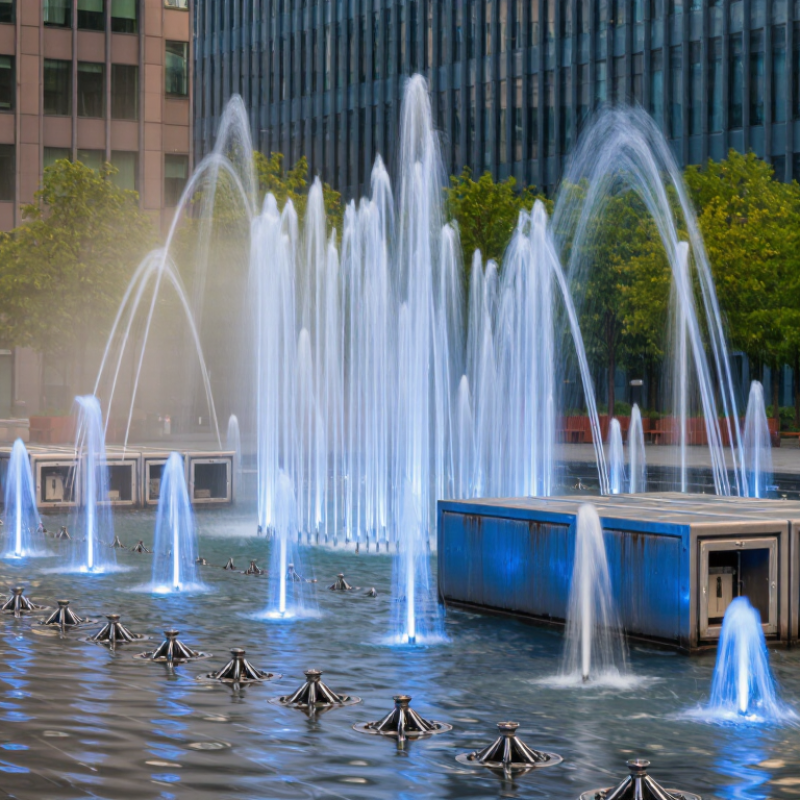
A Dancing Water Fountain is more than a decorative pool with moving jets. It is a coordinated system of pumps, valves, lights, nozzles, sensors, and digital controls. Together, these components shape water into timed patterns that appear to dance with music or programmed effects.

Industry research shows why this technology deserves careful attention. Grand View Research reports continued growth in the global water features market, driven by commercial development, tourism, and public-space investment. MarketsandMarkets also identifies automation and smart control systems as important directions for modern fountain engineering. These reports suggest strong demand, but market growth does not guarantee a successful installation. Design quality still depends on water treatment, hydraulic balance, maintenance access, and accurate programming.

WET Design founder Mark Fuller has described water as “an amazing material.” That simple phrase explains the appeal of a Dancing Water Fountain. Water can look soft, yet its performance depends on precise pressure and timing. A single blocked nozzle may distort an entire visual sequence. Small errors become visible quickly.

The U.S. Environmental Protection Agency’s WaterSense guidance also highlights efficient water management, which matters for public fountains. Recirculation systems can reduce waste, but they still require filtration and routine monitoring. The technology is impressive. It is not effortless.

Understanding how pumps create pressure, how valves control movement, and how software coordinates each effect makes the fountain easier to evaluate. Some explanations focus too heavily on spectacle. A better approach also examines operating cost, safety, reliability, and long-term water quality.
What Is a Dancing Water Fountain and How Does It Work?

Definition and Core Features of a Dancing Water Fountain

A dancing water fountain is an interactive water installation that combines moving jets, lighting, sound, and programmed timing. Unlike a static fountain, it creates visible patterns that appear to move with music or changing commands. Its central feature is controlled motion. Water does not dance by itself.

A typical system uses a pump, pipes, valves, nozzles, and a digital controller. The pump sends recycled water through separate outlets. Fast valves adjust each stream’s height and direction within seconds. A controller coordinates these changes with lighting and audio signals. Some installations also use sensors to respond to visitors, wind, or water levels. The basin usually includes filters and drainage equipment to maintain cleaner circulation.

The nozzles shape the display. Narrow openings create tall, sharp streams, while wider openings produce softer arcs. LED fixtures can color the water from below or beside the jets. In practical maintenance work, alignment matters greatly. A slightly blocked nozzle may create an uneven pattern. Wind can also push water beyond the basin. Perfect synchronization is difficult, especially outdoors. This limitation deserves attention during design. Operators must check pumps, filters, valves, electrical controls, and water quality regularly. A beautiful performance depends on these less visible details.

Main Components That Control Water, Light, and Movement

What Is a Dancing Water Fountain and How Does It Work?

A dancing water fountain combines hydraulics, lighting, and programmed movement. Its pump pushes filtered water through pipes and nozzles. Each nozzle shapes the stream, from a narrow jet to a soft curtain. Solenoid valves open and close rapidly, controlling height and rhythm. A programmable controller sends timed commands, often through DMX or similar lighting protocols. According to the U.S. Department of Energy’s Energy Saver data, LED lighting uses at least 75% less energy than incandescent lighting. This matters when dozens of underwater fixtures operate together.

Light creates the visual structure. Waterproof LED units sit inside basins or around nozzle assemblies. Red, green, blue, and white channels can produce changing colors and stronger contrast at night. Light intensity must match water clarity. The 2023 U.S. Department of Energy Solid-State Lighting report also identifies improved efficiency and thermal control as major development priorities. Heat still matters underwater. Poorly managed fixtures may fade, fail, or discolor nearby surfaces.

Movement depends on accurate water pressure and timing. Variable-speed drives adjust pump output, while sensors can monitor water level, pressure, and temperature. A control system then modifies the sequence when conditions change. Small pressure differences can make one jet look noticeably weaker. In field testing, technicians often rebalance nozzles by hand. It is not perfectly automated. That human adjustment remains important, especially when wind, evaporation, or clogged filters disrupts the pattern.

How Water Pressure Creates Synchronized Fountain Patterns

A dancing water fountain uses controlled jets to create moving, rhythmic patterns. Its effect depends on water pressure, nozzle design, valves, and digital timing. A pump pushes water through pipes, while each valve controls when a jet rises or falls. Higher pressure can produce taller streams, but excessive pressure may create mist and uneven shapes.

The controller sends precise signals to the valves. When several jets open in sequence, the fountain appears to wave, pulse, or dance. Pressure must remain stable during every movement. If one nozzle receives less flow, its stream may look weak or late. Technicians measure pressure at different pipe sections and adjust flow restrictors carefully. Water temperature, clogged filters, and changing water levels can also affect performance. Real installations are rarely perfect. Even a small delay can change the pattern.

Tips: Keep filters clean. Check nozzle alignment regularly. Use pressure gauges during testing. Watch the fountain from several angles, because a pattern may look balanced from one side and uneven from another. Leave room for adjustment. The most attractive motion often comes from controlled variation, not identical jets.

The Role of Pumps, Nozzles, Sensors, and Control Systems

A dancing water fountain turns pressurized water into timed movement. Its pump draws water from a basin and pushes it through pipes. Nozzles then shape the flow into columns, arcs, or fine mist. Nozzle diameter matters. A small opening creates higher velocity, but it also increases pressure loss. The U.S. Department of Energy reports that pumping systems can represent about 25% of industrial electricity use, making hydraulic efficiency a practical design concern.

The control system coordinates pump speed, valve position, lighting, and music cues. Variable-speed drives can adjust flow instead of wasting excess pressure through throttled valves. Sensors monitor water level, pressure, flow, and sometimes wind conditions. A level sensor can stop the pump before air enters the intake. A pressure sensor can reveal a blocked nozzle or damaged pipe. These details are easy to overlook.

Timing must remain accurate. A delay of a few milliseconds may change the visual rhythm. Programmable controllers use stored sequences and feedback signals to repeat movements reliably. The International Energy Agency identifies motor-driven systems as a major global electricity user, supporting careful control and maintenance (Energy-Efficiency Policy Opportunities for Electric Motor-Driven Systems, 2011). In field practice, filters clog, sensors drift, and water chemistry changes nozzle performance. Perfect choreography is unlikely. Regular inspection still matters. A beautiful pattern may hide inefficient pumping.

Common Designs, Uses, and Maintenance Requirements

A dancing water fountain combines pumps, programmable valves, nozzles, lighting, and control software. Pumps send water through narrow nozzles, while valves change pressure and height. Lighting then follows the programmed movement. Common designs include linear jets, circular basins, musical fountains, and interactive splash systems. Sensors can detect movement and adjust the display. Timing is everything.

Public plazas use these fountains as landmarks and cooling features. Shopping centers, hotels, parks, and private gardens use them to improve visitor experience. Water efficiency now deserves equal attention. The UNESCO World Water Development Report 2024 states that agriculture accounts for about 70% of global freshwater withdrawals. A fountain uses far less water, but poor sealing and excessive splash-out still create avoidable losses. EPA WaterSense estimates that household leaks waste more than one trillion gallons annually in the United States. That figure is not fountain-specific, yet it exposes a familiar maintenance mistake: small losses become expensive over time.

Maintenance should include daily visual checks, regular strainer cleaning, nozzle inspection, and pump monitoring. Operators should record water level, pressure, clarity, and equipment noise. Filters need scheduled replacement, not only emergency cleaning. Public interactive systems also require documented disinfectant and pH testing under applicable health codes, including guidance from the CDC Model Aquatic Health Code. Water recycling systems reduce demand, although they can increase filtration complexity. A design may look efficient while hiding difficult service access. That assumption deserves testing before installation.

What Is a Dancing Water Fountain and How Does It Work?

Common fountain designs and their typical spray-height ranges

A dancing water fountain uses pumps, electronically controlled valves, lighting, and programmed timing to synchronize water movement with music or visual effects. The ranges below are typical design examples; actual height depends on nozzle size, pump capacity, wind conditions, and installation depth. Routine maintenance usually includes removing debris, checking nozzles and filters, inspecting pumps, and monitoring water quality.


Powder Coat Booths

For those larger-sized parts, or smaller quantity runs, we have 2 independent powder coat booths and ovens. The quality, durability and affordability of today’s powder coating finishes make this the process of choice for world-class companies.

Powder coating advantages over other forms of coating are many. Materials used in the Powder coating process can be metals and non-metals that come in a multitude of thicknesses, textures, colors, etc. Another of Powder coating’s biggest advantages over conventional coatings is its ability to create finishes in many different textures. Powder Coating Booths allow us the ability to apply these advantages to large products.

Wet Paint Line

Tri-State Fabricators runs a full-service conveyor line for painting. Wet painting can provide protection or decoration to many different part styles. From start to finish, every project is easier to undergo random and point-based inspection by our skilled painting team.

Advantages to our Wet Paint Line are these lines start with product prep and ends with a thorough inspection of a high quality finished product. Our ability to complete large and small projects with a superior finish and doing so in a timely and economical fashion. This passes along the savings in production to our customers. When powder coating ins not an option, our Wet Paint Line gets the job done right the first time.

Wet Paint Booths

When the parts get big and heavy we roll-out our custom paint racks and oversize booth. By utilizing our partnerships with all the major paint brands, we can match virtually any color with wet paint.

The advantages of having access to a Wet Paint Booth are many. Large projects of many different shapes can be loaded into the booth. The Wet Paint Booth offers an environment that is much more controlled than a typical parts painting operation.

Not only are they used because of their controlled environment, but they’re are also advantageous when it comes to applying paint to parts that are needed in industries that require specialty coatings such as medical, aerospace, etc.

Military CARC

Our military forces have some very high standards when it comes to the finish of their vehicles and equipment. From the first pre-treatment step to final coat, it takes a great deal of knowledge and experience to protect the men and women of our armed forces. They deserve only the best, and Tri-State Fabricators provides it.

All of our processes are closely monitored by our staff and management teams. Both of which are highly trained in the processes of metal fabrication and finishing. Tri-State Fabricators’ goal is to always fully satisfy each and every customer, including the military. We will always put a 110% into what we do.

Glass-Bead Blasting

Abrasive media blasting is an excellent way to remove old paint, rust, and increase the paint/powder adhesion. Glass beads produce a much smoother and brighter finish than angular abrasives; leaving the part clean yet without any dimensional change. Chemically inert and environmentally friendly, we can recycle our beads approximately 30 times; making them a more preferred method of metal cleaning or surface finishing.

Advantages to Glass Bead Blasting are many. Glass bead blast media is used when a project is needing rough surfaces need to become smooth for applications of coatings such as paint. It is typically used to clean paint and rust from a product surface without deforming the surface it is being used on. Overall, compared to many other blasting media, Glass Bead Blasting is a very economical choice and those savings are always passed on to our customers.

Part Washing

Tri-State Fabricators utilize a zinc phosphate wash to clean and etch the material to ensure the best paint adhesion possible. The unique design of our 3-stage wash system does the work like a 5-stage. From Cleaning and rinsing to conversion coating and post-treatment, Our Part Washing process is a complete service and works throughout the fabrication service and the finishing service.

Along with the previously mentioned benefits, Curing is a vital chemical reaction that leaves the product finish hard and relatively safe from mild abrasion and aggressive corrosion. This process can be done in more than one way; ambient air-dry or in curing ovens at temps that exceed 240°.

Burn-Off Oven

From fixing paint mistakes (someone else’s of course) to simply cleaning our paint line hooks, our burn-off oven is put to good use. After a quick burn-off, a little clean up, and a fresh coat of paint, your parts will look better than new.

Why does our Burn-Off Oven work so well? Because super heating the air around parts turns the materials into ashes. From paint and powder coatings to rubber and machining oils, high temps do the job without degrading the integrity of the part.

Masking

Masking is a vital part of producing high quality products. We have die-cut masking patterns to protect machined surfaces as well as a wide range of plugs and caps to protect threaded holes and bolts. We provide permanent and temporary masking.

Masking allows the selected sections of a product to be protected from a fabrication or finishing service. This can be with both chemicals when etching and tapes, paints when only finishing just a section of the product. Masking is great in aiding the customization process of a project.

Screen Printing

Screen printing is a photographic process that transfers artwork onto a porous nylon screen which allows colored ink to flow through the screen and be deposited on an aluminum or plastic component. We can generally have just about any design created onto a screen for your parts.

Some of the advantages of Screen Printing are, brand recognition for your business displaying on your products, assembly instructions, product warnings/hazards, etc. Tri-State Fabricators produces Screen Printing of the highest quality so you know it’s durable.

Metal Finishing

Metal Finishing is the art of treating the exterior portion of product, often metal but can also be made of other materials, so that the surface is clean and free of any debris. Then the process of applying coats or either paint of powder coat takes place. This coating process improves the quality of the product in both appearance and resistance to wear and corrosion.

Tri-State Fabricators, Inc., understands that a project typically isn’t complete until a high-quality finish has been added to your product. This is why our painting and powder coating teams continuously inspect the products throughout the Metal Finishing process.



