


Buying Conductive Rubber is less like choosing a color and more like tuning a component. A gasket that looks identical to its sample may behave differently under pressure, heat, or repeated flexing. Small details matter. Carbon loading, cure system, thickness, and contact pressure can all shift electrical performance. ASTM D991 provides a test method for the volume resistivity of electrically conductive rubber products. Buyers should request test conditions alongside the reported value; a number without its method is incomplete.
Market research can help frame the search, but it cannot qualify a compound. Grand View Research’s conductive elastomers market analysis tracks product and application trends, offering useful context for sourcing discussions. Treat such market figures as directional, not as proof that a grade will suit your design. Materials-selection expert Michael F. Ashby’s phrase, “Materials are the stuff of design,” is a useful reminder: the right material depends on the job it must perform.
That is why these seven Conductive Rubber buying tips focus on evidence buyers can verify: resistivity range, shielding needs, operating temperature, compression set, environmental exposure, manufacturing consistency, and supplier documentation. Ask for a datasheet, recent test results, and a sample molded to realistic dimensions. Then check how it performs in your assembly. A lab coupon may not behave like a thin seal squeezed between two metal flanges. This is easy to overlook. I would also challenge one common assumption: the lowest resistivity is not always the best choice. Fit, durability, and repeatability may matter more.
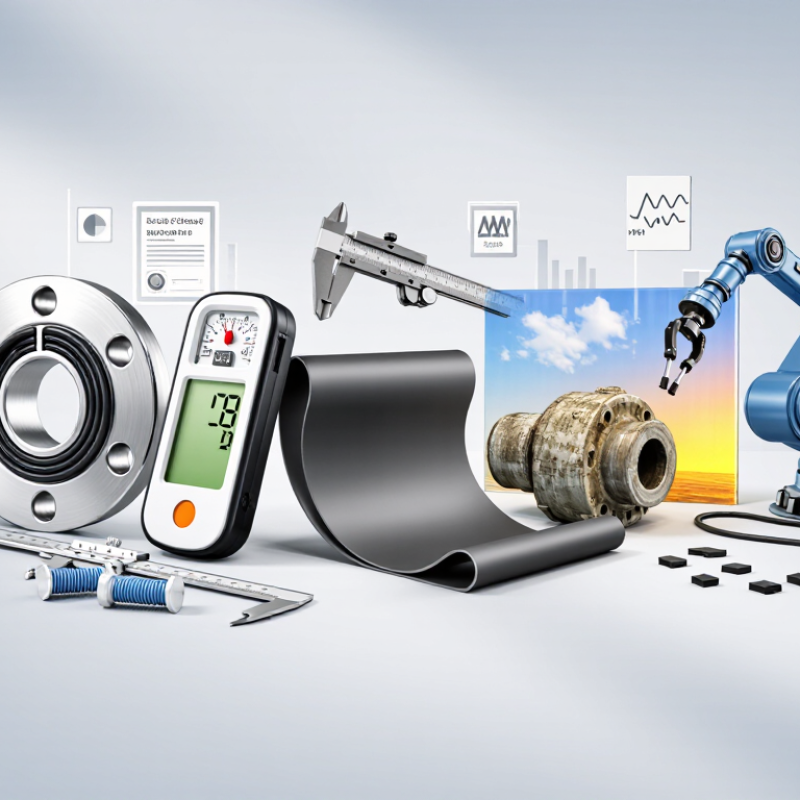
7 Conductive Rubber Buying Tips for Global Buyers
What Conductive Rubber Is and How Buyers Use It
Conductive rubber combines an elastomer, such as silicone, with conductive fillers like carbon or metal particles. It remains flexible while carrying electrical current or helping control electromagnetic interference. Buyers commonly use it in enclosure gaskets, keypad contacts, and seals around connectors. Picture a thin gasket compressed between two metal panels: it must maintain contact without blocking the lid from closing.
The application determines what to specify. For grounding, check volume resistivity and contact resistance; for shielding, ask for shielding effectiveness across the frequencies your device uses. Compression set matters too. A gasket that takes a permanent flattening can lose contact after repeated opening or heat exposure. WSTS’s autumn 2024 industry forecast estimated global semiconductor sales at $626 billion for 2024, reflecting the scale of electronics production—not a direct measure of conductive-rubber demand. Still, it helps explain why reliable component-level shielding and grounding matter across many devices.
A datasheet alone is not enough. Request test conditions, including sample thickness, compression, and temperature, because results can change with the method. Confirm the rubber’s hardness, operating temperature range, and compatibility with nearby oils or cleaners. Then test a sample in the actual joint; small gaps, uneven pressure, or a rough surface can undermine performance. Specifications are useful, but real assemblies can be less tidy than drawings.
| Buying Tip | What Conductive Rubber Is | How Buyers Use It | What to Confirm Before Ordering |
|---|---|---|---|
| 1. Match the material to the application | Conductive rubber is an elastomer compounded with conductive particles, such as carbon or metal-based fillers. It combines rubber-like flexibility with electrical conductivity. | Common uses include EMI/RFI shielding gaskets, electrical grounding contacts, and conductive seals for electronic enclosures. | Tell the supplier whether the part is for shielding, grounding, or another electrical function. A shielding gasket is not automatically suitable for carrying substantial current. |
| 2. Choose the filler and conductivity level | Carbon-filled compounds are often selected where cost, flexibility, or chemical resistance is important. Metal-filled compounds can provide lower electrical resistance, but may cost more and require closer attention to corrosion and environmental conditions. | Buyers select a compound based on the required electrical path, enclosure design, operating environment, and budget. | Request the specified electrical property—such as volume resistivity or surface resistance—and its test method. Lower resistance generally means greater conductivity, but values are comparable only when measured under comparable conditions. |
| 3. Define shielding performance by frequency | Shielding effectiveness describes how much electromagnetic energy a material or assembled enclosure attenuates, usually expressed in decibels (dB). | Conductive gaskets help maintain electrical continuity across enclosure seams, access panels, and other joints that can otherwise become leakage paths. | Specify the frequency range and required shielding performance. Results depend on the compound, gasket geometry, compression, contact surfaces, and test setup; a material data-sheet value alone does not guarantee enclosure performance. |
| 4. Check compression and contact design | Conductive rubber must deform enough to make reliable contact while remaining within its designed compression range. Excessive compression can damage the gasket or shorten its service life. | Buyers use molded profiles, strips, or custom-shaped gaskets at joints and mating surfaces, where the part is compressed during assembly. | Confirm the recommended deflection, compression force, groove or flange dimensions, and surface finish. Base the design on the compound and gasket profile rather than assuming one compression percentage fits all products. |
| 5. Match the elastomer to the environment | The rubber base affects resistance to temperature, moisture, oils, fuels, chemicals, ozone, and weathering. Performance varies by elastomer type and compound formulation. | Buyers select a compatible compound for indoor electronics, outdoor equipment, or installations exposed to fluids or temperature changes. | Provide the expected temperature range, chemicals, humidity, UV or ozone exposure, and required service life. Ask for test data relevant to those conditions; do not assume all conductive rubber has the same environmental resistance. |
| 6. Specify dimensions, tolerances, and installation details | Electrical continuity depends not only on the material but also on the finished part, its fit, and the contact made with adjoining surfaces. | Buyers use drawings and samples to define cut lengths, molded shapes, cross-sections, holes, corners, and joining details. | Provide a dimensioned drawing with tolerances, substrate and contact-surface information, and assembly details. Confirm whether the part is supplied as a molded component, strip, or die-cut gasket. |
| 7. Validate samples and documentation | Compound properties and finished-part performance should be verified against the requirements for the specific design and operating conditions. | Buyers test samples in the intended enclosure or assembly before approving production quantities. | Agree on inspection criteria, electrical test methods, dimensional checks, and required material documentation. For repeat orders, confirm change-control and batch traceability requirements. |

For conductive rubber, electrical performance depends on more than a single resistance figure. Specify volume resistivity or surface resistance, and state the test method, sample thickness, and electrode setup. If the part provides electromagnetic shielding, include the target frequency range and required shielding effectiveness. A gasket tested flat may behave differently once compressed between metal panels. Test the assembly.
Mechanical properties determine whether that electrical contact lasts. Name the required hardness, commonly measured on the Shore A scale, along with tensile strength, elongation, and tear resistance. For a sealing gasket, compression set matters: it indicates how well the rubber recovers after sustained compression. Include the expected squeeze, mating-surface finish, and temperature range. Small changes in panel gaps can affect contact pressure.
Also specify the real operating environment, including exposure to moisture, oils, cleaning agents, or repeated temperature cycles. Ask suppliers to report results under conditions that resemble the finished application, not just ideal laboratory conditions. A precise-looking resistivity limit can still mislead if test pressure is missing. I have seen teams focus on conductivity and overlook compression recovery; the part passed incoming checks, then lost contact after installation. Allow room for prototype testing, because the first specification may need revision.
Start with the operating conditions, not a catalog description. Record the lowest and highest temperatures, expected compression, exposure to oil or water, and whether the part moves. Conductive rubber uses fillers to carry electrical current, but conductivity can affect flexibility, softness, and sealing performance. Ask for volume resistivity data and the test method; figures from different methods may not be directly comparable. Small details matter. Check whether your design depends on current passing through the material or across its surface.
Then match the material form to the part. A sheet may suit a flat panel, while a molded gasket can maintain contact around uneven edges. For a moving cable entry, a flexible profile may work better than a stiff strip. Not always. A low-resistance grade may still fail if compression set leaves gaps after repeated heating. Request samples and test them in the actual assembly, including fasteners, contact pressure, and expected contaminants. One overlooked issue is the interface: paint, oxide, or surface texture can raise contact resistance even when the rubber meets its data-sheet value. Confirm dimensions, tolerance, and aging performance with the supplier. If the application is uncertain, record what the first test did not reveal, then revise the specification rather than guessing.
Ask suppliers for a current quality certificate, product specification, and batch-level test records. The ISO Survey 2022 reported 1,265,216 valid ISO 9001 certificates worldwide. That figure shows broad adoption, not proof that a particular rubber compound performs consistently. Check the certificate’s scope, issuing body, and expiry date. Then compare its scope with the actual manufacturing site.
Request electrical test results for the exact grade you plan to buy. ASTM D991 covers volume resistivity testing for electrically conductive and antistatic rubber products. Ask the supplier to state sample thickness, conditioning, test method, and acceptance limits. A number without test conditions is hard to compare. Check the report against your own target range. Small differences matter.
Review mechanical data too, including hardness, tensile strength, and compression set. Ask for recent batch records, not only a polished sample report. Where practical, send samples to an independent laboratory and compare results with the supplier’s certificate. Check compliance documents against the product’s intended market and use. Confirm the tested formulation matches the shipped grade. One detail is easy to miss: colorants or processing changes may affect conductivity. I would not treat a quality certificate as a substitute for product testing.
Conductive rubber samples should be compared under the same conditions. Match thickness, shape, and test setup before judging performance. Small differences matter. Measure electrical resistance at several points, using consistent electrode pressure and contact time. Also record hardness and dimensions, since a sample that conducts well may still be too stiff or too thin for the application. Keep the readings with the sample date and batch details.
When reviewing quotes, check that each supplier priced the same specification. A low unit price may exclude tooling, testing, or protective packaging. Ask for stated tolerances, the resistance test method, minimum order quantity, and whether sample approval applies to production batches. A neat spreadsheet can still hide gaps. I have seen comparison tables miss inspection charges simply because no one asked. Request a revised quote when the scope is unclear.
Supply terms deserve the same scrutiny as material performance. Confirm production lead time, payment schedule, shipment responsibility, and how goods will be packed to prevent deformation in transit. Agree on an inspection plan and measurable acceptance criteria before ordering. That gap matters. If the supplier cannot guarantee identical readings across batches, ask what variation is expected and how it will be reported. One sample is useful, but it is not proof of consistent production.


For those larger-sized parts, or smaller quantity runs, we have 2 independent powder coat booths and ovens. The quality, durability and affordability of today’s powder coating finishes make this the process of choice for world-class companies.
Powder coating advantages over other forms of coating are many. Materials used in the Powder coating process can be metals and non-metals that come in a multitude of thicknesses, textures, colors, etc. Another of Powder coating’s biggest advantages over conventional coatings is its ability to create finishes in many different textures. Powder Coating Booths allow us the ability to apply these advantages to large products.
Tri-State Fabricators runs a full-service conveyor line for painting. Wet painting can provide protection or decoration to many different part styles. From start to finish, every project is easier to undergo random and point-based inspection by our skilled painting team.
Advantages to our Wet Paint Line are these lines start with product prep and ends with a thorough inspection of a high quality finished product. Our ability to complete large and small projects with a superior finish and doing so in a timely and economical fashion. This passes along the savings in production to our customers. When powder coating ins not an option, our Wet Paint Line gets the job done right the first time.
When the parts get big and heavy we roll-out our custom paint racks and oversize booth. By utilizing our partnerships with all the major paint brands, we can match virtually any color with wet paint.
The advantages of having access to a Wet Paint Booth are many. Large projects of many different shapes can be loaded into the booth. The Wet Paint Booth offers an environment that is much more controlled than a typical parts painting operation.
Not only are they used because of their controlled environment, but they’re are also advantageous when it comes to applying paint to parts that are needed in industries that require specialty coatings such as medical, aerospace, etc.
Our military forces have some very high standards when it comes to the finish of their vehicles and equipment. From the first pre-treatment step to final coat, it takes a great deal of knowledge and experience to protect the men and women of our armed forces. They deserve only the best, and Tri-State Fabricators provides it.
All of our processes are closely monitored by our staff and management teams. Both of which are highly trained in the processes of metal fabrication and finishing. Tri-State Fabricators’ goal is to always fully satisfy each and every customer, including the military. We will always put a 110% into what we do.
Abrasive media blasting is an excellent way to remove old paint, rust, and increase the paint/powder adhesion. Glass beads produce a much smoother and brighter finish than angular abrasives; leaving the part clean yet without any dimensional change. Chemically inert and environmentally friendly, we can recycle our beads approximately 30 times; making them a more preferred method of metal cleaning or surface finishing.
Advantages to Glass Bead Blasting are many. Glass bead blast media is used when a project is needing rough surfaces need to become smooth for applications of coatings such as paint. It is typically used to clean paint and rust from a product surface without deforming the surface it is being used on. Overall, compared to many other blasting media, Glass Bead Blasting is a very economical choice and those savings are always passed on to our customers.
Tri-State Fabricators utilize a zinc phosphate wash to clean and etch the material to ensure the best paint adhesion possible. The unique design of our 3-stage wash system does the work like a 5-stage. From Cleaning and rinsing to conversion coating and post-treatment, Our Part Washing process is a complete service and works throughout the fabrication service and the finishing service.
Along with the previously mentioned benefits, Curing is a vital chemical reaction that leaves the product finish hard and relatively safe from mild abrasion and aggressive corrosion. This process can be done in more than one way; ambient air-dry or in curing ovens at temps that exceed 240°.
From fixing paint mistakes (someone else’s of course) to simply cleaning our paint line hooks, our burn-off oven is put to good use. After a quick burn-off, a little clean up, and a fresh coat of paint, your parts will look better than new.
Why does our Burn-Off Oven work so well? Because super heating the air around parts turns the materials into ashes. From paint and powder coatings to rubber and machining oils, high temps do the job without degrading the integrity of the part.
Masking is a vital part of producing high quality products. We have die-cut masking patterns to protect machined surfaces as well as a wide range of plugs and caps to protect threaded holes and bolts. We provide permanent and temporary masking.
Masking allows the selected sections of a product to be protected from a fabrication or finishing service. This can be with both chemicals when etching and tapes, paints when only finishing just a section of the product. Masking is great in aiding the customization process of a project.
Screen printing is a photographic process that transfers artwork onto a porous nylon screen which allows colored ink to flow through the screen and be deposited on an aluminum or plastic component. We can generally have just about any design created onto a screen for your parts.
Some of the advantages of Screen Printing are, brand recognition for your business displaying on your products, assembly instructions, product warnings/hazards, etc. Tri-State Fabricators produces Screen Printing of the highest quality so you know it’s durable.
Metal Finishing is the art of treating the exterior portion of product, often metal but can also be made of other materials, so that the surface is clean and free of any debris. Then the process of applying coats or either paint of powder coat takes place. This coating process improves the quality of the product in both appearance and resistance to wear and corrosion.
Tri-State Fabricators, Inc., understands that a project typically isn’t complete until a high-quality finish has been added to your product. This is why our painting and powder coating teams continuously inspect the products throughout the Metal Finishing process.

