

7 Commercial Spot Light Buying Tips for Global Buyers

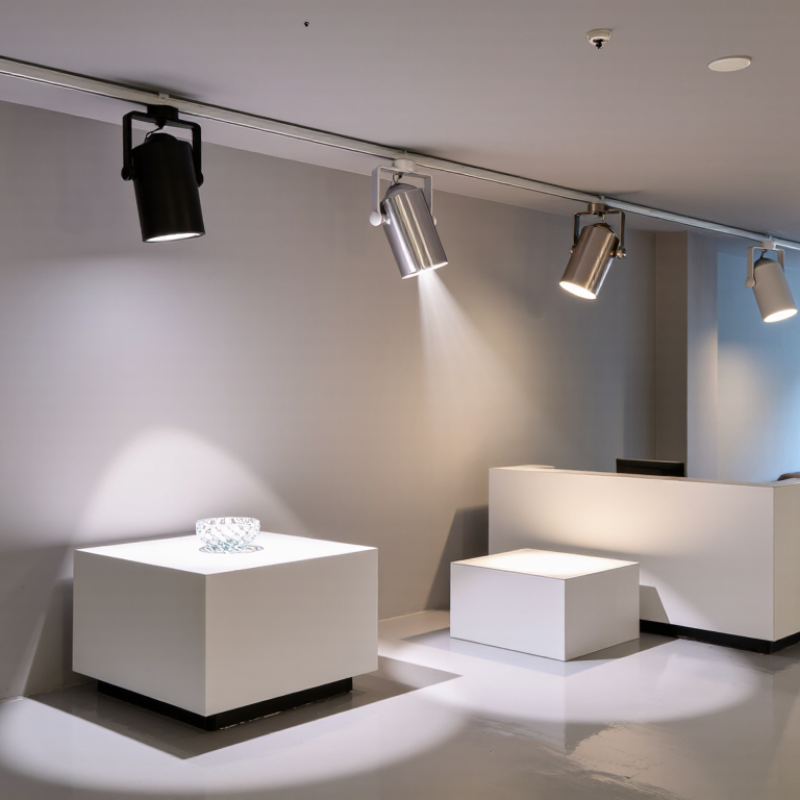
Choosing a Commercial Spot Light for a global project takes more than comparing prices or wattage. Buyers need to consider beam angle, color temperature, brightness, and how the fixture will be installed. A narrow beam can highlight a product display, while a wider beam may suit a reception area. Small details matter. A sample that looks bright in a supplier’s showroom may feel harsh in a darker shop. Check the light in conditions close to the real space whenever possible.

Reliable sourcing also depends on practical questions. Ask about materials, driver specifications, dimming compatibility, product testing, and warranty terms. Request clear technical documents, and confirm that the quoted model matches the drawings and sample. Photographs help, but they are not enough. Packaging, lead times, and communication across time zones can affect a project just as much as the fixture itself. No checklist removes every risk. Even careful buyers sometimes overlook a mounting detail or assume that two similar models perform alike.

The following seven buying tips offer a grounded way to compare suppliers and products before placing an order. They focus on performance, quality checks, supplier evaluation, and shipping considerations. The right choice depends on the room, budget, and project schedule, so there is no universal winner. Be prepared to revise your shortlist when new information appears. That is not wasted effort; it is part of making a better-informed decision.
7 Commercial Spot Light Buying Tips for Global Buyers

Define the Lighting Task and Select a Beam Angle, Such as 15°–60°

Before choosing a commercial spotlight, define what the light must do. A narrow beam can highlight a small product display, while a wider beam can cover a counter or wall section. Note the target’s size, mounting height, and distance from nearby surfaces. A three-metre ceiling and a narrow shelf need different settings from a high ceiling and a broad feature wall. Write down the task before comparing fixtures. It sounds obvious, but buyers often start with wattage or appearance.

Beam angles between 15° and 60° cover many retail and hospitality needs. Around 15°–25° can create a focused accent on a sculpture or merchandise shelf. Angles near 30°–40° often suit medium-sized displays. A 50°–60° beam spreads light more broadly, though it may reduce the visual emphasis on one object. These ranges are practical starting points, not guarantees. Check the manufacturer’s beam data and, where possible, review a lighting layout or test sample at the intended mounting height. Watch for dark gaps, glare, and light spilling onto neighboring displays. Even careful calculations can miss the way finishes reflect light. A quick on-site check can reveal that.

Compare Delivered Lumens and lm/W Instead of Wattage Alone

A spot’s wattage tells you how much power it uses, not how much useful light reaches the target. Two 25 W fixtures may produce very different results. One could deliver 2,000 lumens, while another delivers 2,800. That difference is easy to miss on a basic quotation. Compare delivered lumens and lm/W, not wattage alone. Delivered lumens describe the fixture’s output after losses from its optics and diffuser. Lumens per watt show how efficiently it converts electricity into light. Neither figure tells the whole story.

Ask for test data measured at the complete fixture, rather than relying only on the LED chip’s claimed output. Check the beam angle too. A narrow beam can make a display look bright, but leave nearby surfaces dim. For a high ceiling, compare the expected light at the target height and review the photometric file if available. Small differences matter. Also confirm that figures apply at the intended color temperature and operating conditions. Heat can reduce output, especially in compact housings with limited ventilation. Supplier documents sometimes omit these details; that is worth questioning, even when the price looks attractive. A brief sample test in a room with similar ceiling height can reveal whether the quoted output suits the actual application.

Set Color Requirements: CRI 80+ and CCT in Kelvin

For retail and hospitality spotlights, color errors appear on skin, timber, and product packaging.

Set CRI at 80 or higher as a practical minimum. ENERGY STAR’s lamp specification uses 80 as its minimum CRI threshold. Higher can help, but CRI alone does not tell the full story. DOE’s 2022 Solid-State Lighting R&D Opportunities report treats color quality as more than a single metric. Check samples under the actual merchandise and finishes. Reds can still look dull.

Specify CCT in kelvin, not vague terms such as “cool white.”

ENERGY STAR’s lamp specification lists defined options including 2700K, 3000K, 3500K, 4000K, 5000K, and 6500K. A 3000K beam often feels warm on wood and skin; 4000K can look cleaner in a display area. Neither is universally better. Compare the beam with nearby fixtures, or a carefully chosen spotlight may clash with the rest of the room.

Ask suppliers for CRI and CCT values on the quotation, then test a sample on-site.

Small differences matter. I would also check the red tones in the actual products, not just a chart. That extra check takes time, and it can still miss how customers perceive the display.

Check Driver Compatibility with Local Voltage and 50/60 Hz Supply

Before ordering commercial spotlights, match the driver’s input rating to the installation—not just the fixture’s wattage. IEC 60038:2009, Standard Voltages, identifies 230/400 V and 120/208 V among standardized supply voltages, with 50 Hz and 60 Hz systems used in different markets. Check the driver label for its full input range, such as 100–240 V AC, and confirm it explicitly supports both frequencies. A voltage match alone is not enough. Some drivers are rated for 50 Hz only, while others accept 50/60 Hz.

Ask the supplier for the driver datasheet and verify the exact model, not just a general product-family sheet. For a 230 V, 50 Hz site, confirm the rated input covers local voltage variation; for a 120 V, 60 Hz site, check that 120 V falls within range. Also review dimmer compatibility and startup behavior, since these can differ between driver models.

A practical oversight: buyers sometimes approve a sample tested on one supply, then ship units with a different driver revision. It happens.

Record the voltage, frequency, dimming method, and driver model in the purchase specification, and request a test report using those conditions. A few minutes checking the label can prevent flicker, shutdowns, or costly replacements.

Verify IP Ratings Under IEC 60529 and Market-Specific Certifications

A spot light’s IP rating describes protection against solids and water, not overall product quality. Under IEC 60529, the first digit indicates solid-particle protection; the second indicates water protection. IP65, for example, is dust-tight and tested against water jets, but it does not mean the fitting can be submerged. Looks can deceive.

Check the rating for the complete fixture, not just its housing. A cable gland, glass seal, or adjustable joint can affect protection after installation. Ask for an IEC 60529 test report that names the exact model and test conditions. If the light will sit beneath an exposed canopy, compare the tested water exposure with the site’s likely rain and cleaning methods. A rating alone cannot account for poor installation.

Confirm destination-market requirements separately. Electrical safety, electromagnetic compatibility, labeling, and documentation rules may differ by country or sales region. Request current conformity documents and verify that model numbers, voltage, and product configuration match your purchase order. For outdoor projects, ask whether any required approval covers the complete luminaire and its intended use. Paperwork can be messy; that is a reason to check it early, not to assume a familiar mark covers every market.

Powder Coat Booths

For those larger-sized parts, or smaller quantity runs, we have 2 independent powder coat booths and ovens. The quality, durability and affordability of today’s powder coating finishes make this the process of choice for world-class companies.

Powder coating advantages over other forms of coating are many. Materials used in the Powder coating process can be metals and non-metals that come in a multitude of thicknesses, textures, colors, etc. Another of Powder coating’s biggest advantages over conventional coatings is its ability to create finishes in many different textures. Powder Coating Booths allow us the ability to apply these advantages to large products.

Wet Paint Line

Tri-State Fabricators runs a full-service conveyor line for painting. Wet painting can provide protection or decoration to many different part styles. From start to finish, every project is easier to undergo random and point-based inspection by our skilled painting team.

Advantages to our Wet Paint Line are these lines start with product prep and ends with a thorough inspection of a high quality finished product. Our ability to complete large and small projects with a superior finish and doing so in a timely and economical fashion. This passes along the savings in production to our customers. When powder coating ins not an option, our Wet Paint Line gets the job done right the first time.

Wet Paint Booths

When the parts get big and heavy we roll-out our custom paint racks and oversize booth. By utilizing our partnerships with all the major paint brands, we can match virtually any color with wet paint.

The advantages of having access to a Wet Paint Booth are many. Large projects of many different shapes can be loaded into the booth. The Wet Paint Booth offers an environment that is much more controlled than a typical parts painting operation.

Not only are they used because of their controlled environment, but they’re are also advantageous when it comes to applying paint to parts that are needed in industries that require specialty coatings such as medical, aerospace, etc.

Military CARC

Our military forces have some very high standards when it comes to the finish of their vehicles and equipment. From the first pre-treatment step to final coat, it takes a great deal of knowledge and experience to protect the men and women of our armed forces. They deserve only the best, and Tri-State Fabricators provides it.

All of our processes are closely monitored by our staff and management teams. Both of which are highly trained in the processes of metal fabrication and finishing. Tri-State Fabricators’ goal is to always fully satisfy each and every customer, including the military. We will always put a 110% into what we do.

Glass-Bead Blasting

Abrasive media blasting is an excellent way to remove old paint, rust, and increase the paint/powder adhesion. Glass beads produce a much smoother and brighter finish than angular abrasives; leaving the part clean yet without any dimensional change. Chemically inert and environmentally friendly, we can recycle our beads approximately 30 times; making them a more preferred method of metal cleaning or surface finishing.

Advantages to Glass Bead Blasting are many. Glass bead blast media is used when a project is needing rough surfaces need to become smooth for applications of coatings such as paint. It is typically used to clean paint and rust from a product surface without deforming the surface it is being used on. Overall, compared to many other blasting media, Glass Bead Blasting is a very economical choice and those savings are always passed on to our customers.

Part Washing

Tri-State Fabricators utilize a zinc phosphate wash to clean and etch the material to ensure the best paint adhesion possible. The unique design of our 3-stage wash system does the work like a 5-stage. From Cleaning and rinsing to conversion coating and post-treatment, Our Part Washing process is a complete service and works throughout the fabrication service and the finishing service.

Along with the previously mentioned benefits, Curing is a vital chemical reaction that leaves the product finish hard and relatively safe from mild abrasion and aggressive corrosion. This process can be done in more than one way; ambient air-dry or in curing ovens at temps that exceed 240°.

Burn-Off Oven

From fixing paint mistakes (someone else’s of course) to simply cleaning our paint line hooks, our burn-off oven is put to good use. After a quick burn-off, a little clean up, and a fresh coat of paint, your parts will look better than new.

Why does our Burn-Off Oven work so well? Because super heating the air around parts turns the materials into ashes. From paint and powder coatings to rubber and machining oils, high temps do the job without degrading the integrity of the part.

Masking

Masking is a vital part of producing high quality products. We have die-cut masking patterns to protect machined surfaces as well as a wide range of plugs and caps to protect threaded holes and bolts. We provide permanent and temporary masking.

Masking allows the selected sections of a product to be protected from a fabrication or finishing service. This can be with both chemicals when etching and tapes, paints when only finishing just a section of the product. Masking is great in aiding the customization process of a project.

Screen Printing

Screen printing is a photographic process that transfers artwork onto a porous nylon screen which allows colored ink to flow through the screen and be deposited on an aluminum or plastic component. We can generally have just about any design created onto a screen for your parts.

Some of the advantages of Screen Printing are, brand recognition for your business displaying on your products, assembly instructions, product warnings/hazards, etc. Tri-State Fabricators produces Screen Printing of the highest quality so you know it’s durable.

Metal Finishing

Metal Finishing is the art of treating the exterior portion of product, often metal but can also be made of other materials, so that the surface is clean and free of any debris. Then the process of applying coats or either paint of powder coat takes place. This coating process improves the quality of the product in both appearance and resistance to wear and corrosion.

Tri-State Fabricators, Inc., understands that a project typically isn’t complete until a high-quality finish has been added to your product. This is why our painting and powder coating teams continuously inspect the products throughout the Metal Finishing process.