


10 Commercial Display TV Buying Tips for Global Buyers

Buying a Commercial Display Tv for a global business is not simply a screen-selection exercise. It is a long-term operational decision involving brightness, reliability, connectivity, service, energy use, and regional compatibility. A model that performs well in a quiet European showroom may struggle in a sunlit airport in Southeast Asia.

As Bob Raikes, founder of Meko, has observed, “A display is only successful when it meets the real needs of its environment.” That principle deserves attention. Specifications can look impressive on paper. They may still hide weak cooling, limited warranty support, or software that frustrates local teams.

This guide presents ten practical buying tips for international purchasers. It considers viewing distance, operating hours, panel durability, media players, remote management, and installation conditions. It also examines details that are easy to overlook, such as voltage requirements, language support, replacement parts, and local technical assistance.

Experience changes the decision.

A retail wall may need narrow bezels and consistent color. A hotel lobby may value simple scheduling and quiet operation. A control room may require continuous performance and dependable signal handling. These needs are not interchangeable.

There is no perfect Commercial Display Tv for every market. That is an uncomfortable truth. Buyers can still reduce costly mistakes by comparing total ownership costs, testing content in realistic lighting, and confirming support before signing an order. Some recommendations may need revision as technologies, regulations, and customer expectations change. Careful buyers leave room for that uncertainty.
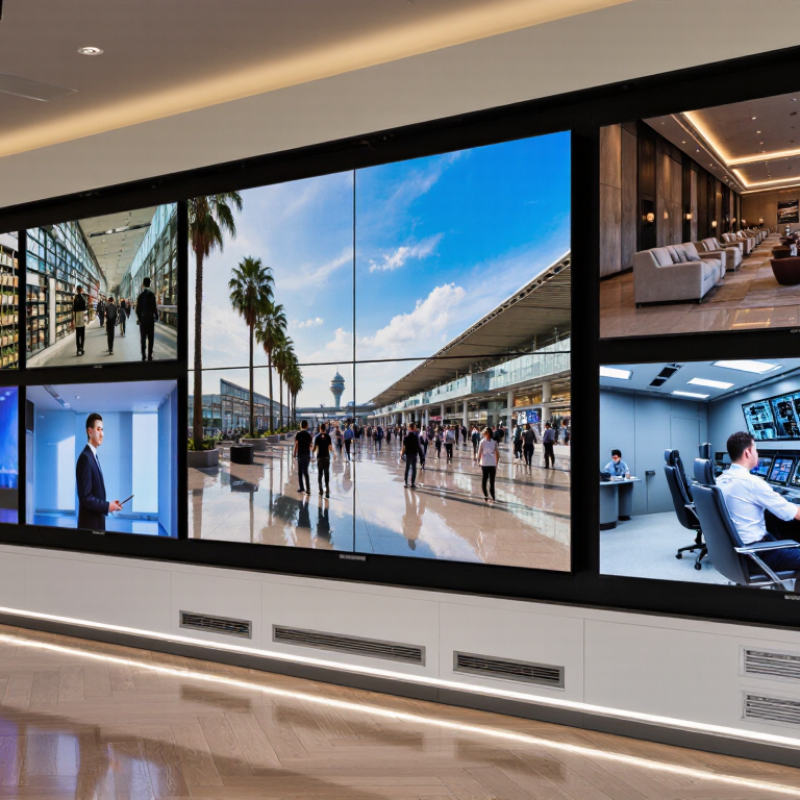
10 Commercial Display TV Buying Tips for Global Buyers

Define Commercial Display Needs and Buyer Requirements

Defining commercial display needs starts with the room, not the screen. Measure viewing distance, wall width, ambient light, and daily operating hours. A lobby with glass doors may need higher brightness than a quiet meeting room. Record peak sunlight at 10 a.m., not only during a showroom visit. That detail matters. Decide whether the display will show menus, schedules, live data, or promotional video. Each use affects resolution, aspect ratio, and content management requirements.

Buyer requirements should be written as testable specifications. State the target screen size, brightness range, uptime expectation, speaker needs, network method, and available input ports. Ask whether the unit supports portrait installation, remote monitoring, automatic restart, and scheduled power control. For multi-country deployment, verify voltage compatibility, wireless approvals, energy rules, and safety documentation for every destination. Do not accept “long life” as a requirement. Define operating hours, warranty coverage, spare-part access, and service response time instead.

Budget planning must include mounting, shipping, installation, software, and replacement costs. A lower purchase price can hide service delays or incompatible accessories. Pilot evaluations often reveal unexpected problems. A bright panel may be excessive in a shaded corridor, while a dim display can fail beside a sunlit entrance. The mistake is rarely technical. The brief was incomplete. Leave room for staff feedback, since daily users may need simpler controls than procurement teams expect. Test one complete setup with real content, network conditions, and local lighting before approving a larger order.


Compare Screen Sizes, Resolutions, Panel Types, and Viewing Conditions

Choosing a commercial display TV starts with the room, not the screen catalog. Measure the distance between viewers and the display. A 55-inch screen may suit a small meeting room, while a 75-inch model can improve readability in a lobby. Larger is not always better. An oversized screen may force viewers to move their heads.

Resolution should match content and viewing distance. Full HD can work for simple announcements viewed from far away. 4K is more suitable for detailed charts, product images, and close seating. However, higher resolution cannot fix poor source quality. Test the actual videos, text, and presentation files before purchasing.

Panel type also affects daily performance. LED-backlit LCD panels often provide strong brightness for bright spaces. OLED panels can deliver deeper blacks, but static content may require careful operating policies. Check viewing angles when people watch from the sides. In a narrow hallway, limited angles can make colors look uneven.

Viewing conditions deserve a practical inspection. Compare brightness near windows, under overhead lights, and after dark. A glossy surface may reflect lamps like small mirrors. A matte finish can improve readability, although it may reduce perceived contrast slightly. I have learned that showroom results can be misleading. A two-hour site test is more reliable than a polished specification sheet. Also verify operating temperature, ventilation, and local power compatibility before placing a global order.

10 Commercial Display TV Buying Tips for Global Buyers

Compare screen sizes, resolutions, panel types, and viewing conditions before selecting a commercial display.

Screen Size and Resolution

At the same screen size, 4K UHD provides four times as many pixels as Full HD. At the same resolution, larger screens have lower pixel density, so viewing distance and image detail should be evaluated together.

Panel Type

IPS panels generally offer wide viewing angles, VA panels typically provide higher native contrast, and OLED panels use self-emissive pixels for deep blacks. For static commercial content, evaluate image-retention requirements and operating conditions.

Viewing Conditions

Bright spaces benefit from strong sustained brightness, effective anti-glare treatment, and controlled reflections. Dark rooms emphasize contrast performance. For wide audiences, viewing-angle consistency is more important than peak brightness alone.

Pixel-density values are calculated from the stated diagonal size and standard 16:9 resolutions: Full HD 1920 × 1080 and 4K UHD 3840 × 2160.

Assess Durability, Connectivity, Software, and Remote Management

Buying a commercial display for global use requires more than checking screen size and brightness. In busy transport halls, retail stores, and meeting rooms, displays may run for long hours. Choose a model with reinforced housing, stable thermal control, and tested resistance to dust. Ask for verified operating-hour data, not only marketing claims. Small details matter.

Tip: Test connectivity before purchase. Confirm HDMI, USB, network, wireless, and control interfaces match your existing equipment. A display can have many ports yet still lack the right signal standards. Test a real source device at the intended resolution. This catches compatibility problems early.

Software and remote management can reduce service visits across different time zones. Look for secure device enrollment, scheduled power control, firmware updates, usage monitoring, and role-based access. Logging should show when settings changed and who changed them. Offline recovery also matters when a store loses internet access. It is not perfect everywhere. Some platforms need extra configuration, and local technicians may require training. Request a trial period with several displays. Measure update time, restart behavior, and network stability under ordinary working conditions. Keep spare cables and a documented recovery procedure nearby.

10 Commercial Display TV Buying Tips for Global Buyers - Assess Durability, Connectivity, Software, and Remote Management

No. Buying Dimension What to Assess Practical Recommendation Typical Target or Benchmark Why It Matters
1 Commercial Duty Cycle Confirm whether the display is designed for continuous commercial operation rather than occasional household viewing. Select a model rated for the planned daily operating schedule and install it with adequate ventilation. Choose a published 16/7 or 24/7 operating rating when the installation requires extended daily use. Reduces overheating, premature component wear, and unexpected downtime.
2 Panel Durability and Image Retention Evaluate panel construction, thermal design, warranty coverage, and the risk of image retention for static content. Use content rotation, screen-saving functions, and suitable brightness settings when menus or dashboards remain on screen. Look for commercial-grade thermal management and a documented warranty covering the intended usage. Helps preserve uniform brightness and extend usable service life.
3 Brightness and Viewing Environment Match luminance to ambient light, viewing distance, window exposure, and whether the screen is used indoors or semi-outdoors. Avoid choosing maximum brightness solely for specification purposes; prioritize readable content without excessive glare. Approximately 350–500 cd/m² is common for indoor signage; brighter environments may require more. Improves legibility, energy efficiency, and viewer comfort.
4 Connectivity and Input Compatibility Check video inputs, network ports, wireless capability, audio connections, control interfaces, and regional power requirements. Verify the required HDMI version, HDCP support, Ethernet speed, Wi-Fi standard, and voltage range before ordering. At least two HDMI inputs, wired Ethernet, Wi-Fi, and support for common 4K input formats are practical baseline requirements. Prevents adapters, compatibility failures, and costly installation changes.
5 Resolution and Content Performance Consider screen size, viewing distance, text density, video quality, refresh rate, and the capabilities of the content source. Use 4K resolution for detailed menus, maps, dashboards, and close-viewing applications; avoid paying for resolution that content cannot use. 3840 × 2160 is a common 4K UHD format; confirm support for the required refresh rate and codecs. Ensures sharp text and smooth playback across international content systems.
6 Operating System and Software Support Review supported media formats, application compatibility, content scheduling, user permissions, and software update policies. Request a software compatibility test using the actual playlists, languages, file types, and web services planned for deployment. Confirm support for common video, image, audio, subtitle, HTML5, and network playback requirements. Reduces dependence on external media players and simplifies content operations.
7 Remote Monitoring and Management Assess centralized control for power, volume, input selection, firmware, diagnostics, content, and device status. Choose a platform with role-based access, device grouping, health alerts, scheduling, logs, and secure remote support. Look for standards-based control such as IP management, web administration, APIs, or industry device-control protocols. Lowers travel and service costs when displays are deployed across multiple countries.
8 Security and Network Administration Check encryption, authentication, access controls, firmware maintenance, network segmentation, and data-handling practices. Require strong administrator passwords, encrypted management traffic, controlled USB access, and documented security updates. The device should support secure network deployment and integration with the buyer’s IT policy. Protects signage networks from unauthorized changes and service disruption.
9 Installation, Serviceability, and Logistics Review mounting standards, screen weight, cable access, operating orientation, replacement procedures, packaging, and spare-part availability. Confirm VESA dimensions, portrait or landscape support, local service coverage, and the availability of replacement components. VESA mounting support and clearly documented installation clearances are useful minimum requirements. Makes international deployment faster and reduces repair-related downtime.
10 Total Cost of Ownership Calculate purchase price together with energy use, software fees, installation, connectivity, maintenance, warranty, shipping, taxes, and replacement costs. Compare a multi-year operating budget instead of selecting the lowest initial price. Model at least a three-year cost period and include local electricity rates and support requirements. Reveals the real financial impact of large-scale, multi-region deployments.

Verify Compliance, Warranty, Installation, and Total Cost of Ownership

10 Commercial Display TV Buying Tips for Global Buyers

Verify compliance before comparing screen size or price. Ask for current safety, electromagnetic compatibility, energy, and recycling documents for each destination. Certification marks alone may not prove local acceptance. Confirm the operating voltage, plug type, wireless functions, and language settings. A regional distributor or qualified compliance consultant should review the paperwork. We have seen projects delayed because one document covered the panel but not the complete display.

Read the warranty conditions line by line. Check coverage length, response time, replacement procedures, and exclusions for commercial operating hours. Ask whether on-site service includes labor, transport, and faulty mounting hardware. Installation also needs practical review. Measure doorways, wall strength, viewing height, ventilation space, and cable routes before delivery. A pilot installation in one location can expose heat, glare, or unstable network issues. Small tests are less expensive than large regrets.

Calculate total cost of ownership over several years. Include freight, duties, brackets, professional installation, software licenses, electricity, maintenance, spare units, and disposal fees. Request a written cost model with realistic usage hours. Energy labels may not reflect your actual schedule. Warranty repairs can also create downtime costs. I would leave room for mistakes, because international estimates often miss local labor or storage charges. Keep every approval, revision, and service promise in writing.

Evaluate Suppliers, Logistics, Support, and Global Purchasing Risks

Global buyers should evaluate commercial display TV suppliers beyond catalog prices. Request factory audit evidence, production photos, sample testing records, and references from similar climates. Check panel consistency, brightness measurements, operating hours, warranty terms, and replacement-part availability. A polished website proves little. Ask awkward questions early. Compare at least three quotations line by line. Confirm whether prices include testing, export packaging, documentation, and installation guidance. Some suppliers promise global support without local technicians.

Map the shipping route before signing the purchase order. Check lead time, port congestion, pallet dimensions, container loading, insurance, and damage procedures. Confirm the agreed trade term and responsibility for customs documents. Verify voltage, plug requirements, labeling, and destination-market compliance papers. A delayed vessel can disrupt a store opening for weeks. Small errors become costly.

Support should include response times, spare-part stock, remote diagnosis, and clear escalation contacts. Test the process before purchasing at scale. Ask who handles firmware issues and failed units after installation. Use staged payments tied to inspection, packaging photos, and shipping documents. Keep several spare displays for urgent replacements. No supplier scorecard is perfect. A low-cost choice may still be sensible, but only when risks are visible, measured, and accepted. Leave room for mistakes; international projects rarely follow the first schedule.

Powder Coat Booths

For those larger-sized parts, or smaller quantity runs, we have 2 independent powder coat booths and ovens. The quality, durability and affordability of today’s powder coating finishes make this the process of choice for world-class companies.

Powder coating advantages over other forms of coating are many. Materials used in the Powder coating process can be metals and non-metals that come in a multitude of thicknesses, textures, colors, etc. Another of Powder coating’s biggest advantages over conventional coatings is its ability to create finishes in many different textures. Powder Coating Booths allow us the ability to apply these advantages to large products.

Wet Paint Line

Tri-State Fabricators runs a full-service conveyor line for painting. Wet painting can provide protection or decoration to many different part styles. From start to finish, every project is easier to undergo random and point-based inspection by our skilled painting team.

Advantages to our Wet Paint Line are these lines start with product prep and ends with a thorough inspection of a high quality finished product. Our ability to complete large and small projects with a superior finish and doing so in a timely and economical fashion. This passes along the savings in production to our customers. When powder coating ins not an option, our Wet Paint Line gets the job done right the first time.

Wet Paint Booths

When the parts get big and heavy we roll-out our custom paint racks and oversize booth. By utilizing our partnerships with all the major paint brands, we can match virtually any color with wet paint.

The advantages of having access to a Wet Paint Booth are many. Large projects of many different shapes can be loaded into the booth. The Wet Paint Booth offers an environment that is much more controlled than a typical parts painting operation.

Not only are they used because of their controlled environment, but they’re are also advantageous when it comes to applying paint to parts that are needed in industries that require specialty coatings such as medical, aerospace, etc.

Military CARC

Our military forces have some very high standards when it comes to the finish of their vehicles and equipment. From the first pre-treatment step to final coat, it takes a great deal of knowledge and experience to protect the men and women of our armed forces. They deserve only the best, and Tri-State Fabricators provides it.

All of our processes are closely monitored by our staff and management teams. Both of which are highly trained in the processes of metal fabrication and finishing. Tri-State Fabricators’ goal is to always fully satisfy each and every customer, including the military. We will always put a 110% into what we do.

Glass-Bead Blasting

Abrasive media blasting is an excellent way to remove old paint, rust, and increase the paint/powder adhesion. Glass beads produce a much smoother and brighter finish than angular abrasives; leaving the part clean yet without any dimensional change. Chemically inert and environmentally friendly, we can recycle our beads approximately 30 times; making them a more preferred method of metal cleaning or surface finishing.

Advantages to Glass Bead Blasting are many. Glass bead blast media is used when a project is needing rough surfaces need to become smooth for applications of coatings such as paint. It is typically used to clean paint and rust from a product surface without deforming the surface it is being used on. Overall, compared to many other blasting media, Glass Bead Blasting is a very economical choice and those savings are always passed on to our customers.

Part Washing

Tri-State Fabricators utilize a zinc phosphate wash to clean and etch the material to ensure the best paint adhesion possible. The unique design of our 3-stage wash system does the work like a 5-stage. From Cleaning and rinsing to conversion coating and post-treatment, Our Part Washing process is a complete service and works throughout the fabrication service and the finishing service.

Along with the previously mentioned benefits, Curing is a vital chemical reaction that leaves the product finish hard and relatively safe from mild abrasion and aggressive corrosion. This process can be done in more than one way; ambient air-dry or in curing ovens at temps that exceed 240°.

Burn-Off Oven

From fixing paint mistakes (someone else’s of course) to simply cleaning our paint line hooks, our burn-off oven is put to good use. After a quick burn-off, a little clean up, and a fresh coat of paint, your parts will look better than new.

Why does our Burn-Off Oven work so well? Because super heating the air around parts turns the materials into ashes. From paint and powder coatings to rubber and machining oils, high temps do the job without degrading the integrity of the part.

Masking

Masking is a vital part of producing high quality products. We have die-cut masking patterns to protect machined surfaces as well as a wide range of plugs and caps to protect threaded holes and bolts. We provide permanent and temporary masking.

Masking allows the selected sections of a product to be protected from a fabrication or finishing service. This can be with both chemicals when etching and tapes, paints when only finishing just a section of the product. Masking is great in aiding the customization process of a project.

Screen Printing

Screen printing is a photographic process that transfers artwork onto a porous nylon screen which allows colored ink to flow through the screen and be deposited on an aluminum or plastic component. We can generally have just about any design created onto a screen for your parts.

Some of the advantages of Screen Printing are, brand recognition for your business displaying on your products, assembly instructions, product warnings/hazards, etc. Tri-State Fabricators produces Screen Printing of the highest quality so you know it’s durable.

Metal Finishing

Metal Finishing is the art of treating the exterior portion of product, often metal but can also be made of other materials, so that the surface is clean and free of any debris. Then the process of applying coats or either paint of powder coat takes place. This coating process improves the quality of the product in both appearance and resistance to wear and corrosion.

Tri-State Fabricators, Inc., understands that a project typically isn’t complete until a high-quality finish has been added to your product. This is why our painting and powder coating teams continuously inspect the products throughout the Metal Finishing process.
