


What Is a Combination Sweeper Scrubber Used For?

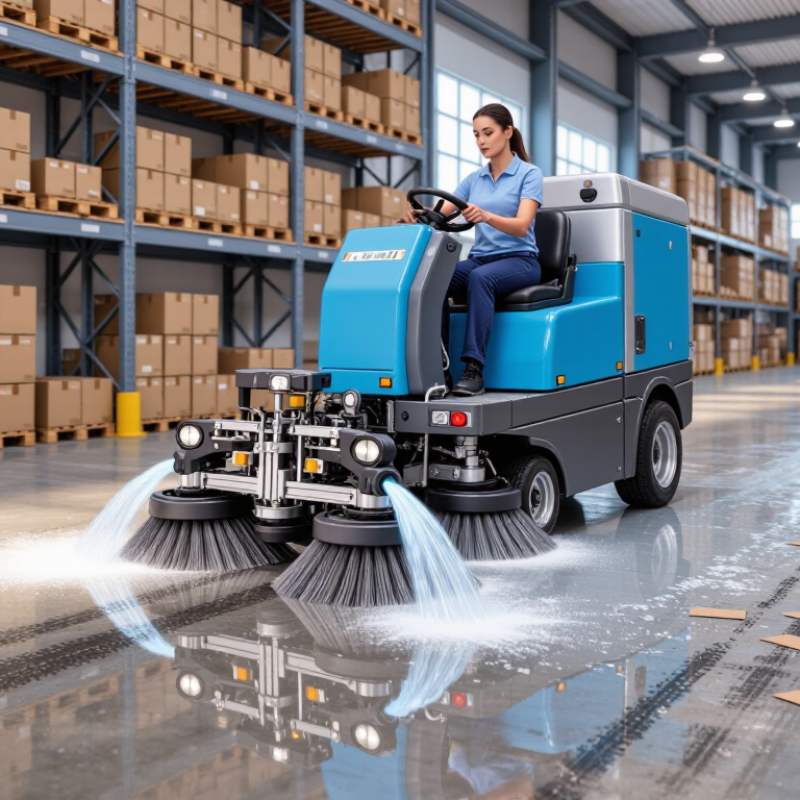
A Combination Sweeper Scrubber is designed to remove loose debris and wash hard floors in one coordinated pass. It can sweep dust, grit, and small litter while applying cleaning solution, scrubbing the surface, and recovering dirty water. The result is a practical option for large indoor spaces where separate cleaning passes take time. Think of a warehouse aisle after a busy shift: tire marks, fine dust, and scattered packaging may all need attention.

Maya Chen, a fictional composite floor-care specialist, offers this illustrative observation: “The machine saves a pass, but it still needs the right brush, water setting, and operator.” This is not a verified quotation from a real expert. The point is useful: performance depends on matching the machine to the floor, soil, and daily workload. A retail store, factory, and distribution center may need different settings.

This equipment is commonly used in warehouses, production areas, supermarkets, and other broad, hard-floor environments. It can help control dust and leave floors cleaner and drier than sweeping alone. But it is not a cure-all. Tight corners, heavy debris, or unsuitable floor finishes may require another tool or a slower approach. That matters. Before choosing a model, consider aisle width, cleaning hours, water capacity, and service support. Real-world results can be less tidy than a product brochure suggests.
What Is a Combination Sweeper Scrubber Used For?

What a Combination Sweeper Scrubber Is

What Is a Combination Sweeper Scrubber Used For?

What a Combination Sweeper Scrubber Is

A combination sweeper scrubber is a powered floor machine that collects loose debris and washes hard surfaces in one pass. A front brush gathers dust, grit, and small scraps. Behind it, water and cleaning solution loosen stuck-on soil, while a squeegee pulls dirty liquid into a recovery tank. The exact setup varies by machine. It is commonly used in warehouses, factories, loading areas, and large retail spaces where sweeping and mopping separately take time.

One pass. Less loose grit pushed through wet cleaning.

The U.S. Energy Information Administration’s 2018 Commercial Buildings Energy Consumption Survey counted about 5.9 million commercial buildings, covering roughly 97 billion square feet. That scale helps explain the need for efficient floor-care equipment. Still, a combination machine is not a cure-all: bulky waste, corners, and very sticky spills may need separate attention. Operators should match brush type, water flow, and travel speed to the floor and soil. Too much solution can leave streaks or a slippery finish.

Tips: Pick up cables and large debris before operating. Test the cleaning solution on a small area, and check the recovery tank during use. Slow down around tight turns. It takes a little practice.


How Its Sweeping and Scrubbing Systems Work

What Is a Combination Sweeper Scrubber Used For?
How Its Sweeping and Scrubbing Systems Work

A combination sweeper scrubber collects loose debris and washes the remaining soil in one pass. Depending on its design, side or cylindrical brushes move grit, leaves, and packaging into a hopper. Then scrub brushes work against the floor with cleaning solution. A vacuum system draws the dirty liquid through a rear squeegee into a recovery tank. The sequence sounds simple. Real floors are less predictable. Wet debris can smear, and heavy grit may need a separate pass.

Operators can adjust brush pressure, solution flow, and travel speed to suit the floor and soil. Too much solution may leave damp tracks; too little can reduce soil removal. Check the recovery tank and squeegee regularly, especially near corners, where water can remain. ISSA’s Value of Clean research found that 94% of consumers would avoid a business in the future after encountering a dirty restroom. That finding is about facility cleanliness, not machine performance, but it shows why consistent floor care matters. A combination unit saves a pass, not judgment. Sticky spills or embedded grime may still need pre-treatment.

Which Surfaces and Debris It Can Clean

A combination sweeper scrubber is designed for hard floors that collect both loose debris and stuck-on soil. On sealed concrete, warehouse floors, and suitable tile, its sweeping section gathers dust, grit, leaves, and small bits of paper or packaging. The scrubber then uses water, cleaning solution, and brushes or pads to loosen everyday grime. It can leave a cleaner, more controlled path than dry sweeping alone. Not every floor responds the same way.

Tips: Check that the floor is sealed and compatible with the machine’s brush and cleaning solution. Pick up bulky scraps first. A handful of gravel or tangled packaging can interfere with cleaning.

These machines are useful in wide indoor areas where dust and light spills appear together, such as loading zones and corridors. They are generally not meant for carpet, deep mud, or large loose debris. Sticky residue may need a slower pass, and some marks will still require spot cleaning. In practice, results depend on the floor’s texture, the amount of soil, and how quickly the operator adjusts water flow and brush pressure. It takes a little judgment. A rushed pass can leave damp streaks or missed edges.

What Is a Combination Sweeper Scrubber Used For?

Typical cleaning capability by debris or soil type

Combination sweeper scrubbers are designed to collect loose dry debris and scrub hard floors to remove wet soil in the same cleaning pass. Carpet is generally outside their intended use. Capabilities vary by machine, brush setup, and cleaning solution; large debris may need to be picked up separately.

Where Combination Sweeper Scrubbers Are Used

What Is a Combination Sweeper Scrubber Used For?

Where Combination Sweeper Scrubbers Are Used

Combination sweeper scrubbers are useful in large indoor spaces where loose debris and tracked-in dirt collect on hard floors. Warehouses are a common setting. A machine can gather dust, grit, and small scraps before washing the floor in the same pass. That saves time. It also reduces the need to sweep separately before scrubbing.

Retail stores, school corridors, factory floors, and transport facilities may benefit from this equipment, especially across broad, open areas. In a warehouse, for example, it can follow long aisles where forklift tires leave dark marks and fine dust settles near loading zones. In a supermarket, it can help maintain clean floors between busy periods. Operators still need to plan around shelves, customers, and narrow corners.

These machines are not ideal for every surface or mess. Tight rooms may be easier to clean with smaller equipment, and heavy debris can require removal before a pass. Floor type matters, too; settings and cleaning solutions should suit the surface. A damp patch can linger if the machine moves too quickly or the floor is uneven. Results depend on setup, maintenance, and careful operation—not just the machine.

Key Benefits and Operating Considerations

A combination sweeper scrubber collects loose dust and debris, then washes and recovers dirty water in one pass. It suits large, hard-floor areas such as warehouses, loading bays, and supermarkets. In a busy aisle, it can pick up grit before the brushes spread cleaning solution, leaving less moisture behind than a poorly controlled mop-and-bucket routine. Still, it is not a cure-all: bulky debris, tight corners, and uneven floors may need separate attention.

ISSA’s 612 Cleaning Times provides production-rate benchmarks for floor-care tasks, including automatic scrubbing. Walk-behind machines can cover roughly 20,000–40,000 square feet per hour under favorable conditions; this is a planning range, not a guarantee. Aisle congestion, soil level, turning, and tank refills all reduce real output. Operators should match brush pressure and solution flow to the floor, inspect the squeegee, and empty recovery tanks before dirty water leaves streaks. Small details matter.

Tips: Clear larger debris first. Test the cleaning solution on a discreet patch, and follow the floor-care and machine instructions. Track actual area cleaned per shift; the first estimate may be optimistic. A clean-looking floor can still be wet, so check drying time before reopening the lane.

What Is a Combination Sweeper Scrubber Used For? - Key Benefits and Operating Considerations

Dimension Typical Use or Benefit Operating Consideration
Core function Combines mechanical sweeping with wet scrubbing in one floor-cleaning pass. The sweeping system collects loose debris while brushes and cleaning solution address adhered soil. Check the machine’s operating sequence and settings; some models sweep and scrub simultaneously, while others allow the functions to be adjusted separately.
Loose debris Suitable for dust, grit, small scraps, and other loose debris commonly found in warehouses, manufacturing areas, and large commercial spaces. Large, bulky, or tangled debris may need to be removed manually first to prevent blockages or damage.
Floor soil Scrubbing can remove tracked-in dirt and many routine surface soils from compatible hard floors, such as sealed concrete, vinyl, or tile. Confirm that the floor finish, brush or pad, and cleaning solution are compatible. Test unfamiliar surfaces in a discreet area.
Typical locations Often used in broad, hard-floor areas such as distribution centers, production facilities, retail backrooms, and transport terminals. Consider aisle width, turning space, floor slope, traffic, and access to charging or refilling points when selecting a machine.
Cleaning efficiency Combining tasks can reduce separate sweeping and scrubbing passes, helping streamline routine floor maintenance. Actual productivity depends on debris load, floor condition, cleaning path, machine width, operator speed, and how often tanks or hoppers need attention.
Water and solution use Solution is applied to the floor during scrubbing, and a recovery system typically collects the resulting dirty water. Use the specified solution concentration, avoid over-wetting, and empty and rinse recovery tanks as required to help prevent odors and residue buildup.
Drying and slip control A functioning squeegee and recovery system can remove much of the wash water, leaving the floor drier than wet mopping alone. Inspect squeegee blades and recovery hoses. Use warning signs and manage pedestrian traffic until the floor is safe and dry.
Debris and wastewater handling Separate collection systems may capture swept solids and recover dirty wash water, reducing the need for separate cleaning equipment. Empty the debris hopper and dispose of recovered water according to site rules and applicable local requirements.
Routine preparation Pre-use checks help ensure the brushes, solution delivery, suction, and debris collection systems are ready for work. Check battery charge or fuel, brushes or pads, squeegee condition, filters, hoses, tanks, and hopper before operating.
After-use care Regular cleaning and inspection help maintain cleaning performance and reduce avoidable wear. Follow the operator manual for tank rinsing, debris removal, battery charging or refueling, and storage. Do not leave cleaning solution in tanks longer than recommended.
Not a substitute for every task Best suited to routine maintenance on compatible hard floors where loose debris and surface soil are both present. It may not replace specialized equipment for carpet, heavy spills, hazardous materials, deep floor restoration, or debris beyond the machine’s capacity.

Selection tip: Match the machine to the floor type, cleaning frequency, debris level, area size, and available operator training. Always follow the equipment manual and site safety procedures.

Powder Coat Booths

For those larger-sized parts, or smaller quantity runs, we have 2 independent powder coat booths and ovens. The quality, durability and affordability of today’s powder coating finishes make this the process of choice for world-class companies.

Powder coating advantages over other forms of coating are many. Materials used in the Powder coating process can be metals and non-metals that come in a multitude of thicknesses, textures, colors, etc. Another of Powder coating’s biggest advantages over conventional coatings is its ability to create finishes in many different textures. Powder Coating Booths allow us the ability to apply these advantages to large products.

Wet Paint Line

Tri-State Fabricators runs a full-service conveyor line for painting. Wet painting can provide protection or decoration to many different part styles. From start to finish, every project is easier to undergo random and point-based inspection by our skilled painting team.

Advantages to our Wet Paint Line are these lines start with product prep and ends with a thorough inspection of a high quality finished product. Our ability to complete large and small projects with a superior finish and doing so in a timely and economical fashion. This passes along the savings in production to our customers. When powder coating ins not an option, our Wet Paint Line gets the job done right the first time.

Wet Paint Booths

When the parts get big and heavy we roll-out our custom paint racks and oversize booth. By utilizing our partnerships with all the major paint brands, we can match virtually any color with wet paint.

The advantages of having access to a Wet Paint Booth are many. Large projects of many different shapes can be loaded into the booth. The Wet Paint Booth offers an environment that is much more controlled than a typical parts painting operation.

Not only are they used because of their controlled environment, but they’re are also advantageous when it comes to applying paint to parts that are needed in industries that require specialty coatings such as medical, aerospace, etc.

Military CARC

Our military forces have some very high standards when it comes to the finish of their vehicles and equipment. From the first pre-treatment step to final coat, it takes a great deal of knowledge and experience to protect the men and women of our armed forces. They deserve only the best, and Tri-State Fabricators provides it.

All of our processes are closely monitored by our staff and management teams. Both of which are highly trained in the processes of metal fabrication and finishing. Tri-State Fabricators’ goal is to always fully satisfy each and every customer, including the military. We will always put a 110% into what we do.

Glass-Bead Blasting

Abrasive media blasting is an excellent way to remove old paint, rust, and increase the paint/powder adhesion. Glass beads produce a much smoother and brighter finish than angular abrasives; leaving the part clean yet without any dimensional change. Chemically inert and environmentally friendly, we can recycle our beads approximately 30 times; making them a more preferred method of metal cleaning or surface finishing.

Advantages to Glass Bead Blasting are many. Glass bead blast media is used when a project is needing rough surfaces need to become smooth for applications of coatings such as paint. It is typically used to clean paint and rust from a product surface without deforming the surface it is being used on. Overall, compared to many other blasting media, Glass Bead Blasting is a very economical choice and those savings are always passed on to our customers.

Part Washing

Tri-State Fabricators utilize a zinc phosphate wash to clean and etch the material to ensure the best paint adhesion possible. The unique design of our 3-stage wash system does the work like a 5-stage. From Cleaning and rinsing to conversion coating and post-treatment, Our Part Washing process is a complete service and works throughout the fabrication service and the finishing service.

Along with the previously mentioned benefits, Curing is a vital chemical reaction that leaves the product finish hard and relatively safe from mild abrasion and aggressive corrosion. This process can be done in more than one way; ambient air-dry or in curing ovens at temps that exceed 240°.

Burn-Off Oven

From fixing paint mistakes (someone else’s of course) to simply cleaning our paint line hooks, our burn-off oven is put to good use. After a quick burn-off, a little clean up, and a fresh coat of paint, your parts will look better than new.

Why does our Burn-Off Oven work so well? Because super heating the air around parts turns the materials into ashes. From paint and powder coatings to rubber and machining oils, high temps do the job without degrading the integrity of the part.

Masking

Masking is a vital part of producing high quality products. We have die-cut masking patterns to protect machined surfaces as well as a wide range of plugs and caps to protect threaded holes and bolts. We provide permanent and temporary masking.

Masking allows the selected sections of a product to be protected from a fabrication or finishing service. This can be with both chemicals when etching and tapes, paints when only finishing just a section of the product. Masking is great in aiding the customization process of a project.

Screen Printing

Screen printing is a photographic process that transfers artwork onto a porous nylon screen which allows colored ink to flow through the screen and be deposited on an aluminum or plastic component. We can generally have just about any design created onto a screen for your parts.

Some of the advantages of Screen Printing are, brand recognition for your business displaying on your products, assembly instructions, product warnings/hazards, etc. Tri-State Fabricators produces Screen Printing of the highest quality so you know it’s durable.

Metal Finishing

Metal Finishing is the art of treating the exterior portion of product, often metal but can also be made of other materials, so that the surface is clean and free of any debris. Then the process of applying coats or either paint of powder coat takes place. This coating process improves the quality of the product in both appearance and resistance to wear and corrosion.

Tri-State Fabricators, Inc., understands that a project typically isn’t complete until a high-quality finish has been added to your product. This is why our painting and powder coating teams continuously inspect the products throughout the Metal Finishing process.
