


Cold Sublimation Transfer Printing is a heat-based method for transferring dye onto compatible materials, most commonly polyester fabrics. The design is printed onto transfer paper, positioned against the material, and pressed under controlled heat and pressure. In workflows described as “cold,” the transfer is allowed to cool before the paper is removed. That pause can help limit smudging or ghosting, though results depend on the paper, ink, fabric, and press settings.
The name is not perfectly standardized. Some suppliers use “cold” to describe a particular release or peeling method, rather than a separate sublimation chemistry. That distinction matters when comparing equipment or production claims. Sublimation dye bonds most effectively with polyester; untreated cotton is generally not a direct match. A bright sample can look less impressive on a different fabric. Small details matter.
Demand for digital textile printing offers useful context, but not a direct measure of this specific technique. Grand View Research’s Digital Textile Printing Market Size, Share & Trends Analysis Report estimated the global market at USD 2.7 billion in 2023 and projected a 12.1% compound annual growth rate from 2024 to 2030. The estimate covers digital textile printing broadly, not Cold Sublimation Transfer Printing alone. This guide examines how the process works, where it performs well, and which settings deserve a test run before full production. Because terminology varies, verify supplier instructions with a small, measured sample.
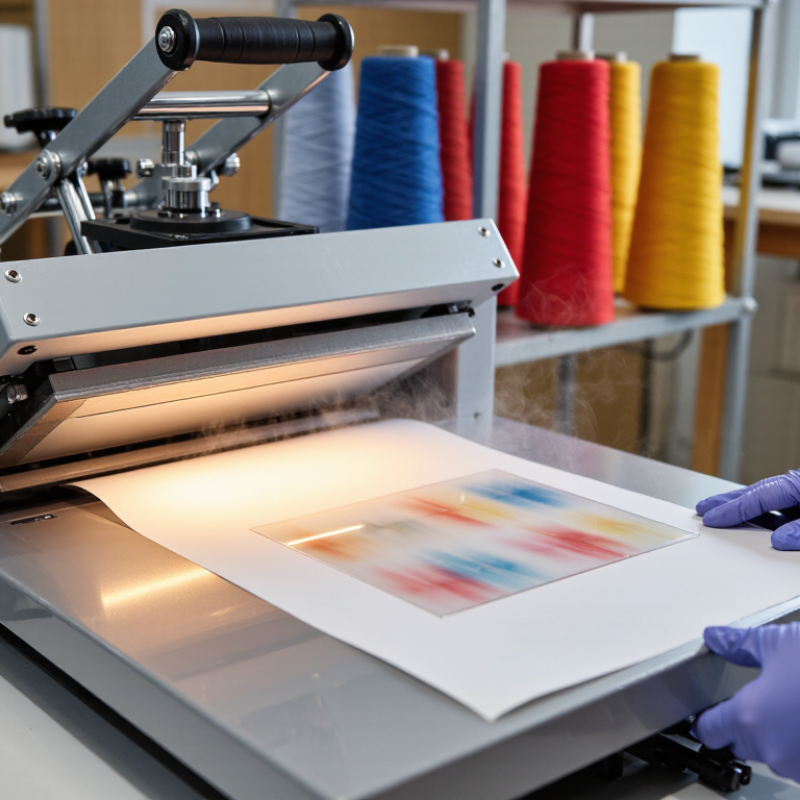
What Is Cold Sublimation Transfer Printing?
Meaning and Core Principle of Cold Sublimation Transfer Printing
Cold sublimation transfer printing is a heat-based method for moving dye from printed transfer paper onto a suitable surface. The word “cold” can be misleading: heat is still essential. It usually describes when the transfer paper is peeled away—after the print has cooled. Terminology can vary, so check the paper’s instructions.
During pressing, heat turns sublimation dye into gas. The dye enters polyester fibers or a compatible polymer coating, then becomes trapped as the material cools. That is the key. Unlike a surface layer of ink, the color becomes part of the receptive material. This can produce a smooth feel, but results depend on the fabric, coating, pressure, and temperature. A slightly uneven press may leave pale edges or weak color.
Tips: Let the transfer cool before peeling, unless its instructions specify otherwise. Test a small swatch first. Keep the paper flat and avoid shifting it during pressing; even a small movement can blur fine lines.

Representative temperature checkpoints for a cold-peel sublimation transfer process
Sublimation transfer uses heat to turn dye into gas, allowing it to diffuse into polyester or a polymer-coated surface. “Cold peel” describes waiting for the transfer to cool before removing the paper—it does not mean the transfer happens without heat. Around 195°C is a representative press temperature; actual settings depend on the ink, material, and equipment.
Cold sublimation transfer printing uses disperse dye printed onto coated transfer paper, then applied to a compatible surface with heat and pressure. “Cold” usually refers to cooling the transfer before peeling, not dyeing at room temperature. Peeling too soon can blur edges or create uneven color. The process works best on polyester fabric and polymer-coated items; untreated cotton does not reliably hold sublimation dye.
Materials include transfer paper, disperse-dye ink, and a polyester-rich substrate. Equipment typically includes a compatible printer, a flat or calendar heat press, protective paper, and tools for checking temperature and pressure. Textile Exchange’s Materials Market Report 2024 estimates that polyester made up 57% of global fiber production in 2023, from a total of 124 million tonnes. That figure shows polyester’s broad availability, not that every polyester fabric transfers equally well. Coatings, fabric construction, and press settings all affect the result.
Tips: Test a small swatch. Record time, temperature, and pressure, then change one setting at a time. Let the transfer cool fully before peeling. Even careful tests can disappoint; pale areas may come from uneven contact, not just weak ink.
What Is Cold Sublimation Transfer Printing?
Step-by-Step Workflow for Creating a Cold Sublimation Transfer
Cold sublimation transfer printing uses heat to move sublimation dye from paper into a polyester surface or polymer-coated object. “Cold” describes when the paper is removed: after the transfer cools, not while it is hot. That timing can help reduce smearing and uneven edges.
Start by preparing a mirrored design and printing it onto sublimation paper with compatible ink. Let the print dry, then trim excess paper around the artwork. Check the blank for dust, moisture, or wrinkles. A quick lint-roll can help on fabric. Position the design face down, secure it with heat-resistant tape, and keep the substrate flat. Small shifts matter.
Set the press according to the substrate supplier’s guidance for temperature, pressure, and time. These settings vary, so test a small sample rather than guessing. Press the transfer, then move the item to a clean, heat-safe surface and let it cool fully. Peel the paper slowly. If it resists, wait longer; pulling too soon can blur fine details. Inspect the result under good light. A slightly dull first test is not always a printer problem; pressure, moisture, or the surface coating may be responsible. Record adjustments, but change one setting at a time.
Cold sublimation transfer printing is suited to fabrics that contain polyester and can withstand the required heat. The dye bonds with polyester fibers, so a high polyester content usually produces stronger, clearer color. A polyester-rich blend can work, but its colors may look softer. White or pale fabric is generally best because sublimation inks are transparent and cannot print white. Dark material may hide the design.
“Cold” refers to letting the transfer cool before peeling away the paper. Peeling too soon can blur fine edges or cause ghosting. It is easy to assume any smooth fabric will work; that is not the case. Cotton does not reliably accept sublimation dye unless it has a suitable coating, and results can vary. Test a small swatch.
For hard surfaces, use a flat item with a compatible polyester coating. The area should be clean, dry, and free from dust or oil. Even a tiny crumb can leave a pale spot under pressure. Curves, seams, and deep texture can prevent even contact, making color patchy. Check that the material can tolerate the press temperature, and test one sample before printing a full batch. Small tests matter. A coated surface may still shift the final color, so compare the pressed sample with your artwork under good light.
Cold sublimation transfer printing uses heat to move dye from printed paper into polyester fibers or a polymer coating. “Cold” usually describes the peel: the transfer is allowed to cool before the paper is removed. The press still gets hot. That distinction matters when choosing compatible paper and following its recommended process.
One benefit is sharp, detailed color without a thick layer sitting on the surface. On suitable fabric, the image can feel smooth and remain flexible during wear. It also works well for repeat jobs, such as team shirts or small runs of polyester bags. Small text can reproduce clearly, provided the artwork and transfer settings are well prepared.
There are limits. Cotton alone does not bond with sublimation dye, and dark fabric can hide the colors. White or light-colored polyester is usually a better fit. Heat, pressure, and timing need control; too much heat can dull colors or mark the material. Cooling adds a little wait time. Not dramatic, but easy to overlook. Common applications include sportswear, flags, coated drinkware, and display fabrics. Test a sample first, since coatings and fabric finishes can affect the result.
| Topic | Details | Practical Considerations |
|---|---|---|
| What “cold” means | In this context, “cold” usually refers to a cold-peel transfer: the printed transfer paper is allowed to cool before it is removed. | The dye transfer itself still requires heat and pressure. It is not a room-temperature sublimation process. |
| How the process works | Sublimation ink is printed in reverse onto transfer paper, then heat and pressure turn the dye into a gas so it can enter a compatible polyester surface. | After pressing, the transfer is left to cool before the paper is peeled away. Follow the ink, paper, substrate, and heat-press instructions. |
| Key benefits | Dye becomes part of the polyester surface rather than forming a thick layer on top, which can produce smooth-feeling prints with fine detail and strong color. | The result depends on suitable materials, correct color management, even pressure, and controlled temperature and time. |
| Material compatibility | Best suited to white or light-colored polyester fabrics and products with a polymer coating designed for sublimation. | Untreated cotton and most natural fibers do not retain sublimation dye in the same way. Standard sublimation also does not print white ink. |
| Limitations | Dark substrates can obscure the dye, and results on fabric depend on polyester content. Heat can also affect sensitive materials or cause unwanted marks. | Test the specific substrate first. Use a protective sheet where appropriate and avoid stretching or shifting the transfer during pressing. |
| Cold-peel considerations | Cooling before peeling can help prevent smearing or transfer disturbance when the specified paper and process call for a cold peel. | Peel instructions vary. Some transfer papers are designed for hot or warm peeling, so “cold peel” is not a universal requirement. |
| Typical applications | Polyester sportswear, flags, banners, soft signage, and coated hard goods such as suitable mugs, panels, and photo products. | Hard goods need a compatible sublimation coating and a press or fixture suited to their shape. |
| Process control | Temperature, pressing time, and pressure vary by substrate and consumables; no single setting is suitable for every job. | Use the specifications for the materials being used, verify press temperature, and run a test before production. |


For those larger-sized parts, or smaller quantity runs, we have 2 independent powder coat booths and ovens. The quality, durability and affordability of today’s powder coating finishes make this the process of choice for world-class companies.
Powder coating advantages over other forms of coating are many. Materials used in the Powder coating process can be metals and non-metals that come in a multitude of thicknesses, textures, colors, etc. Another of Powder coating’s biggest advantages over conventional coatings is its ability to create finishes in many different textures. Powder Coating Booths allow us the ability to apply these advantages to large products.
Tri-State Fabricators runs a full-service conveyor line for painting. Wet painting can provide protection or decoration to many different part styles. From start to finish, every project is easier to undergo random and point-based inspection by our skilled painting team.
Advantages to our Wet Paint Line are these lines start with product prep and ends with a thorough inspection of a high quality finished product. Our ability to complete large and small projects with a superior finish and doing so in a timely and economical fashion. This passes along the savings in production to our customers. When powder coating ins not an option, our Wet Paint Line gets the job done right the first time.
When the parts get big and heavy we roll-out our custom paint racks and oversize booth. By utilizing our partnerships with all the major paint brands, we can match virtually any color with wet paint.
The advantages of having access to a Wet Paint Booth are many. Large projects of many different shapes can be loaded into the booth. The Wet Paint Booth offers an environment that is much more controlled than a typical parts painting operation.
Not only are they used because of their controlled environment, but they’re are also advantageous when it comes to applying paint to parts that are needed in industries that require specialty coatings such as medical, aerospace, etc.
Our military forces have some very high standards when it comes to the finish of their vehicles and equipment. From the first pre-treatment step to final coat, it takes a great deal of knowledge and experience to protect the men and women of our armed forces. They deserve only the best, and Tri-State Fabricators provides it.
All of our processes are closely monitored by our staff and management teams. Both of which are highly trained in the processes of metal fabrication and finishing. Tri-State Fabricators’ goal is to always fully satisfy each and every customer, including the military. We will always put a 110% into what we do.
Abrasive media blasting is an excellent way to remove old paint, rust, and increase the paint/powder adhesion. Glass beads produce a much smoother and brighter finish than angular abrasives; leaving the part clean yet without any dimensional change. Chemically inert and environmentally friendly, we can recycle our beads approximately 30 times; making them a more preferred method of metal cleaning or surface finishing.
Advantages to Glass Bead Blasting are many. Glass bead blast media is used when a project is needing rough surfaces need to become smooth for applications of coatings such as paint. It is typically used to clean paint and rust from a product surface without deforming the surface it is being used on. Overall, compared to many other blasting media, Glass Bead Blasting is a very economical choice and those savings are always passed on to our customers.
Tri-State Fabricators utilize a zinc phosphate wash to clean and etch the material to ensure the best paint adhesion possible. The unique design of our 3-stage wash system does the work like a 5-stage. From Cleaning and rinsing to conversion coating and post-treatment, Our Part Washing process is a complete service and works throughout the fabrication service and the finishing service.
Along with the previously mentioned benefits, Curing is a vital chemical reaction that leaves the product finish hard and relatively safe from mild abrasion and aggressive corrosion. This process can be done in more than one way; ambient air-dry or in curing ovens at temps that exceed 240°.
From fixing paint mistakes (someone else’s of course) to simply cleaning our paint line hooks, our burn-off oven is put to good use. After a quick burn-off, a little clean up, and a fresh coat of paint, your parts will look better than new.
Why does our Burn-Off Oven work so well? Because super heating the air around parts turns the materials into ashes. From paint and powder coatings to rubber and machining oils, high temps do the job without degrading the integrity of the part.
Masking is a vital part of producing high quality products. We have die-cut masking patterns to protect machined surfaces as well as a wide range of plugs and caps to protect threaded holes and bolts. We provide permanent and temporary masking.
Masking allows the selected sections of a product to be protected from a fabrication or finishing service. This can be with both chemicals when etching and tapes, paints when only finishing just a section of the product. Masking is great in aiding the customization process of a project.
Screen printing is a photographic process that transfers artwork onto a porous nylon screen which allows colored ink to flow through the screen and be deposited on an aluminum or plastic component. We can generally have just about any design created onto a screen for your parts.
Some of the advantages of Screen Printing are, brand recognition for your business displaying on your products, assembly instructions, product warnings/hazards, etc. Tri-State Fabricators produces Screen Printing of the highest quality so you know it’s durable.
Metal Finishing is the art of treating the exterior portion of product, often metal but can also be made of other materials, so that the surface is clean and free of any debris. Then the process of applying coats or either paint of powder coat takes place. This coating process improves the quality of the product in both appearance and resistance to wear and corrosion.
Tri-State Fabricators, Inc., understands that a project typically isn’t complete until a high-quality finish has been added to your product. This is why our painting and powder coating teams continuously inspect the products throughout the Metal Finishing process.

