


What Is CNC Machining Metal and How Does It Work?

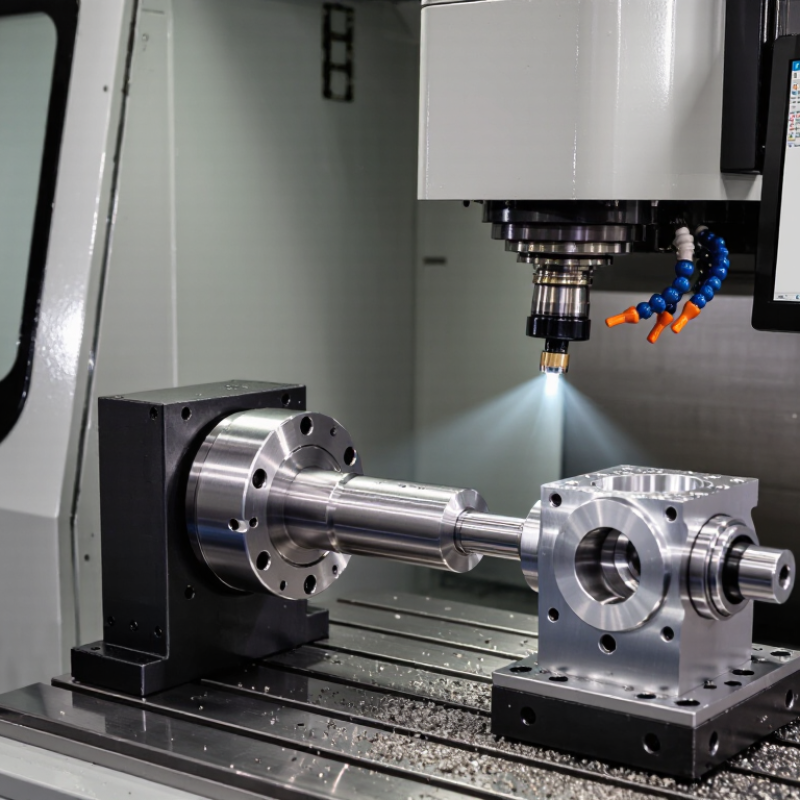
Cnc Machining Metal turns a digital design into a physical component through controlled material removal. A cutting tool follows programmed coordinates, while the workpiece rotates, slides, or remains fixed. This controlled choreography shapes aluminum brackets, steel shafts, titanium housings, and complex aerospace parts.

The process begins with CAD geometry and CAM toolpaths. Operators then select cutting speed, feed rate, depth of cut, tooling, coolant, and workholding. Small decisions matter. A dull carbide insert can leave visible lines across a supposedly smooth surface. Heat can also distort thin walls or change dimensional accuracy. Mike Lynch, a manufacturing educator and author of CNC programming books, describes the principle simply: “CNC is a technology, not a machine.” That distinction matters because results depend on programming, setup, inspection, and operator judgment.

Industry data shows why this capability remains important. Grand View Research estimated the global CNC machine market at approximately USD 88.3 billion in 2023. Its report also projects strong growth through 2030, driven by automation and demand for precision manufacturing. The International Federation of Robotics reported 541,302 industrial robot installations worldwide in 2023. That figure reflects a wider shift toward connected production, although robots do not replace sound machining knowledge.

This guide explains how Cnc Machining Metal works, from material selection to final inspection. It will examine milling, turning, tolerances, surface finish, tooling, and cost. The explanation cannot cover every alloy or machine configuration. That limitation deserves attention. Real production often demands testing, measurement, and practical adjustment beyond textbook formulas.
What Is CNC Machining Metal and How Does It Work?

What Is CNC Machining Metal?

CNC machining metal is a subtractive manufacturing process. A computer-controlled machine removes material from a solid metal block. The process follows digital design instructions, often created with CAD and CAM software. Cutting tools rotate, move, and shape the workpiece with controlled precision.

Machines may use three, four, or five axes. More axes can reach complex surfaces with fewer setups. Common metals include aluminum, steel, brass, and titanium. Each material needs suitable cutting speeds, feeds, and tooling. In a workshop, operators also check tool wear, vibration, heat, and chip formation. These details affect surface finish and dimensional accuracy. The finished part still requires inspection. Calipers, micrometers, or coordinate measuring equipment can verify critical features. It is precise work, but not effortless.

Tips: Confirm the drawing’s tolerances before machining. Use rigid workholding to reduce movement. Allow enough material for finishing passes. Sharp tools usually produce cleaner edges. Coolant can control heat, but poor chip removal may still damage a part. A perfect first setup is not guaranteed. Small errors in clamping or tool offsets can change the result. Reviewing the setup before cutting often prevents expensive rework.


CNC machining removes material from a solid workpiece using computer-controlled cutting tools. Material density affects part weight, cutting behavior, tool selection, and machining efficiency. The values shown are typical room-temperature densities in grams per cubic centimeter.

How CNC Machines Cut and Shape Metal

CNC machining cuts and shapes metal through programmed movements. A digital model guides the machine’s cutting tools along carefully calculated paths. The operator secures the metal block, loads the program, and checks the tool setup before cutting begins.

The process can involve milling, turning, drilling, or tapping. During milling, rotating cutters remove material from the workpiece. Turning spins the metal while a fixed tool shapes its diameter. Sharp tools remove thin layers, leaving slots, holes, shoulders, or curved surfaces. Chips fall away as coolant reduces heat and friction. Small details matter.

Accuracy depends on more than software. Tool wear, metal hardness, vibration, and poor workholding can change the final size. A loose clamp may leave marks or create dangerous movement. Experienced machinists measure critical features with calipers, micrometers, or coordinate equipment during production. They also inspect the first part before running more pieces. Even a precise program can produce an imperfect result. That reality deserves attention. Adjustments may involve cutting speed, feed rate, tool offset, or a revised setup. A clean edge often reflects careful preparation rather than faster cutting.

Key Steps in the CNC Metal Machining Process

CNC metal machining begins with a digital model, but the process depends on disciplined preparation. An engineer checks wall thickness, hole sizes, tolerances, and tool access before programming. The CAD file then becomes toolpath instructions through computer-aided manufacturing software. According to the U.S. National Institute of Standards and Technology, better digital coordination can reduce manufacturing errors and improve process traceability. That matters when a small offset can ruin an expensive aluminum billet.

The machine setup follows. An operator secures the metal blank, loads cutting tools, sets the work coordinate system, and verifies tool length. The program is often tested through simulation before cutting starts. Then the spindle removes material through milling, turning, drilling, or boring. Cutting speed, feed rate, coolant flow, and tool wear require constant attention. A 2023 report from the International Federation of Robotics recorded more than 4 million industrial robots operating worldwide, showing how automation is expanding across manufacturing. CNC machining still needs human judgment.

Inspection comes after machining. Operators measure critical features with calipers, micrometers, or coordinate-measuring equipment. They compare results with the engineering drawing and record deviations. A first article may pass, yet later parts can drift as tools wear or heat changes the machine. This is where real experience becomes difficult to replace. The simulation looked perfect. The part did not. Revising offsets, improving fixturing, or changing the cutting sequence may be necessary. The process is precise, but never careless.

What Is CNC Machining Metal and How Does It Work? - Key Steps in the CNC Metal Machining Process
Step Process Stage What Happens Typical Data or Parameters Common Equipment Primary Result
1 Design and CAD Modeling A three-dimensional part model is created with the required dimensions, holes, radii, threads, surface requirements, and material information. Units: millimeters or inches
Geometry: solid model, holes, pockets, slots, and contours
Drawing information: dimensions, datums, and tolerances
CAD software and engineering drawings A digital definition of the metal component
2 CAM Programming The CAD model is converted into toolpaths that define how the cutting tool will remove material from the workpiece. Toolpath types: facing, roughing, finishing, drilling, and threading
Cutting data: spindle speed, feed rate, depth of cut, and step-over
Output: machine-readable G-code or equivalent numerical-control code
CAM software and post-processor A verified machining program
3 Material Selection and Preparation A metal blank is selected according to strength, corrosion resistance, thermal performance, machinability, and final application requirements. Common metals: aluminum, steel, stainless steel, brass, copper, and titanium
Stock forms: bar, plate, block, tube, or casting
Allowance: extra material is retained for machining
Material saw, stock preparation tools, and measuring equipment A correctly sized and identified workpiece
4 Workholding and Machine Setup The workpiece is secured, tools are loaded, and the machine establishes the relationship between the part, cutting tools, and coordinate system. Setup data: work offset, tool length offset, fixture location, and tool number
Important condition: the part must be held rigidly without excessive distortion
CNC mill, CNC lathe, vise, chuck, fixture, probes, and tool holders A repeatable machining setup
5 Machine Calibration and Program Verification The operator checks tool offsets, coordinate directions, program travel, clearance, and possible collisions before cutting the metal. Checks: dry run, single-block operation, toolpath simulation, and offset verification
Safety factors: adequate clearance and correct spindle direction
Control panel, simulation software, probes, and inspection tools A validated program and safer first operation
6 Roughing Larger cutting tools remove most of the unwanted material efficiently, leaving a controlled amount for later finishing operations. Objective: high material-removal rate
Typical strategy: multiple passes with a programmed stock allowance
Key controls: cutting load, chip evacuation, coolant, and tool deflection
Carbide end mills, drills, turning tools, and coolant system A near-net-shape component with machining allowance
7 Finishing Smaller or specialized tools perform the final passes to achieve the specified dimensions, geometry, edge condition, and surface finish. Operations: finish milling, reaming, boring, threading, chamfering, and turning
Surface finish: commonly specified using Ra values
Dimensional control: depends on machine condition, tool wear, material, and setup
Finish mills, reamers, boring tools, taps, thread mills, and turning tools A finished part close to its design requirements
8 In-Process Inspection Critical features are measured during production so that offsets can be corrected before a dimensional problem affects additional parts. Measured features: diameter, length, position, flatness, perpendicularity, and surface condition
Typical tools: calipers for general checks and micrometers or gauges for closer control
Calipers, micrometers, height gauges, probes, and bore gauges Early detection of dimensional variation
9 Deburring and Cleaning Sharp edges, burrs, chips, and cutting fluid are removed without changing the functional geometry of the component. Methods: hand deburring, abrasive tools, brushing, washing, or controlled tumbling
Requirement: preserve critical edges, holes, threads, and mating surfaces
Deburring tools, brushes, washers, and compressed-air systems A clean and safe-to-handle part
10 Final Inspection The completed part is compared with the engineering drawing or digital inspection plan before release. Inspection data: dimensional results, geometric tolerances, surface finish, material traceability, and visual condition
Typical capability: standard CNC work may achieve approximately ±0.1 mm; tighter values require controlled equipment, tooling, and process conditions
Coordinate-measuring machine, optical comparator, gauges, and surface tester Documented conformity decision
11 Optional Post-Processing Additional treatments may be applied to improve corrosion resistance, hardness, wear resistance, appearance, or dimensional stability. Examples: anodizing for aluminum, plating, passivation for stainless steel, heat treatment, powder coating, and surface polishing
Note: treatment can affect dimensions and should be included in the design plan
Specialized finishing and heat-treatment equipment Improved functional or cosmetic performance
12 CNC Process Output CNC machining produces accurate, repeatable metal parts by controlling tool movement along programmed axes while material is removed. Common machine types: 3-axis, 4-axis, and 5-axis machining centers; CNC lathes for rotational parts
Main variables: axis motion, spindle speed, feed rate, tool geometry, workholding, coolant, and inspection control
CNC machining center or CNC turning center A repeatable metal component manufactured from digital instructions

Common Metals Used in CNC Machining

CNC machining turns digital designs into precise metal parts by removing material with computer-controlled cutting tools. The chosen metal strongly affects cutting speed, tool wear, surface finish, and final cost. No material is universally easy to machine.

Aluminum is lightweight and machines quickly, making it useful for housings, brackets, and prototypes. It produces bright chips, but sharp tools help prevent material from sticking to the cutter.

Carbon steel offers strength and predictable performance. However, it can generate heat during heavy cuts, so proper coolant flow matters.

Stainless steel resists corrosion and looks clean, yet it often work-hardens. Slow, careless cutting can make the next pass harder.

Brass machines smoothly and can produce crisp edges with little effort. It suits fittings, small mechanical parts, and decorative components.

Copper conducts heat and electricity well, but its softness may cause burrs or rough edges.

Titanium is strong, light, and corrosion-resistant. It also demands patience, rigid workholding, and careful heat control. It cuts slowly. That choice matters.

Material selection should match the part’s load, environment, tolerance, and production volume. A machinist may inspect chips, listen for vibration, and measure the first part before continuing.

Drawings sometimes underestimate finishing needs. I have found that a technically suitable metal can still create unnecessary problems when its machining behavior is ignored. Testing one sample often reveals more than relying on a material chart alone.

Benefits and Applications of CNC Metal Machining

CNC metal machining uses computer-controlled tools to shape aluminum, steel, titanium, brass, and other alloys. A digital design guides cutting, drilling, turning, or milling operations. The machine follows programmed coordinates with repeatable movement. In practice, the result still depends on tooling, fixturing, material condition, and inspection.

The main benefit is consistency. A properly prepared process can produce dozens of parts with nearly identical dimensions. This helps manufacturers control assembly fit and reduce manual rework. CNC machining also supports complex curves, narrow slots, threaded holes, and internal features. Operators can adjust cutting speed and tool paths for different metals. Short setup times can make small production runs practical. Fast changes matter.

Applications cover many demanding fields. Machined metal parts appear in industrial equipment, robotics, transportation systems, energy hardware, and laboratory instruments. Engineers often use CNC machining for prototypes because design changes can move from a computer model to a physical part quickly. It also suits custom brackets, shafts, housings, molds, and replacement components. Careful inspection remains essential, especially where tight tolerances affect safety or performance.

CNC machining is not effortless. A misplaced zero point can spoil an entire batch. Tool wear may leave rough edges or inaccurate holes. Heat can also change dimensions during cutting. These limits deserve attention when estimating cost, lead time, and material waste. A skilled operator checks the first part, measures critical features, and refines the process before wider production.

Powder Coat Booths

For those larger-sized parts, or smaller quantity runs, we have 2 independent powder coat booths and ovens. The quality, durability and affordability of today’s powder coating finishes make this the process of choice for world-class companies.

Powder coating advantages over other forms of coating are many. Materials used in the Powder coating process can be metals and non-metals that come in a multitude of thicknesses, textures, colors, etc. Another of Powder coating’s biggest advantages over conventional coatings is its ability to create finishes in many different textures. Powder Coating Booths allow us the ability to apply these advantages to large products.

Wet Paint Line

Tri-State Fabricators runs a full-service conveyor line for painting. Wet painting can provide protection or decoration to many different part styles. From start to finish, every project is easier to undergo random and point-based inspection by our skilled painting team.

Advantages to our Wet Paint Line are these lines start with product prep and ends with a thorough inspection of a high quality finished product. Our ability to complete large and small projects with a superior finish and doing so in a timely and economical fashion. This passes along the savings in production to our customers. When powder coating ins not an option, our Wet Paint Line gets the job done right the first time.

Wet Paint Booths

When the parts get big and heavy we roll-out our custom paint racks and oversize booth. By utilizing our partnerships with all the major paint brands, we can match virtually any color with wet paint.

The advantages of having access to a Wet Paint Booth are many. Large projects of many different shapes can be loaded into the booth. The Wet Paint Booth offers an environment that is much more controlled than a typical parts painting operation.

Not only are they used because of their controlled environment, but they’re are also advantageous when it comes to applying paint to parts that are needed in industries that require specialty coatings such as medical, aerospace, etc.

Military CARC

Our military forces have some very high standards when it comes to the finish of their vehicles and equipment. From the first pre-treatment step to final coat, it takes a great deal of knowledge and experience to protect the men and women of our armed forces. They deserve only the best, and Tri-State Fabricators provides it.

All of our processes are closely monitored by our staff and management teams. Both of which are highly trained in the processes of metal fabrication and finishing. Tri-State Fabricators’ goal is to always fully satisfy each and every customer, including the military. We will always put a 110% into what we do.

Glass-Bead Blasting

Abrasive media blasting is an excellent way to remove old paint, rust, and increase the paint/powder adhesion. Glass beads produce a much smoother and brighter finish than angular abrasives; leaving the part clean yet without any dimensional change. Chemically inert and environmentally friendly, we can recycle our beads approximately 30 times; making them a more preferred method of metal cleaning or surface finishing.

Advantages to Glass Bead Blasting are many. Glass bead blast media is used when a project is needing rough surfaces need to become smooth for applications of coatings such as paint. It is typically used to clean paint and rust from a product surface without deforming the surface it is being used on. Overall, compared to many other blasting media, Glass Bead Blasting is a very economical choice and those savings are always passed on to our customers.

Part Washing

Tri-State Fabricators utilize a zinc phosphate wash to clean and etch the material to ensure the best paint adhesion possible. The unique design of our 3-stage wash system does the work like a 5-stage. From Cleaning and rinsing to conversion coating and post-treatment, Our Part Washing process is a complete service and works throughout the fabrication service and the finishing service.

Along with the previously mentioned benefits, Curing is a vital chemical reaction that leaves the product finish hard and relatively safe from mild abrasion and aggressive corrosion. This process can be done in more than one way; ambient air-dry or in curing ovens at temps that exceed 240°.

Burn-Off Oven

From fixing paint mistakes (someone else’s of course) to simply cleaning our paint line hooks, our burn-off oven is put to good use. After a quick burn-off, a little clean up, and a fresh coat of paint, your parts will look better than new.

Why does our Burn-Off Oven work so well? Because super heating the air around parts turns the materials into ashes. From paint and powder coatings to rubber and machining oils, high temps do the job without degrading the integrity of the part.

Masking

Masking is a vital part of producing high quality products. We have die-cut masking patterns to protect machined surfaces as well as a wide range of plugs and caps to protect threaded holes and bolts. We provide permanent and temporary masking.

Masking allows the selected sections of a product to be protected from a fabrication or finishing service. This can be with both chemicals when etching and tapes, paints when only finishing just a section of the product. Masking is great in aiding the customization process of a project.

Screen Printing

Screen printing is a photographic process that transfers artwork onto a porous nylon screen which allows colored ink to flow through the screen and be deposited on an aluminum or plastic component. We can generally have just about any design created onto a screen for your parts.

Some of the advantages of Screen Printing are, brand recognition for your business displaying on your products, assembly instructions, product warnings/hazards, etc. Tri-State Fabricators produces Screen Printing of the highest quality so you know it’s durable.

Metal Finishing

Metal Finishing is the art of treating the exterior portion of product, often metal but can also be made of other materials, so that the surface is clean and free of any debris. Then the process of applying coats or either paint of powder coat takes place. This coating process improves the quality of the product in both appearance and resistance to wear and corrosion.

Tri-State Fabricators, Inc., understands that a project typically isn’t complete until a high-quality finish has been added to your product. This is why our painting and powder coating teams continuously inspect the products throughout the Metal Finishing process.
