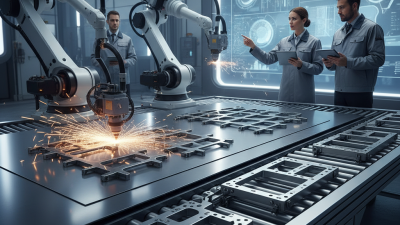
What is a CNC Machine and How Does It Work?
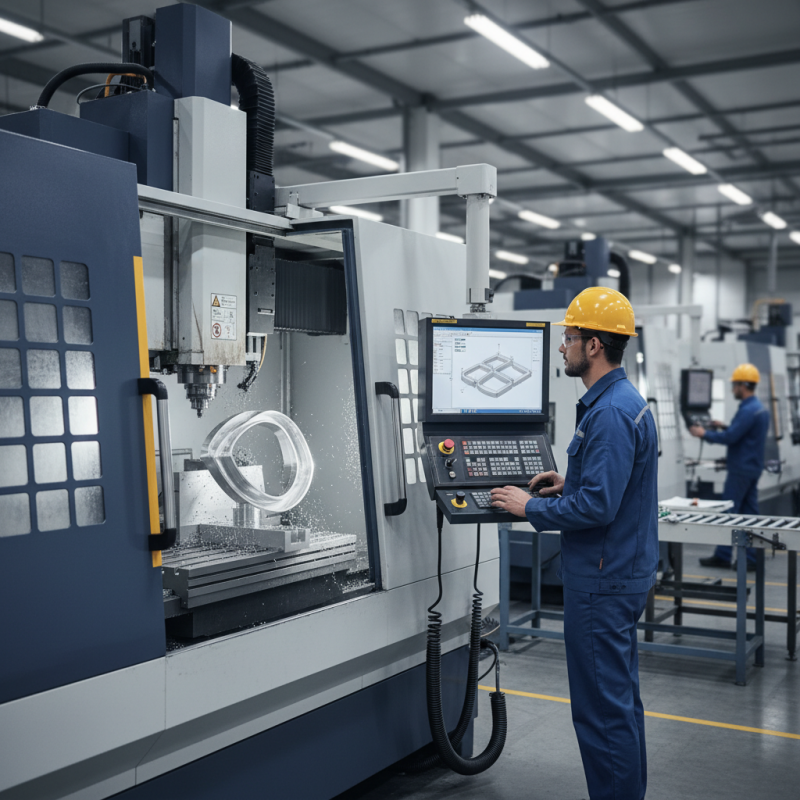
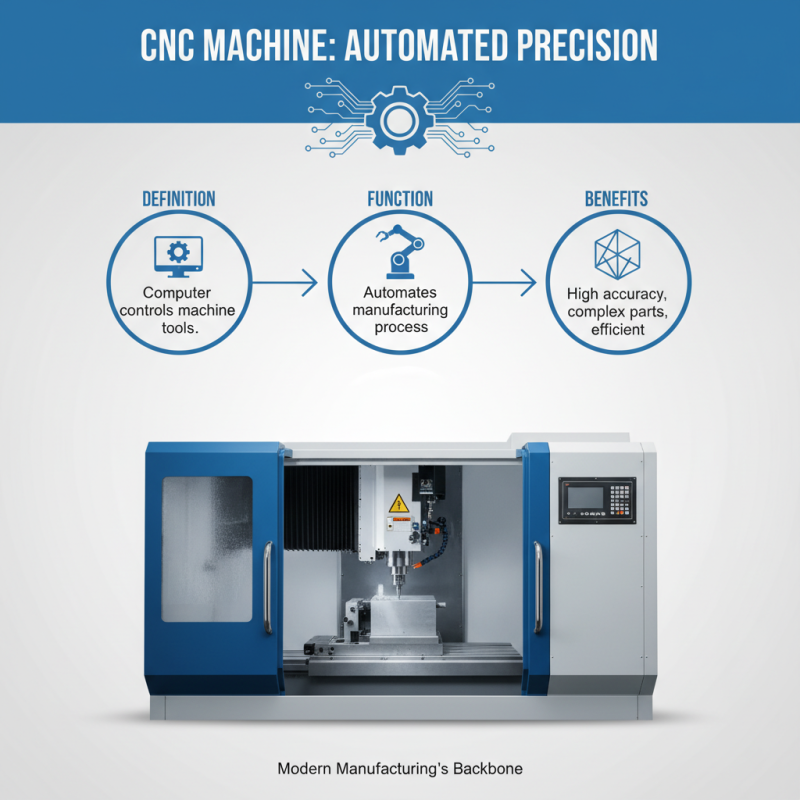
A CNC machine, short for Computer Numerical Control machine, revolutionizes manufacturing. It automates cutting, drilling, and milling processes. With precision and efficiency, these machines are essential in various industries.
CNC machines use computer-aided design (CAD) software to create detailed blueprints. The machine interprets these designs and executes tasks with accuracy. Operators input commands, which guide the machine's movements. Every step is calculated to ensure consistency.
However, relying solely on CNC machines can lead to oversights. A perfect design doesn’t always equate to a perfect outcome. Humans must still supervise processes, making adjustments when necessary. This blend of technology and human oversight shapes modern manufacturing's future. The CNC machine embodies innovation but requires thoughtful handling to meet quality standards.
What is a CNC Machine: Definition and Overview
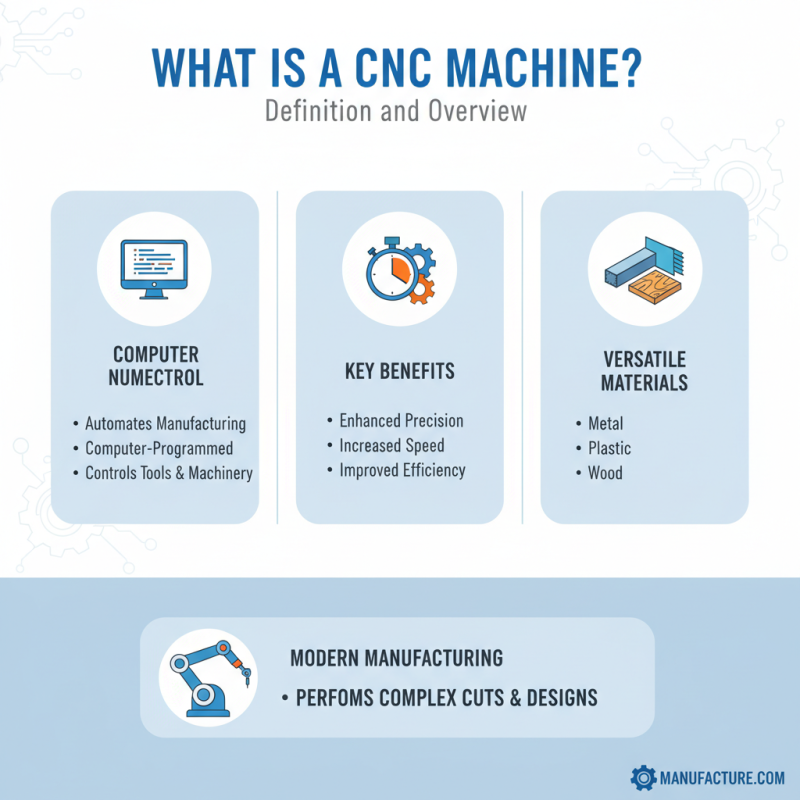
CNC, or Computer Numerical Control, machines are revolutionizing manufacturing. They automate tasks such as cutting and shaping materials. By following coded instructions, these machines can create precise components. The technology in CNC machines enhances efficiency and accuracy in production.
CNC machines operate through a combination of hardware and software. Operators input designs into a computer, which translates them into machine movements. This process can be used with various materials, like metal, wood, or plastic. It allows for intricate designs that would be difficult to achieve manually. However, one must regularly calibrate and maintain these machines to ensure consistent quality.
Despite their many advantages, relying solely on CNC machines can present challenges. A lack of skilled operators can hinder performance. Additionally, programming errors might lead to costly mistakes. Balancing automation with human oversight is crucial for optimal results. Manufacturers must continually assess both technology and workforce skills.
CNC, or Computer Numerical Control, machines are revolutionizing manufacturing. They automate tasks such as cutting and shaping materials. By following coded instructions, these machines can create precise components. The technology in CNC machines enhances efficiency and accuracy in production.
CNC machines operate through a combination of hardware and software. Operators input designs into a computer, which translates them into machine movements. This process can be used with various materials, like metal, wood, or plastic. It allows for intricate designs that would be difficult to achieve manually. However, one must regularly calibrate and maintain these machines to ensure consistent quality.
Despite their many advantages, relying solely on CNC machines can present challenges. A lack of skilled operators can hinder performance. Additionally, programming errors might lead to costly mistakes. Balancing automation with human oversight is crucial for optimal results. Manufacturers must continually assess both technology and workforce skills.
The Components of a CNC Machine and Their Functions
CNC machines are complex tools made up of several critical components. At the heart of each machine is the controller, which acts like the brain. It interprets design files and generates precise instructions. This essential part ensures that the machine executes movements accurately.
The drive system is another vital component. It consists of motors and gears that convert electrical signals into mechanical movement. Motors can be stepper or servo types, each with its specific advantages. Gears help amplify torque, allowing for smooth operation.
Moreover, the cutting tool is pivotal in the machining process. Different materials require unique tools. The wrong tool can lead to poor results or tool wear. This highlights a frequent challenge: selecting the appropriate cutting tool based on the material being processed. It's not always straightforward, and experience plays a crucial role in overcoming such hurdles.
How CNC Machines are Programmed for Precision Machining
CNC machines are a cornerstone of modern manufacturing. They transform raw materials into precision parts. Programming these machines is critical for accuracy. Most CNC machines rely on Computer-Aided Design (CAD) files. These files provide detailed geometries of the parts to be manufactured. According to the International Federation of Robotics, the use of CNC machines has increased by 25% in the past five years.
Programming involves translating CAD designs into Machine Code. This code gives the CNC machine specific instructions to follow. Operators must ensure the code is free of errors. A small mistake can lead to significant manufacturing defects. Research shows that 70% of production issues stem from programming errors. It’s essential to combine technical skills with attention to detail.
Effective programming is both an art and a science. Operators often use simulation software to visualize the machining process. This helps identify potential issues before actual production begins. Continuous education in programming languages and software updates is vital. The rapid evolution of technology requires ongoing training. As machines become more sophisticated, the gap between skilled operators and less experienced ones may widen.
What is a CNC Machine and How Does It Work? - CNC Machines Data Overview
| Dimension |
Description |
| Type of CNC Machine |
Milling Machine, Lathe, Laser Cutter, Plasma Cutter |
| Materials Used |
Metal, Plastics, Wood, Composite Materials |
| Precision |
Up to 0.001 inches |
| Common Applications |
Aerospace parts, Automotive components, Medical devices, Electronics |
| Programming Language |
G-code, M-code |
| Control System |
Computer Numerical Control (CNC) |
The Working Process of CNC Machines: Step-by-Step
CNC machines are highly sophisticated tools used for precise manufacturing. They operate through a step-by-step process that ensures accuracy and efficiency. The journey typically begins with the design phase. Engineers create a digital model using CAD software. This model guides precision machining. According to industry reports, CNC machining can achieve tolerances of ±0.005 inches, making it critical for sectors like aerospace and automotive.
Once the design is ready, the CNC machine is programmed. The G-code, generated from the CAD file, contains instructions for the machine. Proper programming is vital, yet many operators overlook details. A simple error in the G-code can lead to significant mistakes, resulting in wasted materials. The machine then follows the programmed instructions, cutting or shaping materials like metal or plastic with high precision. The speed of the process sets CNC apart; it can reduce production time by 50%, a crucial advantage in competitive markets.
Moreover, the finishing process often requires additional attention. While the machine provides initial shaping, a manual review is necessary to ensure quality. Some imperfections may go unnoticed in the automated phase. Continuous monitoring and inspection help maintain standards and improve overall output quality. The dependency on rigorous feedback loops is essential for any manufacturing process.
CNC Machine Types and Their Popularity
Applications of CNC Machines in Various Industries
CNC machines have revolutionized manufacturing across diverse sectors. In aerospace, precision machining creates critical components that ensure safety and efficiency. Parts like turbine blades and fuselage sections are produced with unmatched accuracy. Here, even the slightest error can lead to catastrophic outcomes. Hence, reliance on CNC technology is paramount.
The automotive industry also benefits significantly. CNC machines streamline the production of intricate parts, such as engine blocks and transmission gears. Speed and precision reduce production costs. However, achieving the perfect balance between efficiency and quality remains a constant challenge for engineers.
In the medical field, CNC technology produces custom implants and prosthetics. Surgeons require tailored solutions for optimal patient outcomes. Each product must meet high standards. The process often involves complex geometries that demand advanced capabilities. Mistakes in design or execution can affect patient safety, underscoring the importance of continual improvement in CNC practices.