How to Choose Vacuum Insulated Panels for Walls in 2026?
In 2026, choosing Vacuum Insulated Panels For Walls means balancing slim construction with dependable, long-term performance. These panels can provide strong insulation in limited space, but their benefits depend on careful product selection and installation. A high advertised thermal value is only part of the picture. Panel thickness, dimensions, edge details, and the way joints meet all affect the finished wall. Small gaps can become weak points. Details matter.
Start with the wall’s purpose, climate, available depth, and existing materials. Then compare manufacturers’ technical data, including declared thermal performance, aging information, and guidance on handling and installation. Check whether the panel’s facing and core suit the intended wall assembly, especially where moisture or impact could be a concern. A puncture may compromise performance, and panels generally cannot be trimmed like conventional insulation. That is not enough. The surrounding system matters too.
This guide explains how to assess specifications, compare costs, and plan around thermal bridges before buying. It also considers delivery, site protection, and the experience of the installer, since a well-made panel can still disappoint when poorly fitted. Look for clear documentation, realistic performance claims, and project-specific advice from qualified building professionals. Requirements vary by location and building design, so confirm relevant local provisions before committing. Some choices involve trade-offs, and product data may not answer every site question. A little uncertainty is normal; careful verification is better than guessing.
Understand How Vacuum Insulated Panels Work in Wall Systems
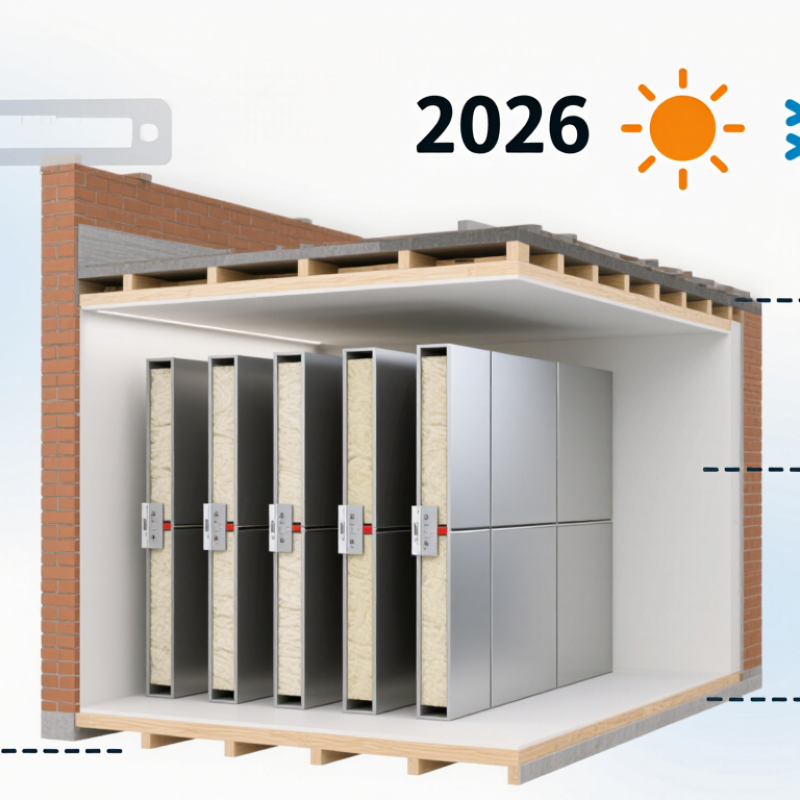
Vacuum insulated panels (VIPs) use a porous core sealed inside a gas-tight barrier. Removing most of the air reduces heat transfer through the panel’s center. Their slim profile can preserve interior floor space where thicker insulation would crowd a wall. Small details matter.
In a wall, a VIP is one layer within a larger assembly, not a stand-alone solution. Heat can bypass the panel at edges, fasteners, window returns, and floor or roof connections. Review whole-wall performance rather than relying only on a center-panel rating. That sounds tidy on paper, but site tolerances are rarely perfect.
VIPs cannot be trimmed like ordinary board insulation; a puncture can sharply reduce their performance. Confirm panel dimensions, joint layouts, fixing methods, and compatible weather and fire layers before installation. Protect panels during handling, then inspect them before they disappear behind the interior finish.
Define Wall Performance and Building Requirements for 2026
How to Choose Vacuum Insulated Panels for Walls in 2026?
Define Wall Performance and Building Requirements for 2026
Start with the wall’s job, not the panel’s advertised R-value. Identify your climate, target heat loss, available wall depth, and whether the building is new or being renovated. Compare declared thermal performance using consistent test conditions, then account for joints, edges, fasteners, and framing. These details can reduce real-world performance. Small gaps matter.
Check moisture control, fire performance, impact resistance, and installation limits alongside insulation value. Vacuum insulated panels cannot be cut on site without losing their insulating function, so drawings must show exact panel sizes and service routes. Ask for documented test data, handling instructions, and details for corners and openings. Confirm that the proposed wall assembly meets current local building requirements. A tidy specification may still overlook a pipe chase or an uneven substrate; review those details with the design and installation teams.
Tips: Measure the wall depth and openings before ordering. Keep panels dry and protected from punctures during delivery and installation. Compare the complete wall assembly, not just the center-panel rating. If site conditions remain uncertain, allow time for a sample installation and inspection.
Compare Panel Materials, Thermal Ratings, and Sizes
How to Choose Vacuum Insulated Panels for Walls in 2026?
Vacuum insulated panels can provide high thermal resistance in a thin wall, but their performance depends on more than the headline rating. Core materials may include fumed silica or glass fiber, while the sealed outer envelope helps maintain the vacuum. Compare declared thermal conductivity and resistance at the same thickness and test conditions. Check whether the figures describe the panel center or account for edge effects. Small details matter.
Panel size should match the wall layout, not just the available cavity. Measure around windows, corners, and service openings, then plan joints to limit gaps. Vacuum panels generally cannot be cut on site: puncturing the envelope can sharply reduce insulation performance. Ask for available dimensions and installation guidance before finalizing the wall design. A top rating may look convincing, yet awkward sizing can create difficult seams.
Tips: Allow for edge details and fastening clearances when measuring. Confirm how the stated rating may change with temperature and aging. Keep a small layout sketch beside your measurements. It may not be perfect, but it can expose a mismatch before panels arrive.
Check Compatibility with Wall Design and Installation Methods
Choosing vacuum insulated panels for a wall starts with the assembly, not the advertised insulation value. Check the required thickness against studs, cladding, window reveals, and available floor space. A panel may fit a clear wall bay but conflict with brackets or service routes. Its envelope must remain intact; cutting or drilling can reduce performance. Plan around openings and corners before ordering, and confirm dimensions and tolerances in the technical documentation.
Installation method matters just as much. Decide whether panels will sit outside the structure, within a framed cavity, or behind an interior lining. Each option affects supports, fasteners, moisture control, and thermal bridges at panel joints. Do not assume standard insulation details transfer directly. Draw sections for corners, floor edges, window heads, and penetrations. Small gaps matter. These details can take longer than expected, especially on uneven existing walls. Have the proposed assembly checked against the project’s climate and requirements.
Tips: Measure the wall in several places and compare the smallest usable cavity with panel dimensions. Mark no-drill zones, and agree on what to do if a panel is damaged. Inspect seams before covering them. It is tempting to prioritize the highest stated R-value; careful detailing and compatibility may matter more.
Assess Durability, Safety, Compliance, and Lifecycle Cost
For a wall panel, check more than its advertised thermal conductivity. Vacuum insulation panels can lose performance if their barrier is punctured, and joints can create thermal bridges. On site, a misplaced fixing can matter. That detail is easy to underestimate. The IEA EBC Annex 65 project examined the long-term performance of super-insulating materials in building components; use its guidance alongside product-specific aging and durability test data. ASTM C1484 provides a specification for vacuum insulated panels, but confirm which edition and local requirements apply.
Safety and compliance depend on the complete wall assembly, not just the panel core. Ask for fire-test evidence, installation limits, moisture guidance, and documented thermal values. Check details around windows, corners, and service penetrations. IEA and UNEP’s 2023 Global Status Report for Buildings and Construction estimated that buildings accounted for 34% of global energy demand and 37% of energy- and process-related CO2 emissions in 2022. That makes lifecycle performance relevant, but not a reason to ignore replacement risk. Compare installed cost, expected service life, repair access, and whole-wall energy performance. The calculation is not always neat. A small panel may deliver excellent insulation, yet become costly if site handling is difficult or damage is hard to detect.





