


Why Choose an EV Charger Type 2 for Global Use?
As electric vehicles cross borders, charging compatibility becomes more than a technical detail. It affects travel plans, installation costs, and everyday confidence. The Ev Charger Type 2 has become a familiar solution across Europe and many international markets. Its seven-pin design supports both single-phase and three-phase AC charging. A commuter may plug in at home overnight, while a hotel guest can recharge beside a busy highway.
Claas Bracklo, a long-time charging-industry specialist and CharIN board member, states, “Interoperability is the key to confidence.” This idea explains the growing appeal of the Ev Charger Type 2. Drivers need equipment that communicates reliably with different vehicles, buildings, and energy systems. Type 2 charging also supports practical features, including load management, scheduled charging, and solar integration. These functions can reduce pressure on a property’s electrical supply.
It is not perfect.
Connector availability still varies by region. Charging speed depends on the vehicle, cable, power supply, and local installation. A Type 2 socket alone cannot guarantee fast charging. That detail is easy to overlook. Buyers should check vehicle specifications, grid capacity, safety certification, and installer experience before choosing equipment. Real-world reliability comes from the complete charging system, not one connector.
For global use, the Ev Charger Type 2 offers a strong balance of compatibility, flexibility, and proven adoption. Its value is practical rather than flashy. It helps make charging feel ordinary. That may be its greatest strength.
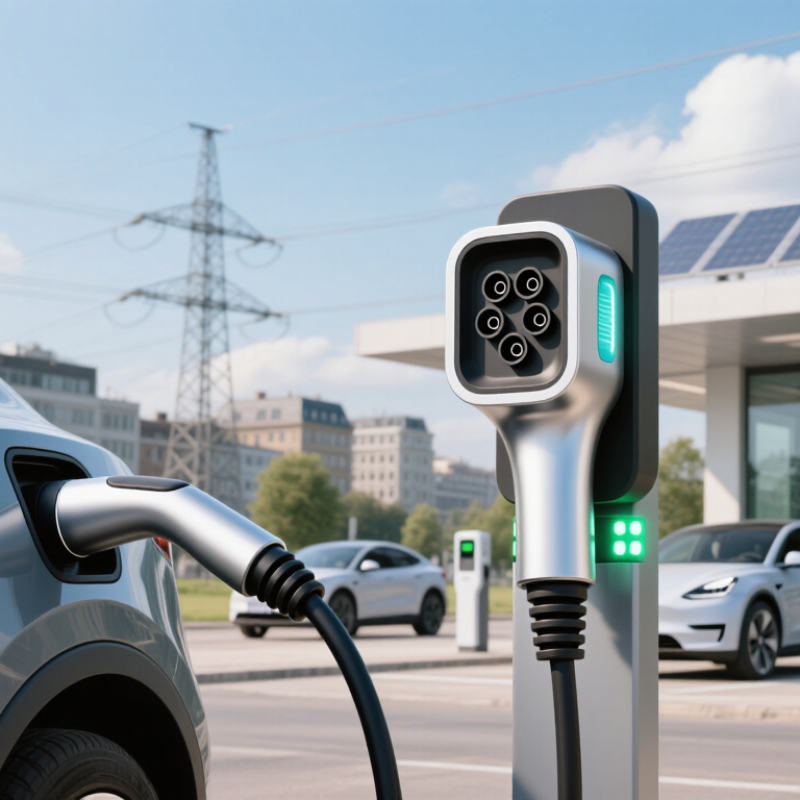
An EV Charger Type 2 is an alternating-current connector defined by the IEC 62196-2 standard. It is common across Europe and several other charging markets. The connector usually has seven pins. These support power delivery, protective grounding, and communication between the vehicle and charger.
In practical use, Type 2 charging works with single-phase or three-phase electricity. A home installation may deliver around 3.7 to 7.4 kilowatts on single-phase power. Suitable three-phase equipment can provide higher output, depending on the vehicle and local supply. The vehicle controls the charging rate. It does not simply accept every available kilowatt.
That distinction matters.
During site checks, I have found that people often confuse the Type 2 connector with the complete charging system. The connector is only one part. A wall-mounted unit, portable cable, protective devices, and a compatible vehicle also affect charging performance. Type 2 commonly includes a locking mechanism and communication signals, which help prevent unsafe disconnection while power flows.
It is useful for global travel, but “global” needs careful interpretation. Electrical systems, plug ends, installation rules, and public charging networks differ by country. A Type 2 vehicle may need a certified cable or approved adapter elsewhere. Not every adapter is suitable for high current. Checking the vehicle manual, charger rating, socket condition, and local electrical requirements remains essential. I still think the term “universal” is too generous; compatibility is practical, not automatic.
| Data Dimension | Verified Information |
|---|---|
| Definition | An EV Charger Type 2 is an alternating-current (AC) charging interface defined primarily by the IEC 62196-2 standard. It is also commonly known as the Mennekes-style connector, although no brand reference is required for its technical definition. |
| Primary charging function | Type 2 supplies AC electricity to the vehicle. The vehicle's onboard charger converts AC power into DC power for the traction battery. |
| Connector design | The standard Type 2 AC connector has seven contacts: three phase contacts, one neutral contact, one protective earth contact, and two signal contacts for control and proximity functions. |
| Typical voltage | Common operating values are approximately 230 V for single-phase charging and approximately 400 V between phases for three-phase charging. Actual voltage depends on the local electrical grid. |
| Typical charging current | Residential AC charging commonly operates at 16 A or 32 A. Higher-current Type 2 installations are possible when the vehicle, cable, charger, and electrical supply are all rated accordingly. |
| Common charging power | Typical AC power levels include about 3.7 kW at 230 V and 16 A single-phase, 7.4 kW at 230 V and 32 A single-phase, 11 kW at 400 V and 16 A three-phase, and 22 kW at 400 V and 32 A three-phase. |
| Maximum practical power | Although some Type 2 systems can be rated for higher current, 22 kW is a widely used upper level for everyday public and commercial AC charging. The vehicle's onboard charger may accept less. |
| Communication method | Type 2 AC charging uses signaling between the vehicle and the charging equipment through the control pilot and proximity functions. These signals help manage charging readiness, current limits, and connector status. |
| Common charging mode | Mode 3 is the normal configuration for dedicated AC charging stations. It provides controlled charging through built-in protection and communication equipment. |
| Cable options | Type 2 charging may use a tethered cable permanently attached to the station or a detachable Mode 3 cable supplied by the user. Cable current capacity must match the charging system. |
| Regional adoption | Type 2 is widely used for AC charging across Europe and is also found in many international markets that align with IEC-based charging practices. It is not the universal AC connector in every country. |
| Global-use advantage | Its broad international adoption, single-phase and three-phase capability, standardized signaling, and availability in multiple power levels make Type 2 a practical choice for cross-border AC charging applications. |
| Safety features | A compliant installation normally includes protective earth monitoring, residual-current protection, overcurrent protection, temperature control where applicable, and charging-current negotiation before energy delivery. |
| Weather resistance | Outdoor suitability depends on the specific enclosure and installation rating. A Type 2 connector alone does not guarantee resistance to water, dust, impact, or extreme temperatures. |
| Charging-speed limitation | Charging speed is limited by the lowest-rated component among the vehicle's onboard charger, the charging station, the cable, the circuit, and the available grid capacity. |
| Type 2 versus DC charging | A standard Type 2 connection is intended for AC charging. High-power DC charging requires a separate DC charging interface or a combined connector system designed for that purpose. |
| Vehicle compatibility check | Before installation or travel, verify the vehicle inlet, permitted phase count, maximum AC current, maximum AC power, local voltage, connector configuration, and applicable national regulations. |
| Best-fit applications | Type 2 is well suited to home charging, workplaces, hotels, apartment buildings, destination charging, fleet depots, and public AC charging where vehicles remain parked for several hours. |
Note: Charging values are representative nominal figures. Final performance depends on the vehicle, electrical installation, local standards, cable rating, and charging-station configuration.

Type 2 charging uses the IEC 62196-2 connector for AC power. It communicates with the vehicle before electricity flows. This handshake checks connection status, charging limits, and protective conditions. The vehicle’s onboard charger then converts AC electricity into battery-ready DC power. Charging speed depends on that charger, not only the socket.
Across different EV systems, Type 2 can support single-phase or three-phase charging. A home supply may deliver slower overnight charging. A three-phase installation can provide higher power when the vehicle accepts it. Voltage, current limits, grounding, and local wiring still matter. The same connector does not guarantee the same charging speed everywhere.
In practical installations, a driver should check the vehicle inlet, cable rating, and charging station settings. Some stations use a tethered cable, while others require a separate cable. Adapters may help with approved combinations, but they cannot correct incompatible electrical standards. A qualified installer should inspect the circuit, especially in older garages. Small details matter, such as cable temperature, rain protection, and space around the plug. I once assumed connector compatibility meant complete system compatibility. That assumption was too simple. Regional grid conditions can change the result. Availability also varies outside markets that commonly use Type 2. Read the vehicle manual and station specifications before relying on cross-border charging.
Type 2 charging supports both single-phase and three-phase AC power, making it adaptable across many electrical systems. The chart shows commonly used Type 2 configurations based on a nominal 230 V supply.
Values are calculated from nominal voltage and current: single-phase power = 230 V × current, while three-phase power = √3 × 230 V × current. Actual charging power depends on the vehicle’s onboard charger, installation limits, and grid conditions.
Type 2 charging is supported mainly by the IEC 62196-2 standard, which defines the connector’s shape, pins, and electrical limits. It is widely adopted across Europe and many neighboring markets. IEC 61851 also supports the charging process, including control signals, safety checks, and communication between the vehicle and charger. These standards create a reliable foundation for everyday AC charging.
For faster charging, Combo 2 extends the Type 2 connector with additional DC pins. Its technical requirements are covered by IEC 62196-3. Smart charging may also use ISO 15118, which supports vehicle identification, charging control, and future energy services. However, Type 2 is not universal. North America commonly uses other AC connectors, while China and Japan follow different national systems. A Type 2 cable may fit one vehicle perfectly but remain unsuitable in another country.
Tips: Check the vehicle inlet, charger output, and local grid requirements before traveling. Confirm whether the station provides AC or DC power. A Type 2 inlet does not automatically mean Combo 2 DC charging is available. Inspect cable markings and protection ratings, especially outdoors. Standards improve compatibility, but installation quality still matters. I have seen specifications appear clear until voltage, phase, or communication limits are checked. That small gap deserves attention.
Choosing Type 2 can simplify EV charging across many international markets. It is widely used for AC charging in Europe and several neighboring regions. Its seven-pin design supports single-phase and three-phase power. That flexibility helps homes, workplaces, hotels, and public parking areas serve different vehicles. Type 2 also supports controlled communication between the vehicle and charger. This helps manage current safely.
For international travel, familiarity matters. Drivers can often find Type 2 sockets at airports, offices, and roadside stations. A detachable cable is easier to replace than a permanently fixed lead. It also fits neatly inside a vehicle. Small detail, but useful. Installers benefit from common wiring practices and established safety requirements. Proper residual-current protection remains essential, even with a recognized connector.
Type 2 is not a universal answer. Some regions use other AC standards, and DC fast charging usually requires a different connection. Travelers should check local regulations, socket compatibility, voltage, and grid capacity before installation. An adapter may solve a physical mismatch, but it cannot correct unsafe electrical conditions. That point is sometimes overlooked. Weatherproof housings, cable temperature, and load balancing also affect real-world performance. A charger may work perfectly in a mild garage, yet perform differently outdoors during heavy rain or extreme heat.
Selecting a Type 2 EV charger starts with the vehicle, not the socket. Check the car’s inlet, maximum AC charging rate, and cable requirements. Type 2 follows the IEC 62196-2 standard and is widely used in many regions, but it is not universally suitable. Local voltage and grid rules still matter.
Choose a charger with an appropriate current rating. A 7.4 kW unit commonly uses a single-phase supply, while higher power may require three-phase wiring. Ask a qualified electrician to inspect the consumer unit, earthing, cable route, and available capacity. Protection against residual current and DC leakage is essential. Do not judge safety by appearance alone.
Think about daily use. A tethered cable is convenient at home, while an untethered model offers easier replacement and cleaner storage. Look for weather resistance, load balancing, clear status indicators, and dependable temperature protection. Installation should include a dedicated circuit, secure mounting, correct cable glands, and a commissioning test. Keep records of the settings and test results.
A neat installation can still be poorly configured. That is worth remembering. In practice, owners sometimes choose the highest power rating without checking their vehicle or building supply. I would avoid that assumption. A slower charger may be safer, cheaper, and fully adequate for overnight charging. Confirm local electrical requirements before energising the unit, especially when the charger will serve visitors from different countries.


For those larger-sized parts, or smaller quantity runs, we have 2 independent powder coat booths and ovens. The quality, durability and affordability of today’s powder coating finishes make this the process of choice for world-class companies.
Powder coating advantages over other forms of coating are many. Materials used in the Powder coating process can be metals and non-metals that come in a multitude of thicknesses, textures, colors, etc. Another of Powder coating’s biggest advantages over conventional coatings is its ability to create finishes in many different textures. Powder Coating Booths allow us the ability to apply these advantages to large products.
Tri-State Fabricators runs a full-service conveyor line for painting. Wet painting can provide protection or decoration to many different part styles. From start to finish, every project is easier to undergo random and point-based inspection by our skilled painting team.
Advantages to our Wet Paint Line are these lines start with product prep and ends with a thorough inspection of a high quality finished product. Our ability to complete large and small projects with a superior finish and doing so in a timely and economical fashion. This passes along the savings in production to our customers. When powder coating ins not an option, our Wet Paint Line gets the job done right the first time.
When the parts get big and heavy we roll-out our custom paint racks and oversize booth. By utilizing our partnerships with all the major paint brands, we can match virtually any color with wet paint.
The advantages of having access to a Wet Paint Booth are many. Large projects of many different shapes can be loaded into the booth. The Wet Paint Booth offers an environment that is much more controlled than a typical parts painting operation.
Not only are they used because of their controlled environment, but they’re are also advantageous when it comes to applying paint to parts that are needed in industries that require specialty coatings such as medical, aerospace, etc.
Our military forces have some very high standards when it comes to the finish of their vehicles and equipment. From the first pre-treatment step to final coat, it takes a great deal of knowledge and experience to protect the men and women of our armed forces. They deserve only the best, and Tri-State Fabricators provides it.
All of our processes are closely monitored by our staff and management teams. Both of which are highly trained in the processes of metal fabrication and finishing. Tri-State Fabricators’ goal is to always fully satisfy each and every customer, including the military. We will always put a 110% into what we do.
Abrasive media blasting is an excellent way to remove old paint, rust, and increase the paint/powder adhesion. Glass beads produce a much smoother and brighter finish than angular abrasives; leaving the part clean yet without any dimensional change. Chemically inert and environmentally friendly, we can recycle our beads approximately 30 times; making them a more preferred method of metal cleaning or surface finishing.
Advantages to Glass Bead Blasting are many. Glass bead blast media is used when a project is needing rough surfaces need to become smooth for applications of coatings such as paint. It is typically used to clean paint and rust from a product surface without deforming the surface it is being used on. Overall, compared to many other blasting media, Glass Bead Blasting is a very economical choice and those savings are always passed on to our customers.
Tri-State Fabricators utilize a zinc phosphate wash to clean and etch the material to ensure the best paint adhesion possible. The unique design of our 3-stage wash system does the work like a 5-stage. From Cleaning and rinsing to conversion coating and post-treatment, Our Part Washing process is a complete service and works throughout the fabrication service and the finishing service.
Along with the previously mentioned benefits, Curing is a vital chemical reaction that leaves the product finish hard and relatively safe from mild abrasion and aggressive corrosion. This process can be done in more than one way; ambient air-dry or in curing ovens at temps that exceed 240°.
From fixing paint mistakes (someone else’s of course) to simply cleaning our paint line hooks, our burn-off oven is put to good use. After a quick burn-off, a little clean up, and a fresh coat of paint, your parts will look better than new.
Why does our Burn-Off Oven work so well? Because super heating the air around parts turns the materials into ashes. From paint and powder coatings to rubber and machining oils, high temps do the job without degrading the integrity of the part.
Masking is a vital part of producing high quality products. We have die-cut masking patterns to protect machined surfaces as well as a wide range of plugs and caps to protect threaded holes and bolts. We provide permanent and temporary masking.
Masking allows the selected sections of a product to be protected from a fabrication or finishing service. This can be with both chemicals when etching and tapes, paints when only finishing just a section of the product. Masking is great in aiding the customization process of a project.
Screen printing is a photographic process that transfers artwork onto a porous nylon screen which allows colored ink to flow through the screen and be deposited on an aluminum or plastic component. We can generally have just about any design created onto a screen for your parts.
Some of the advantages of Screen Printing are, brand recognition for your business displaying on your products, assembly instructions, product warnings/hazards, etc. Tri-State Fabricators produces Screen Printing of the highest quality so you know it’s durable.
Metal Finishing is the art of treating the exterior portion of product, often metal but can also be made of other materials, so that the surface is clean and free of any debris. Then the process of applying coats or either paint of powder coat takes place. This coating process improves the quality of the product in both appearance and resistance to wear and corrosion.
Tri-State Fabricators, Inc., understands that a project typically isn’t complete until a high-quality finish has been added to your product. This is why our painting and powder coating teams continuously inspect the products throughout the Metal Finishing process.

