


How to Choose a Wrapping Machine in 2026?

Choosing a Wraping Machine in 2026 is not just about buying the fastest unit. It is about matching equipment to real products, packaging materials, and production conditions. Grand View Research’s Packaging Machinery Market report estimated the global market at USD 45.5 billion in 2023, with projected growth through 2030. That is useful context, not a guarantee that every machine type or supplier will grow at the same rate. A fast machine can still be the wrong machine.

Start with measurable needs: product dimensions, daily volume, required wrap style, film type, and changeover frequency. Picture a line switching between small cartons and larger bundles. Can operators adjust settings quickly? Does the machine handle the film without frequent breaks? Check rated speed against expected output, because real production includes loading, stoppages, and maintenance. Ask suppliers for trials using your own products and materials. Small details matter.

Compare total cost, not only the purchase price. Include energy use, consumables, spare parts, training, service access, and integration with existing conveyors or controls. PMMI’s industry research can help frame automation and operational trends, while site-specific testing should guide the final choice. Forecasts are imperfect. So are sales demonstrations. I would question any recommendation that skips a product trial or avoids discussing downtime. This guide explains how to assess a wrapping machine, compare options, and choose equipment that fits your operation in 2026.
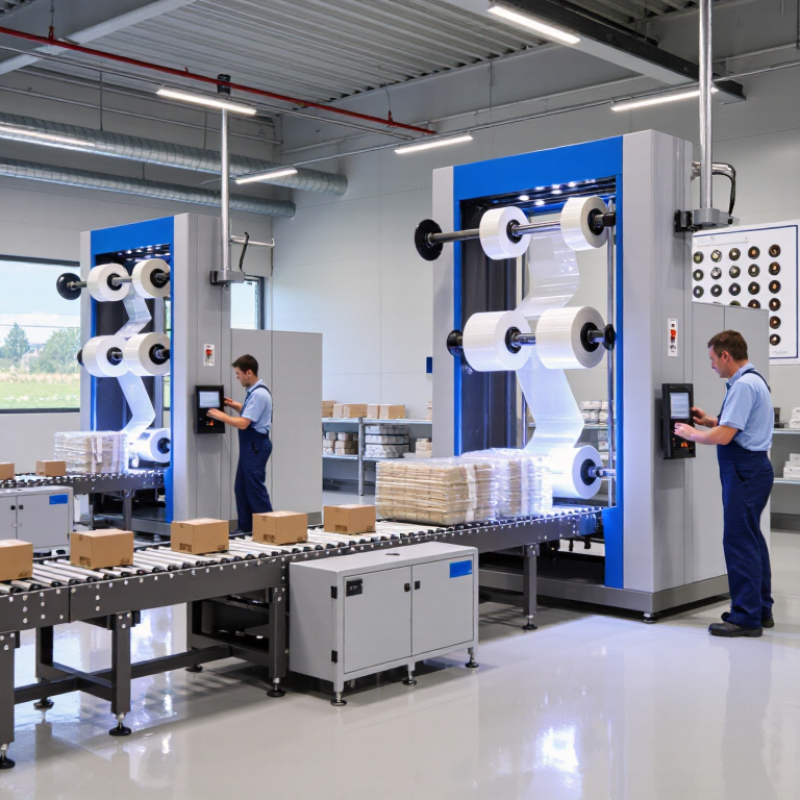
How to Choose a Wrapping Machine in 2026?

Define Your Packaging Requirements and Production Goals

How to Choose a Wrapping Machine in 2026?
Define Your Packaging Requirements and Production Goals

Before comparing wrapping machines, map the products and shifts they must serve. Record package dimensions, weight, surface condition, and how often sizes change. A soft pouch behaves differently from a rigid carton, especially around the corners. Measure the smallest and largest loads, not just the average one. Small details matter.

Describe the real production target. Count finished packages per hour during a normal shift, and note peak periods. Include changeover time, operator availability, floor space, and existing conveyor speed. If the line runs in bursts, a machine rated for steady flow may disappoint. Be honest here. Spreadsheet targets can be optimistic, so check them against a week of actual output.

Define what a good wrap means for your operation: tightness, overlap, appearance, and film use. For fragile or irregular loads, test samples under realistic conditions before choosing a configuration. Track damaged packages and film breaks during trials; they can reveal issues a speed rating hides. Leave room for growth, but avoid buying capacity the line cannot feed. That balance is awkward. Document assumptions, including future product sizes, before requesting a quote or test.


How to Choose a Wrapping Machine in 2026?

Define Your Packaging Requirements and Production Goals

This planning example compares daily output goals with the minimum wrapping speed needed to meet them. Required speed is calculated using 450 net production minutes per day and an assumed 85% operating availability: daily units ÷ (450 × 0.85). These are scenario calculations, not industry benchmarks. When selecting a machine, allow additional capacity for changeovers, product variation, and future growth.

Identify the Wrapping Machine Types That Fit Your Products

How to Choose a Wrapping Machine in 2026?
Identify the Wrapping Machine Types That Fit Your Products

Start with the product, not the machine’s advertised speed. A turntable stretch wrapper suits stable pallet loads, such as stacked cartons. An orbital wrapper carries film around long or awkward items, including pipes and furniture panels. For individual retail packs, shrink wrappers create a snug film sleeve; flow wrappers form sealed packs around regularly shaped goods. Each format handles a different load, so a fast machine can still be the wrong choice.

Product size, weight, surface, and fragility narrow the options. A sharp corner may puncture film. A soft item may deform under tight tension. Test the real product, including its heaviest and least uniform versions. Check changeover time, film waste, and access for cleaning or maintenance. Small details matter. One issue often missed: a wrapper that works well on today’s product may struggle after a size change.

Industry context can help, but it cannot replace a line trial. Grand View Research valued the global packaging machinery market at USD 46.3 billion in 2023 and projected a 5.4% compound annual growth rate through 2030. Its flexible packaging market report estimated a USD 270.3 billion market in 2023, with projected annual growth of 4.8% through 2030. These figures show a broad, growing market—not which wrapper fits your product. Record sample results, film consumption, and package damage before deciding. The first test may expose a flaw in your assumptions. That is useful.

How to Choose a Wrapping Machine in 2026? - Identify the Wrapping Machine Types That Fit Your Products

Compare common wrapping machine types by product format, wrapping method, and operational needs. Actual throughput and material compatibility depend on product dimensions, line configuration, and machine specifications.

Machine Type How It Wraps Products It Commonly Suits Typical Packaging Material Key Advantages Important Considerations A Good Fit When...
Pallet Stretch Wrapper Applies stretch film around a pallet load, usually by rotating the load or a film carriage. Cartons, sacks, bundled goods, and mixed cases arranged on pallets. Stretch film, commonly polyethylene-based. Helps unitize loads for storage and transport; offers adjustable wrap patterns and film tension. Load stability, pallet dimensions, load weight, and required containment force affect machine selection. You need to secure palletized goods while limiting manual wrapping and improving consistency.
Rotary Arm Stretch Wrapper A rotating arm carries stretch film around a stationary load. Unstable, lightweight, tall, or heavy pallet loads that are difficult to rotate safely. Stretch film. Keeps the load stationary during wrapping and can suit loads that may shift on a turntable. Requires suitable floor space and guarding around the rotating arm; installation layout matters. The load should remain stationary, or a turntable wrapper is not suitable for its weight or stability.
Shrink-Wrapping Machine Forms a film bundle around products, then uses heat to shrink the film closely around them. Multipacks, trays, cartons, bottles, cans, and selected retail or distribution packs. Heat-shrink film, such as polyolefin or polyethylene; film choice depends on the application. Creates a close-fitting bundle and can package multiple items together. Needs a suitable heat source and ventilation; product heat sensitivity and film sealing requirements must be checked. You want a compact film bundle or multipack and the products can tolerate the selected heat process.
Flow Wrapper (Horizontal Form-Fill-Seal) Feeds products horizontally into a formed film tube, seals the package, and cuts individual packs. Bars, bakery goods, hardware, medical items, and other discrete products with a suitable shape. Rollstock flexible packaging film, selected for sealing and product requirements. Can package individual products continuously and integrate with conveyors or feeding equipment. Product size, orientation, feeding method, seal area, and film sealing properties must match the machine. You need individually wrapped products and can present them consistently to a horizontal packaging line.
Orbital Stretch Wrapper Rotates a film ring around a product or bundle as it travels through the wrapping area. Long, narrow, or bundled items such as profiles, pipes, lumber, and selected rolled goods. Stretch film; protective layers or edge protection may be added where required. Wraps elongated products without requiring them to rotate end over end. Product length, cross-section, bundle stability, and required end coverage influence the setup. You handle long products that are awkward to wrap on a pallet turntable or by hand.
Stretch Hood Machine Stretches a tubular film hood over a palletized load and releases it to grip the load. Palletized bags, boxes, building materials, and other loads suitable for a fitted hood. Stretch hood film, typically supplied as tubular film. Can cover the sides and top of a load in one application, depending on the system and hood design. Load dimensions and shape must suit available hood sizes; film handling and changeover requirements should be assessed. You need a fitted outer cover for pallet loads and can standardize load dimensions or hood specifications.
Banding or Bundle Wrapper Applies one or more film bands or wraps around a group of products rather than fully enclosing each item. Printed materials, cartons, boards, and other stable product bundles. Stretch film or other compatible wrapping material, depending on the machine design. Uses targeted wrapping to hold a bundle together while leaving much of the product exposed. Provides less surface coverage than a fully enclosed pack; bundle shape and required holding force matter. You need to group products securely without wrapping every surface of the bundle.

Compare Machine Capacity, Features, and Material Compatibility

Choosing a wrapping machine in 2026 starts with your actual workload, not the advertised top speed. Track cartons per hour during a normal shift, including changeovers, pauses, and rejects. A line rated for 18 boxes per minute may struggle when operators feed mixed sizes. Allow room for peak days, but avoid paying for capacity that sits idle. Measure the smallest and largest loads, too.

Features matter when they solve a recurring problem. Variable speed controls can help handle fragile cartons more gently. Sensors may reduce film waste by matching wrap cycles to load height, but they require calibration and cleaning. Check access around rollers, emergency stops, and adjustment points. If a technician cannot reach a jam safely, uptime estimates may be optimistic. Small setup details can matter more than a long feature list.

Tips: Bring three real packages to a machine test: the lightest, heaviest, and most awkward. Confirm film width, thickness, stretch range, and core size against the machine’s specifications. Test sharp corners for punctures and check wrap tension after transport. Ask how settings change with different materials. Recycled or thinner films may behave differently, even at the same nominal gauge. Record your settings, but expect to revise them on your own line.

Assess Safety, Automation, Maintenance, and Total Cost

Choosing a wrapping machine in 2026 starts with the load, not the brochure. Measure pallet width, height, weight, and stability across real shifts. A tall, loose load may need adjustable film tension and a turntable with guarded access. Safety matters. Check emergency stops, interlocked doors, film-carriage pinch points, and operator reach before comparing speed. Ask operators to test access during changeovers; awkward guards can invite unsafe workarounds.

Automation should fit actual throughput. A powered pre-stretch carriage or automatic cut-and-clamp can reduce repetitive handling, but sensors and recipes need careful setup. Track successful wraps per hour, not advertised cycle time. Ask how often rollers, belts, and photo-eyes need cleaning, and whether common parts are easy to reach. Small downtime adds up. During a trial, record film breaks, adjustments, and minutes spent clearing faults. One shift is not enough to reveal every issue.

Compare purchase price with film use, energy, service, training, and lost production over several years. Request the assumptions behind savings estimates, then test them against your own load mix. Budget for installation and spare parts. A cheaper machine can cost more when support is distant or setup is fragile. Seasonal loads and tired operators can change results, so leave room for doubt in your calculations.

Verify Supplier Support and Test the Machine Before Purchase

How to Choose a Wrapping Machine in 2026?

Verify Supplier Support and Test the Machine Before Purchase

A polished machine demonstration is not enough. Ask the supplier to run your actual products, film, and target line speed. Watch the film track around corners, seals form, and packs exit the conveyor. Record output, reject rate, changeover time, and any manual adjustments. Numbers need context. Test more than one product size, and repeat the run after a changeover. A brief trial can miss jams that appear only during longer production.

Supplier support matters after installation. Request written response times, technician availability, spare-parts lead times, and operator training details. Ask who handles remote troubleshooting and what happens when the fault cannot be fixed remotely. McKinsey Global Institute’s 2015 report on the industrial Internet of Things estimated predictive maintenance could reduce machine downtime by 30–50%. That is a broad industrial estimate, not a guarantee for a wrapping machine. Still, it shows why maintenance planning and access to knowledgeable support deserve attention.

Before approval, agree on a practical acceptance test with clear pass criteria. Include start-up, normal running, a planned stop, restart, and a basic fault-recovery check. Have your operators perform a changeover, not just watch a supplier technician do it. Note the settings they need and where instructions feel unclear. Some details will be missed. That is exactly why the test should happen on your floor, with your materials and people, before final purchase sign-off.

Powder Coat Booths

For those larger-sized parts, or smaller quantity runs, we have 2 independent powder coat booths and ovens. The quality, durability and affordability of today’s powder coating finishes make this the process of choice for world-class companies.

Powder coating advantages over other forms of coating are many. Materials used in the Powder coating process can be metals and non-metals that come in a multitude of thicknesses, textures, colors, etc. Another of Powder coating’s biggest advantages over conventional coatings is its ability to create finishes in many different textures. Powder Coating Booths allow us the ability to apply these advantages to large products.

Wet Paint Line

Tri-State Fabricators runs a full-service conveyor line for painting. Wet painting can provide protection or decoration to many different part styles. From start to finish, every project is easier to undergo random and point-based inspection by our skilled painting team.

Advantages to our Wet Paint Line are these lines start with product prep and ends with a thorough inspection of a high quality finished product. Our ability to complete large and small projects with a superior finish and doing so in a timely and economical fashion. This passes along the savings in production to our customers. When powder coating ins not an option, our Wet Paint Line gets the job done right the first time.

Wet Paint Booths

When the parts get big and heavy we roll-out our custom paint racks and oversize booth. By utilizing our partnerships with all the major paint brands, we can match virtually any color with wet paint.

The advantages of having access to a Wet Paint Booth are many. Large projects of many different shapes can be loaded into the booth. The Wet Paint Booth offers an environment that is much more controlled than a typical parts painting operation.

Not only are they used because of their controlled environment, but they’re are also advantageous when it comes to applying paint to parts that are needed in industries that require specialty coatings such as medical, aerospace, etc.

Military CARC

Our military forces have some very high standards when it comes to the finish of their vehicles and equipment. From the first pre-treatment step to final coat, it takes a great deal of knowledge and experience to protect the men and women of our armed forces. They deserve only the best, and Tri-State Fabricators provides it.

All of our processes are closely monitored by our staff and management teams. Both of which are highly trained in the processes of metal fabrication and finishing. Tri-State Fabricators’ goal is to always fully satisfy each and every customer, including the military. We will always put a 110% into what we do.

Glass-Bead Blasting

Abrasive media blasting is an excellent way to remove old paint, rust, and increase the paint/powder adhesion. Glass beads produce a much smoother and brighter finish than angular abrasives; leaving the part clean yet without any dimensional change. Chemically inert and environmentally friendly, we can recycle our beads approximately 30 times; making them a more preferred method of metal cleaning or surface finishing.

Advantages to Glass Bead Blasting are many. Glass bead blast media is used when a project is needing rough surfaces need to become smooth for applications of coatings such as paint. It is typically used to clean paint and rust from a product surface without deforming the surface it is being used on. Overall, compared to many other blasting media, Glass Bead Blasting is a very economical choice and those savings are always passed on to our customers.

Part Washing

Tri-State Fabricators utilize a zinc phosphate wash to clean and etch the material to ensure the best paint adhesion possible. The unique design of our 3-stage wash system does the work like a 5-stage. From Cleaning and rinsing to conversion coating and post-treatment, Our Part Washing process is a complete service and works throughout the fabrication service and the finishing service.

Along with the previously mentioned benefits, Curing is a vital chemical reaction that leaves the product finish hard and relatively safe from mild abrasion and aggressive corrosion. This process can be done in more than one way; ambient air-dry or in curing ovens at temps that exceed 240°.

Burn-Off Oven

From fixing paint mistakes (someone else’s of course) to simply cleaning our paint line hooks, our burn-off oven is put to good use. After a quick burn-off, a little clean up, and a fresh coat of paint, your parts will look better than new.

Why does our Burn-Off Oven work so well? Because super heating the air around parts turns the materials into ashes. From paint and powder coatings to rubber and machining oils, high temps do the job without degrading the integrity of the part.

Masking

Masking is a vital part of producing high quality products. We have die-cut masking patterns to protect machined surfaces as well as a wide range of plugs and caps to protect threaded holes and bolts. We provide permanent and temporary masking.

Masking allows the selected sections of a product to be protected from a fabrication or finishing service. This can be with both chemicals when etching and tapes, paints when only finishing just a section of the product. Masking is great in aiding the customization process of a project.

Screen Printing

Screen printing is a photographic process that transfers artwork onto a porous nylon screen which allows colored ink to flow through the screen and be deposited on an aluminum or plastic component. We can generally have just about any design created onto a screen for your parts.

Some of the advantages of Screen Printing are, brand recognition for your business displaying on your products, assembly instructions, product warnings/hazards, etc. Tri-State Fabricators produces Screen Printing of the highest quality so you know it’s durable.

Metal Finishing

Metal Finishing is the art of treating the exterior portion of product, often metal but can also be made of other materials, so that the surface is clean and free of any debris. Then the process of applying coats or either paint of powder coat takes place. This coating process improves the quality of the product in both appearance and resistance to wear and corrosion.

Tri-State Fabricators, Inc., understands that a project typically isn’t complete until a high-quality finish has been added to your product. This is why our painting and powder coating teams continuously inspect the products throughout the Metal Finishing process.
