


Choosing the right Welding Tube starts with a clear understanding of the job. Will it carry fluid, support a frame, or form part of a fabricated assembly? Each use places different demands on the tube. A line exposed to moisture may need different material and protection than a tube used indoors.
Small details matter. Check the required diameter, wall thickness, length, and material grade against the design and operating conditions. Then consider how the tube will be joined. Fit-up, joint access, and welding process can affect fabrication time and weld quality. A tube that looks suitable on a supplier’s page may still be difficult to position or weld on the shop floor.
Reliable selection depends on evidence, not appearance alone. Review product specifications, traceability information, and applicable technical requirements. Ask the supplier to clarify any missing details, such as dimensional tolerances or material documentation. If the application involves pressure, heat, vibration, or corrosive surroundings, confirm that the tube is rated for those conditions with a qualified engineer. Do not assume that similar-looking products perform alike.
There is no universal best option. Budget, availability, and ease of fabrication all matter, but cutting corners on verification can create costly rework. I have seen how a small mismatch in wall thickness can complicate alignment. It is worth checking twice. The sections ahead explain how to compare materials, dimensions, weldability, and supplier information, so you can make a practical choice with fewer surprises.
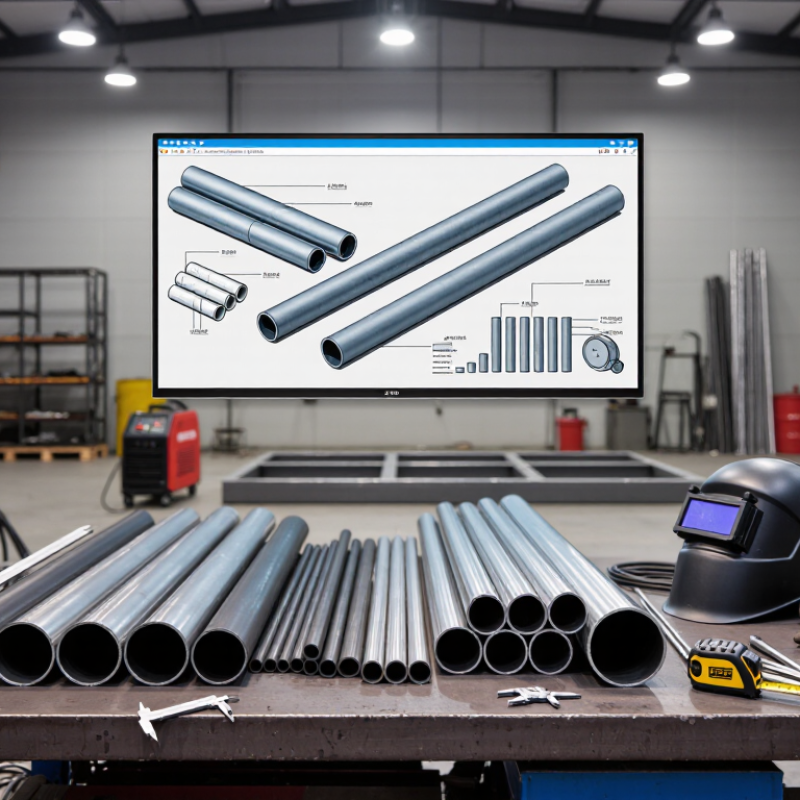
How to Choose the Right Welding Tube?
Identify the Tube’s Application and Operating Conditions
Start with the tube’s actual duty: what it carries, its pressure range, temperature, and exposure to moisture or chemicals. A tube transporting chilled water faces different risks from one carrying hot process fluid. Record normal conditions and short-term peaks; startup and cleaning cycles can matter as much as steady operation.
For outdoor or marine service, salt spray and trapped water can accelerate corrosion, especially around welds and supports. The 2016 NACE International IMPACT study estimated corrosion costs at US$2.5 trillion annually, about 3.4% of global GDP. That figure covers many industries, but it shows why environmental exposure deserves careful attention. Consider corrosion allowance, compatible materials, and whether welds can be inspected and maintained.
For pressure service, confirm the applicable design code and specify temperature, pressure, wall thickness, and inspection requirements before ordering. A nominal size alone is not enough. Ask whether the tube will see vibration, repeated thermal cycling, or abrasive flow. Then check that the welding procedure and inspection plan suit the service. Small details matter. A datasheet can still miss real operating changes, so verify assumptions with the people who know the process.
| Application | Typical Operating Conditions | Common Tube Choice | Key Selection Checks |
|---|---|---|---|
| Structural frames and supports | Indoor or outdoor service; primarily static loads, with possible vibration or weather exposure. Usually near ambient temperature. | Welded carbon-steel structural tubing, selected to the applicable structural specification. | Confirm design loads, wall thickness, weldability, corrosion protection, dimensional tolerances, and the governing building or structural code. |
| Water and general fluid piping | Water or compatible fluids at ambient or moderately elevated temperatures; pressure varies by system design. | Welded carbon steel for compatible services, or welded stainless steel where corrosion resistance is needed. | Check fluid chemistry, corrosion allowance, pressure and temperature design requirements, joining method, and applicable piping code. Do not infer pressure capacity from tube size alone. |
| Food, beverage, and sanitary process lines | Product contact, frequent washdown, and cleaning or sanitizing cycles; temperature and chemical exposure depend on the process. | Welded stainless process tubing, commonly selected from suitable stainless grades such as 304L or 316L based on the environment. | Specify the required sanitary standard, surface finish, internal cleanliness, weld quality, drainage needs, and resistance to the actual cleaning chemicals. |
| Corrosive chemical service | Exposure to acids, alkalis, salts, solvents, or mixed chemicals; operating conditions may include elevated temperature or pressure. | A welded alloy selected for the specific chemical environment; stainless steel may be suitable for some services but not all. | Verify concentration, temperature, impurities, exposure duration, and corrosion data. Obtain materials-engineering review for uncertain or severe service. |
| Automotive or equipment exhaust | Hot exhaust gases, thermal cycling, vibration, and outdoor moisture or road-salt exposure; temperatures vary with location in the system. | Welded aluminized steel or stainless tubing, chosen according to temperature, corrosion exposure, and service life requirements. | Check heat exposure, thermal expansion, vibration fatigue, wall thickness, bend geometry, and corrosion resistance. Confirm suitability for the exact exhaust location. |
| Hydraulic or pneumatic equipment | Pressure pulses, vibration, and changing temperatures; hydraulic systems can operate at high pressure. | Precision tubing specified for the system, with welded construction used only where the applicable design and product specification permit it. | Use the system designer’s pressure rating and applicable standard. Check fatigue, wall thickness, end connections, cleanliness, and inspection requirements; avoid substituting general-purpose tube. |
| Selection note: Treat the examples as starting points, not design approvals. Confirm the tube specification, outside diameter, wall thickness, material grade, weld quality, pressure-temperature limits, and relevant code with the supplier or responsible engineer before use. | |||

Carbon steel, stainless steel, and aluminum tubes respond differently under the welding arc. Outokumpu’s Stainless Steel Handbook lists 304 stainless steel’s thermal conductivity at about 15 W/m·K and expansion at about 17 × 10⁻⁶/K. That higher expansion can increase distortion compared with carbon steel. Watch the seam.
For aluminum, the challenge is its oxide layer. ASM Handbook: Aluminum and Aluminum Alloys reports melting points near 660°C for aluminum and 2,072°C for aluminum oxide. The oxide stays solid while the tube melts, so clean preparation matters. Choose filler metal for the specific aluminum alloy, not just its appearance. Stainless also needs suitable filler and heat input; excess heat can discolor the surface and complicate cleanup.
Check the tube grade, wall thickness, and intended process before choosing. A thin-walled tube may burn through even when its material is readily weldable. Keep similar alloys together where possible, and treat mixed-metal joints as a separate design problem. Fit-up matters: a visible gap at the root can undermine an otherwise sound weld. Test a short coupon using the actual tube and settings. The comparison is not perfect; operator technique and joint geometry can outweigh a material’s general reputation for weldability.
Start with the tube’s outside diameter, especially if it must slide into a fitting or align with a fixture. Check the mating part’s specified size rather than relying on a nominal label. A caliper reading at several points can reveal ovality that a single measurement misses. Small differences matter. Also confirm whether the drawing refers to outside diameter or inside diameter.
Choose wall thickness based on the loads, pressure, temperature, and welding process involved. A thicker wall may provide more strength, but it can add weight and require more heat during welding. Too much heat can distort a thin tube or affect fit-up. Check the design requirements and consult a qualified engineer when loads or operating conditions are uncertain. A choice that looks efficient on paper may not suit the actual assembly.
Specify tolerances for diameter, wall thickness, straightness, and cut length where they affect installation or performance. Tight tolerances can improve consistency, but they may raise production costs without solving a real fit problem. Check the drawing. I would revisit any tolerance chosen only because it “sounds precise”; the finished assembly is what matters. Agree on how dimensions will be measured, and inspect sample tubes before production if the fit is critical.
A welding tube should be selected against the specification governing its final service, not appearance alone. Confirm the required material grade, outside diameter, wall thickness, and delivery condition on the drawing or purchase specification. Then check which code or standard applies, including its required edition and any project-specific amendments. ASTM, ASME, or ISO documents may be relevant, but the application determines the correct reference. Do not assume a familiar designation covers every size or service condition. Small details matter.
Quality requirements should define more than a passable-looking seam. Ask for documented checks such as dimensional inspection, weld examination, and material test records, as required by the governing specification. For pressure or structural service, confirm acceptance criteria and inspection scope with the responsible engineer before ordering. Traceability should connect each tube or lot to its material certificate and inspection records. A straight, clean tube can still be unsuitable if its grade, tolerance, or heat-treatment condition is undocumented. A visual check alone cannot prove internal weld integrity; it has limits. Requirements can feel tedious, especially on a small order, but unclear records can lead to avoidable substitutions or disputes.
Match the tube’s intended application to the scope of the applicable product standard.
A value of 1 indicates the standard covers that primary application scope; 0 indicates it is not the standard’s primary scope. ASTM A500 and EN 10219 cover structural hollow sections, ASTM A513 covers mechanical tubing, and ISO 3183 covers pipeline transportation pipe. Confirm the required grade, dimensions, inspection, testing, and documentation against the applicable standard edition and purchase order.
Choosing a welding tube is not just about matching diameter and wall thickness. Compare the required material grade, length tolerance, weldability, and finish against your drawing and process. Ask whether quoted dimensions are nominal or guaranteed. A small mismatch can create fit-up delays on the shop floor.
Price is not the full cost. Check minimum order quantities, shipping, cutting fees, packaging, and expected scrap. Confirm that stock is current, not merely listed online. Request a realistic lead time and ask what happens if a batch is delayed. Supplier reliability shows in clear answers, consistent documents, and willingness to discuss tolerances before payment. Request a sample or inspection report when tighter control matters. Verify that material certificates match the delivered lot, then keep them with receiving records. I used to treat the lowest quote as the best value; that shortcut was too simple. Late tubes can stall a crew and cost more than the initial savings.
Tips: Compare at least three quotes using the same specifications. Record promised lead times and document requirements. If a supplier avoids direct answers, pause and review the risk before placing a large order.


For those larger-sized parts, or smaller quantity runs, we have 2 independent powder coat booths and ovens. The quality, durability and affordability of today’s powder coating finishes make this the process of choice for world-class companies.
Powder coating advantages over other forms of coating are many. Materials used in the Powder coating process can be metals and non-metals that come in a multitude of thicknesses, textures, colors, etc. Another of Powder coating’s biggest advantages over conventional coatings is its ability to create finishes in many different textures. Powder Coating Booths allow us the ability to apply these advantages to large products.
Tri-State Fabricators runs a full-service conveyor line for painting. Wet painting can provide protection or decoration to many different part styles. From start to finish, every project is easier to undergo random and point-based inspection by our skilled painting team.
Advantages to our Wet Paint Line are these lines start with product prep and ends with a thorough inspection of a high quality finished product. Our ability to complete large and small projects with a superior finish and doing so in a timely and economical fashion. This passes along the savings in production to our customers. When powder coating ins not an option, our Wet Paint Line gets the job done right the first time.
When the parts get big and heavy we roll-out our custom paint racks and oversize booth. By utilizing our partnerships with all the major paint brands, we can match virtually any color with wet paint.
The advantages of having access to a Wet Paint Booth are many. Large projects of many different shapes can be loaded into the booth. The Wet Paint Booth offers an environment that is much more controlled than a typical parts painting operation.
Not only are they used because of their controlled environment, but they’re are also advantageous when it comes to applying paint to parts that are needed in industries that require specialty coatings such as medical, aerospace, etc.
Our military forces have some very high standards when it comes to the finish of their vehicles and equipment. From the first pre-treatment step to final coat, it takes a great deal of knowledge and experience to protect the men and women of our armed forces. They deserve only the best, and Tri-State Fabricators provides it.
All of our processes are closely monitored by our staff and management teams. Both of which are highly trained in the processes of metal fabrication and finishing. Tri-State Fabricators’ goal is to always fully satisfy each and every customer, including the military. We will always put a 110% into what we do.
Abrasive media blasting is an excellent way to remove old paint, rust, and increase the paint/powder adhesion. Glass beads produce a much smoother and brighter finish than angular abrasives; leaving the part clean yet without any dimensional change. Chemically inert and environmentally friendly, we can recycle our beads approximately 30 times; making them a more preferred method of metal cleaning or surface finishing.
Advantages to Glass Bead Blasting are many. Glass bead blast media is used when a project is needing rough surfaces need to become smooth for applications of coatings such as paint. It is typically used to clean paint and rust from a product surface without deforming the surface it is being used on. Overall, compared to many other blasting media, Glass Bead Blasting is a very economical choice and those savings are always passed on to our customers.
Tri-State Fabricators utilize a zinc phosphate wash to clean and etch the material to ensure the best paint adhesion possible. The unique design of our 3-stage wash system does the work like a 5-stage. From Cleaning and rinsing to conversion coating and post-treatment, Our Part Washing process is a complete service and works throughout the fabrication service and the finishing service.
Along with the previously mentioned benefits, Curing is a vital chemical reaction that leaves the product finish hard and relatively safe from mild abrasion and aggressive corrosion. This process can be done in more than one way; ambient air-dry or in curing ovens at temps that exceed 240°.
From fixing paint mistakes (someone else’s of course) to simply cleaning our paint line hooks, our burn-off oven is put to good use. After a quick burn-off, a little clean up, and a fresh coat of paint, your parts will look better than new.
Why does our Burn-Off Oven work so well? Because super heating the air around parts turns the materials into ashes. From paint and powder coatings to rubber and machining oils, high temps do the job without degrading the integrity of the part.
Masking is a vital part of producing high quality products. We have die-cut masking patterns to protect machined surfaces as well as a wide range of plugs and caps to protect threaded holes and bolts. We provide permanent and temporary masking.
Masking allows the selected sections of a product to be protected from a fabrication or finishing service. This can be with both chemicals when etching and tapes, paints when only finishing just a section of the product. Masking is great in aiding the customization process of a project.
Screen printing is a photographic process that transfers artwork onto a porous nylon screen which allows colored ink to flow through the screen and be deposited on an aluminum or plastic component. We can generally have just about any design created onto a screen for your parts.
Some of the advantages of Screen Printing are, brand recognition for your business displaying on your products, assembly instructions, product warnings/hazards, etc. Tri-State Fabricators produces Screen Printing of the highest quality so you know it’s durable.
Metal Finishing is the art of treating the exterior portion of product, often metal but can also be made of other materials, so that the surface is clean and free of any debris. Then the process of applying coats or either paint of powder coat takes place. This coating process improves the quality of the product in both appearance and resistance to wear and corrosion.
Tri-State Fabricators, Inc., understands that a project typically isn’t complete until a high-quality finish has been added to your product. This is why our painting and powder coating teams continuously inspect the products throughout the Metal Finishing process.

