


How to Choose a Weigh Feeder in 2026?

Choosing a Weigh Feeder in 2026 starts with the process, not a feature list. The right unit must deliver a steady, measurable flow while handling the material’s real behavior. Consider target rate, turndown, particle size, moisture, bulk density, and whether the material is abrasive or prone to bridging. A belt feeder may suit granules, while a screw design can contain dusty powders; neither choice is automatic. That matters. Small changes in moisture or hopper level can affect flow and calibration.

Compare stated accuracy with the operating range, test conditions, and verification method. Check load-cell protection, frame stiffness, control-system compatibility, cleaning access, and spare-parts support. Ask suppliers for references involving similar materials, and request a trial when flow behavior is uncertain. A neat datasheet helps, but it cannot show every bridging or buildup problem. Be cautious. Consider installation space, maintenance skills, commissioning time, and downtime costs—not just purchase price. Even careful selection has limits: site conditions can expose assumptions that looked sound on paper. Leave room for adjustment, record baseline results, and review performance after startup. This guide outlines practical questions for comparing designs and choosing equipment that fits the process, not just the sales pitch.
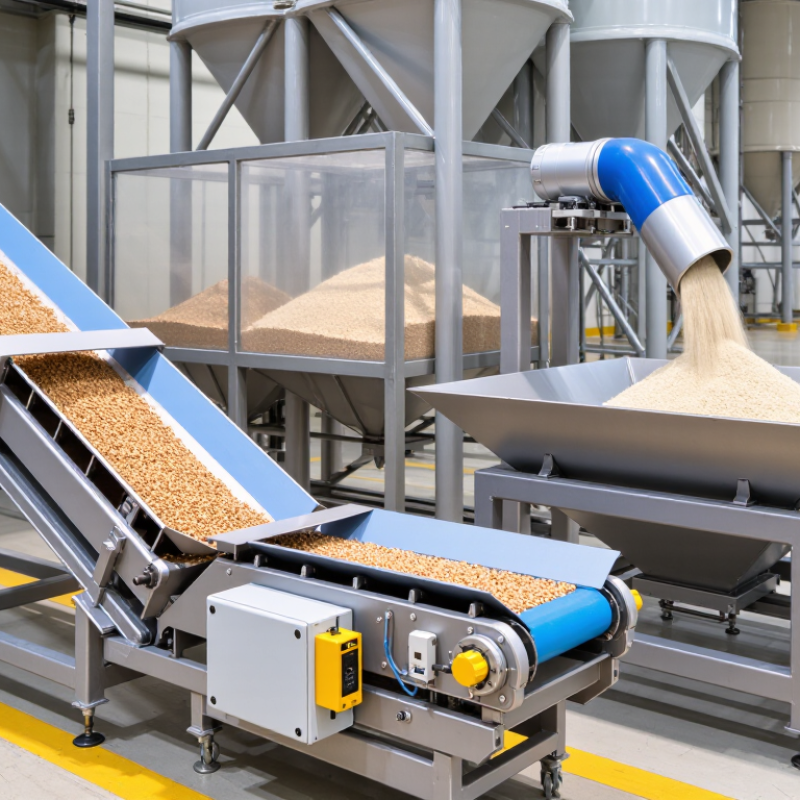
How to Choose a Weigh Feeder in 2026?

Define the Weigh Feeder’s Role in Your Process

How to Choose a Weigh Feeder in 2026?

Define the Weigh Feeder’s Role in Your Process

Before comparing equipment, identify what the feeder must control. Is it supplying a mixer at a steady rate, dosing ingredients into a batch, or keeping a production line fed? The answer affects the required capacity, accuracy, and control response. A feeder handling fine powder may behave differently from one moving coarse, irregular granules. Note the material, target rate, and operating hours. Details matter.

Also consider where the feeder sits in the process. A unit feeding a mixer may need to respond quickly when demand changes. One serving a steady downstream conveyor may prioritize consistent flow. Check how operators will set rates and monitor performance. Think about dust, vibration, and limited space near the discharge point. These conditions can affect readings and maintenance access. The process boundary is not always obvious, so confirm which equipment controls the feed and which only transports material. That distinction is easy to miss.

Tips: Record actual material behavior, not just the specification sheet. Test flow where possible. Ask what happens during start-up, refill, and stoppage. A design that looks right on paper may need adjustment after installation. Be ready to revisit your assumptions.


Assess Material Properties and Operating Conditions

Material behavior often matters more than its name on a process diagram. Record particle size, bulk density, moisture, and flow characteristics under normal handling conditions. Fine powders may bridge or create dust, while damp solids can cling to belt surfaces. Coarse, abrasive particles may wear contact parts and shift calibration over time. Small details matter. A material that segregates can also feed unevenly, even when the feeder runs steadily. Use a sample from routine production, not only an idealized laboratory batch.

Assess the operating window: minimum and maximum feed rates, required accuracy, and hours of continuous service. Check for vibration, temperature swings, washdown exposure, and limited installation space. These factors affect the weighing signal, drive selection, enclosure, and maintenance access. Dust buildup on a belt or load sensor can distort readings, so allow time for cleaning and calibration. Test real material. A short trial may reveal surging, sticking, or slow response that a specification sheet misses. One trial, however, may not capture seasonal moisture changes or every startup condition. Keep operating records and review settings when the material or process changes.

Set Capacity, Accuracy, and Control Requirements

How to Choose a Weigh Feeder in 2026?
Set Capacity, Accuracy, and Control Requirements

Start with the full operating range, not just the highest target rate. Record minimum and maximum throughput, expected run hours, and changes in bulk density. A feeder handling 20 tonnes per hour may struggle to control a steady trickle at startup. Not just peak rate. Check how material leaves the hopper, too; bridging or surging can distort feed even when the feeder is correctly sized. Small details matter.

Define accuracy in practical terms: the allowable error over a stated test period and operating rate. Ask how performance is verified, and whether the measurement includes material properties, installation, and calibration effects. Fine powders, damp granules, and uneven particle sizes behave differently. Dust changes things. A specification that looks precise on paper may not reflect a variable process, so leave room for real-world conditions.

Control requirements should match the wider line. Confirm whether the feeder needs local speed adjustment, a process controller, or communication with a plant control system. Check response time when the target rate changes, and decide what alarms operators need for empty hoppers, belt slip, or unstable flow. A neat spreadsheet can still miss a difficult material or a slow control response. Testing with representative material, where practical, can expose those gaps before installation.

How to Choose a Weigh Feeder in 2026? - Set Capacity, Accuracy, and Control Requirements

Use this comparison to shortlist a feeder type, then confirm performance against the material, installation, and operating conditions.
Application or Requirement Typical Feeder Type Indicative Rate Range Typical Accuracy Target Control Requirements Key Selection Checks
Continuous feeding of free-flowing bulk solids at medium to high rates Belt weigh feeder About 0.1–500 t/h, depending on belt width, material, and design Commonly around ±0.5–1% of rate under suitable, stable operating conditions Closed-loop speed control using belt load and belt-speed signals; verify required analog or fieldbus connections Check belt loading, material spread, belt tension, tracking, dust protection, and space for maintenance access.
Metering powders, granules, or other materials through an enclosed feed path Screw weigh feeder About 0.01–100 t/h, depending on screw geometry and material properties Often around ±1–2% of rate; actual results depend strongly on material consistency and calibration Use screw-speed control with live weight feedback; consider a low-level signal and interlocks with downstream equipment Assess bulk density, cohesion, moisture, aeration, bridging risk, screw wear, and cleanout requirements.
Gentle, adjustable feeding of small quantities or fragile particles Vibratory weigh feeder About 0.001–50 t/h, depending on trough size and material Often around ±1–2% of rate in a well-tuned application Control vibration amplitude or drive output from the measured feed rate; check response time and signal stability Review particle size, bulk density, material friction, vibration transmission, noise limits, and mounting stiffness.
Continuous dosing where hopper inventory is measured while material is discharged Loss-in-weight feeder, commonly screw or vibratory type Typically from grams per hour to several tonnes per hour, depending on feeder size Can support targets around ±0.25–1% of rate in suitable applications; refill transitions can affect performance Use gravimetric control during normal discharge and a defined refill sequence; specify refill alarms and recovery logic Check hopper size, refill frequency, load-cell stability, vibration isolation, and whether the process can tolerate refill periods.
Batching a defined quantity rather than maintaining a continuous mass rate Batch weigh hopper with controlled gate or feeder Set by batch size and required cycle time; not directly comparable with continuous-feed rates Specify allowable batch error as a percentage or mass tolerance; verify cut-off and in-flight material effects Set batch target, coarse/fine feed stages, pre-act, final cut-off, and batch-complete signals Consider target batch mass, cycle time, material fall distance, settling time, and the consequences of overfill.
High-accuracy continuous dosing of multiple ingredients One gravimetric feeder per ingredient, often loss-in-weight Set an individual operating range for each ingredient; avoid sizing every feeder for one shared maximum rate Define accuracy separately for each ingredient and operating rate; low-rate performance may differ from full-scale performance Coordinate feeder setpoints through a recipe or ratio controller; define communication, alarms, permissives, and fail-safe behavior Confirm turndown ratio, minimum stable rate, cross-contamination controls, recipe changeover, and calibration access.
Variable demand with frequent setpoint changes Feeder selected for the material, paired with responsive closed-loop control Size for the normal operating range as well as the required peak rate Confirm accuracy at minimum, normal, and maximum setpoints—not only at one test point Check control-loop response, setpoint ramping, signal filtering, remote commands, and recovery after interruptions Ask for operating limits and test data across the intended turndown range and material conditions.
Dusty, abrasive, corrosive, or washdown service Enclosed or specially configured belt, screw, or vibratory feeder Determine from the required rate and the constraints of the protective configuration Use the accuracy target for the selected feeder type, then confirm it with the specified enclosure and process conditions Specify suitable sensor protection, motor and electrical protection, alarms, and safe isolation for maintenance State dust-control needs, material abrasiveness or corrosion, temperature, cleaning method, and applicable site requirements.

Selection note: Rate ranges and accuracy figures are indicative application-level guides, not guaranteed specifications. Final performance depends on feeder design, material properties, installation, calibration, operating rate, and maintenance. Request documented performance at the intended minimum, normal, and maximum rates.

Compare Feeder Designs, Sensors, and Control Systems

How to Choose a Weigh Feeder in 2026?

Choose the feeder design around material behavior, not catalog capacity. A belt weigh feeder suits continuous bulk flow and makes belt tracking visible. A loss-in-weight feeder measures hopper mass decline, making it useful for controlled recipe dosing. Refills can interrupt measurement unless the system manages replenishment carefully. Sticky powders may need suitable screw geometry or agitation. Small details matter. Material buildup beneath a weigh frame can quietly distort readings.

Load cells measure material mass; a speed sensor tracks belt or screw movement. A gravimetric controller combines these signals and adjusts feeder speed to meet the setpoint. Check how easily operators can calibrate it and review alarms. Deloitte’s 2024 Smart Manufacturing Survey of 600 executives found that 86% expect smart manufacturing solutions to drive competitiveness within five years. This points to growing interest in connected controls, but it does not prove that connectivity alone improves dosing accuracy. A local material test still matters.

Tips: Ask suppliers to test your actual material, including its moisture and particle-size range. Compare results at low and high feed rates. Check repeatability after refill, not just during steady operation. I would also inspect the mounting and belt alignment; those are easy to overlook.

How to Choose a Weigh Feeder in 2026?

Compare feeder designs by their typical suitability for continuous flow, cohesive materials, and low-rate dosing. Ratings are qualitative selection guidance based on operating principles—not measured performance guarantees.

How to read: 1 = typically less suitable; 5 = typically more suitable. Loss-in-weight screw feeders are often a strong starting point for low-rate powder dosing, while weigh belts suit continuous handling of materials that can be conveyed reliably. Material properties, capacity, accuracy requirements, and refill strategy can change the choice. Confirm performance with application-specific testing.

Verify Integration, Maintenance, and Supplier Support

A weigh feeder should fit the process around it, not merely meet a catalog capacity. Before purchasing, map the signal path from load cells and speed feedback to the plant control system. Confirm whether it uses the site's existing communication protocol, and ask how alarms, setpoints, and signal loss are handled. A tabletop demonstration can look smooth. Test it live. Check its response when material flow changes, belts start, or a sensor reading drops.

Maintenance access deserves the same scrutiny as accuracy. Ask whether belt tensioning, calibration, and cleaning can be done without dismantling nearby equipment. Request realistic service intervals and a list of wear parts kept in stock. Get the calibration procedure and expected downtime in writing. Dust, sticky material, and washdowns can expose weaknesses that a clean showroom will not. Small details matter.

Supplier support becomes important when feed rates drift during a night shift. Ask who handles commissioning, remote diagnostics, and urgent site visits, and clarify what response times mean in practice. Check that manuals include wiring diagrams, fault codes, and steps your technicians can follow. “Full support” is too vague; request clear responsibilities and escalation steps. Software updates can also change interface assumptions, so have both teams review a real operating scenario before purchase.

Article Source:

Powder Coat Booths

For those larger-sized parts, or smaller quantity runs, we have 2 independent powder coat booths and ovens. The quality, durability and affordability of today’s powder coating finishes make this the process of choice for world-class companies.

Powder coating advantages over other forms of coating are many. Materials used in the Powder coating process can be metals and non-metals that come in a multitude of thicknesses, textures, colors, etc. Another of Powder coating’s biggest advantages over conventional coatings is its ability to create finishes in many different textures. Powder Coating Booths allow us the ability to apply these advantages to large products.

Wet Paint Line

Tri-State Fabricators runs a full-service conveyor line for painting. Wet painting can provide protection or decoration to many different part styles. From start to finish, every project is easier to undergo random and point-based inspection by our skilled painting team.

Advantages to our Wet Paint Line are these lines start with product prep and ends with a thorough inspection of a high quality finished product. Our ability to complete large and small projects with a superior finish and doing so in a timely and economical fashion. This passes along the savings in production to our customers. When powder coating ins not an option, our Wet Paint Line gets the job done right the first time.

Wet Paint Booths

When the parts get big and heavy we roll-out our custom paint racks and oversize booth. By utilizing our partnerships with all the major paint brands, we can match virtually any color with wet paint.

The advantages of having access to a Wet Paint Booth are many. Large projects of many different shapes can be loaded into the booth. The Wet Paint Booth offers an environment that is much more controlled than a typical parts painting operation.

Not only are they used because of their controlled environment, but they’re are also advantageous when it comes to applying paint to parts that are needed in industries that require specialty coatings such as medical, aerospace, etc.

Military CARC

Our military forces have some very high standards when it comes to the finish of their vehicles and equipment. From the first pre-treatment step to final coat, it takes a great deal of knowledge and experience to protect the men and women of our armed forces. They deserve only the best, and Tri-State Fabricators provides it.

All of our processes are closely monitored by our staff and management teams. Both of which are highly trained in the processes of metal fabrication and finishing. Tri-State Fabricators’ goal is to always fully satisfy each and every customer, including the military. We will always put a 110% into what we do.

Glass-Bead Blasting

Abrasive media blasting is an excellent way to remove old paint, rust, and increase the paint/powder adhesion. Glass beads produce a much smoother and brighter finish than angular abrasives; leaving the part clean yet without any dimensional change. Chemically inert and environmentally friendly, we can recycle our beads approximately 30 times; making them a more preferred method of metal cleaning or surface finishing.

Advantages to Glass Bead Blasting are many. Glass bead blast media is used when a project is needing rough surfaces need to become smooth for applications of coatings such as paint. It is typically used to clean paint and rust from a product surface without deforming the surface it is being used on. Overall, compared to many other blasting media, Glass Bead Blasting is a very economical choice and those savings are always passed on to our customers.

Part Washing

Tri-State Fabricators utilize a zinc phosphate wash to clean and etch the material to ensure the best paint adhesion possible. The unique design of our 3-stage wash system does the work like a 5-stage. From Cleaning and rinsing to conversion coating and post-treatment, Our Part Washing process is a complete service and works throughout the fabrication service and the finishing service.

Along with the previously mentioned benefits, Curing is a vital chemical reaction that leaves the product finish hard and relatively safe from mild abrasion and aggressive corrosion. This process can be done in more than one way; ambient air-dry or in curing ovens at temps that exceed 240°.

Burn-Off Oven

From fixing paint mistakes (someone else’s of course) to simply cleaning our paint line hooks, our burn-off oven is put to good use. After a quick burn-off, a little clean up, and a fresh coat of paint, your parts will look better than new.

Why does our Burn-Off Oven work so well? Because super heating the air around parts turns the materials into ashes. From paint and powder coatings to rubber and machining oils, high temps do the job without degrading the integrity of the part.

Masking

Masking is a vital part of producing high quality products. We have die-cut masking patterns to protect machined surfaces as well as a wide range of plugs and caps to protect threaded holes and bolts. We provide permanent and temporary masking.

Masking allows the selected sections of a product to be protected from a fabrication or finishing service. This can be with both chemicals when etching and tapes, paints when only finishing just a section of the product. Masking is great in aiding the customization process of a project.

Screen Printing

Screen printing is a photographic process that transfers artwork onto a porous nylon screen which allows colored ink to flow through the screen and be deposited on an aluminum or plastic component. We can generally have just about any design created onto a screen for your parts.

Some of the advantages of Screen Printing are, brand recognition for your business displaying on your products, assembly instructions, product warnings/hazards, etc. Tri-State Fabricators produces Screen Printing of the highest quality so you know it’s durable.

Metal Finishing

Metal Finishing is the art of treating the exterior portion of product, often metal but can also be made of other materials, so that the surface is clean and free of any debris. Then the process of applying coats or either paint of powder coat takes place. This coating process improves the quality of the product in both appearance and resistance to wear and corrosion.

Tri-State Fabricators, Inc., understands that a project typically isn’t complete until a high-quality finish has been added to your product. This is why our painting and powder coating teams continuously inspect the products throughout the Metal Finishing process.
