


Choosing the right Valve Seal supplier can determine whether a valve performs reliably or fails during critical operation. The decision involves more than comparing prices or browsing attractive product photos. Material compatibility, operating temperature, pressure, sealing design, and production consistency all matter. A seal used with steam may require very different properties from one exposed to oil, chemicals, or abrasive media.
Practical experience makes the difference. An experienced supplier should explain why EPDM, FKM, PTFE, graphite, or another material suits your application. Ask for material certificates, inspection records, batch traceability, and realistic test data. A sample should be checked against the drawing, groove dimensions, hardness, and surface condition. Small details matter. A slight size variation can cause leakage, friction, or premature wear.
Reliable suppliers also ask difficult questions before accepting an order. They should understand duty cycles, installation methods, storage conditions, and maintenance expectations. Industry certifications can support credibility, but certificates alone do not prove product quality. Visit the production site when possible, or request clear evidence of process control and final inspection.
No checklist is perfect. I have seen buyers overlook packaging, delivery stability, and technical communication. Those mistakes often appear later, when replacement seals are urgently needed. The best supplier is not always the largest or cheapest. It is the partner that documents its claims, admits limitations, and responds with useful engineering answers. Careful evaluation protects equipment, reduces downtime, and supports safer long-term valve performance.
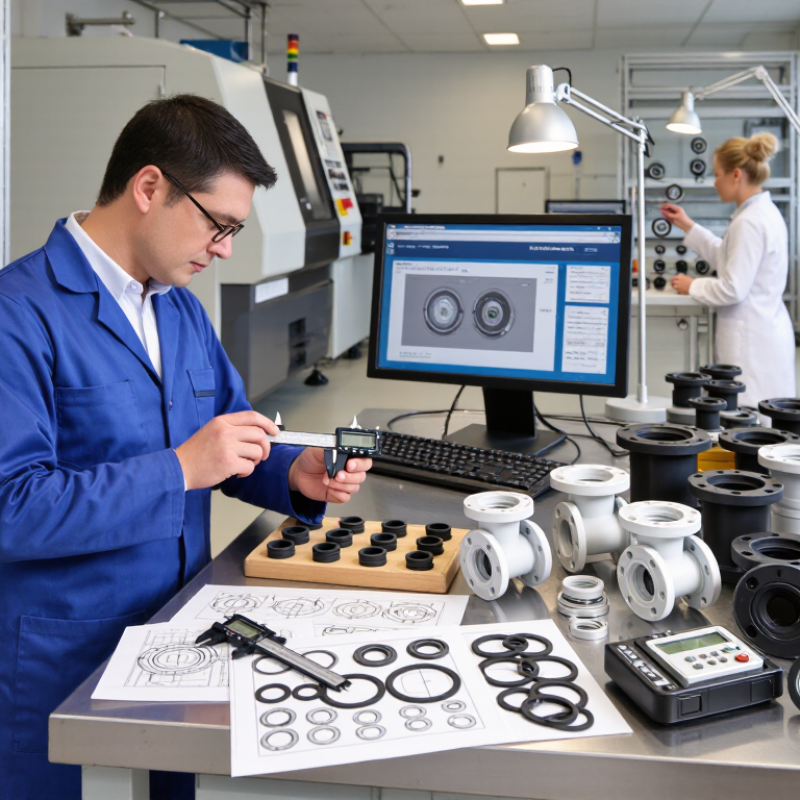
How to Choose the Right Valve Seal Supplier?
Define Your Valve Seal Requirements and Operating Conditions
A reliable valve seal selection starts with operating facts, not a catalogue image. Record the fluid, pressure, temperature, cycling frequency, shaft speed, and leakage limits. Include start-up and shutdown conditions. They may be harsher than normal operation.
Material compatibility matters. Steam, oxygen, hydrocarbons, acids, and abrasive slurries require different sealing strategies. Check swelling, chemical attack, extrusion, and thermal ageing. For sour service, review NACE MR0175 requirements. For fugitive emissions, ask whether testing follows ISO 15848-1 or an equivalent method. Small details matter.
The U.S. Environmental Protection Agency’s Protocol for Equipment Leak Emission Estimates identifies valves as major sources of fugitive emissions in process facilities. Its data shows valves can represent about 60% of such emissions. The International Energy Agency reported around 120 million tonnes of methane emissions from fossil fuel operations in 2023. These figures make seal performance an environmental and maintenance issue, not merely a purchasing detail.
Request test evidence linked to your conditions. Ask for temperature ranges, pressure limits, cycle results, media compatibility data, and traceable material certificates. A supplier should explain test methods clearly. Be cautious with impressive leakage claims lacking test context. I have seen seals pass laboratory tests yet fail after vibration, contamination, or repeated thermal cycling. The overlooked condition is often the real cause.

| Application Area | Key Requirement | Typical Operating Condition | Common Seal Material Options | Supplier Evaluation Criteria | Recommended Verification |
|---|---|---|---|---|---|
| General Water Service | Low leakage, dimensional stability, resistance to water absorption | 0–80°C; up to approximately 16 bar, depending on valve design | EPDM, NBR, PTFE | Water-service compatibility, controlled hardness, compression-set data | Pressure and leakage testing with the actual valve body and fluid |
| Hot Water and Steam | High-temperature resistance and low compression set | 120–200°C for hot water or saturated steam; pressure depends on steam conditions | PTFE, graphite, high-temperature elastomers | Temperature rating, steam-aging data, sealing performance after thermal cycling | Thermal cycling, steam exposure, torque measurement, and leakage testing |
| Hydraulic Oil | Oil resistance, extrusion resistance, and reliable dynamic sealing | -30–100°C; commonly 100–350 bar in hydraulic systems | NBR, polyurethane, PTFE-based compounds | Fluid compatibility, extrusion resistance, wear rate, and dimensional consistency | High-pressure cycling, abrasion testing, and post-test dimensional inspection |
| Natural Gas and Hydrocarbon Gas | Low fugitive emissions, decompression resistance, and gas compatibility | -40–150°C; pressure may exceed 100 bar in transmission systems | Specially formulated elastomers, PTFE, graphite | Gas-service qualification, rapid gas decompression performance, traceability | Gas leakage testing, rapid decompression testing, and material batch verification |
| Chemicals and Solvents | Resistance to swelling, shrinkage, permeation, and chemical degradation | -20–180°C; pressure varies according to chemical process | PTFE, FKM, EPDM, perfluoroelastomer compounds | Chemical compatibility chart, immersion data, and resistance to permeation | Fluid immersion, mass and volume-change measurement, and pressure retention testing |
| Food and Beverage Processing | Hygienic design, cleanability, low extractables, and regulatory suitability | -20–150°C; frequent cleaning and sanitizing cycles | Food-grade EPDM, PTFE, silicone compounds | Material declarations, surface-finish control, clean-in-place compatibility | Cleaning-cycle validation, extractables review, visual inspection, and leakage testing |
| Cryogenic Service | Flexibility at low temperature, low permeability, and thermal-shock resistance | Approximately -196 to -40°C, depending on the cryogenic medium | PTFE, specialized low-temperature elastomers, metal seals | Low-temperature test data, leakage control, and material traceability | Cryogenic cycling, helium leak testing, and inspection after thermal shock |
| Abrasive Slurry | Wear resistance, particle tolerance, and stable sealing under cycling | 10–120°C; pressure commonly 5–40 bar, depending on process equipment | Polyurethane, reinforced PTFE, abrasion-resistant elastomers | Wear testing, particle-size tolerance, and resistance to extrusion | Accelerated wear testing, cycle testing, and leakage measurement after abrasion |
| High Vacuum | Very low outgassing, low vapor pressure, and minimal permeation | From atmospheric pressure down to approximately 10-6 mbar or lower | Vacuum-grade PTFE, metal seals, selected low-outgassing elastomers | Outgassing data, surface cleanliness, dimensional control, and packaging quality | Helium leak testing, vacuum bake-out assessment, and residual-gas analysis |
| Dynamic Rotary or Sliding Valves | Low friction, controlled wear, and resistance to stick-slip | Movement speed up to approximately 1 m/s; pressure and temperature depend on design | PTFE-based compounds, polyurethane, filled elastomers | Friction coefficient, wear rate, shaft or stem finish, and installation guidance | Dynamic cycle testing, friction-torque measurement, and leakage inspection |
How to Choose the Right Valve Seal Supplier?
Supplier expertise should be tested on the shop floor, not inferred from a polished brochure. Ask for seal failure histories, application limits, and corrective-action records. A capable supplier can explain why an elastomer swells, hardens, or loses compression in service. The explanation should match test evidence. According to the MarketsandMarkets Industrial Valves Market report, the market is projected to grow from about USD 78 billion in 2024 to over USD 103 billion by 2029. More equipment means more pressure on seal reliability.
Material selection needs measurable logic. Request compatibility data for temperature, pressure, media, and cycling frequency. PTFE, graphite, EPDM, and fluorocarbon compounds behave differently beside steam, hydrocarbons, or aggressive chemicals. ASTM D2000 classification can help compare rubber compounds, but it does not replace application testing. Ask for batch certificates, hardness results, tensile data, and compression-set values. Small details matter.
Manufacturing capability is equally important. Review mold control, machining tolerances, cleaning procedures, and lot traceability. ISO 9001 certification supports process discipline, but certification alone proves little about seal performance. Request dimensional inspection reports and sample approval records. If fugitive emissions matter, check testing against ISO 15848-1 or applicable industry requirements. I would not accept only a perfect sample. Production variation is the harder question. A supplier should show how it controls flash, surface finish, and storage aging across repeated batches. Some supplier claims sound convincing, yet the evidence may be thin. That is where a factory visit can change the decision.
Use these practical evaluation dimensions when comparing valve seal suppliers. The reference weights reflect the typical importance of technical suitability, material knowledge, manufacturing control, testing, and delivery capability in industrial sealing applications.
Choosing a valve seal supplier requires more than comparing prices. Product quality begins with material traceability, controlled manufacturing, and repeatable inspections. Request EN 10204 3.1 material certificates, batch numbers, dimensional records, and hardness results. Confirm that the supplier tests sealing materials against the actual temperature, pressure, media, and cycling conditions.
Certifications need careful review. ISO 9001 supports process control, but it does not prove seal performance. For industrial valves, ask for test evidence aligned with API 622, API 624, or ISO 15848-1, where applicable. These standards address fugitive emissions and repeated valve operation. The U.S. EPA’s 2024 Inventory identifies natural-gas systems as roughly one-third of reported U.S. methane emissions. Small sealing failures can therefore create large operational and environmental costs. Request independent laboratory reports, test duration, cycle counts, acceptance limits, and calibration dates. A certificate alone is not proof.
Tips: Check whether the tested design matches the supplied design. Ask for samples from the same production lot. Inspect packaging for moisture, deformation, and expired storage limits. Keep records.
Performance testing should reflect field reality, not only a clean laboratory setup. Pressure cycling, thermal cycling, chemical compatibility, and emissions testing can reveal weaknesses. Ask how failures are investigated and corrected. A supplier that cannot explain nonconforming results may not control its process well. I would also challenge impressive claims that lack raw data. Supplier selection is rarely perfect. A second technical review often catches what a polished certificate hides.
Choosing a valve seal supplier requires more than comparing unit prices. A low quote may exclude tooling, testing, expedited freight, or replacement stock. Ask for a cost breakdown. Include seal material, minimum order quantity, inspection fees, and delivery charges. The World Bank’s 2023 Logistics Performance Index assessed 139 economies, highlighting timeliness, tracking, and logistics competence. These factors can affect downtime as much as the purchase price.
Customization should match the application, not merely the drawing. Share media type, pressure, temperature, shaft speed, cycling frequency, and installation limits. Request dimensional drawings, material certificates, tolerance data, and sample validation. The ISO Survey 2022 recorded 1,265,216 ISO 9001 certificates worldwide. Certification helps, but it does not prove every seal will perform in your valve. That part needs evidence. Ask for batch traceability and failure-analysis support.
Lead time should separate engineering, production, inspection, and shipping. A supplier promising seven days may mean only factory processing. Confirm the real date in writing. Technical support matters during commissioning. Can an engineer review swelling, leakage, compression set, or premature wear? Can the supplier suggest an alternative compound without changing the design? I would also test communication before signing. Slow answers during quotation often become slower answers after delivery. No scorecard is perfect. Keep a small trial order, record actual lead times, and revise the supplier comparison after field data arrives.
Supplier reliability is easier to judge through evidence than promises. Start with recent customer reviews, especially those mentioning leakage, delivery accuracy, and technical support. Look for repeated patterns, not one perfect comment. A supplier with consistent feedback usually manages quality more carefully.
Request samples before placing a large order. Check the seal’s dimensions, surface finish, elasticity, and resistance to the intended fluid and temperature. Ask for material certificates and inspection records. A practical test with your valve body can reveal poor fitting or excessive compression. I once treated a sample as proof of full production quality. That was a mistake. Production batches still need clear inspection controls.
Tips: Send the supplier your drawings, operating pressure, temperature range, and media details. Notice how clearly they respond. Do they ask useful questions? Do they explain limitations? Fast replies are not enough. Technical answers matter more. Ask for a sample schedule, production timeline, packaging details, and corrective-action process. Keep communication in writing. Vague promises create expensive confusion. If a supplier avoids simple questions or changes specifications without explanation, pause the evaluation. Good communication should remain clear when a problem appears. That is often the real test.


For those larger-sized parts, or smaller quantity runs, we have 2 independent powder coat booths and ovens. The quality, durability and affordability of today’s powder coating finishes make this the process of choice for world-class companies.
Powder coating advantages over other forms of coating are many. Materials used in the Powder coating process can be metals and non-metals that come in a multitude of thicknesses, textures, colors, etc. Another of Powder coating’s biggest advantages over conventional coatings is its ability to create finishes in many different textures. Powder Coating Booths allow us the ability to apply these advantages to large products.
Tri-State Fabricators runs a full-service conveyor line for painting. Wet painting can provide protection or decoration to many different part styles. From start to finish, every project is easier to undergo random and point-based inspection by our skilled painting team.
Advantages to our Wet Paint Line are these lines start with product prep and ends with a thorough inspection of a high quality finished product. Our ability to complete large and small projects with a superior finish and doing so in a timely and economical fashion. This passes along the savings in production to our customers. When powder coating ins not an option, our Wet Paint Line gets the job done right the first time.
When the parts get big and heavy we roll-out our custom paint racks and oversize booth. By utilizing our partnerships with all the major paint brands, we can match virtually any color with wet paint.
The advantages of having access to a Wet Paint Booth are many. Large projects of many different shapes can be loaded into the booth. The Wet Paint Booth offers an environment that is much more controlled than a typical parts painting operation.
Not only are they used because of their controlled environment, but they’re are also advantageous when it comes to applying paint to parts that are needed in industries that require specialty coatings such as medical, aerospace, etc.
Our military forces have some very high standards when it comes to the finish of their vehicles and equipment. From the first pre-treatment step to final coat, it takes a great deal of knowledge and experience to protect the men and women of our armed forces. They deserve only the best, and Tri-State Fabricators provides it.
All of our processes are closely monitored by our staff and management teams. Both of which are highly trained in the processes of metal fabrication and finishing. Tri-State Fabricators’ goal is to always fully satisfy each and every customer, including the military. We will always put a 110% into what we do.
Abrasive media blasting is an excellent way to remove old paint, rust, and increase the paint/powder adhesion. Glass beads produce a much smoother and brighter finish than angular abrasives; leaving the part clean yet without any dimensional change. Chemically inert and environmentally friendly, we can recycle our beads approximately 30 times; making them a more preferred method of metal cleaning or surface finishing.
Advantages to Glass Bead Blasting are many. Glass bead blast media is used when a project is needing rough surfaces need to become smooth for applications of coatings such as paint. It is typically used to clean paint and rust from a product surface without deforming the surface it is being used on. Overall, compared to many other blasting media, Glass Bead Blasting is a very economical choice and those savings are always passed on to our customers.
Tri-State Fabricators utilize a zinc phosphate wash to clean and etch the material to ensure the best paint adhesion possible. The unique design of our 3-stage wash system does the work like a 5-stage. From Cleaning and rinsing to conversion coating and post-treatment, Our Part Washing process is a complete service and works throughout the fabrication service and the finishing service.
Along with the previously mentioned benefits, Curing is a vital chemical reaction that leaves the product finish hard and relatively safe from mild abrasion and aggressive corrosion. This process can be done in more than one way; ambient air-dry or in curing ovens at temps that exceed 240°.
From fixing paint mistakes (someone else’s of course) to simply cleaning our paint line hooks, our burn-off oven is put to good use. After a quick burn-off, a little clean up, and a fresh coat of paint, your parts will look better than new.
Why does our Burn-Off Oven work so well? Because super heating the air around parts turns the materials into ashes. From paint and powder coatings to rubber and machining oils, high temps do the job without degrading the integrity of the part.
Masking is a vital part of producing high quality products. We have die-cut masking patterns to protect machined surfaces as well as a wide range of plugs and caps to protect threaded holes and bolts. We provide permanent and temporary masking.
Masking allows the selected sections of a product to be protected from a fabrication or finishing service. This can be with both chemicals when etching and tapes, paints when only finishing just a section of the product. Masking is great in aiding the customization process of a project.
Screen printing is a photographic process that transfers artwork onto a porous nylon screen which allows colored ink to flow through the screen and be deposited on an aluminum or plastic component. We can generally have just about any design created onto a screen for your parts.
Some of the advantages of Screen Printing are, brand recognition for your business displaying on your products, assembly instructions, product warnings/hazards, etc. Tri-State Fabricators produces Screen Printing of the highest quality so you know it’s durable.
Metal Finishing is the art of treating the exterior portion of product, often metal but can also be made of other materials, so that the surface is clean and free of any debris. Then the process of applying coats or either paint of powder coat takes place. This coating process improves the quality of the product in both appearance and resistance to wear and corrosion.
Tri-State Fabricators, Inc., understands that a project typically isn’t complete until a high-quality finish has been added to your product. This is why our painting and powder coating teams continuously inspect the products throughout the Metal Finishing process.

