How to Choose the Right Three Winding Transformer for Your Needs?
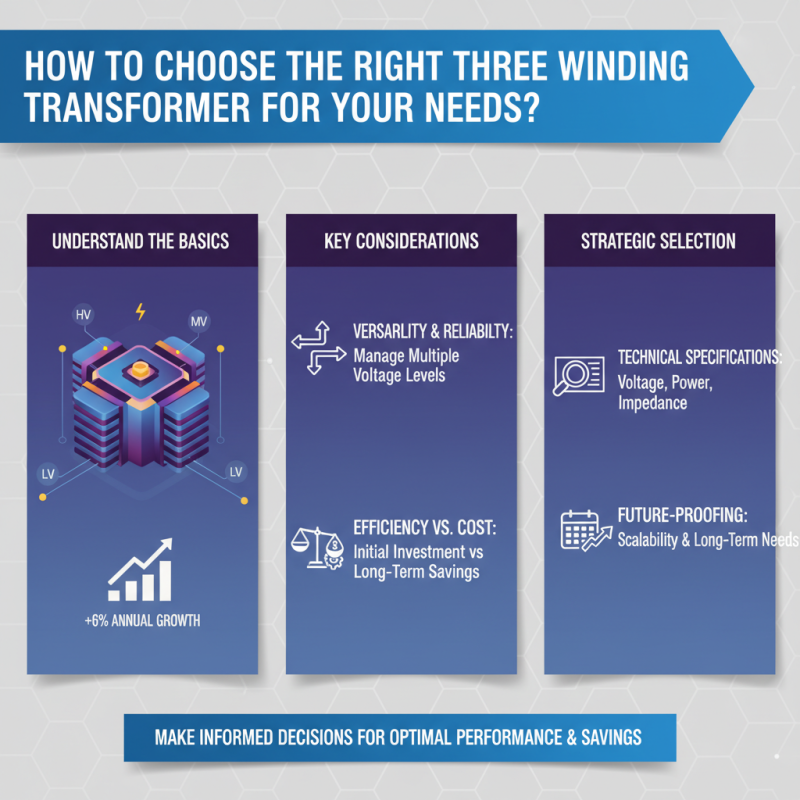
In the electrical engineering industry, the choice of a transformer can significantly impact system performance. A Three Winding Transformer is a versatile solution that offers benefits in power distribution. According to a recent market report, the demand for transformers is expected to grow by 6% annually, highlighting their critical role in energy efficiency.
Selecting the right Three Winding Transformer requires careful consideration of specific needs. These transformers allow connections that can simultaneously manage different voltage levels, improving reliability. However, not all applications necessitate a three-winding design, which raises important questions about efficiency versus cost.
Industry experts emphasize reliability and optimal performance. However, choosing a transformer involves evaluating not only technical specifications but also budget constraints. Many choose based on immediate requirements, often overlooking long-term implications and scalability. Keeping these factors in mind will lead to better decision-making regarding Three Winding Transformers.
Understanding the Types of Three Winding Transformers Available in the Market
When selecting a three winding transformer, understanding the types available is crucial. Three winding transformers are highly specialized devices. They have one primary winding, two secondary windings, and are used in various applications like voltage regulation and power distribution. According to the International Energy Agency, the demand for efficient energy transformers has grown by over 15% in the last three years. This surge highlights the need for understanding different transformer configurations.
Various configurations exist in the market. Delta-wye and wye-delta are popular options among power systems. Delta-wye transformers help in phase shift adjustments and minimize harmonics, essential for improving overall system efficiency. On the other hand, wye-delta transformers provide a stable reference point for grounding, beneficial in industrial settings. Reports from the IEEE show that companies using high-efficiency configurations experience up to a 20% reduction in operational costs. However, choosing the right type often requires deep technical knowledge.
Customization is another critical factor. Not all transformers fit every application. Engineers must assess their specific needs and load requirements. This often involves trial and error. Monitoring performance post-implementation is vital. Adjustments may be necessary based on real-world usage. As the demand for energy continues to evolve, staying updated with the latest transformer technologies will be essential for effective power management.
Analyzing Power Requirements: Calculating Load and Voltage Ratings
When selecting a three-winding transformer, power requirements play a crucial role. Understanding load and voltage ratings is essential for effective operation. A transformer must handle the maximum load without overheating. Reports indicate that a transformer should ideally operate at 80% of its capacity. This helps prevent overheating and damage, extending its lifespan.
Calculating load involves identifying both the electrical demand and the voltage levels needed. The power rating in VA (volt-amperes) indicates how much power a transformer can handle. For instance, a transformer rated at 10,000 VA manages 10 kW at a power factor of 1. Voltage ratings determine compatibility with equipment. Mismatched voltages can lead to inefficiencies or failures. According to industry data, voltage discrepancies account for 20% of transformer failures.
Choosing the right transformer requires recognizing these factors. It's important to analyze specific project demands. Not all applications need the same configurations. Overestimating requirements may lead to unnecessary costs. Conversely, underestimating may disrupt operations. Reflecting on actual needs is vital for making informed decisions. Transformer efficiency can vary widely. It's necessary to weigh performance data carefully.
Evaluating Efficiency and Performance Metrics for Optimal Selection
When choosing a three winding transformer, efficiency and performance metrics are crucial. The transformer's efficiency determines how much energy is converted for useful work. Higher efficiency often means lower operational costs. This metric isn't just a number; it directly impacts your energy consumption over time. Consider the load conditions when evaluating performance. A transformer may perform well under specific load scenarios but poorly under others.
Thermal performance is another important factor. How a transformer dissipates heat affects its longevity and reliability. Inadequate cooling could lead to failures, impacting operations and budgets. Regular monitoring of temperature can reveal hidden issues. Performance testing under varying conditions is also essential. It could uncover limitations you hadn't anticipated.
It's vital to review the materials used in construction. Higher quality materials often lead to better performance. However, they also come with higher costs. In some cases, a less expensive transformer could meet your needs sufficiently. Always weigh the long-term benefits against initial investments. This reflective process can help prevent costly mistakes in selection.
Key Features: Assessing Insulation, Cooling, and Safety Standards
When selecting a three winding transformer, understanding insulation is critical. High-quality insulation materials prevent electrical breakdown and enhance durability. Consider factors like dielectric strength and temperature rating. These characteristics will influence the transformer’s lifespan and performance. Insulation failure can lead to costly repairs and downtime. It's crucial to evaluate insulation capabilities carefully.
Cooling is another vital aspect. Proper cooling methods extend the life of the transformer. Liquid cooling or air cooling systems sustain optimal temperatures during operation. Overheating can compromise safety and efficiency. It’s essential to examine cooling capabilities before making a decision. Inadequate cooling systems may not perform well under stress.
Lastly, safety standards cannot be overlooked. Review compliance with relevant regulations and certifications. This ensures the transformer operates safely in various environments. Ignoring safety can result in severe consequences. Evaluate the transformer’s safety features, including overload protection and earth grounding. These considerations play a vital role in the overall reliability and functionality of the transformer.
Cost-Effectiveness: Balancing Initial Investment with Long-Term Savings
In the world of electrical engineering, choosing the right three-winding transformer requires a keen focus on cost-effectiveness. Initial investment costs can often be misleading. While lower-priced options may seem attractive, they frequently lead to higher operational costs. According to industry reports, up to 30% of maintenance expenses relate to inefficient transformers over time.
Long-term savings hinge on the transformer’s construction and materials. High-quality transformers often come with better insulation and cooling systems. These features enhance efficiency, directly impacting energy savings. A well-optimized transformer can cut energy losses by as much as 5%, translating to significant cost savings annually.
However, it’s crucial to strike a balance. Oversized transformers can waste energy and lead to a poor return on investment. In fact, studies show that 15% of transformers in operation are oversized, contributing to inefficiencies. A careful analysis of your load requirements is essential. Evaluating both initial costs and potential savings paints a clearer picture for future investments.





