


How to Choose Temperature Sensors in 2026?

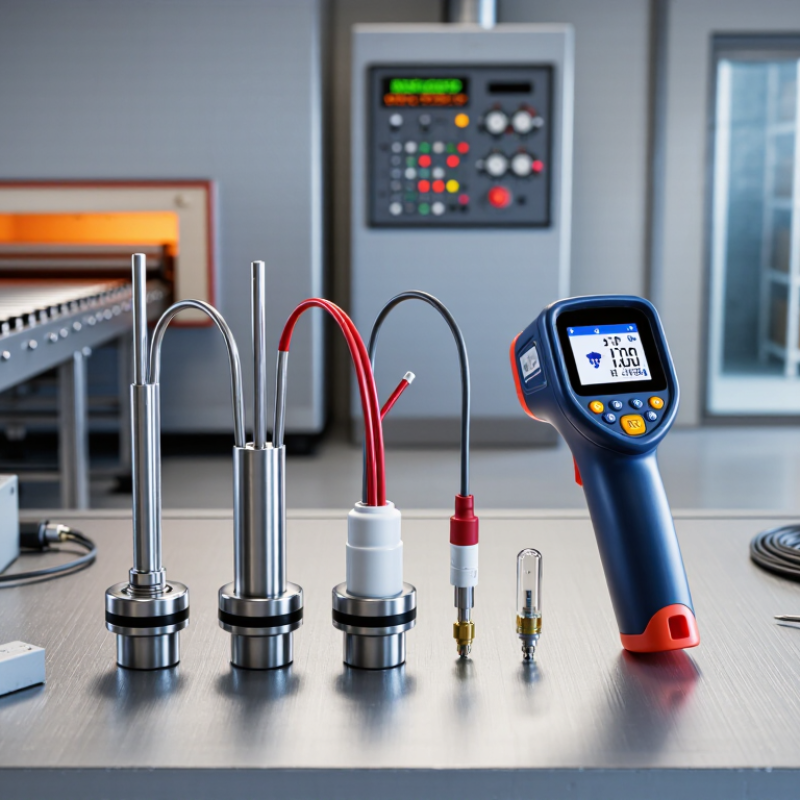
Choosing Temperature Sensors in 2026 is not just a matter of comparing price lists. The right device must match the process, installation, and required accuracy. A sensor beside a fast-moving oven belt faces different demands from one inside a chilled storage room. Probe material, response time, operating range, vibration, moisture, and cable length can all affect readings. Small details matter. A slow probe may miss a brief temperature spike, while a poorly placed sensor can report a precise number that does not represent the product.

Lord Kelvin, whose work helped shape modern temperature measurement, is widely credited with saying, “When you can measure what you are speaking about, and express it in numbers, you know something about it.” That idea is useful when comparing Temperature Sensors, but numbers alone do not settle the choice. RTDs, thermocouples, thermistors, and infrared sensors each suit different conditions. Check the full measurement chain, including the transmitter, wiring, display, and calibration plan. For example, a two-wire RTD installation may introduce lead resistance that matters in a precision application. Infrared models also depend on surface emissivity and line of sight.

This guide explains how to weigh those practical factors in 2026. It covers accuracy, response, durability, connectivity, and lifecycle cost. The selection process is rarely perfect on the first pass. A real installation may reveal assumptions worth revisiting.
How to Choose Temperature Sensors in 2026?

Define the Temperature Measurement Requirements

Before choosing a temperature sensor in 2026, define what the measurement must tell you. Record the normal operating range, expected extremes, required accuracy, and acceptable response time. A cold-storage monitor may need stable readings near freezing, while a heated pipe may demand a wider range. Those are different jobs. Also note whether the sensor contacts a liquid, solid surface, or moving air.

Check the installation conditions, not just the specification sheet. Moisture, vibration, pressure, chemical exposure, and limited space can affect sensor life and reading quality. Consider how the sensor will connect to your controller, and whether its signal type is supported. For a fast-changing process, response time matters; for a steady tank, repeatability may matter more. A frequent planning mistake is asking for maximum accuracy everywhere. That can add cost without improving the decision the measurement supports. It is worth questioning the requirement before selecting hardware.

Tips: Write a one-page measurement brief. Include range, accuracy, response time, environment, mounting method, and output needs. Note how the sensor will be checked or calibrated. If you are unsure about one condition, label it as an assumption and verify it before ordering.


Compare Common Temperature Sensor Technologies

How to Choose Temperature Sensors in 2026?
Compare Common Temperature Sensor Technologies

Choosing a temperature sensor starts with the operating range, required accuracy, response time, and installation environment. Resistance temperature detectors, or RTDs, offer stable, repeatable readings and suit many process measurements. They often need careful wiring and can respond more slowly than smaller sensors. Thermistors are sensitive across a narrower range, making them useful for compact equipment and close temperature control. Thermocouples cover broad temperature ranges and tolerate demanding conditions, but their signals may need more careful conditioning. Integrated circuit sensors are convenient for electronic assemblies, though their operating limits may not suit hot or harsh locations. Fast, but less precise. No type wins everywhere.

Tips: Check the sensor’s stated accuracy across your actual working range, not just at room temperature. Consider cable length, vibration, moisture, and how the probe contacts the measured surface. A sensor mounted near a heat source may report the wrong temperature. Simple can be enough.

For a stable industrial process, an RTD may be a practical choice; for a furnace, a thermocouple may fit better. A thermistor can work well inside a battery pack when its range and response match the design. Compare total system performance, including wiring, calibration, and signal-reading electronics. Specifications are useful, but real mounting conditions can still surprise you. Test the assembled setup before relying on its readings.

How to Choose Temperature Sensors in 2026? - Compare Common Temperature Sensor Technologies
Technology How It Works Typical Temperature Range Typical Accuracy Response Time Key Advantages Limitations Common Applications
Thermocouple Two dissimilar metal conductors generate a small voltage that changes with the temperature difference between the measuring and reference junctions. About −200 to 1,700 °C, depending on thermocouple type, construction, and environment. Often around ±1 to ±2.2 °C, or specified as a percentage of the reading; the applicable tolerance depends on type and wire grade. Typically fractions of a second to several seconds, depending on probe size, sheath, and installation. Very wide operating range; rugged; suitable for high temperatures; relatively low cost. Requires cold-junction compensation; output is nonlinear and low-level; accuracy and stability can drift with age or exposure. Furnaces, kilns, engines, process equipment, and high-temperature testing.
RTD (platinum resistance thermometer) Measures the change in electrical resistance of platinum as temperature changes. Pt100 and Pt1000 are common resistance designs. Commonly about −200 to 850 °C for platinum elements; the usable range depends on probe construction. For a Pt100, IEC Class A tolerance is ±(0.15 + 0.002 × |t|) °C, where t is temperature in °C. Usually about 1 to 10 seconds for a probe; smaller elements can respond faster. Good accuracy, repeatability, and long-term stability; useful over a broad industrial temperature range. Generally costs more than a basic thermocouple; needs excitation and suitable wiring; self-heating and lead resistance must be managed. Industrial process control, laboratories, HVAC systems, and precision equipment.
NTC thermistor Uses a semiconductor material whose resistance decreases as temperature rises. Commonly about −50 to 150 °C, with the actual range determined by the component and packaging. Often around ±0.1 to ±1 °C over a specified range for selected parts; performance varies substantially by tolerance and calibration. Often fractions of a second to several seconds, depending on bead size, encapsulation, and mounting. High sensitivity over a limited range; compact; inexpensive; simple measurement circuitry. Strongly nonlinear; narrower useful range; can self-heat; characteristics may vary between parts. Battery packs, appliances, medical devices, HVAC, and electronic equipment protection.
Semiconductor temperature sensor IC Uses on-chip semiconductor circuitry to provide an analog voltage, digital output, or temperature reading. Commonly about −55 to 150 °C, depending on the device. Typically around ±0.5 to ±2 °C over specified conditions; check the individual device’s accuracy limits. Typically milliseconds to a few seconds, depending on the IC, conversion settings, and thermal coupling. Easy to interface with electronics; compact; often provides calibrated digital output and built-in signal conditioning. Limited temperature range; needs a power supply; measurement can be affected by board heating and placement. Consumer electronics, embedded systems, data loggers, and equipment monitoring.
Infrared (non-contact) sensor Estimates surface temperature by detecting emitted infrared radiation; it does not need to touch the target. Model-dependent; handheld and fixed instruments commonly cover ranges from below 0 °C to several hundred degrees Celsius, with specialized instruments extending higher. Often specified as approximately ±1 to ±2 °C or ±1% to ±2% of reading, whichever is greater; depends on instrument and conditions. Typically milliseconds to about one second for the instrument’s indicated response. Measures moving, hazardous, inaccessible, or very hot surfaces without contact; fast readings. Measures surface rather than internal temperature; emissivity, distance-to-spot ratio, reflections, and viewing conditions affect results. Conveyor inspection, electrical maintenance, food surface checks, and moving-process monitoring.

Selection note: Specifications are typical examples, not guarantees. Confirm the sensor’s rated range, accuracy class, response time, calibration requirements, environmental protection, and installation method for the intended application.

Match Sensor Types to Operating Conditions

Match the sensor to the actual operating conditions, not just the temperature shown on a process diagram. Thermocouples suit wide temperature ranges and changing conditions, while RTDs often provide stable, repeatable readings over moderate ranges. Thermistors respond sensitively across narrower ranges. Check the required accuracy, response time, and expected temperature extremes before choosing. A sensor that works well in a dry test chamber may struggle beside a vibrating motor or inside a damp pipe.

Installation details matter. Select a probe sheath compatible with the process, and consider whether the sensor will contact liquid, moving air, or a solid surface. Poor placement can create misleading readings, even with a capable sensor. I have seen specifications look convincing on paper, then fall short because the probe sat too far from the point that mattered. Field conditions can surprise you.

Tips: Confirm the full operating range, including brief temperature spikes. Check vibration, moisture, and chemical exposure. Allow room for calibration and replacement. Test it in place. If readings drift or respond too slowly, review the mounting and wiring before changing sensor types. A small installation mistake can look like a sensor failure.

Assess Accuracy, Calibration, and System Compatibility

How to Choose Temperature Sensors in 2026?
Assess Accuracy, Calibration, and System Compatibility

Start with the temperature range and accuracy your process actually needs. A sensor rated to ±0.2°C may sound precise, but the full measurement chain matters: probe tolerance, wiring, transmitter, and readout can all add error. Compare total system uncertainty with your process limits, not just the figure on a product sheet. Small details matter.

Calibration records should show the reference method, date, results, and uncertainty. Choose an interval based on operating conditions and observed drift, rather than assuming one schedule fits every application. Heat cycling, vibration, moisture, and chemical exposure can change performance. Keep records that let technicians compare readings over time and identify when recalibration is warranted.

Check that the sensor matches the input type, wiring arrangement, connector, and measurement range of your monitoring system. Also consider probe dimensions, mounting, and response time: a thick probe may lag during rapid temperature changes. In practice, a tidy specification can still mislead if the sensor sits in a draft or touches a cold pipe wall. That installation detail is easy to overlook. Test the assembled setup at representative operating points, and document any gaps between expected and observed readings.

Validate the Sensor Before Final Selection

How to Choose Temperature Sensors in 2026?
Validate the Sensor Before Final Selection

Before selecting a temperature sensor, test it in the conditions it will actually face. A data sheet cannot reveal every installation problem. Check the operating range, expected accuracy, response time, and probe dimensions against your process. Place the sensor beside a recently calibrated reference probe at several stable temperatures. Record readings after they settle, not just at startup. A two-degree offset may matter greatly in a small incubator, but little in a large storage room. Context matters.

Tips: Test the complete measurement chain, including the sensor, cable, connector, and controller. Repeat readings during warm-up and cooldown. Keep a simple log of the setpoint, reference reading, sensor reading, and settling time.

A neat bench test can still miss a real-world issue. Check repeatability after removing and reinstalling the probe, and note whether airflow, moisture, or vibration affects readings. If the sensor drifts or disagrees with the reference, inspect its placement and wiring before applying a correction. One honest limitation: a short trial may not capture seasonal changes. Validate under representative conditions, then keep the results with your selection records.

How to Choose Temperature Sensors in 2026? Validate the Sensor Before Final Selection

Representative Temperature Ranges of Common Industrial Sensors

Compare the expected process temperature with the sensor’s usable range, then validate the selected assembly at representative operating points against a traceable reference. These ranges are indicative: the sensor construction, sheath, wiring, and installation can affect the practical limits and performance.

Powder Coat Booths

For those larger-sized parts, or smaller quantity runs, we have 2 independent powder coat booths and ovens. The quality, durability and affordability of today’s powder coating finishes make this the process of choice for world-class companies.

Powder coating advantages over other forms of coating are many. Materials used in the Powder coating process can be metals and non-metals that come in a multitude of thicknesses, textures, colors, etc. Another of Powder coating’s biggest advantages over conventional coatings is its ability to create finishes in many different textures. Powder Coating Booths allow us the ability to apply these advantages to large products.

Wet Paint Line

Tri-State Fabricators runs a full-service conveyor line for painting. Wet painting can provide protection or decoration to many different part styles. From start to finish, every project is easier to undergo random and point-based inspection by our skilled painting team.

Advantages to our Wet Paint Line are these lines start with product prep and ends with a thorough inspection of a high quality finished product. Our ability to complete large and small projects with a superior finish and doing so in a timely and economical fashion. This passes along the savings in production to our customers. When powder coating ins not an option, our Wet Paint Line gets the job done right the first time.

Wet Paint Booths

When the parts get big and heavy we roll-out our custom paint racks and oversize booth. By utilizing our partnerships with all the major paint brands, we can match virtually any color with wet paint.

The advantages of having access to a Wet Paint Booth are many. Large projects of many different shapes can be loaded into the booth. The Wet Paint Booth offers an environment that is much more controlled than a typical parts painting operation.

Not only are they used because of their controlled environment, but they’re are also advantageous when it comes to applying paint to parts that are needed in industries that require specialty coatings such as medical, aerospace, etc.

Military CARC

Our military forces have some very high standards when it comes to the finish of their vehicles and equipment. From the first pre-treatment step to final coat, it takes a great deal of knowledge and experience to protect the men and women of our armed forces. They deserve only the best, and Tri-State Fabricators provides it.

All of our processes are closely monitored by our staff and management teams. Both of which are highly trained in the processes of metal fabrication and finishing. Tri-State Fabricators’ goal is to always fully satisfy each and every customer, including the military. We will always put a 110% into what we do.

Glass-Bead Blasting

Abrasive media blasting is an excellent way to remove old paint, rust, and increase the paint/powder adhesion. Glass beads produce a much smoother and brighter finish than angular abrasives; leaving the part clean yet without any dimensional change. Chemically inert and environmentally friendly, we can recycle our beads approximately 30 times; making them a more preferred method of metal cleaning or surface finishing.

Advantages to Glass Bead Blasting are many. Glass bead blast media is used when a project is needing rough surfaces need to become smooth for applications of coatings such as paint. It is typically used to clean paint and rust from a product surface without deforming the surface it is being used on. Overall, compared to many other blasting media, Glass Bead Blasting is a very economical choice and those savings are always passed on to our customers.

Part Washing

Tri-State Fabricators utilize a zinc phosphate wash to clean and etch the material to ensure the best paint adhesion possible. The unique design of our 3-stage wash system does the work like a 5-stage. From Cleaning and rinsing to conversion coating and post-treatment, Our Part Washing process is a complete service and works throughout the fabrication service and the finishing service.

Along with the previously mentioned benefits, Curing is a vital chemical reaction that leaves the product finish hard and relatively safe from mild abrasion and aggressive corrosion. This process can be done in more than one way; ambient air-dry or in curing ovens at temps that exceed 240°.

Burn-Off Oven

From fixing paint mistakes (someone else’s of course) to simply cleaning our paint line hooks, our burn-off oven is put to good use. After a quick burn-off, a little clean up, and a fresh coat of paint, your parts will look better than new.

Why does our Burn-Off Oven work so well? Because super heating the air around parts turns the materials into ashes. From paint and powder coatings to rubber and machining oils, high temps do the job without degrading the integrity of the part.

Masking

Masking is a vital part of producing high quality products. We have die-cut masking patterns to protect machined surfaces as well as a wide range of plugs and caps to protect threaded holes and bolts. We provide permanent and temporary masking.

Masking allows the selected sections of a product to be protected from a fabrication or finishing service. This can be with both chemicals when etching and tapes, paints when only finishing just a section of the product. Masking is great in aiding the customization process of a project.

Screen Printing

Screen printing is a photographic process that transfers artwork onto a porous nylon screen which allows colored ink to flow through the screen and be deposited on an aluminum or plastic component. We can generally have just about any design created onto a screen for your parts.

Some of the advantages of Screen Printing are, brand recognition for your business displaying on your products, assembly instructions, product warnings/hazards, etc. Tri-State Fabricators produces Screen Printing of the highest quality so you know it’s durable.

Metal Finishing

Metal Finishing is the art of treating the exterior portion of product, often metal but can also be made of other materials, so that the surface is clean and free of any debris. Then the process of applying coats or either paint of powder coat takes place. This coating process improves the quality of the product in both appearance and resistance to wear and corrosion.

Tri-State Fabricators, Inc., understands that a project typically isn’t complete until a high-quality finish has been added to your product. This is why our painting and powder coating teams continuously inspect the products throughout the Metal Finishing process.
