


Choosing the right Steel Wire Mesh begins with the application, not the catalogue price. A mesh panel may look strong on a warehouse floor, yet fail when exposed to vibration, moisture, or repeated impact. Wire diameter, opening size, material grade, coating, and load direction must work together. Small details matter. Even the edge finish can affect handling, corrosion resistance, and installation time.
The World Steel Association reported approximately 1.892 billion tonnes of crude steel production worldwide in 2023, according to its World Steel in Figures 2024 report. This scale reflects steel’s importance, but it also reveals a challenge: not every steel product offers the same performance. Galvanized, stainless steel, and plain carbon steel meshes behave differently in coastal air, chemical environments, and high-temperature areas. ASTM A1064/A1064M provides requirements for carbon-steel wire and welded wire reinforcement, while ISO 4783 addresses industrial wire screens and related specifications. These standards are useful reference points, not substitutes for engineering judgment.
Start with the real conditions.
A reliable selection process checks mesh opening, wire tolerance, tensile strength, weld quality, and surface protection. It also confirms whether the mesh will be cut, bent, welded, or installed outdoors. Product certificates and batch traceability can support confidence, but paperwork alone cannot reveal every weakness. A supplier’s practical experience matters. So does independent testing.
The cheapest option may appear efficient. It may not remain economical after rust, deformation, or replacement costs appear. This guide compares the main selection factors, highlights common mistakes, and explains where professional advice is necessary. No checklist is perfect. That is worth remembering.
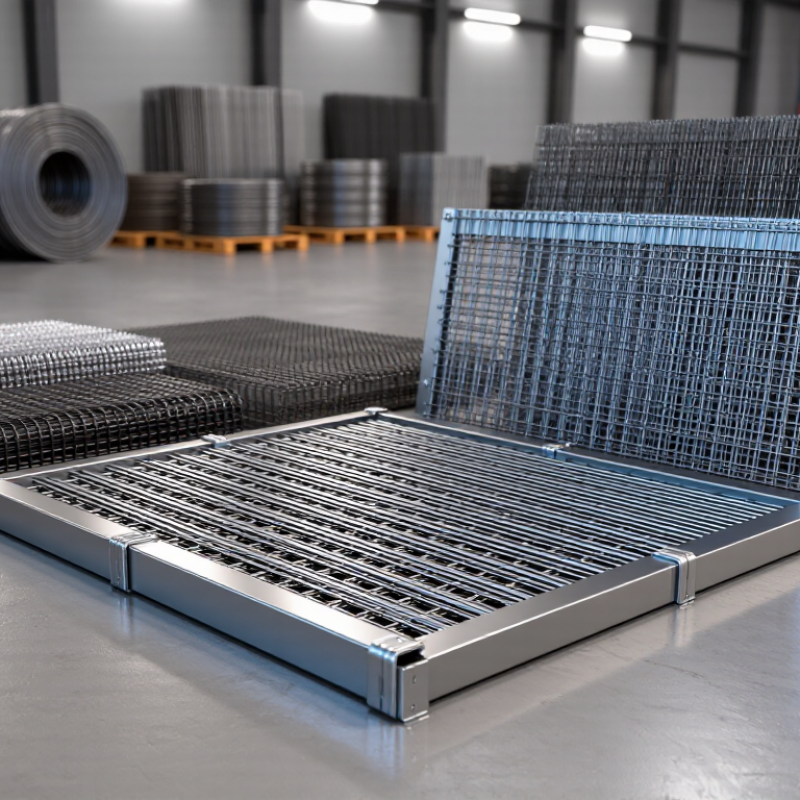
How to Choose the Right Steel Wire Mesh?
Choosing steel wire mesh starts with the application, not the appearance. Identify what the mesh must do before comparing sizes or finishes. A screen for flour dust needs different performance than a guard around moving equipment.
Measure the opening size carefully. A 10 mm aperture may suit material screening, but it may be unsafe for small parts or fingers. Check the wire diameter, panel strength, and expected load. Consider impact, vibration, airflow, and cleaning methods. Outdoor installations also require protection against moisture and corrosion. Stainless steel may perform well in damp areas, while coated steel can suit less aggressive environments. Always verify temperature limits and relevant safety requirements with a qualified engineer.
In practical projects, I have seen buyers choose mesh by price alone. That decision caused early deformation. I have also underestimated cleaning access before. It was a useful reminder. Performance depends on the whole installation, including frames, fasteners, and support spacing.
Tips: Write down the material size, load, environment, and service temperature. Request test data or technical drawings when performance matters. Compare open area, not aperture size alone. Inspect a sample under realistic conditions before ordering large quantities. Small details matter.

Define the application first, then match the mesh material to the required strength, corrosion resistance, flexibility, and service environment.
Higher tensile strength is useful for security barriers, screening, and reinforcement, while stainless steel is generally preferred for corrosion-sensitive applications. The values shown are representative lower-bound tensile-strength figures from ASTM A580/A580M, ASTM A641/A641M, and EN 10270-1; actual mesh performance also depends on wire diameter, aperture size, weave or weld pattern, and surface treatment.
Choosing the right steel wire mesh starts with the wire material, not the opening size. Carbon steel offers strength and lower cost for dry, indoor applications. Galvanized steel adds a zinc coating, helping resist moisture and surface rust. Stainless steel suits kitchens, chemical areas, coastal locations, and frequent washing. Grade 304 is a practical general choice. Grade 316 performs better where chlorides and salt exposure are severe.
The World Steel Association reported approximately 1.89 billion tonnes of crude steel production in 2023. This scale shows steel’s broad industrial value, but production volume does not guarantee suitable mesh performance. The International Stainless Steel Forum reported global stainless steel production of about 58.4 million tonnes in 2023. That figure reflects stainless steel’s continuing role in demanding environments. Still, grade selection needs real site data, including humidity, chemicals, temperature, and cleaning methods. A common mistake is choosing stainless steel only by appearance. It may fail if the environment contains strong chlorides.
Tips: Confirm the material certificate, wire diameter, coating mass, and tensile strength. For stainless mesh, request the exact grade, not simply “stainless steel.” Check applicable standards, such as ASTM A580 for stainless wire or ASTM A641 for zinc-coated carbon steel wire. Test a sample near the installation site when corrosion risk is uncertain. It costs time. Replacement costs more. Even experienced buyers sometimes overlook weld zones, cut edges, and trapped moisture. These small details can shorten service life.
Determine the mesh size, wire diameter, and opening pattern before comparing prices. Mesh size describes the number of openings per linear inch. A 20-mesh screen has smaller openings than a 10-mesh screen. However, mesh count alone can mislead. Wire diameter changes the clear opening and affects flow, filtration, and strength.
Use this relationship: opening size equals pitch minus wire diameter. For example, 20 mesh with 0.016-inch wire provides roughly a 0.034-inch opening. Confirm the result with ISO 9044:2016 tolerances, especially when particle separation matters. Thicker wire improves impact resistance, but it reduces open area. That trade-off is often underestimated.
Pattern matters too. Plain weave suits general screening and stable particle sizing. Twill weave supports finer openings with heavier wire. Welded mesh offers rigid panels, while woven mesh adapts better to curved or vibrating equipment.
The World Steel Association reported 1,888.2 million tonnes of crude steel production in 2023, showing the scale of the material supply behind these products. Yet production volume does not guarantee suitability. Test a sample under real temperature, load, and cleaning conditions.
Small details matter. A drawing may specify 1.00 mm wire, while actual measurements vary within accepted tolerances. That variance can change performance. I would also question whether the selected aperture matches the smallest critical particle, not merely the average size.
How to Choose the Right Steel Wire Mesh?
Compare Coatings, Finishes, and Environmental Protection
Steel wire mesh should match its environment, not just its opening size. Indoor storage areas may need only a basic galvanized finish. Outdoor fencing faces rain, sunlight, scratches, and changing temperatures. Coastal sites are harsher because salt accelerates corrosion. Small details matter here.
Hot-dip galvanizing usually provides a thicker zinc layer than electro-galvanizing. It suits exposed structures, construction barriers, and agricultural enclosures. However, a thick coating can slightly alter wire dimensions. Check the specified coating mass and wire diameter before ordering. Do not rely on appearance alone.
PVC-coated mesh adds color and another barrier against moisture. It can work well around gardens, playgrounds, and residential boundaries. Yet damaged plastic may hide early rust beneath the surface. Stainless steel offers strong corrosion resistance, especially in wet or chemically demanding areas, but its higher cost may not suit every project. Epoxy finishes can provide a smooth surface indoors, though prolonged sunlight may reduce their performance.
Ask for coating thickness records, material certificates, and relevant test data. Examine cut edges, weld points, and bends, where protection is often weakest. Salt-spray results can help compare products, but they do not perfectly predict field life. Installation quality matters too. A scratched mesh, trapped water, or contact with dissimilar metals can shorten service life. This choice is rarely perfect. Recheck the site conditions before final selection.
| Mesh Type / Finish | Typical Protective System | Corrosion Resistance | UV and Weathering Performance | Temperature Considerations | Maintenance Needs | Recommended Environments | Key Selection Considerations |
|---|---|---|---|---|---|---|---|
| Bright Steel Wire Mesh | Uncoated carbon-steel wire with a clean, mill-finished surface | Limited Readily rusts when exposed to moisture, salts, or outdoor condensation | Limited Outdoor exposure can accelerate oxidation and surface deterioration | Suitable for normal indoor temperatures; performance depends strongly on humidity and exposure | Requires dry storage, protective paint, oiling, or another suitable treatment | Dry indoor screening, temporary fabrication, and applications where later coating is planned | Lowest initial protection; avoid for permanent outdoor or wet-service use unless an additional coating system is applied |
| Electro-Galvanized Steel Wire Mesh | Thin zinc coating applied by an electroplating process | Moderate Provides sacrificial zinc protection, but the thinner coating is less suitable for severe exposure | Moderate Suitable for protected or mildly exposed locations | Generally suitable for ordinary ambient service; avoid assuming high-temperature suitability without supplier data | Inspect cut edges, scratches, and fastener interfaces; repair damaged areas when practical | Indoor areas, light-duty equipment, dry warehouses, and mildly humid environments | Offers a smoother appearance and tighter dimensional control than many hot-dip finishes, but usually has less zinc protection |
| Hot-Dip Galvanized Steel Wire Mesh | Zinc coating applied by immersion in molten zinc; coating may be applied before or after mesh fabrication | Very Good Zinc acts as a barrier and provides sacrificial protection to exposed steel | Very Good Performs well in many outdoor and atmospheric conditions | Suitable for common outdoor service; prolonged high-temperature exposure can affect zinc-coating performance | Low to moderate; check for white rust in damp storage and inspect cut or abraded areas | Fencing, guards, agricultural structures, construction sites, and general outdoor applications | Choose heavier zinc coating or a relevant standard when exposure includes persistent humidity, industrial pollutants, or deicing salts |
| PVC-Coated Galvanized Steel Wire Mesh | Steel core protected by zinc, plus a bonded polyvinyl chloride outer layer | Very Good Dual protection helps shield the steel from moisture and many common contaminants | Very Good Use a UV-stabilized formulation for prolonged sunlight exposure | Service temperature is limited by the PVC layer; elevated heat can cause softening, aging, or loss of adhesion | Inspect for cuts, peeling, cracking, and damage caused by abrasion or sharp edges | Outdoor fencing, landscaping, animal enclosures, safety barriers, and applications needing color or touch comfort | Confirm coating thickness, adhesion, UV stabilization, and temperature range; damaged PVC can allow localized corrosion |
| Polyester-Powder-Coated Steel Mesh | Steel mesh, commonly galvanized or pretreated, covered with a cured polyester powder coating | Very Good Strong when pretreatment, coating thickness, and edge coverage are properly controlled | Excellent Exterior-grade polyester systems generally provide good color and gloss retention | Suitable for normal outdoor temperatures; verify the coating manufacturer’s continuous-use range for heat exposure | Low; clean with mild detergent and inspect chips, scratches, and exposed edges | Architectural panels, equipment guards, displays, commercial fencing, and visible outdoor installations | Provides a clean decorative finish, but coating damage should be repaired promptly to limit under-film corrosion |
| Epoxy-Coated Steel Mesh | Steel mesh coated with an epoxy resin system, often used as a primer or protective barrier | Very Good Excellent barrier properties in controlled environments; exposed epoxy can chalk under sunlight | Moderate Epoxy is commonly protected with a UV-resistant topcoat for exterior service | Good chemical and heat resistance within the specified system limits; verify compatibility with the process temperature | Inspect for impact damage, chalking, and coating breakdown; avoid harsh cleaners unless approved | Industrial interiors, chemical-process areas, concrete reinforcement applications, and sheltered service | Choose a compatible topcoat when both corrosion protection and long-term outdoor appearance are required |
| 304 Stainless Steel Wire Mesh | Chromium-bearing stainless steel with a passive oxide surface; no additional coating normally required | Excellent Strong general resistance to atmospheric corrosion and many indoor chemicals | Excellent Does not rely on an organic coating for normal UV resistance | Good high-temperature capability relative to coated carbon steel; verify strength and corrosion performance at elevated temperatures | Low; periodic cleaning prevents deposits and helps preserve appearance | Food and pharmaceutical equipment, architectural uses, general outdoor service, and humid indoor environments | Can suffer localized corrosion in chloride-rich conditions; avoid contamination with carbon-steel tools or particles |
| 316 Stainless Steel Wire Mesh | Molybdenum-bearing stainless steel with a passive oxide surface; typically uncoated | Excellent Better resistance than 304 stainless steel in many chloride and marine exposures | Excellent Excellent outdoor durability without dependence on a paint or polymer layer | Suitable for demanding service when the grade, wire condition, and operating temperature are correctly specified | Low; rinse salt deposits and clean regularly in marine or polluted atmospheres | Marine locations, coastal equipment, chemical-processing areas, cleanable screens, and high-humidity environments | Higher material cost is justified when chloride exposure, service life, and reduced maintenance are important |
Selection note: Actual service life depends on wire diameter, coating mass or thickness, mesh construction, edge protection, installation details, pollutants, chloride concentration, humidity, and cleaning practices. Always verify the applicable material standard and environmental exposure classification before final selection.
Choosing steel wire mesh starts with evidence, not appearance. Check the wire diameter, opening size, weld strength, surface finish, and dimensional tolerance. A caliper can expose variations that photographs hide. Measure twice. Request a sample from the same production batch. Inspect several intersections for loose welds, uneven spacing, sharp ends, or incomplete coating. These small defects may cause installation delays or early corrosion.
Standards must match the application and destination market. Ask the supplier which material grade, testing method, and coating requirement they follow. Request mill certificates, inspection reports, and batch traceability documents. Do not accept a generic “quality certificate” without test details. It sounds professional, but proves little. I have seen buyers compare prices before confirming mesh specifications; that mistake made the cheaper option more expensive after replacement and labor costs.
Evaluate the full cost, including cutting, forming, packaging, freight, maintenance, and rejected pieces. A reliable supplier should provide clear drawings, realistic lead times, consistent communication, and a written inspection process. Ask how they handle nonconforming material and request recent production photos or a factory inspection when practical. Test the supplier with a small order before committing to a large one. Even then, reliability is not guaranteed. Recheck the first shipment against the approved sample, because assumptions can survive longer than defects.


For those larger-sized parts, or smaller quantity runs, we have 2 independent powder coat booths and ovens. The quality, durability and affordability of today’s powder coating finishes make this the process of choice for world-class companies.
Powder coating advantages over other forms of coating are many. Materials used in the Powder coating process can be metals and non-metals that come in a multitude of thicknesses, textures, colors, etc. Another of Powder coating’s biggest advantages over conventional coatings is its ability to create finishes in many different textures. Powder Coating Booths allow us the ability to apply these advantages to large products.
Tri-State Fabricators runs a full-service conveyor line for painting. Wet painting can provide protection or decoration to many different part styles. From start to finish, every project is easier to undergo random and point-based inspection by our skilled painting team.
Advantages to our Wet Paint Line are these lines start with product prep and ends with a thorough inspection of a high quality finished product. Our ability to complete large and small projects with a superior finish and doing so in a timely and economical fashion. This passes along the savings in production to our customers. When powder coating ins not an option, our Wet Paint Line gets the job done right the first time.
When the parts get big and heavy we roll-out our custom paint racks and oversize booth. By utilizing our partnerships with all the major paint brands, we can match virtually any color with wet paint.
The advantages of having access to a Wet Paint Booth are many. Large projects of many different shapes can be loaded into the booth. The Wet Paint Booth offers an environment that is much more controlled than a typical parts painting operation.
Not only are they used because of their controlled environment, but they’re are also advantageous when it comes to applying paint to parts that are needed in industries that require specialty coatings such as medical, aerospace, etc.
Our military forces have some very high standards when it comes to the finish of their vehicles and equipment. From the first pre-treatment step to final coat, it takes a great deal of knowledge and experience to protect the men and women of our armed forces. They deserve only the best, and Tri-State Fabricators provides it.
All of our processes are closely monitored by our staff and management teams. Both of which are highly trained in the processes of metal fabrication and finishing. Tri-State Fabricators’ goal is to always fully satisfy each and every customer, including the military. We will always put a 110% into what we do.
Abrasive media blasting is an excellent way to remove old paint, rust, and increase the paint/powder adhesion. Glass beads produce a much smoother and brighter finish than angular abrasives; leaving the part clean yet without any dimensional change. Chemically inert and environmentally friendly, we can recycle our beads approximately 30 times; making them a more preferred method of metal cleaning or surface finishing.
Advantages to Glass Bead Blasting are many. Glass bead blast media is used when a project is needing rough surfaces need to become smooth for applications of coatings such as paint. It is typically used to clean paint and rust from a product surface without deforming the surface it is being used on. Overall, compared to many other blasting media, Glass Bead Blasting is a very economical choice and those savings are always passed on to our customers.
Tri-State Fabricators utilize a zinc phosphate wash to clean and etch the material to ensure the best paint adhesion possible. The unique design of our 3-stage wash system does the work like a 5-stage. From Cleaning and rinsing to conversion coating and post-treatment, Our Part Washing process is a complete service and works throughout the fabrication service and the finishing service.
Along with the previously mentioned benefits, Curing is a vital chemical reaction that leaves the product finish hard and relatively safe from mild abrasion and aggressive corrosion. This process can be done in more than one way; ambient air-dry or in curing ovens at temps that exceed 240°.
From fixing paint mistakes (someone else’s of course) to simply cleaning our paint line hooks, our burn-off oven is put to good use. After a quick burn-off, a little clean up, and a fresh coat of paint, your parts will look better than new.
Why does our Burn-Off Oven work so well? Because super heating the air around parts turns the materials into ashes. From paint and powder coatings to rubber and machining oils, high temps do the job without degrading the integrity of the part.
Masking is a vital part of producing high quality products. We have die-cut masking patterns to protect machined surfaces as well as a wide range of plugs and caps to protect threaded holes and bolts. We provide permanent and temporary masking.
Masking allows the selected sections of a product to be protected from a fabrication or finishing service. This can be with both chemicals when etching and tapes, paints when only finishing just a section of the product. Masking is great in aiding the customization process of a project.
Screen printing is a photographic process that transfers artwork onto a porous nylon screen which allows colored ink to flow through the screen and be deposited on an aluminum or plastic component. We can generally have just about any design created onto a screen for your parts.
Some of the advantages of Screen Printing are, brand recognition for your business displaying on your products, assembly instructions, product warnings/hazards, etc. Tri-State Fabricators produces Screen Printing of the highest quality so you know it’s durable.
Metal Finishing is the art of treating the exterior portion of product, often metal but can also be made of other materials, so that the surface is clean and free of any debris. Then the process of applying coats or either paint of powder coat takes place. This coating process improves the quality of the product in both appearance and resistance to wear and corrosion.
Tri-State Fabricators, Inc., understands that a project typically isn’t complete until a high-quality finish has been added to your product. This is why our painting and powder coating teams continuously inspect the products throughout the Metal Finishing process.

