How to Choose the Right Stainless Wire Mesh for Your Needs?
When selecting the right Stainless Wire Mesh, understanding your specific needs is crucial. The diverse applications of stainless wire mesh can make this decision complex. From industrial uses to home projects, the right type can significantly affect performance.
Consider the material composition of stainless wire mesh. Different grades, like 304 or 316, offer varying levels of corrosion resistance. Clarity about your environment can influence this choice. Additionally, the mesh's wire diameter and openness play pivotal roles in functionality. A finer mesh may suit filtration tasks, while a coarser one might be better for security.
Engaging with knowledgeable suppliers can provide valuable insights. However, it’s essential to question recommendations and gather multiple perspectives. The ideal stainless wire mesh should balance quality, cost, and suitability for your specific application. Reflecting on these factors will guide you towards a more informed decision.
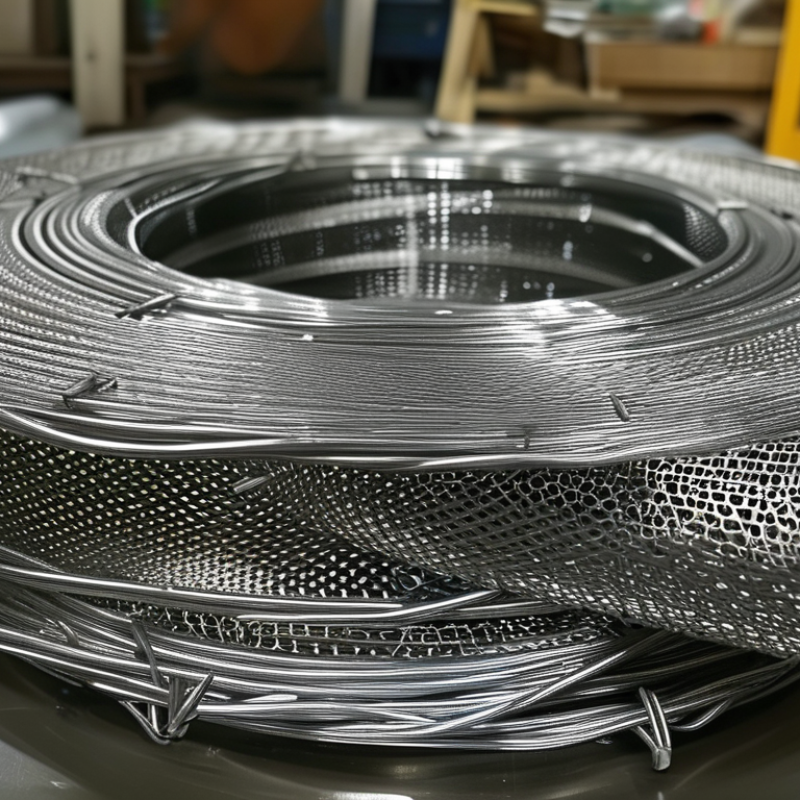
Understanding the Different Types of Stainless Steel Wire Mesh Materials
When selecting the right stainless steel wire mesh, understanding the types of materials available is crucial. Different stainless steel grades serve different purposes. For instance, Type 304 is commonly used in food processing due to its corrosion resistance. This makes it ideal for kitchens and factories. Meanwhile, Type 316 offers even better resistance to harsher chemicals and saline environments, making it suitable for marine applications.
Each type of mesh also varies in wire diameter and aperture size. A thicker wire or smaller aperture can enhance strength and durability. However, this could reduce airflow or liquid passage through the mesh. Therefore, businesses must balance strength and functional requirements.
Not all projects require high-end materials. Sometimes, opting for a moderate grade can lower costs without compromising safety. Reflecting on the project's needs is essential. Will the mesh endure harsh conditions? Will it be used for safety barriers or filtration? These considerations will influence the right choice significantly.
How to Choose the Right Stainless Wire Mesh for Your Needs?
| Type of Stainless Steel Wire Mesh | Opening Size (mm) | Wire Diameter (mm) | Typical Applications |
| T304 Stainless Steel Wire Mesh | 1.0 - 25.0 | 0.20 - 2.00 | Food filtration, architectural applications |
| T316 Stainless Steel Wire Mesh | 0.5 - 20.0 | 0.25 - 1.50 | Chemical processing, marine environments |
| Woven Wire Mesh | 0.1 - 15.0 | 0.15 - 1.00 | Filtration, sieving, and decoration |
| Perforated Stainless Steel Sheets | Varies by design | Varies by sheet thickness | Architectural facades, security screens |
| Stainless Steel Mesh Belting | Custom sizes | Varies significantly | Conveyor systems, industrial processes |
Key Factors Influencing Wire Mesh Selection: Aperture Size and Wire Diameter
When selecting stainless wire mesh, aperture size and wire diameter are critical. Aperture size determines the mesh's ability to filter particles. A smaller aperture captures finer materials, while a larger one allows for better airflow and drainage. Studies indicate that using a mesh with a smaller aperture can enhance filtration efficiency by up to 30%. However, this increase can also cause pressure drop issues, which need careful consideration.
Wire diameter plays a vital role in strength and durability. Thicker wires provide better structural integrity, making them suitable for heavy-duty applications. For instance, a mesh with a wire diameter of 0.5 mm can support an increased load compared to a 0.3 mm thickness. However, thicker wires may reduce the overall aperture size, limiting filtration. Balancing these two factors requires an understanding of the specific application and operational conditions.
Choosing the right combination is not straightforward. Each application may present unique challenges, and it’s essential to analyze the intended use carefully. A mesh well-suited for one industry might perform poorly in another. Experimentation and test runs can often reveal unanticipated behaviors, leading to increased efficiency or, conversely, failure of the mesh. Adjusting aperture and diameter based on these real-world results can lead to significant improvements in performance.
Stainless Wire Mesh Selection: Aperture Size and Wire Diameter
This bar chart illustrates the relationship between aperture size and wire diameter in stainless wire mesh selection. As aperture size increases, the wire diameter also tends to increase to maintain structural integrity.
Evaluating Mesh Properties: Tensile Strength and Corrosion Resistance
When selecting stainless wire mesh, understanding its mesh properties is crucial. Two primary factors to consider are tensile strength and corrosion resistance. Tensile strength refers to the mesh's ability to withstand tension without breaking. It is essential for applications where the mesh will bear heavy loads or face tension. A wire mesh with high tensile strength can maintain its integrity even under pressure.
Corrosion resistance plays a vital role, especially in harsh environments. Stainless steel is known for its resistance to rust and degradation. However, not all grades offer the same level of protection. Factors such as exposure to chemicals, moisture, and temperature variations can affect performance. Choosing a wire mesh with appropriate corrosion resistance for your specific conditions is critical. Evaluating these properties ensures that the selected mesh will meet your needs effectively.
Sometimes, the ideal mesh may not be readily available. Custom solutions might be necessary. This can lead to higher costs or longer lead times. Balancing the need for specific mesh properties against practical constraints is often a challenge. Careful consideration and thorough research can help you make informed decisions.
Applications of Stainless Steel Wire Mesh in Various Industries
Stainless steel wire mesh plays a vital role in various industries, including food processing, pharmaceuticals, and manufacturing. Its durable nature resists corrosion, making it ideal for environments exposed to moisture or chemicals. In food processing, mesh is crucial for filtering, drying, and sifting. It ensures that food products maintain their integrity while keeping contaminants at bay. In pharmaceuticals, it serves as a barrier during production and packaging, ensuring product safety and efficacy.
A variety of applications require different mesh specifications. For instance, a tighter mesh may be needed in the pharmaceutical industry to prevent the smallest particles from passing through. Meanwhile, a coarser mesh might be adequate for agricultural purposes, such as sieving soil.
Tips: Always analyze the intended use before selecting the mesh. Consider the size of the particles you’ll be dealing with. It’s essential to balance durability with the necessary filtration. Additionally, reflect on your operating environment. A mesh that performs well in dry conditions may not withstand wet, humid atmospheres. Keep these factors in mind for better decision-making. Select wisely!
Cost Considerations: Balancing Quality and Price for Wire Mesh Selection
When selecting stainless wire mesh, cost considerations remain paramount. Research suggests that market prices can vary significantly based on material properties, gauge, and weave type. For instance, a standard 304 stainless wire mesh can range from $0.60 to $3.00 per square foot, while premium options like 316 stainless can reach $5.00 per square foot due to enhanced corrosion resistance.
Balancing quality and price is crucial. Lower-cost meshes may lack durability, leading to higher long-term costs. A report by the International Wire and Cable Products Group notes that investing in higher-quality wire mesh can extend its lifespan by up to 30%. Furthermore, factors such as mesh opening size and the application can affect your overall budget. Some users opt for cheaper alternatives, only to find they require replacement sooner than expected, highlighting the necessity for thoughtful investment.
Understanding the specific application also plays a role. For industrial uses, the mesh must withstand harsh conditions. However, overspending on unnecessary features can lead to wasted resources. Each choice you make should be guided by a thorough analysis of both immediate and future needs.





