How to Choose the Right Side Tipper Truck?
Choosing the right Side Tipper Truck begins with the material, route, and working conditions. It should not begin with the lowest purchase price.
The U.S. Census Bureau’s Commodity Flow Survey shows trucks move roughly two-thirds of domestic freight value. That figure highlights a practical truth: transport efficiency affects the entire supply chain. A suitable Side Tipper Truck must match payload, body volume, axle capacity, and loading equipment. Otherwise, unused space or excessive weight will reduce productivity.
The World Bank’s 2023 Logistics Performance Index places strong emphasis on reliability and shipment timeliness. These priorities matter on construction sites, mines, and aggregate routes. A truck that tips quickly but suffers frequent hydraulic failures is not efficient. It is expensive downtime.
Research and Markets’ global dump truck industry analysis identifies construction, mining, and infrastructure development as major demand drivers. Yet market growth does not make every model suitable. Operators should inspect the tipping angle, cylinder protection, chassis strength, suspension, tire specification, and service access. Small details matter.
Look beneath the brochure.
For example, a 30-cubic-meter body may appear highly productive. However, local road limits, material density, and loading habits can make that capacity unrealistic. Fuel consumption, maintenance intervals, spare-parts availability, and operator visibility also deserve measured comparison. These factors are easy to overlook during a showroom visit.
No single report can replace field experience. Data provides direction, but actual route conditions often expose weaknesses. The safest choice combines verified specifications, lifecycle-cost calculations, manufacturer support, and feedback from experienced drivers. That approach may require more time, but it usually prevents a costly mismatch.
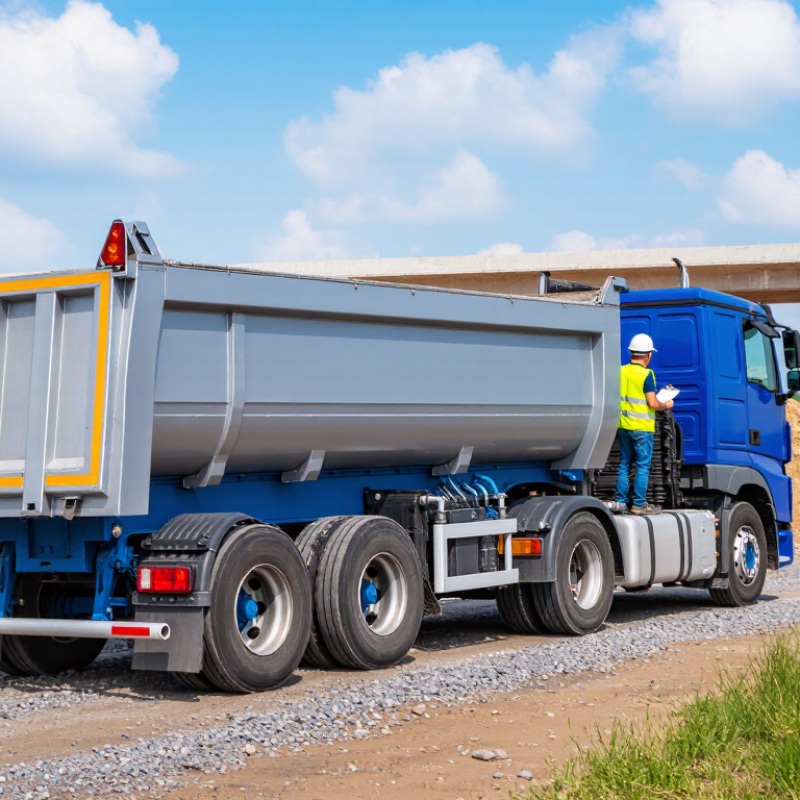
Define Your Side Tipper Truck’s Hauling Requirements
Choosing the right side tipper truck starts with a clear definition of your hauling requirements. Start with the material, not the truck. Loose gravel, wet soil, and crushed stone have different densities and loading behaviors. Record the average density before estimating payload. Then calculate the required body volume. A certified weighbridge can improve this estimate. Do not rely on visual guesses alone.
Consider how the truck will be loaded and discharged. Measure the excavator bucket size and loading height. Check whether tipping requires clearance on the left or right side. Narrow construction sites may limit the usable discharge direction. Short cycles may favor higher payload efficiency, while long-distance hauling may require better operator comfort and fuel control. These details are easy to overlook.
Route conditions also shape the specification. Steep gradients, soft ground, and uneven access roads demand suitable traction and ground clearance. Confirm axle limits, total operating weight, and local transport requirements before purchase. Ask for verified payload data and maintenance intervals from qualified suppliers. My first payload estimate was too optimistic. The body looked large, but dense material reached the weight limit quickly. That mistake changed my planning. Leave room for moisture, uneven loading, and seasonal road changes. Review actual site records after several working days. Real workloads often differ from the original spreadsheet.
Evaluate Chassis, Hydraulic, and Safety Specifications
Choosing the right side tipper truck starts with its chassis, not its paint or advertised payload. Check the gross vehicle weight rating, axle capacity, wheelbase, frame thickness, and suspension type. A frame that flexes under uneven loads can damage the body and reduce steering control. NHTSA’s 2022 Traffic Safety Facts recorded 5,837 large trucks involved in fatal crashes. That figure makes stability more than a sales specification.
Hydraulic performance deserves practical inspection. Confirm the pump flow, working pressure, cylinder stroke, reservoir capacity, and power-take-off matching. Hoses should avoid sharp bends, exhaust heat, and rubbing points. A pressure-relief valve and visible maintenance gauge are essential.
ISO 4413 requires hydraulic systems to control stored energy and protect users from hose or component failure. Test the body with a partial load first. Full-load testing can hide poor balance until it becomes dangerous.
Safety equipment should include body-lowering interlocks, emergency stopping controls, reverse alarms, cameras, rollover warnings, and mechanical body supports. The operator needs clear sight lines from the seat, especially beside the raised body.
OSHA requires raised dump bodies to be lowered or securely blocked during maintenance.
I would also inspect welds after several working cycles. A neat specification sheet can still mislead. In real yards, mud, overloads, and rushed inspections expose weaknesses quickly. BLS reported 1,053 fatal occupational injuries in transportation and material-moving occupations during 2023, so small safety omissions deserve serious attention.
Select the Best Truck for Your Terrain and Operating Conditions
Choosing a side tipper truck starts with the ground, not the brochure. On a quarry route, loose stone, sharp turns, and steep ramps punish weak traction. I have seen a truck lose working time because its tires suited highways, not wet clay. Measure gradients, turning space, soil strength, and average haul distance before comparing payload figures. A larger body is not automatically better. It may overload soft ground and increase fuel use. Keep it practical.
For muddy sites, choose deep-tread tires, suitable ground clearance, and a driveline matched to low-speed pulling. On hard, level roads, road-oriented tires can reduce rolling resistance. Check axle ratings against real payloads, not optimistic estimates. Side tipping also needs clearance beside the body. Power lines, walls, and stockpiles leave less room than drawings suggest. The hydraulic system should lift steadily, even on cold mornings. Test it under load. Small details matter.
Your operating pattern should guide the cab, suspension, and service plan. Frequent short cycles favor quick controls and easy cleaning. Long hauls demand seating comfort, cooling capacity, and dependable braking. Inspect hinges, cylinders, hoses, and body-floor wear at scheduled intervals. A neglected hinge can stop a whole shift. I would also record fuel use and tire damage for several weeks. My first estimate is often wrong. Real site data deserves the final say, especially when seasons change.
Review Ownership Costs, Maintenance, and Supplier Support
How to Choose the Right Side Tipper Truck?
Ownership cost starts with more than the purchase price. American Trucking Research Institute’s 2024 cost report placed average U.S. trucking costs at $2.27 per mile in 2023. Fuel represented about $0.65 per mile, while repair and maintenance reached roughly $0.20. These figures are not side-tipper specific, but they provide a useful benchmark. Compare fuel consumption, payload, tyre wear, hydraulic oil use, and expected resale value. A lighter body can carry more material, yet thin panels may suffer on abrasive aggregate. That trade-off is easy to underestimate.
Tips: Request a five-year cost worksheet. Include tyres, scheduled servicing, hydraulic repairs, downtime, insurance, and financing. Ask the supplier for verified cycle-time data, not only brochure claims. Inspect welds, hinges, cylinder mounts, and the floor plate before signing. Also check local parts availability and technician response times. A cheap truck can become expensive when one hydraulic seal stops a working day.
Supplier support deserves written terms. Require service intervals, parts lead times, diagnostic assistance, and warranty exclusions in clear language. The Global Fleet Maintenance Survey 2023 found that parts availability and technician shortages remain major fleet concerns. That matters when a side tipper works far from a workshop. Do not assume the largest payload is automatically best. Real payload depends on legal axle limits, route conditions, and material density. My own calculation would still be imperfect without local fuel prices and load records. Use actual scale tickets from similar routes, then challenge every optimistic estimate.





