


A Shaped Pouch can help a product stand out, feel easier to hold, and create a stronger shelf presence. Its outline might echo a fruit, bottle, or brand mark, but appearance is only one part of the decision. The pouch must also protect the product and work with the way it is filled, sealed, stored, and shipped. A striking shape is not useful if it tips over or makes dispensing awkward.
Small details matter. A narrow neck may suit a pourable product, while a broad base can improve stability on a store shelf. The material and barrier properties should match the product’s sensitivity to moisture, oxygen, or light. Check these needs with packaging specialists, and confirm them through product-specific testing rather than relying on appearance alone.
A practical selection process compares the pouch design with the product, filling equipment, and customer experience. Ask suppliers for samples and clear specifications, then inspect seals, handling, and performance on your actual filling line. Teams sometimes fall for a distinctive silhouette too early. That choice can be hard to undo. Consider production limits, shipping space, and how consumers will open and store the pack before approving the design. Some trade-offs will remain, and early samples may not reveal every issue. A dependable choice balances visual appeal with measurable performance and careful review.
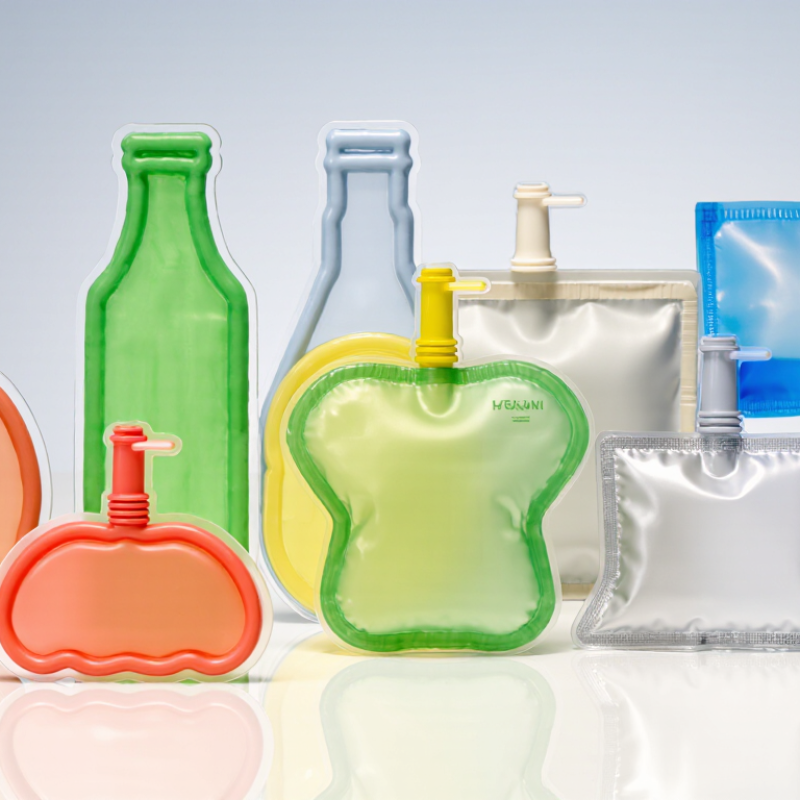
A shaped pouch is flexible packaging cut into a distinctive outline rather than a simple rectangle or pillow shape. Its edges may follow a bottle, fruit, leaf, or product silhouette, while sealed seams help contain the contents. Compared with standard pouches, its shape can stand out on a crowded shelf and may improve grip or pouring. Looks are only part of the job.
Standard packaging usually has familiar formats, broad panels, and predictable sealing areas. These shapes are often easier to fill, stack, and store. A custom outline may require adjusted tooling, careful seal placement, and extra checks for leaks or weak corners. That can affect cost and production time. Not always.
Start with the product, not the silhouette. Consider its weight, moisture, oil content, storage conditions, and opening method. A narrow base may look elegant but tip over when filled; a sharp curve can reduce usable space. Test filled samples on the actual shelf and during transport. Test first. Ask the packaging supplier to check material compatibility and seal strength. A distinctive shape does not automatically protect the contents better, and that trade-off is easy to miss.
| How to Choose the Right Shaped Pouch for Your Product? — What Is a Shaped Pouch and How Does It Differ from Standard Packaging? | |||
|---|---|---|---|
| Comparison Dimension | Shaped Pouch | Standard Pouch | What to Consider |
| Basic definition | A flexible package with a non-rectangular outline, such as a curved, angled, or product-inspired silhouette. | A flexible package with a conventional rectangular or square outline, such as a flat pouch or stand-up pouch. | Choose a shaped design when the outline supports product recognition or brand presentation; choose a standard shape for familiar, efficient packaging. |
| Typical construction | May use flexible film laminates and can include features such as a zipper, spout, hang hole, or clear window, depending on the design. | Common formats include flat pouches, side-gusset pouches, and stand-up pouches. Features can also include zippers, spouts, and windows. | Shape and closure are separate design decisions. Confirm that the selected features fit the product and filling process. |
| Appearance and shelf presence | Distinctive contours can help a pack stand out and may reinforce a product theme or category. | Conventional outlines provide a familiar presentation and broad usable space for graphics. | Review the finished pack both on a shelf and in online product images; a distinctive outline should remain recognizable at small sizes. |
| Usable package area | Curves, angled edges, and seals can reduce or interrupt the area available for product information and artwork. | Regular panels generally make it easier to plan a continuous printable area and place required information. | Allow room for seals, closures, barcodes, ingredients, directions, and any information required for the product’s market. |
| Storage and shipping | Flexible packs can be shipped flat before filling, but irregular outlines may make packed cases or shelf arrangements less uniform. | Regular formats are often easier to align and arrange in cartons, though actual efficiency depends on pouch size, filling, and case design. | Test filled packs in the intended retail display and shipping carton rather than judging efficiency from an empty pouch alone. |
| Filling and sealing | Non-standard outlines may require specific tooling or adjustments to forming, filling, and sealing equipment. | Common pouch formats may be easier to match to established equipment, but compatibility still depends on the machine and pouch specifications. | Confirm dimensions, seal locations, material structure, and machine requirements with the pouch converter and filling facility before production. |
| Material and barrier needs | Can be made with flexible film structures selected for the product’s required protection; the outline alone does not determine barrier performance. | Can also use a range of flexible film structures selected for product protection and shelf-life needs. | Choose materials based on the product, moisture or oxygen sensitivity, light exposure, storage conditions, and applicable food-contact requirements. |
| Cost and production considerations | Custom contours may involve specialized tooling, setup, or production constraints. Costs vary by design, materials, order quantity, and supplier. | Standard outlines may use more established production options, although cost still depends on size, material, features, and order quantity. | Request comparable quotations using the same dimensions, material specification, closure, printing requirements, and order quantity. |
| Products that may suit the format | Promotional products, novelty items, gifts, or products where a distinctive pack outline is part of the presentation. | Food, personal-care, household, and other products that benefit from a familiar pouch format and straightforward panel layout. | Suitability depends on product properties, target market, required protection, and the capabilities of the filling line. |
| Best-fit decision | Consider when visual differentiation is a priority and the design can meet filling, sealing, storage, and information-layout requirements. | Consider when a regular outline, established production approach, or predictable panel layout is the priority. | Prototype and test a filled sample before approving tooling or a production run. |
| Important note | The actual performance, recyclability, cost, and shelf life of a pouch depend on its materials, structure, closures, manufacturing process, and local collection systems. Verify product-specific requirements with qualified packaging and regulatory professionals. | ||

Start with the product, not the pouch silhouette. Is it a liquid, powder, paste, or collection of solid pieces? Note its weight, volume, flow behavior, and sensitivity to moisture, oxygen, or light. A fine powder may leak through a weak seal, while a thick sauce may need a wider opening. Small details matter. Record the expected shelf life and storage conditions, including heat or refrigeration. These facts help narrow down suitable materials and pouch structures before appearance enters the discussion.
Then consider how the pouch will be filled, sealed, shipped, opened, and stored. Check the filling equipment’s limits, required seal width, and available space for a spout, zipper, or hang hole. A sharp corner may look distinctive but create stress during transport. I would also test a filled sample, not just an empty mock-up. Observe whether it stands steadily, pours cleanly, and survives handling. A drop test and seal check can reveal issues early. Even then, the first mock-up may be wrong. Confirm material compatibility and performance with qualified packaging professionals, using the actual product and process whenever possible.
A pouch shape should follow the product, not just the shelf. A flat-bottom pouch can stand steadily for powders or snacks, while a narrow side-gusset design may fit tight storage spaces. For liquids or products poured in small amounts, a shaped corner can guide flow and reduce mess. The trade-off is real: unusual contours may use shelf space less efficiently or need more careful filling. Small details matter. Test the filled pouch upright, on its side, and after opening.
Material and closure choices determine whether that shape protects the contents. A dry snack may need a moisture barrier and a resealable zipper; an oily product may need stronger resistance to grease and oxygen. Match the barrier to the product’s actual sensitivity, rather than choosing the heaviest laminate by default. The Flexible Packaging Association’s 2023 State of the U.S. Flexible Packaging Industry report estimated 2022 U.S. sales at $42.9 billion, showing how widely flexible formats are used—but scale does not prove a particular pouch will fit. Check seal strength, opening force, and compatibility with filling equipment using production-like samples. Test before scaling. A zipper can feel convenient, yet add cost and complicate recycling; that balance deserves a second look.
How to Choose the Right Shaped Pouch for Your Product?
A shaped pouch should fit the product, not just catch the eye. Compare its usable capacity with the product’s weight and volume. Powders, snacks, and liquids settle differently, so the same pouch dimensions may not work for each. Check the filled pouch’s width, height, and base depth on a shelf or display rack. Small details matter. A narrow base can make a tall pouch tip over, while sharp corners may crease during packing. Consider how customers will open and pour from it, too. A trial fill often reveals awkward handling that a drawing does not.
Compare material protection against the product’s needs. Moisture, oxygen, light, and aroma can affect freshness, but the required barrier depends on the contents and storage conditions. Ask for material specifications, then test samples with the actual product. Also check seal strength, opening features, and compatibility with the filling equipment. A pouch that looks right may run slowly on a packing line. That can matter. If the product is fragile, watch for crushing and leaks during transport tests. For retail visibility, a clear window may help, though it can reduce protection from light. There is no perfect option in every case. I would compare filled samples side by side, even if the first preferred shape needs another revision.
Compare common pouch formats across practical packaging considerations. Ratings are qualitative screening guidance, not measured performance data.
Use this matrix to shortlist formats. Final suitability depends on product properties, film structure, closure, filling equipment, and supplier specifications.
Before ordering a shaped pouch, test a physical prototype with the product it will hold. Fill it to the intended weight, then check whether it stands upright, pours cleanly, and fits your shelf or shipping carton. A pouch that looks balanced when empty may tip once filled. Looks are not proof.
Test the closure and seals under realistic handling. Turn the filled pouch upside down over absorbent paper, squeeze it gently, and inspect the seams for leaks or wrinkles. Then run drop and vibration tests that reflect your actual distribution conditions. The Flexible Packaging Association’s 2024 State of the U.S. Flexible Packaging Industry report estimated 2023 sales at $42.9 billion, showing the scale of this packaging category.
That figure is not a performance guarantee; your own product and route still matter.
Ask the converter for samples made with the proposed material, zipper, and seal dimensions. Check barrier needs with a shelf-life trial, not just a quick visual inspection. For a product sensitive to moisture or oxygen, compare test results against your target storage period. If possible, run a short trial on your filling line. Record fill speed, seal failures, and pouch stability. It may feel excessive for a small launch. Still, catching one weak corner before production can save a costly remake.


For those larger-sized parts, or smaller quantity runs, we have 2 independent powder coat booths and ovens. The quality, durability and affordability of today’s powder coating finishes make this the process of choice for world-class companies.
Powder coating advantages over other forms of coating are many. Materials used in the Powder coating process can be metals and non-metals that come in a multitude of thicknesses, textures, colors, etc. Another of Powder coating’s biggest advantages over conventional coatings is its ability to create finishes in many different textures. Powder Coating Booths allow us the ability to apply these advantages to large products.
Tri-State Fabricators runs a full-service conveyor line for painting. Wet painting can provide protection or decoration to many different part styles. From start to finish, every project is easier to undergo random and point-based inspection by our skilled painting team.
Advantages to our Wet Paint Line are these lines start with product prep and ends with a thorough inspection of a high quality finished product. Our ability to complete large and small projects with a superior finish and doing so in a timely and economical fashion. This passes along the savings in production to our customers. When powder coating ins not an option, our Wet Paint Line gets the job done right the first time.
When the parts get big and heavy we roll-out our custom paint racks and oversize booth. By utilizing our partnerships with all the major paint brands, we can match virtually any color with wet paint.
The advantages of having access to a Wet Paint Booth are many. Large projects of many different shapes can be loaded into the booth. The Wet Paint Booth offers an environment that is much more controlled than a typical parts painting operation.
Not only are they used because of their controlled environment, but they’re are also advantageous when it comes to applying paint to parts that are needed in industries that require specialty coatings such as medical, aerospace, etc.
Our military forces have some very high standards when it comes to the finish of their vehicles and equipment. From the first pre-treatment step to final coat, it takes a great deal of knowledge and experience to protect the men and women of our armed forces. They deserve only the best, and Tri-State Fabricators provides it.
All of our processes are closely monitored by our staff and management teams. Both of which are highly trained in the processes of metal fabrication and finishing. Tri-State Fabricators’ goal is to always fully satisfy each and every customer, including the military. We will always put a 110% into what we do.
Abrasive media blasting is an excellent way to remove old paint, rust, and increase the paint/powder adhesion. Glass beads produce a much smoother and brighter finish than angular abrasives; leaving the part clean yet without any dimensional change. Chemically inert and environmentally friendly, we can recycle our beads approximately 30 times; making them a more preferred method of metal cleaning or surface finishing.
Advantages to Glass Bead Blasting are many. Glass bead blast media is used when a project is needing rough surfaces need to become smooth for applications of coatings such as paint. It is typically used to clean paint and rust from a product surface without deforming the surface it is being used on. Overall, compared to many other blasting media, Glass Bead Blasting is a very economical choice and those savings are always passed on to our customers.
Tri-State Fabricators utilize a zinc phosphate wash to clean and etch the material to ensure the best paint adhesion possible. The unique design of our 3-stage wash system does the work like a 5-stage. From Cleaning and rinsing to conversion coating and post-treatment, Our Part Washing process is a complete service and works throughout the fabrication service and the finishing service.
Along with the previously mentioned benefits, Curing is a vital chemical reaction that leaves the product finish hard and relatively safe from mild abrasion and aggressive corrosion. This process can be done in more than one way; ambient air-dry or in curing ovens at temps that exceed 240°.
From fixing paint mistakes (someone else’s of course) to simply cleaning our paint line hooks, our burn-off oven is put to good use. After a quick burn-off, a little clean up, and a fresh coat of paint, your parts will look better than new.
Why does our Burn-Off Oven work so well? Because super heating the air around parts turns the materials into ashes. From paint and powder coatings to rubber and machining oils, high temps do the job without degrading the integrity of the part.
Masking is a vital part of producing high quality products. We have die-cut masking patterns to protect machined surfaces as well as a wide range of plugs and caps to protect threaded holes and bolts. We provide permanent and temporary masking.
Masking allows the selected sections of a product to be protected from a fabrication or finishing service. This can be with both chemicals when etching and tapes, paints when only finishing just a section of the product. Masking is great in aiding the customization process of a project.
Screen printing is a photographic process that transfers artwork onto a porous nylon screen which allows colored ink to flow through the screen and be deposited on an aluminum or plastic component. We can generally have just about any design created onto a screen for your parts.
Some of the advantages of Screen Printing are, brand recognition for your business displaying on your products, assembly instructions, product warnings/hazards, etc. Tri-State Fabricators produces Screen Printing of the highest quality so you know it’s durable.
Metal Finishing is the art of treating the exterior portion of product, often metal but can also be made of other materials, so that the surface is clean and free of any debris. Then the process of applying coats or either paint of powder coat takes place. This coating process improves the quality of the product in both appearance and resistance to wear and corrosion.
Tri-State Fabricators, Inc., understands that a project typically isn’t complete until a high-quality finish has been added to your product. This is why our painting and powder coating teams continuously inspect the products throughout the Metal Finishing process.

