How to Choose the Right Screw Vacuum Pump for Your Needs?
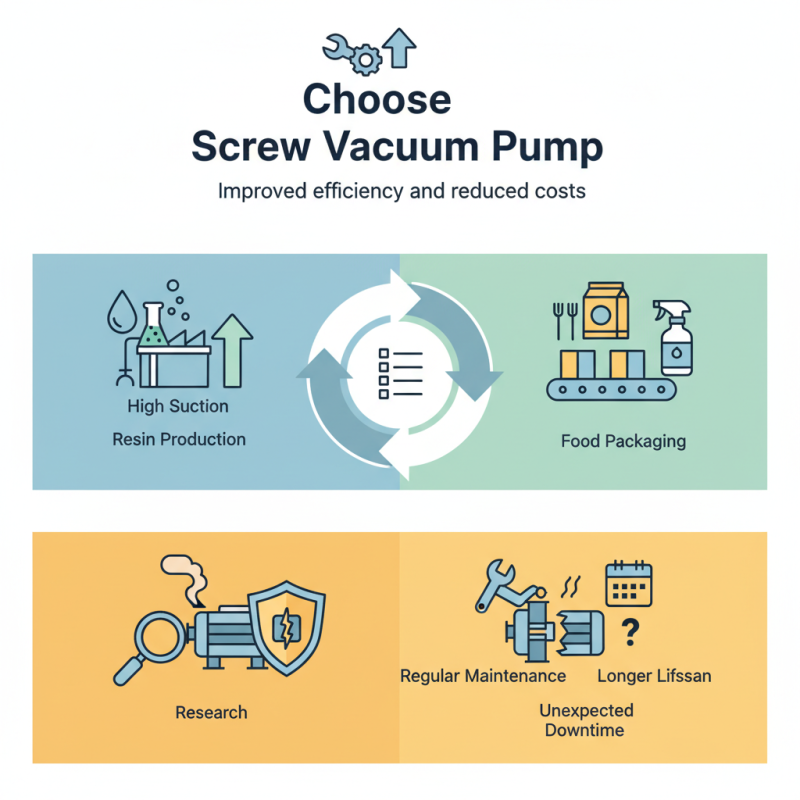
Choosing the right Screw Vacuum Pump can significantly impact your operations. According to Dr. Emily Hart, a leading expert in vacuum technology, “The right pump can improve efficiency and reduce costs.” This insight highlights the importance of making an informed decision.
When selecting a Screw Vacuum Pump, it is crucial to consider your specific needs. Different applications require different capacities and features. For example, resin production requires high suction, while food packaging may prioritize hygiene. Understanding your requirements is essential.
Another aspect to consider is the type of materials handled. Some environments may be more corrosive than others, affecting pump longevity. Regular maintenance is also critical. A quality Screw Vacuum Pump, paired with diligent care, can last for many years. However, selecting a pump without thorough research can lead to mismatched expectations and unexpected downtime.
Understanding the Basics of Screw Vacuum Pumps
Understanding screw vacuum pumps is essential for various industrial applications. These pumps use two helical screws to create a vacuum. This design results in smooth, continuous operation and high reliability. According to a report by Research and Markets, the global vacuum pump market is projected to reach $6.3 billion by 2026, indicating steady growth.
Screw vacuum pumps are known for their durability and energy efficiency. They typically operate at lower noise levels compared to other types, making them suitable for noise-sensitive environments. The efficiency of these pumps can often lead to energy savings of up to 25% when compared to traditional vacuum systems. This efficiency is crucial for industries looking to reduce operational costs while maintaining productivity.
However, selecting the right screw vacuum pump can be challenging. Factors such as required vacuum levels, flow rates, and application types must be considered. It's important to assess the specific needs of your operation. Sometimes, people focus too much on initial costs rather than total lifecycle expenses. Understanding these aspects can significantly impact performance and user satisfaction in the long run.
Identifying Your Specific Applications and Requirements
Identifying your specific applications and requirements is essential when choosing the right screw vacuum pump. Begin by assessing the materials and processes involved in your application. For instance, consider the types of gases you need to evacuate. Different applications require different pumping capacities and pressures. Understanding your operational environment will narrow your options effectively.
Next, evaluate the required flow rate. This factor significantly impacts the pump's performance. A low-flow application might suffice with a smaller pump. However, high-demand industries need robust options. Take into account the space available for installation. Sometimes, size constraints limit your choices. Also, consider maintenance requirements. Some pumps demand more regular service, adding to operational costs.
Don't overlook energy efficiency and noise levels. These factors contribute to your overall operational costs and working conditions. Reflect on how often you use the pump. If it's a continuous operation, the impact of energy consumption can be significant. Ultimately, outlining your specific needs helps in selecting a reliable screw vacuum pump tailored to your operations.
Evaluating Performance Specifications and Capacity
When selecting a screw vacuum pump, one must closely examine performance specifications and capacity. This involves understanding your process requirements. Different applications demand varying levels of vacuum. Thus, knowing the necessary pressure range is crucial. A pump designed for high vacuum might be overkill for lighter applications. Alternatively, an underpowered pump may lead to inefficiencies.
Capacity is another integral factor. It’s vital to assess the volume of air or gas that needs to be evacuated. If a pump cannot handle this, system performance suffers. Sometimes, manufacturers provide flow rate data. However, these figures often reflect optimal conditions. Real-world performance may differ. Evaluating how the pump performs in your specific context can highlight discrepancies. This can lead to operational challenges later, especially in a production environment.
Additionally, consider maintenance needs. A high-capacity pump may require frequent servicing. This aspect can add to your operational costs over time. Balancing initial investment with long-term maintenance is essential. Finding the right screw vacuum pump can require trial and error. Reflecting on past decisions can inform better choices for future projects.
Performance Comparison of Screw Vacuum Pumps
Comparing Energy Efficiency and Cost Considerations
When selecting a screw vacuum pump, energy efficiency and cost are pivotal factors to consider. The U.S. Department of Energy reports that industrial vacuum systems can consume up to 10% of a facility's total energy. This drives the necessity for pumps that minimize energy usage while maintaining optimal performance. An energy-efficient pump can cut electricity costs significantly, making initial investments more justifiable over time.
Cost considerations extend beyond purchase price. Maintenance expenses can accumulate swiftly. According to industry data, routine maintenance can cost up to 15% of the initial pump cost annually. Selecting a reliable, efficient pump reduces these long-term expenses. Investing in well-designed screw vacuum pumps often results in fewer breakdowns and extended operational life.
Evaluating energy consumption in terms of kilowatts per hour is essential. A pump that uses 5 kWh can incur costs ranging from $0.30 to $0.60, depending on local energy rates. While running costs are crucial, initial setup and installation may also affect overall expenses. It's vital to balance upfront costs with ongoing operating efficiency to achieve better financial planning.
Exploring Maintenance Needs and Lifespan Factors
Selecting the right screw vacuum pump hinges significantly on understanding its maintenance needs and lifespan factors. Regular maintenance is crucial for optimal performance. Routine checks on oil levels and cleaning are essential. Neglecting these can lead to inefficiencies and potential failures. Pumps that are well-maintained may last longer, usually exceeding their expected lifespan.
Environmental conditions play a vital role as well. High temperatures and humidity can accelerate wear. These factors often go unnoticed in maintenance schedules. Lack of attention to operational conditions can result in unpredictable downtimes and costly fixes. Assessing the installation area for potential hazards is advisable.
Consider also monitoring the pump’s operational metrics. This will provide insights into performance trends. Unexpected spikes in energy consumption may signal underlying issues. Investing time in thorough training for staff can enhance reliability. In many cases, personnel overlook small, vital details that can prevent significant problems. Addressing these areas proactively can extend the pump's life and improve efficiency.
How to Choose the Right Screw Vacuum Pump for Your Needs?
| Dimension | Value |
| Pumping Speed | 10 - 1000 m³/h |
| Ultimate Vacuum | 0.1 mbar - 5 mbar |
| Power Consumption | 3 - 50 kW |
| Lifespan | 15,000 - 30,000 hours |
| Maintenance Frequency | Every 6 - 12 months |
| Noise Level | 60 - 85 dB |
| Weight | 50 - 500 kg |
| Cooling Method | Air-cooled / Water-cooled |