What Is the Right Rockwool Density for Your Application?
Rockwool Density is not a single number that suits every project. The right specification depends on what the insulation must do. A roof board may need to resist foot traffic and compression. A partition may prioritize sound absorption. A pipe section must fit securely around hot services. Density matters, but it does not tell the whole story.
For a reliable choice, compare the product’s declared thermal conductivity, compressive strength, dimensions, and intended use—not density alone. Check the manufacturer’s technical data sheet, and confirm that the product matches the assembly and installation conditions. A dense slab can feel reassuring in the hand. That alone proves little. This is an easy detail to overlook.
The practical question is not simply, “Which density is best?” It is, “Which product meets this application’s performance requirements?” A building-envelope designer or insulation manufacturer’s technical specialist can help interpret those requirements. No source material was provided to verify a named expert’s quotation, so I will not invent one. That restraint matters. This guide examines how to compare Rockwool Density across common applications, what product data to check, and where a density-based shortcut can lead to a poor specification. Even a careful selection can leave questions; installation quality and the complete assembly still deserve attention.
How Rockwool Density Is Measured and Classified
Rockwool density is the mass of a material divided by its volume, usually reported in kilograms per cubic metre. For a regular board, a basic check uses its measured dimensions and mass. Divide the mass by the calculated volume. Small details matter.
Manufacturers typically classify products using stated density ranges or product-specific grades, rather than one universal scale. A technician may weigh a representative sample and check its dimensions, following the relevant test method. Moisture, uneven edges, and compression can affect a field estimate. That sounds neat, but real samples are less tidy. Density figures should be compared only when the product type and measurement method are alike.
A density label alone does not tell you how well insulation will perform. Higher density may suit applications needing greater rigidity, but thermal conductivity, acoustic performance, and compressive strength require their own test data. A low-density blanket and a rigid board may serve different purposes, even if their figures seem close. Check the technical sheet for the declared range, tolerances, and intended use. On site, a quick calculation is useful, but it is not a substitute for verified product data.
How Density Affects Thermal, Acoustic, and Mechanical Performance
Rockwool density affects how an insulation layer handles heat, sound, and physical loads, but higher density is not automatically better. Published mineral-wool product declarations under EN 13162 commonly report thermal conductivity around 0.034–0.040 W/(m·K). These figures describe tested products, not every density level. Thickness, fiber structure, and installation also matter. In a wall, a tightly fitted batt can reduce gaps; an over-compressed batt may perform differently than its declared value. Density is a useful clue, not a verdict.
For sound control, denser boards can add mass, while open fiber structure helps absorb sound within a cavity. ASTM C423 measures sound absorption in a reverberation room, and reported NRC values apply to the tested product and assembly. They cannot be predicted from density alone. A thin, dense panel may block some sound yet absorb less low-frequency noise than a deeper system. Small details matter: an unsealed edge around a pipe can undermine an otherwise careful installation.
Mechanical performance needs its own evidence. EN 826 reports compressive stress at 10% deformation, giving designers a clearer basis for selecting boards beneath floors or on flat roofs. Density alone does not establish load capacity. Compare the tested compressive strength, intended use, and installation conditions. The imperfect part is that product data rarely mirror every site condition; moisture, joints, and uneven substrates can change real-world behavior.
What Is the Right Rockwool Density for Your Application?
Indicative density ranges by application (kg/m³). The best choice depends on the specific product, thickness, installation, and performance requirements.
Lower-density products are commonly used for cavity and acoustic insulation, while higher-density boards are often chosen where greater rigidity or compressive strength is needed. Density alone does not determine thermal or acoustic performance: fiber structure, thickness, airflow resistance, and product design also matter. These ranges are indicative, not a product specification.
Which Application Conditions Should Guide Density Selection
What Is the Right Rockwool Density for Your Application?
Which Application Conditions Should Guide Density Selection
Start with what the insulation must do. In a lightweight interior partition, sound absorption and a snug cavity fit may matter more than high density. A roof or façade system may face wind pressure, vibration, or compression from nearby components. Check the product’s declared compressive strength, not density alone. More kilograms per cubic metre do not automatically mean better thermal or acoustic performance.
The details matter. Measure the cavity depth, note whether the insulation sits vertically or overhead, and check for pipes, brackets, or uneven framing. Small gaps can undermine performance. Damp conditions call for careful moisture detailing, not simply a denser board. Check the tested assembly and installation guidance, especially where fire performance is required. A practical site check helps: does the board stay in place without bulging or leaving gaps? Density charts can look more decisive than the job really is. When conditions are unusual, confirm the selection with a qualified designer or the product’s technical data.
How to Match Rockwool Density to Walls, Roofs, Floors, and Equipment
What Is the Right Rockwool Density for Your Application?
How to Match Rockwool Density to Walls, Roofs, Floors, and Equipment
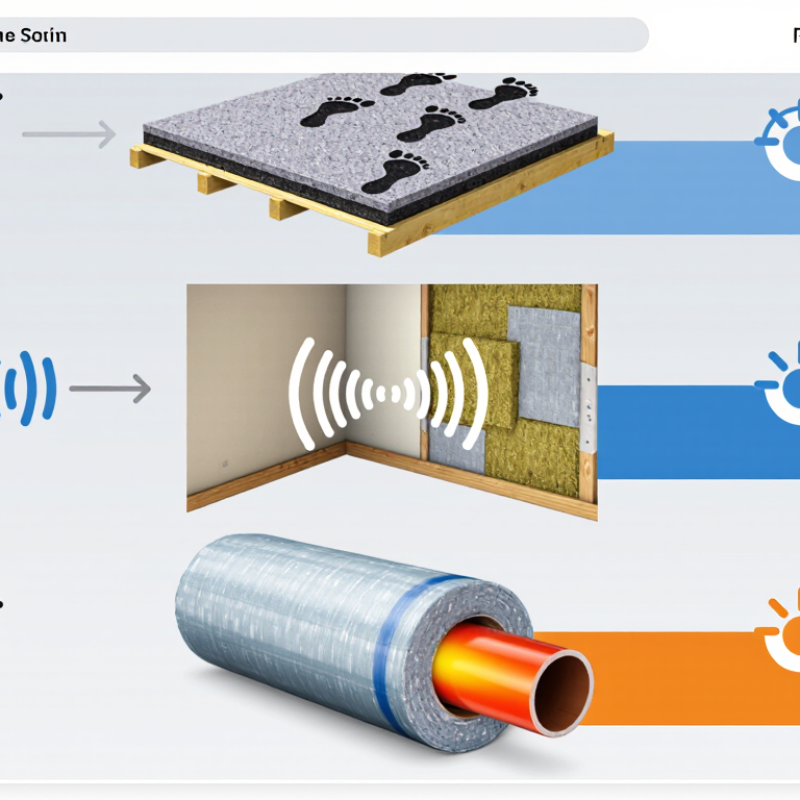
For cavity walls, a light or medium-density Rockwool batt often fits between studs without being forced into place. Around 30–60 kg/m³ is a common starting range, but the product’s tested thermal and acoustic performance matters more than density alone. For pitched roofs, choose insulation that stays in place between rafters and suits the available depth. Flat roofs may need rigid, higher-density boards that can handle the specified loads. A neat chart can still mislead.
Floors and equipment need closer attention to compression. Under a floating floor or service platform, select boards rated for the expected load; many applications use products around 100–160 kg/m³, though requirements vary. For boilers, ducts, or industrial equipment, consider temperature limits, vibration, and whether the insulation must support cladding. Denser is not always better. I would check the product data before assuming a heavier board will solve every problem.
Tips: Measure the cavity and check the support spacing. Keep insulation snug, not crushed. Compare declared thermal conductivity, load ratings, and installation guidance. For unusual equipment or roof loads, ask a qualified designer to verify the specification.
How to Check Product Specifications and Installation Requirements
Before choosing mineral wool insulation, check the product datasheet rather than relying on density alone. Density affects handling and performance, but it does not determine suitability by itself. Compare the listed thermal conductivity, thickness, compressive strength, and intended use with your project requirements. Check whether the product is designed for walls, roofs, floors, or equipment. Details matter. A product that fits one cavity may not suit another.
Tips: Measure the cavity depth and spacing before ordering. Confirm the specified installation method, including any facing, fasteners, or support needed. Do not guess.
During installation, follow the product instructions and avoid crushing the insulation to make it fit. Gaps around pipes, framing, or corners can reduce performance, so cut pieces carefully and check the edges. Also confirm ventilation and moisture-control requirements for the assembly. These vary by location and construction type. A tidy specification table can still hide a mismatch, so compare the exact product code and dimensions with the installer’s plan. If a requirement is unclear, ask the supplier or a qualified building professional before work begins.





