


How to Choose Pneumatic Seals in 2026?

Pneumatic Seals rarely attract attention until pressure drops, a rod sticks, or a cylinder leaves a faint lubricant film. In 2026, choosing the right seal still starts with the application, not a catalog headline. Operating pressure, speed, temperature, stroke length, and the working medium all shape performance. Small details matter. A seal that works well in a clean, slow actuator may wear quickly in a fast, dusty line. Material compatibility deserves equal care. Polyurethane, nitrile, and other elastomers respond differently to heat, compressed-air quality, lubrication, and cleaning agents. That difference is easy to overlook.

A practical selection process also checks seal profile, groove dimensions, surface finish, and installation space. Fit matters. For example, a rod seal must control leakage without creating excessive friction or damaging the rod during repeated cycles. Wipers help limit dust ingress, while piston seals support pressure separation inside the cylinder. Neither component can compensate for a poor bore, a scratched rod, or incorrect assembly. Even a premium seal can fail early. This guide explains how to compare seal materials and designs, read supplier data, and match a seal to real operating conditions. It also considers maintenance access, expected service life, and the cost of unplanned downtime. No selection chart replaces a verified fit check. When conditions are uncertain, confirm dimensions and limits with the cylinder maker or a qualified seal supplier. The best choice is not always the newest material; it is the one that performs consistently in your actual system.
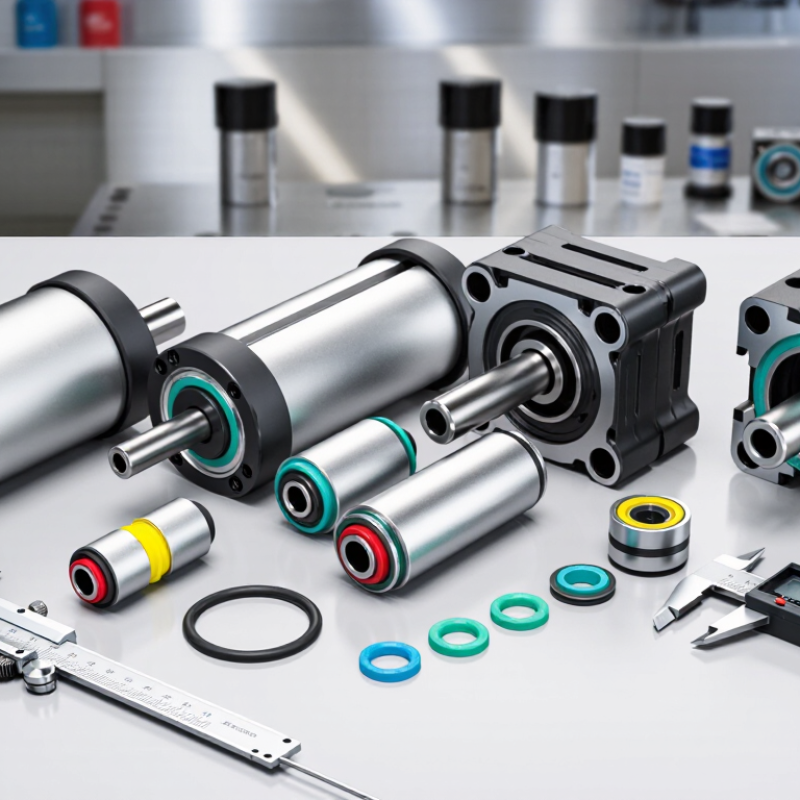
How to Choose Pneumatic Seals in 2026?

Define the Operating Conditions and Performance Requirements

Before choosing a pneumatic seal, define the conditions it will face in service. Record minimum and maximum pressure, temperature range, piston speed, stroke length, and cycle frequency. Note whether the air is dry, lubricated, or carries moisture and compressor contaminants. Small details matter.

Measure the cylinder bore, rod diameter, groove dimensions, and available clearance rather than relying only on a drawing. Check for misalignment, surface wear, and changes in load during the stroke. A seal that performs well in a clean test rig may behave differently in a machine with vibration or frequent starts. Identify the acceptable leakage level, friction limit, and expected service interval. These requirements help narrow the design and material options without treating any one specification as universal.

A common selection mistake is to focus on peak pressure while overlooking speed and heat buildup. Ask how long the system runs continuously, and whether it pauses long enough to cool. Consider maintenance access too: a seal that is difficult to replace can increase downtime. If operating data is incomplete, say so and gather measurements under real use. It is tempting to choose from the nominal values alone, but those numbers may miss brief pressure spikes or temperature changes. Test it. Verify performance across the actual operating range before committing to a production choice.


Compare Pneumatic Seal Types and Their Applications

Compare pneumatic seals by motion, pressure, speed, temperature, and air quality—not by shape alone. Piston seals suit reciprocating cylinders, where they separate pressure chambers and maintain force through each stroke. Rod seals limit leakage around the moving rod; add a wiper when dust or dried residue could enter the cylinder. Small detail, big impact.

Static O-rings work well in ports and end caps, but can roll or wear in repeated motion if the groove is poorly designed. Polyurethane seals often handle abrasion in cycling cylinders, while PTFE-based designs can reduce friction in faster or lower-lubrication service. Material choice still depends on temperature and the air’s moisture and oil content. No seal fits every duty.

The U.S. Department of Energy’s Improving Compressed Air System Performance: A Sourcebook for Industry reports that leaks can waste 20–30% of compressor output in poorly maintained systems. Seal wear is only one possible cause; fittings and tubing matter too. Match the seal profile to the cylinder drawing, then check pressure, stroke speed, and operating temperature. A slightly imperfect fit may run quietly at first, yet leak more as the seal wears.

Select Materials for Air, Temperature, and Chemical Compatibility

How to Choose Pneumatic Seals in 2026?
Select Materials for Air, Temperature, and Chemical Compatibility

Start with the air itself. Dry, clean air differs from lubricated air, which may expose seals to compressor oils and additives. Nitrile rubber is commonly considered for oil exposure, while other elastomers may suit different fluids. Check the exact compound, not just the material name. ASTM D2000 classifies rubber by properties, but it does not confirm compatibility with every chemical. ISO 1817 provides a method for testing how liquids affect vulcanized rubber.

Temperature changes the decision. A seal near a warm cylinder may behave differently during cold starts or long operating cycles. Compare the full temperature range with the seal maker’s compound data, then account for pressure, motion, and cleaning agents. The U.S. Department of Energy reports that leaks can waste 20–30% of compressed-air output in poorly maintained systems. That figure covers system leakage overall, not seals alone, but it shows why small sealing choices matter.

Tips: List every fluid, cleaner, and temperature extreme before choosing. Ask for test data when exposure is uncertain. A compatibility chart is a starting point, not a guarantee; real conditions can surprise you.

How to Choose Pneumatic Seals in 2026: Materials for Air, Temperature, and Chemical Compatibility

Typical continuous operating temperature ranges for common pneumatic seal materials (°C)

These are indicative ranges; actual limits depend on the compound, seal design, pressure, and duty cycle. For oil-misted air or mineral-oil contact, NBR is commonly used; EPDM suits water-based media but is generally unsuitable for oils and hydrocarbons. FKM offers broad chemical and heat resistance, while polyurethane is often selected for wear resistance. Check the seal grade against the exact air additives, lubricant, and contaminants.

Verify Seal Dimensions, Groove Design, and Cylinder Fit

How to Choose Pneumatic Seals in 2026?

Verify Seal Dimensions, Groove Design, and Cylinder Fit

A pneumatic seal can look correct on a parts list and still leak in service. Measure the rod or bore diameter, groove width, and groove depth with clean, calibrated tools. Check the cylinder drawing, too; worn surfaces or earlier repairs may differ from nominal dimensions. Small errors matter. A seal squeezed too tightly can wear quickly, while a loose fit may allow air to bypass the sealing lip.

Groove design determines how the seal is supported as pressure changes direction. Confirm that the groove leaves enough space for the seal to deform without pinching or twisting. Also check clearances between the piston, rod, and cylinder wall, since excess clearance can encourage extrusion under load. After assembly, move the cylinder slowly through its stroke and watch for uneven drag or leakage. A short test helps, but it cannot reveal every long-term issue. Recheck after initial operation when the application is critical. Measurements are not perfect; document any uncertainty rather than assuming the drawing tells the whole story.

Assess Service Life, Maintenance Needs, and Supplier Quality

Choosing a pneumatic seal in 2026 starts with the duty cycle, not the catalog description. Record operating pressure, temperature swings, stroke speed, and exposure to moisture or dust. A seal in a clean packaging cylinder may last far longer than one facing abrasive particles or side loading. Ask how service life was tested, then compare those conditions with your machine. Lab results help, but they are not a guarantee.

Maintenance needs matter just as much. Check whether the seal can be inspected without removing major components, and note how quickly wear becomes visible. A slow leak may first show up as longer cycle times or a compressor running more often. Keep a simple record of replacements and operating hours. It will not explain every failure, but it can reveal patterns. Not every shutdown is caused by the seal.

Supplier quality is more than a polished data sheet. Request material specifications, batch traceability, and test information for the seal size and compound you plan to use. Ask how dimensional consistency is checked between production lots. If possible, test a small quantity in the actual cylinder before standardizing it. A supplier should also ask about pressure, temperature, lubrication, and contamination—not just the bore size. If those questions never come up, reconsider the fit.

How to Choose Pneumatic Seals in 2026? - Assess Service Life, Maintenance Needs, and Supplier Quality
Selection Dimension What to Assess Practical Guidance Service-Life and Maintenance Effect Supplier Evidence to Request
Operating pressure and motion Normal and peak pressure, reciprocating speed, stroke length, and duty cycle. Specify the full operating envelope, including pressure spikes and high-cycle conditions. Confirm that the seal profile and housing are suitable for the application. Excess pressure, speed, or cycle frequency can increase friction, heat, wear, and the risk of extrusion or leakage. Application-specific recommendations and test data that state pressure, speed, stroke, temperature, and cycle conditions.
Seal material Air quality, lubricant exposure, temperature, chemical contact, and required flexibility. NBR is commonly used for general-purpose pneumatic service; polyurethane is often selected for abrasion resistance; FKM may suit higher-temperature or chemical exposure; EPDM is used where its media compatibility is appropriate; PTFE is considered when low friction or broader chemical resistance is needed. Confirm the exact compound and application limits. Material compatibility helps limit swelling, hardening, cracking, and wear. Material names alone do not define performance; formulation and operating conditions matter. Compound identification, documented temperature and media limits, and compatibility information for the actual air, lubricant, and cleaning agents.
Temperature range Minimum start-up temperature and maximum seal temperature during continuous and intermittent operation. Use the seal compound’s documented limits, not a generic material range. Consider heat generated by friction and temperature changes during start-up or cleaning. Temperatures outside the compound’s suitable range can accelerate aging, reduce elasticity, or change friction and leakage behavior. Compound-specific temperature data and test conditions, including whether limits apply to continuous or short-term exposure.
Air quality and contamination Moisture, particles, compressor oil, condensate, and the effectiveness of filtration. Specify the air-treatment conditions and required filtration for the equipment. Keep cylinder surfaces and assembly areas clean during installation. Particles can score surfaces or damage sealing lips; unsuitable oil or condensate can affect some compounds and increase maintenance frequency. Guidance on air-quality requirements, compatible lubricants, and seal handling and storage.
Seal profile and installation Rod or piston application, groove dimensions, clearance, surface finish, and assembly method. Check dimensions and tolerances against the cylinder design. Use the specified installation method and avoid twisting, cutting, or stretching the seal during assembly. Incorrect groove geometry, surface damage, or installation can cause early leakage even when the material is suitable. Dimensioned drawings, tolerance information, installation instructions, and inspection records for supplied parts.
Service-life planning Required cycles, acceptable leakage, operating profile, and consequences of downtime. Set a service-life target in cycles or operating hours and define the conditions used to evaluate it. Compare performance only when test conditions are comparable. There is no universal service-life figure for a pneumatic seal. Actual life depends on the seal, cylinder, air quality, installation, and duty cycle. Application-relevant endurance or field data with stated test conditions, failure criteria, and sample size where available.
Maintenance and replacement Access to the cylinder, planned service intervals, spare-part availability, and downtime cost. Use condition-based inspection where practical; track leakage, sluggish motion, and changes in air consumption. Keep critical replacement seals identified and stored correctly. Early detection can prevent secondary damage and unplanned downtime. Replacement intervals should be based on operating history rather than a generic schedule. Recommended inspection guidance, storage-life information, replacement identification, and consistent dimensional specifications.
Supplier quality and traceability Manufacturing controls, batch consistency, dimensional inspection, change management, and technical support. Evaluate documented quality processes and the supplier’s ability to maintain consistent material and dimensions. A quality-system certificate alone does not establish application performance. Consistent production and traceability make failures easier to investigate and help reduce variation between replacement parts. Batch or lot traceability, material documentation, inspection records, nonconformance handling, and notification of material or process changes.
Selection note: Confirm all material, temperature, pressure, and life expectations for the specific seal compound and equipment. Published ranges and test results are meaningful only when their conditions match the intended application.

Powder Coat Booths

For those larger-sized parts, or smaller quantity runs, we have 2 independent powder coat booths and ovens. The quality, durability and affordability of today’s powder coating finishes make this the process of choice for world-class companies.

Powder coating advantages over other forms of coating are many. Materials used in the Powder coating process can be metals and non-metals that come in a multitude of thicknesses, textures, colors, etc. Another of Powder coating’s biggest advantages over conventional coatings is its ability to create finishes in many different textures. Powder Coating Booths allow us the ability to apply these advantages to large products.

Wet Paint Line

Tri-State Fabricators runs a full-service conveyor line for painting. Wet painting can provide protection or decoration to many different part styles. From start to finish, every project is easier to undergo random and point-based inspection by our skilled painting team.

Advantages to our Wet Paint Line are these lines start with product prep and ends with a thorough inspection of a high quality finished product. Our ability to complete large and small projects with a superior finish and doing so in a timely and economical fashion. This passes along the savings in production to our customers. When powder coating ins not an option, our Wet Paint Line gets the job done right the first time.

Wet Paint Booths

When the parts get big and heavy we roll-out our custom paint racks and oversize booth. By utilizing our partnerships with all the major paint brands, we can match virtually any color with wet paint.

The advantages of having access to a Wet Paint Booth are many. Large projects of many different shapes can be loaded into the booth. The Wet Paint Booth offers an environment that is much more controlled than a typical parts painting operation.

Not only are they used because of their controlled environment, but they’re are also advantageous when it comes to applying paint to parts that are needed in industries that require specialty coatings such as medical, aerospace, etc.

Military CARC

Our military forces have some very high standards when it comes to the finish of their vehicles and equipment. From the first pre-treatment step to final coat, it takes a great deal of knowledge and experience to protect the men and women of our armed forces. They deserve only the best, and Tri-State Fabricators provides it.

All of our processes are closely monitored by our staff and management teams. Both of which are highly trained in the processes of metal fabrication and finishing. Tri-State Fabricators’ goal is to always fully satisfy each and every customer, including the military. We will always put a 110% into what we do.

Glass-Bead Blasting

Abrasive media blasting is an excellent way to remove old paint, rust, and increase the paint/powder adhesion. Glass beads produce a much smoother and brighter finish than angular abrasives; leaving the part clean yet without any dimensional change. Chemically inert and environmentally friendly, we can recycle our beads approximately 30 times; making them a more preferred method of metal cleaning or surface finishing.

Advantages to Glass Bead Blasting are many. Glass bead blast media is used when a project is needing rough surfaces need to become smooth for applications of coatings such as paint. It is typically used to clean paint and rust from a product surface without deforming the surface it is being used on. Overall, compared to many other blasting media, Glass Bead Blasting is a very economical choice and those savings are always passed on to our customers.

Part Washing

Tri-State Fabricators utilize a zinc phosphate wash to clean and etch the material to ensure the best paint adhesion possible. The unique design of our 3-stage wash system does the work like a 5-stage. From Cleaning and rinsing to conversion coating and post-treatment, Our Part Washing process is a complete service and works throughout the fabrication service and the finishing service.

Along with the previously mentioned benefits, Curing is a vital chemical reaction that leaves the product finish hard and relatively safe from mild abrasion and aggressive corrosion. This process can be done in more than one way; ambient air-dry or in curing ovens at temps that exceed 240°.

Burn-Off Oven

From fixing paint mistakes (someone else’s of course) to simply cleaning our paint line hooks, our burn-off oven is put to good use. After a quick burn-off, a little clean up, and a fresh coat of paint, your parts will look better than new.

Why does our Burn-Off Oven work so well? Because super heating the air around parts turns the materials into ashes. From paint and powder coatings to rubber and machining oils, high temps do the job without degrading the integrity of the part.

Masking

Masking is a vital part of producing high quality products. We have die-cut masking patterns to protect machined surfaces as well as a wide range of plugs and caps to protect threaded holes and bolts. We provide permanent and temporary masking.

Masking allows the selected sections of a product to be protected from a fabrication or finishing service. This can be with both chemicals when etching and tapes, paints when only finishing just a section of the product. Masking is great in aiding the customization process of a project.

Screen Printing

Screen printing is a photographic process that transfers artwork onto a porous nylon screen which allows colored ink to flow through the screen and be deposited on an aluminum or plastic component. We can generally have just about any design created onto a screen for your parts.

Some of the advantages of Screen Printing are, brand recognition for your business displaying on your products, assembly instructions, product warnings/hazards, etc. Tri-State Fabricators produces Screen Printing of the highest quality so you know it’s durable.

Metal Finishing

Metal Finishing is the art of treating the exterior portion of product, often metal but can also be made of other materials, so that the surface is clean and free of any debris. Then the process of applying coats or either paint of powder coat takes place. This coating process improves the quality of the product in both appearance and resistance to wear and corrosion.

Tri-State Fabricators, Inc., understands that a project typically isn’t complete until a high-quality finish has been added to your product. This is why our painting and powder coating teams continuously inspect the products throughout the Metal Finishing process.
