


How to Choose a Paper Roll Slitting Machine?

Choosing a Paper Roll Slitting Machine is a production decision, not just a speed comparison. FAO’s 2022 forest-products statistics place global paper and paperboard production at roughly 401 million tonnes. That scale brings many grades, roll widths, and converting needs. Smithers’ The Future of Paper Packaging to 2028 also examines demand across paper-based packaging markets. These reports provide useful context, but they do not choose a machine for your plant.

Start with the roll you actually process. Record parent-roll width, diameter, core size, paper weight, and required finished-roll tolerances. Then compare cutting method, web tension control, knife setup, changeover time, and waste removal. A machine that runs quickly on a brochure may behave differently with lightweight tissue or stiff kraft paper. Ask for a material trial using your own stock. Watch the roll edges, splice handling, and operator access—not only the speed display.

Details matter. A lot.

Before requesting quotations, estimate daily output and the number of width changes per shift. Check whether the supplier can document achievable speed, cut accuracy, and setup time for comparable materials. Ask about training, spare blades, and maintenance support. One limitation is easy to overlook: published machine capacity may not match real production conditions. Your paper, operators, and workflow all affect results. A careful comparison should expose those gaps, rather than hide them behind a headline specification.
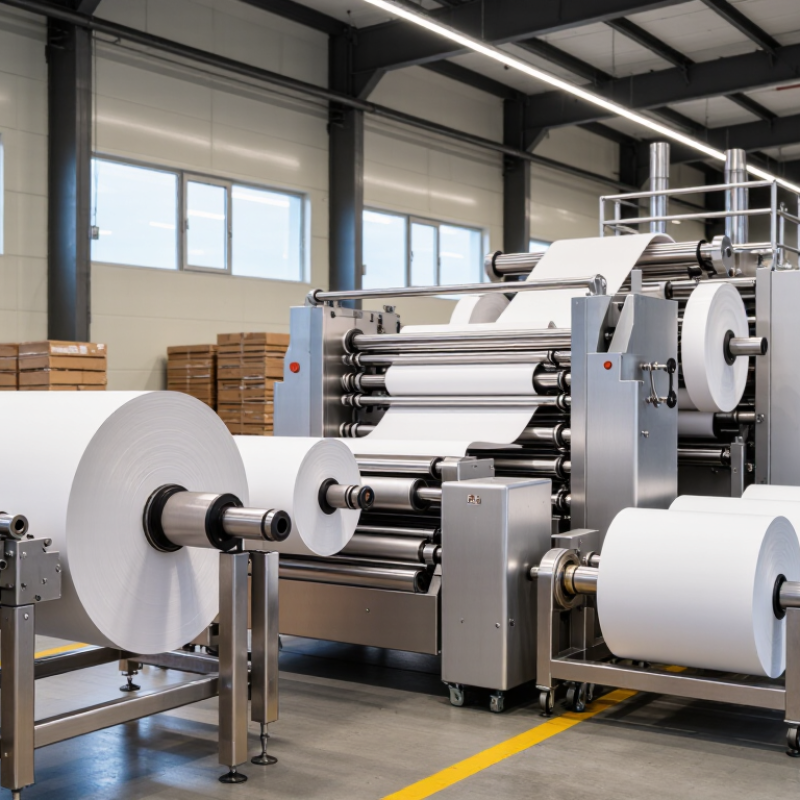
How to Choose a Paper Roll Slitting Machine?

Define the Production Needs for a Paper Roll Slitting Machine

How to Choose a Paper Roll Slitting Machine?

Define the Production Needs for a Paper Roll Slitting Machine

Before comparing machines, record the paper grades you process, including basis weight, coating, and roll width. Note the parent roll’s maximum diameter and weight, too. A narrow roll of lightweight tissue behaves differently from a heavy roll of coated paper. Small details matter. Estimate daily output and typical order sizes, then identify how often operators change slit widths.

List the finished widths you need and the tolerances your customers expect. Consider whether you need several slit widths from one parent roll, and check that the machine’s usable width and knife arrangement suit those jobs. Match operating speed to your real production target, not just the highest advertised figure. Stable web tension and clean edges can matter more than peak speed. Also allow room for loading, unloading, and routine blade changes.

Tips: Bring sample rolls and a written job list when assessing a machine. Ask how tension is adjusted and how changeovers are handled. If possible, run a trial using your own paper and inspect the finished edges. Early estimates can be wrong; revise them after tracking scrap and changeover time for a few weeks. Test it.


Identify Paper Types, Roll Sizes, and Required Slitting Widths

How to Choose a Paper Roll Slitting Machine?

Identify the paper before comparing machine specifications. Coated paper, kraft, tissue, and label stock behave differently under tension. Thin tissue can wrinkle; stiff kraft may need firmer guiding. Check the paper’s basis weight, thickness, coating, and moisture condition. Then measure the parent roll’s width, diameter, core size, and weight. These details determine whether the machine can load and unwind the roll safely. They also affect web tension and cutting stability. A specification sheet alone may not tell the whole story.

Tips: Write down your narrowest and widest finished widths, plus the number of rolls needed per run. Ask for a trial using your actual paper. Watch for edge dust, uneven winding, and wrinkles. Small defects matter.

Match the machine’s working width and maximum roll diameter to your real production range, not just your largest occasional order. Confirm that its blade setup can produce your target slit widths and leave enough room for trim waste. For frequent width changes, adjustable blade positioning can reduce setup time. Consider how operators control tension and how quickly they can replace blades. I would not assume a faster machine is always better; fragile stock may need slower, steadier handling. Keep a sample of acceptable finished rolls as a practical reference during testing.

Compare Machine Capacity, Accuracy, and Automation Features

How to Choose a Paper Roll Slitting Machine?

Compare Machine Capacity, Accuracy, and Automation Features

A machine’s rated width and diameter matter only when they match your actual rolls. Check the maximum parent-roll width, unwind diameter, core size, and finished-roll range against recent orders. Leave room for occasional wider stock. Too little capacity can force extra handling; too much may add cost without improving daily output. Measure the loading area, too.

Accuracy shows up at the edges. Ask for a cutting tolerance and test it with your own paper grade, not just a smooth sample. Record finished widths across several lanes, then inspect for dust, burrs, and uneven edges. Small errors add up. Confirm that tension stays steady as the roll diameter shrinks, since thin paper can wrinkle while heavier stock may telescope. Results can vary with humidity and operator setup.

Automation should solve a real bottleneck. A powered shaft, automatic tension control, or recipe storage may shorten changeovers, but each feature needs training and maintenance. Watch a full changeover, including knife adjustment and unloading. How long does it take? Check whether one operator can reach controls without crossing the web path. A specification sheet will not show every awkward detail. Leave time for a practical trial, and revise your needs list afterward.

Check Safety Systems, Maintenance Needs, and Operating Costs

When evaluating a paper roll slitting machine, inspect its safeguards in person, not only on a specification sheet. Check that blade areas are guarded, access doors are interlocked, and emergency stops remain reachable from the operator’s station. Test how the machine behaves during threading and roll changes, when hands may come close to moving parts. The U.S. Bureau of Labor Statistics reported a 2.4 total recordable injury and illness rate per 100 full-time workers across private industry in 2023. This broad figure is not specific to slitters, but it underlines why safety features deserve careful review. Look for clear lockout instructions, too. Small gaps matter.

Maintenance demands can quietly raise the cost of ownership. Ask how often blades, bearings, and web-guiding components need inspection, and whether routine service requires lengthy shutdowns. The U.S. Department of Energy’s Operations & Maintenance Best Practices Guide estimates predictive maintenance can reduce maintenance costs by 25–30% and downtime by 35–45% compared with reactive maintenance; actual results vary by site. Use those figures as a benchmark, not a promise. Compare energy use, blade replacement, scrap during setup, and labor for each shift. A machine with a lower purchase price may consume more through waste and stoppages. Track sample-roll yield during a trial. It may reveal problems a neat quotation misses.

Evaluate Suppliers, Technical Support, and Installation Requirements

How to Choose a Paper Roll Slitting Machine?

Evaluate Suppliers, Technical Support, and Installation Requirements

A supplier’s quotation should match your actual rolls, not an idealized sample. Share paper grades, web width, roll diameter, target speed, and required slit widths. Ask how the machine controls tension and handles dust, blade changes, and narrow strips. Request a test using your own stock. The edge may look clean at low speed, then become ragged during a longer run. That matters.

PMMI’s 2023 State of the Industry report valued U.S. packaging machinery shipments at about $10.4 billion in 2022. The scale of that market makes supplier capability worth checking carefully; the figure does not guarantee service quality. Ask for a written response-time commitment, local technician coverage, spare-parts lead times, and operator training. A remote troubleshooting session is useful, but it cannot replace a technician when a shaft or control needs hands-on work. Check references from plants running similar paper grades and shift patterns.

Installation planning is easy to underestimate. Confirm floor loading, machine footprint, roll-loading clearance, electrical supply, guarding, and dust extraction before delivery. Have the supplier provide utility drawings and anchoring details early. Measure the route from the receiving bay to the production floor, including doorways and tight turns. It sounds obvious. Yet access problems can delay commissioning. Keep some schedule margin; site readiness is rarely perfect, even with a careful checklist.

Powder Coat Booths

For those larger-sized parts, or smaller quantity runs, we have 2 independent powder coat booths and ovens. The quality, durability and affordability of today’s powder coating finishes make this the process of choice for world-class companies.

Powder coating advantages over other forms of coating are many. Materials used in the Powder coating process can be metals and non-metals that come in a multitude of thicknesses, textures, colors, etc. Another of Powder coating’s biggest advantages over conventional coatings is its ability to create finishes in many different textures. Powder Coating Booths allow us the ability to apply these advantages to large products.

Wet Paint Line

Tri-State Fabricators runs a full-service conveyor line for painting. Wet painting can provide protection or decoration to many different part styles. From start to finish, every project is easier to undergo random and point-based inspection by our skilled painting team.

Advantages to our Wet Paint Line are these lines start with product prep and ends with a thorough inspection of a high quality finished product. Our ability to complete large and small projects with a superior finish and doing so in a timely and economical fashion. This passes along the savings in production to our customers. When powder coating ins not an option, our Wet Paint Line gets the job done right the first time.

Wet Paint Booths

When the parts get big and heavy we roll-out our custom paint racks and oversize booth. By utilizing our partnerships with all the major paint brands, we can match virtually any color with wet paint.

The advantages of having access to a Wet Paint Booth are many. Large projects of many different shapes can be loaded into the booth. The Wet Paint Booth offers an environment that is much more controlled than a typical parts painting operation.

Not only are they used because of their controlled environment, but they’re are also advantageous when it comes to applying paint to parts that are needed in industries that require specialty coatings such as medical, aerospace, etc.

Military CARC

Our military forces have some very high standards when it comes to the finish of their vehicles and equipment. From the first pre-treatment step to final coat, it takes a great deal of knowledge and experience to protect the men and women of our armed forces. They deserve only the best, and Tri-State Fabricators provides it.

All of our processes are closely monitored by our staff and management teams. Both of which are highly trained in the processes of metal fabrication and finishing. Tri-State Fabricators’ goal is to always fully satisfy each and every customer, including the military. We will always put a 110% into what we do.

Glass-Bead Blasting

Abrasive media blasting is an excellent way to remove old paint, rust, and increase the paint/powder adhesion. Glass beads produce a much smoother and brighter finish than angular abrasives; leaving the part clean yet without any dimensional change. Chemically inert and environmentally friendly, we can recycle our beads approximately 30 times; making them a more preferred method of metal cleaning or surface finishing.

Advantages to Glass Bead Blasting are many. Glass bead blast media is used when a project is needing rough surfaces need to become smooth for applications of coatings such as paint. It is typically used to clean paint and rust from a product surface without deforming the surface it is being used on. Overall, compared to many other blasting media, Glass Bead Blasting is a very economical choice and those savings are always passed on to our customers.

Part Washing

Tri-State Fabricators utilize a zinc phosphate wash to clean and etch the material to ensure the best paint adhesion possible. The unique design of our 3-stage wash system does the work like a 5-stage. From Cleaning and rinsing to conversion coating and post-treatment, Our Part Washing process is a complete service and works throughout the fabrication service and the finishing service.

Along with the previously mentioned benefits, Curing is a vital chemical reaction that leaves the product finish hard and relatively safe from mild abrasion and aggressive corrosion. This process can be done in more than one way; ambient air-dry or in curing ovens at temps that exceed 240°.

Burn-Off Oven

From fixing paint mistakes (someone else’s of course) to simply cleaning our paint line hooks, our burn-off oven is put to good use. After a quick burn-off, a little clean up, and a fresh coat of paint, your parts will look better than new.

Why does our Burn-Off Oven work so well? Because super heating the air around parts turns the materials into ashes. From paint and powder coatings to rubber and machining oils, high temps do the job without degrading the integrity of the part.

Masking

Masking is a vital part of producing high quality products. We have die-cut masking patterns to protect machined surfaces as well as a wide range of plugs and caps to protect threaded holes and bolts. We provide permanent and temporary masking.

Masking allows the selected sections of a product to be protected from a fabrication or finishing service. This can be with both chemicals when etching and tapes, paints when only finishing just a section of the product. Masking is great in aiding the customization process of a project.

Screen Printing

Screen printing is a photographic process that transfers artwork onto a porous nylon screen which allows colored ink to flow through the screen and be deposited on an aluminum or plastic component. We can generally have just about any design created onto a screen for your parts.

Some of the advantages of Screen Printing are, brand recognition for your business displaying on your products, assembly instructions, product warnings/hazards, etc. Tri-State Fabricators produces Screen Printing of the highest quality so you know it’s durable.

Metal Finishing

Metal Finishing is the art of treating the exterior portion of product, often metal but can also be made of other materials, so that the surface is clean and free of any debris. Then the process of applying coats or either paint of powder coat takes place. This coating process improves the quality of the product in both appearance and resistance to wear and corrosion.

Tri-State Fabricators, Inc., understands that a project typically isn’t complete until a high-quality finish has been added to your product. This is why our painting and powder coating teams continuously inspect the products throughout the Metal Finishing process.
