How to Choose the Right Packing Boxes for Global Shipping?

Choosing the right Packing Boxes for global shipping begins with one practical question: what will the box endure?

A parcel may face stacking, vibration, moisture, temperature changes, and rough handling. A box that looks strong in a warehouse can fail after several transfers. Smithers’ global packaging research projects the industry will approach $1.2 trillion in value by 2028, driven partly by e-commerce and international distribution. DHL’s 2024 E-Commerce Trends Report also found that 70% of consumers expect to shop mainly online by 2030. More online orders mean more pressure on packaging performance.

Walter Soroka, author of Fundamentals of Packaging Technology, defines packaging as “the art, science, and technology of enclosing and protecting products for distribution, storage, sale, and use.” His words remain useful for export decisions. The box must protect the product, not merely contain it. Select board strength according to product weight, stacking height, route length, and humidity exposure. Double-wall corrugated boxes may suit heavy or fragile goods, while single-wall boxes can reduce material use for lighter items. Internal cushioning also matters. A five-centimeter gap can become a costly problem when the product shifts.

Do not choose only by price. The cheapest carton may create replacement costs, delays, and disappointed customers. Yet stronger is not always better. Oversized Packing Boxes increase void fill, freight volume, and handling difficulty. The imperfect part is often the specification itself; real routes can be unpredictable. Test representative boxes through compression, vibration, and drop conditions before scaling shipments. Small changes, such as reinforced corners or accurate dimensions, can make a surprisingly large difference.
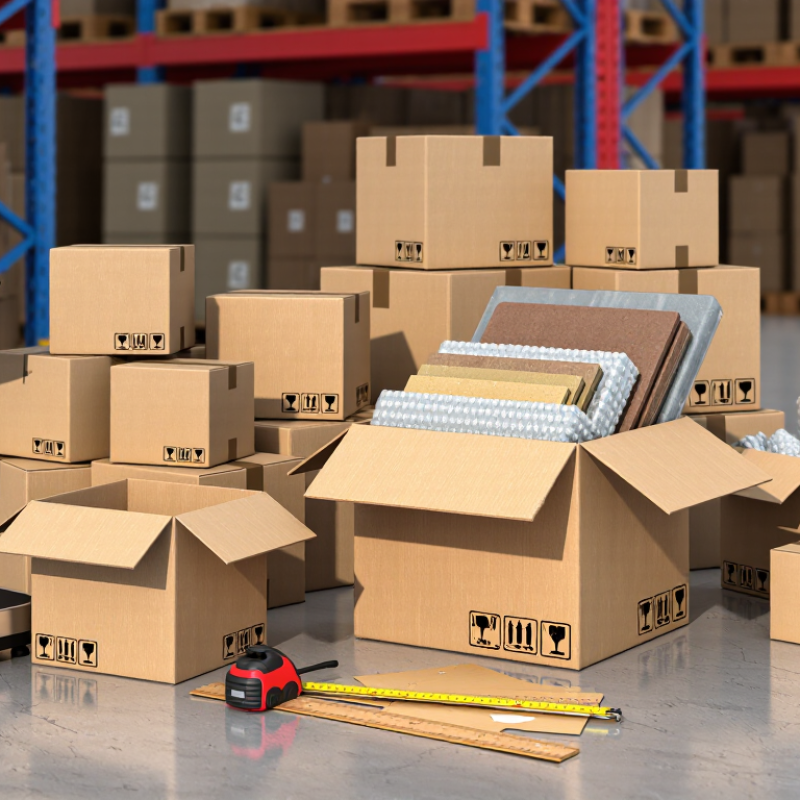
How to Choose the Right Packing Boxes for Global Shipping?

Define Shipping Requirements and Box Performance Needs

Global shipping starts with clear requirements, not a larger box. Define the product’s weight, dimensions, fragility, value, and stacking limits. Identify the route, transport modes, climate, and likely handling points. UNCTAD’s Review of Maritime Transport 2023 reports that over 80% of global merchandise trade by volume moves by sea. Sea routes can expose cartons to humidity, compression, vibration, and long storage periods. The World Bank’s Logistics Performance Index 2023 covered 139 economies and highlighted reliability as a core logistics challenge. Your box must protect the product during delays, transfers, and uneven handling.

Tips: Choose a box with enough internal clearance for cushioning, but avoid empty space that allows movement. Specify edge-crush strength, burst strength, and stacking performance. Test samples through drops, vibration, compression, and humidity exposure. Use the actual product weight. Not a guess.

In practice, a rigid carton can still collapse when stacked on a damp container floor. I have also seen excessive cushioning increase shipping volume and handling costs. That trade-off deserves review. Start with the weakest expected condition, then test the packed unit against relevant ISTA procedures. Record failures, including crushed corners, shifting contents, and wet surfaces. A smaller box is not automatically better. A stronger box is not always efficient. Requirements should reflect the full journey, not only the warehouse departure.

Select the Right Box Material, Size, and Structural Design

How to Choose the Right Packing Boxes for Global Shipping?

Select the Right Box Material, Size, and Structural Design

Global shipping exposes a box to compression, vibration, humidity, and repeated handling. Material choice should reflect that journey, not just product weight. Standard corrugated board suits many dry goods, while heavier items may require double-wall construction. Moisture-sensitive shipments may need a water-resistant outer treatment. Check its recyclability and supplier test data. Do not guess. An experienced packer should review edge-crush strength and burst resistance before approving the box.

Measure the product at its longest, widest, and highest points. Add only enough clearance for protective cushioning. Too much empty space increases movement inside the carton. Too little space transfers impact directly to the product. I once approved a box that looked efficient, but its narrow corners crushed during stacking. The lesson was uncomfortable: internal fit matters as much as external size.

Structural design also affects stability. A regular slotted carton works for many rectangular products, while reinforced corners help heavier contents. Keep major seams away from vulnerable surfaces when possible. Use strong, consistent sealing across the full closure. Build a trial pack and shake it by hand before shipment. Then test compression and drop performance under realistic conditions. A box can appear sturdy and still fail after several damp days in transit. Recheck the design when the product, route, or packing method changes.

Match Packing Methods to Product Type and Fragility

Packing boxes should follow the product, not a warehouse habit. In my shipping trials, small glass components survived better in rigid, double-wall boxes with molded separation. Each piece needs space from the outer wall. Fragile items need restraint. Paper cushioning can fill gaps, but it may settle during vibration. I now shake a sealed sample gently before approving a packing method. This simple check exposes movement that photographs never show.

Dense products, such as books or metal fittings, need strong corrugated boxes and balanced weight distribution. Avoid oversized cartons; empty space increases impact forces. Soft goods often need moisture-resistant inner bags before entering a carton. Long products require corner protection and boxes that resist bending. Sharp edges can cut through weak padding. Use reinforced tape across seams, especially where humidity may weaken adhesive. Do not guess. Record box dimensions, product weight, and cushioning thickness for repeatable packing.

For international routes, test packed samples with drop, compression, and vibration checks that resemble handling conditions. Keep labels visible, but never rely on them as the only protection. A “handle with care” message cannot correct poor internal support. I once chose a stronger carton and still saw damage because the insert was too loose. That mistake changed my method: test the complete pack, not the box alone. Review results after each route, since temperature, humidity, and handling patterns can change performance. Some solutions still need adjustment.

Choosing Corrugated Box Profiles for Global Shipping

Match the box construction to product weight and fragility. E-flute is commonly used for lightweight retail packaging, while B- and C-flute provide progressively greater cushioning and stacking support. BC double-wall board is typically selected for heavy or highly fragile shipments.

Nominal flute heights shown: E ≈ 1.5 mm, B ≈ 3 mm, C ≈ 4 mm, and BC double-wall ≈ 7 mm. Actual board thickness varies by paper grade, manufacturer, and converting process. Use cushioning, internal dividers, and appropriate testing for fragile products.

Evaluate International Shipping Rules and Labeling Requirements

Choosing a box for global shipping means checking rules before measuring carton strength. A beautiful box can still fail customs review.

The World Bank’s 2023 Logistics Performance Index rated average customs performance at about 2.2 out of 5. Clear documentation matters. Match the packing list, commercial invoice, and shipping label exactly. State the product description, quantity, value, country of origin, and HS code where required. Avoid vague terms such as “parts” or “samples.” Customs officers need useful detail.

Labels must remain readable after rain, handling, and long storage. Print the recipient’s name, complete address, postal code, contact details, and return information. Add package count, gross weight, dimensions, and orientation marks when appropriate. Use the destination country’s required language and format. The Universal Postal Union’s addressing guidance emphasizes consistent, machine-readable address placement. Small errors create large delays.

Box design also affects transport risk. UNCTAD reports that more than 80% of global merchandise trade by volume moves by sea. Containers may face humidity, compression, and repeated transfers. Choose corrugated board suited to the shipment’s weight and route. Test a filled box, not an empty one. I have seen teams trust supplier specifications without checking actual labels. That assumption deserves review. Regulations change, and local customs portals remain the final authority.


Test, Seal, and Optimize Boxes for Safe Global Delivery

Choosing a box for global shipping starts with the journey, not the product. The 2023 UNCTAD Review of Maritime Transport reports that over 80% of global merchandise trade moves by sea. Your parcel may face vibration, compression, humidity, and repeated handling. A neat-looking carton is not enough. Measure the product, add cushioning, and leave minimal movement inside. Too much empty space increases shifting. Too little space transfers impact directly to the product.

Test the packed box under realistic conditions. Use compression testing for stacked loads and vibration testing for long routes. ISTA procedures provide practical guidance for simulated transport testing. Drop the carton from different faces, edges, and corners. Inspect the product, not only the box. A small tear near a hand hole can become a failure point. Seal every opening with strong, continuous tape. Apply enough pressure for full contact. Weak seals often fail before the carton does.

Optimize after testing, not before. Record carton weight, dimensions, damage points, and packing time. Dimensional weight can raise freight costs, so reducing unnecessary space matters. Re-test after changing the box size or cushioning. This step is often skipped. That is a mistake. In real warehouse conditions, rushed packing, wet floors, and inconsistent tape placement can defeat a perfect laboratory result. Build a simple packing checklist, train staff with sample cartons, and review damage reports monthly. The best box is not the thickest one; it is the smallest tested design that survives its actual route.

Article Source:

Powder Coat Booths

For those larger-sized parts, or smaller quantity runs, we have 2 independent powder coat booths and ovens. The quality, durability and affordability of today’s powder coating finishes make this the process of choice for world-class companies.

Powder coating advantages over other forms of coating are many. Materials used in the Powder coating process can be metals and non-metals that come in a multitude of thicknesses, textures, colors, etc. Another of Powder coating’s biggest advantages over conventional coatings is its ability to create finishes in many different textures. Powder Coating Booths allow us the ability to apply these advantages to large products.

Wet Paint Line

Tri-State Fabricators runs a full-service conveyor line for painting. Wet painting can provide protection or decoration to many different part styles. From start to finish, every project is easier to undergo random and point-based inspection by our skilled painting team.

Advantages to our Wet Paint Line are these lines start with product prep and ends with a thorough inspection of a high quality finished product. Our ability to complete large and small projects with a superior finish and doing so in a timely and economical fashion. This passes along the savings in production to our customers. When powder coating ins not an option, our Wet Paint Line gets the job done right the first time.

Wet Paint Booths

When the parts get big and heavy we roll-out our custom paint racks and oversize booth. By utilizing our partnerships with all the major paint brands, we can match virtually any color with wet paint.

The advantages of having access to a Wet Paint Booth are many. Large projects of many different shapes can be loaded into the booth. The Wet Paint Booth offers an environment that is much more controlled than a typical parts painting operation.

Not only are they used because of their controlled environment, but they’re are also advantageous when it comes to applying paint to parts that are needed in industries that require specialty coatings such as medical, aerospace, etc.

Military CARC

Our military forces have some very high standards when it comes to the finish of their vehicles and equipment. From the first pre-treatment step to final coat, it takes a great deal of knowledge and experience to protect the men and women of our armed forces. They deserve only the best, and Tri-State Fabricators provides it.

All of our processes are closely monitored by our staff and management teams. Both of which are highly trained in the processes of metal fabrication and finishing. Tri-State Fabricators’ goal is to always fully satisfy each and every customer, including the military. We will always put a 110% into what we do.

Glass-Bead Blasting

Abrasive media blasting is an excellent way to remove old paint, rust, and increase the paint/powder adhesion. Glass beads produce a much smoother and brighter finish than angular abrasives; leaving the part clean yet without any dimensional change. Chemically inert and environmentally friendly, we can recycle our beads approximately 30 times; making them a more preferred method of metal cleaning or surface finishing.

Advantages to Glass Bead Blasting are many. Glass bead blast media is used when a project is needing rough surfaces need to become smooth for applications of coatings such as paint. It is typically used to clean paint and rust from a product surface without deforming the surface it is being used on. Overall, compared to many other blasting media, Glass Bead Blasting is a very economical choice and those savings are always passed on to our customers.

Part Washing

Tri-State Fabricators utilize a zinc phosphate wash to clean and etch the material to ensure the best paint adhesion possible. The unique design of our 3-stage wash system does the work like a 5-stage. From Cleaning and rinsing to conversion coating and post-treatment, Our Part Washing process is a complete service and works throughout the fabrication service and the finishing service.

Along with the previously mentioned benefits, Curing is a vital chemical reaction that leaves the product finish hard and relatively safe from mild abrasion and aggressive corrosion. This process can be done in more than one way; ambient air-dry or in curing ovens at temps that exceed 240°.

Burn-Off Oven

From fixing paint mistakes (someone else’s of course) to simply cleaning our paint line hooks, our burn-off oven is put to good use. After a quick burn-off, a little clean up, and a fresh coat of paint, your parts will look better than new.

Why does our Burn-Off Oven work so well? Because super heating the air around parts turns the materials into ashes. From paint and powder coatings to rubber and machining oils, high temps do the job without degrading the integrity of the part.

Masking

Masking is a vital part of producing high quality products. We have die-cut masking patterns to protect machined surfaces as well as a wide range of plugs and caps to protect threaded holes and bolts. We provide permanent and temporary masking.

Masking allows the selected sections of a product to be protected from a fabrication or finishing service. This can be with both chemicals when etching and tapes, paints when only finishing just a section of the product. Masking is great in aiding the customization process of a project.

Screen Printing

Screen printing is a photographic process that transfers artwork onto a porous nylon screen which allows colored ink to flow through the screen and be deposited on an aluminum or plastic component. We can generally have just about any design created onto a screen for your parts.

Some of the advantages of Screen Printing are, brand recognition for your business displaying on your products, assembly instructions, product warnings/hazards, etc. Tri-State Fabricators produces Screen Printing of the highest quality so you know it’s durable.

Metal Finishing

Metal Finishing is the art of treating the exterior portion of product, often metal but can also be made of other materials, so that the surface is clean and free of any debris. Then the process of applying coats or either paint of powder coat takes place. This coating process improves the quality of the product in both appearance and resistance to wear and corrosion.

Tri-State Fabricators, Inc., understands that a project typically isn’t complete until a high-quality finish has been added to your product. This is why our painting and powder coating teams continuously inspect the products throughout the Metal Finishing process.



