


How to Choose the Right Milling Machinery for Global Buyers

Choosing the right Milling Machinery is a production decision, not merely a purchasing exercise. Global buyers must balance accuracy, throughput, energy use, service support, and total ownership cost. A compact three-axis mill may suit aluminum prototypes, while a five-axis machining center may better handle complex aerospace components. The wrong match can leave an expensive spindle idle.

Market evidence shows why careful evaluation matters. Grand View Research estimates that the global machine tools market reached approximately USD 102.3 billion in 2023. Its forecast also indicates continued growth through 2030. Definitions vary between reports, so these figures deserve scrutiny. Still, the direction is clear. Automation and flexible production are gaining importance. The International Federation of Robotics reported 541,302 industrial robots installed worldwide in 2023. That figure signals stronger demand for connected, repeatable manufacturing systems.

Performance comes first. Usually.

Alexander Slocum, an MIT precision-engineering authority, describes the machine tool as “a machine that makes machines.” His observation remains practical for international buyers. A milling system should be judged by the parts it must make, not by brochure specifications alone. Buyers should compare spindle torque, working envelope, axis travel, positioning accuracy, chip evacuation, control compatibility, and local technical support. Ask for sample cuts. Inspect surface finish directly. Request verified cycle-time data.

Cost estimates can mislead. Freight, installation, training, tooling, spare parts, tariffs, and downtime may exceed the initial price difference. Supplier claims also need independent checking. This guide examines those details, helping global purchasers select Milling Machinery with stronger evidence, fewer assumptions, and realistic expectations. Some choices will still involve compromise. That is unavoidable.
How to Choose the Right Milling Machinery for Global Buyers

Define the Milling Process, Materials, and Required Output

How to Choose the Right Milling Machinery for Global Buyers

A milling machine should be chosen around the process, not its appearance or advertised capacity. The correct choice begins with a clear material definition. Are you producing flour, animal feed, powder, flakes, or uniform granules? Grain may require cleaning, crushing, grinding, and screening. Hard minerals may need slower feed rates and stronger wear protection. Wet milling also demands corrosion-resistant contact parts and controlled moisture removal.

Material behavior matters. A dusty material can increase filtration needs, while oily seeds may clog narrow passages. I have seen buyers specify only “high efficiency” and overlook moisture, hardness, and temperature. That mistake often appears during commissioning. Ask for a material test before purchase. Record the feed size, moisture level, bulk density, and desired particle range. These details make supplier comparisons more reliable.

Required output must be measurable. State the target hourly capacity, acceptable particle variation, operating hours, and available power supply. A laboratory sample may look excellent, but production output can change under continuous loading. Request a documented trial using your material. Check energy use, noise, dust control, and cleaning time. Global buyers should also confirm voltage, spare-part access, operator training, and local service capability. Leaving extra capacity sounds sensible, but oversized machinery can waste energy and reduce control. Review the specification again after testing.

How to Choose the Right Milling Machinery for Global Buyers - Define the Milling Process, Materials, and Required Output

Material Category Typical Milling Objective Recommended Machinery Type Typical Feed Moisture Typical Product Size Indicative Throughput Range Typical Drive Power Key Selection Considerations
Cereal grains
Wheat, maize, rice, oats
Flour, meal, grits, or cracked grain production Roller mill or hammer mill Approximately 10–15% for efficient dry milling Fine flour: 80–250 µm
Meal or grits: 0.5–3 mm
0.5–20 t/h 15–250 kW Use roller systems for controlled flour granulation. Use impact systems when flexible particle reduction and compact equipment are priorities.
Oilseeds
Soybean, sunflower seed, rapeseed
Flaking, cracking, or particle-size reduction before oil extraction Cracker mill or flaking mill Commonly 7–12%, depending on conditioning requirements Cracked particles: 1–5 mm
Flakes: approximately 0.2–0.5 mm thick
1–15 t/h 30–300 kW Evaluate roll diameter, feed conditioning, roll-gap control, and the required flake thickness. Excessive heat can reduce product quality.
Feed ingredients
Grain, bran, forage, protein meal
Uniform particle reduction for livestock or poultry feed Hammer mill with screen system Usually 10–16% for dry ingredients Typical feed range: 0.5–4 mm 1–25 t/h 30–400 kW Screen area, rotor speed, aspiration, and wear-resistant hammers strongly affect capacity, energy use, and particle distribution.
Minerals and ores
Limestone, gypsum, coal, soft ores
Primary or secondary size reduction for processing or construction use Hammer mill, impact mill, or cage mill Preferably below 8–10% unless the machine is designed for wet or sticky feed Approximately 0.5–20 mm, depending on the stage 5–100 t/h 45–800 kW Check abrasiveness, maximum feed size, reduction ratio, dust control, liner life, and whether tramp-metal protection is required.
Spices and herbs
Pepper, chili, turmeric, dried leaves
Fine grinding while limiting heat and preserving aroma Pin mill, universal mill, or cooled hammer mill Often below 8–12% for dried materials Fine powder: 100–500 µm 50–2,000 kg/h 7.5–75 kW Prioritize temperature control, hygienic construction, easy cleaning, dust collection, and protection against cross-contamination.
Wood and biomass
Wood chips, straw, husks, pellets
Preparation of fuel, pellets, briquettes, or fiber products Biomass hammer mill or knife mill Typically below 15% for many pellet applications; higher moisture requires process-specific design Approximately 1–10 mm 1–15 t/h 30–500 kW Consider fibrous feed behavior, knife or hammer wear, fire and explosion protection, screen blockage, and bulk-density changes.
Chemicals and pigments
Dry powders, salts, fillers
Deagglomeration, fine grinding, or controlled classification Pin mill, jet mill, or air-classifier mill Usually below 1–5% for moisture-sensitive fine grinding Approximately 5–150 µm 20–1,500 kg/h 15–250 kW Assess heat sensitivity, powder flow, contamination limits, explosion classification, classifier accuracy, and the need for inert-gas operation.
Mineral fillers
Calcium carbonate, kaolin, talc
Ultra-fine powder production with particle classification Ball mill with classifier or air-classifier mill Generally below 1–3% for dry fine grinding Approximately 2–45 µm, depending on the target grade 0.2–20 t/h 75–1,000 kW Specify target particle-size distribution, whiteness, contamination tolerance, circulating load, separator efficiency, and energy consumption.
Wet or sticky materials
Fresh biomass, clay, damp food materials
Size reduction where dry milling may cause plugging or excessive heat Wet mill, colloid mill, or heavy-duty cutter mill Often above 15%; exact range depends on material rheology Approximately 0.1–5 mm, or a paste-like dispersion 0.2–30 t/h 15–500 kW Confirm viscosity, abrasiveness, sanitation requirements, corrosion resistance, drainage, cleaning method, and downstream separation needs.
Planning note: The ranges shown are typical engineering reference values rather than guaranteed machine specifications. Actual capacity and power demand depend on feed size, hardness, moisture, bulk density, target particle-size distribution, screen or classifier settings, operating hours, and local electrical standards. Request a material test and performance guarantee before final equipment selection.

Compare Milling Machine Types and Their Suitable Applications

Choosing milling machinery begins with the workpiece, not the machine’s advertised power. A vertical milling machine suits maintenance shops, prototypes, and small metal parts. Its visible table and straightforward setup help operators adjust cutters quickly. It is often practical for buyers managing varied orders. However, manual control may limit repeatability during larger production runs.

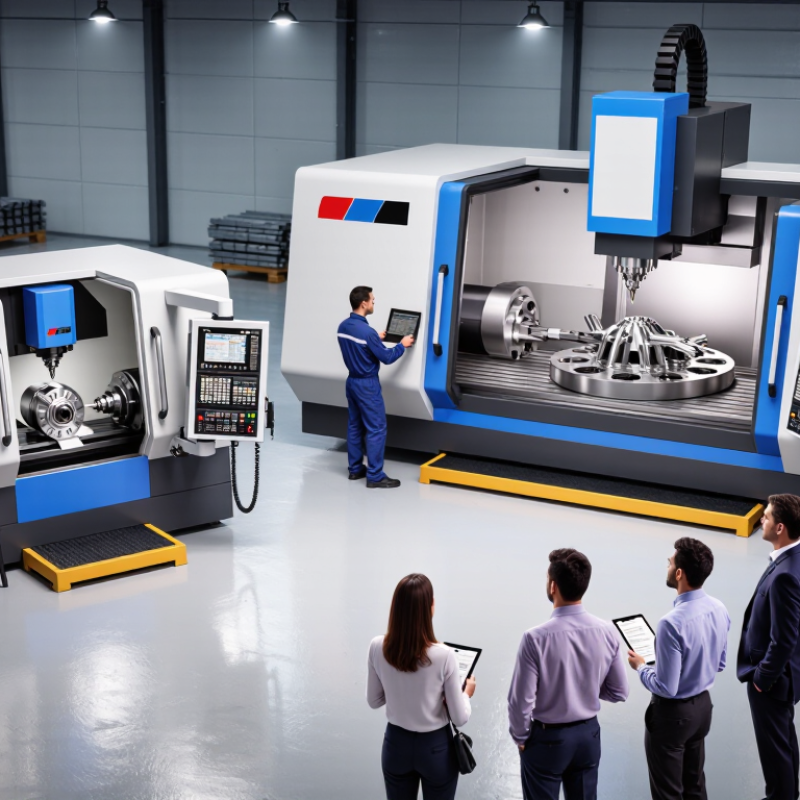
A horizontal milling machine handles deep slots, heavy cuts, and long components more efficiently. Its cutter engages the workpiece from the side, improving chip removal during demanding operations. For automotive fixtures, structural parts, or repeated batches, this design can reduce cutting time. CNC milling machines add programmable movement and consistent production. Three-axis models fit common plates and housings, while five-axis systems reach angled surfaces with fewer setups. That flexibility costs more and requires stronger programming skills.

Think carefully here. A complex machine can become an expensive underused asset. Buyers should compare material, tolerance, batch size, available floor space, and operator experience. A stainless-steel housing may need rigid construction, coolant control, and stable spindle performance. An aluminum prototype may need speed and easy access instead. Check electrical requirements, metric or imperial control settings, tool compatibility, guarding, and service support in the destination country. Request a test cut using similar material when possible. Inspect surface finish, dimensional accuracy, vibration, and cycle time. One overlooked detail can disrupt production. Manufacturer specifications matter, but real cutting evidence matters more.

Evaluate Capacity, Precision, Power, and Automation Features

How to Choose the Right Milling Machinery for Global Buyers

Evaluate Capacity, Precision, Power, and Automation Features

Capacity should match both today’s parts and tomorrow’s orders. Check the work envelope, table load, spindle torque, and tool capacity. A machine that barely handles a 600-millimeter component may create delays when fixtures or longer cutters are added. Review realistic production samples, not only maximum travel figures. Leave room for growth.

Precision requires more than a small tolerance printed in a brochure. Ask for repeatability data, thermal compensation details, and a test-cut report. Measure a sample part after warm-up, then measure it again hours later. Temperature changes can quietly affect results. Perfect figures are rare.

Power planning is equally important. Confirm voltage, phase, frequency, peak demand, and compressed-air requirements before shipment. Local electrical conditions may differ sharply from the factory’s setup. Automation can reduce handling time through probing, tool monitoring, pallet changes, and automatic tool storage. However, advanced functions need trained operators and dependable maintenance support. More automation is not always better.

Request installation guidance, spare-part information, software compatibility, and operator training in writing. These details often determine uptime more than spindle speed. A lower-cost machine may become expensive after repeated manual adjustments. Still, buyers should question their own assumptions. Some operations purchase automation they rarely use. A practical choice balances measurable output, manageable complexity, and verified service capability.

Check Global Compliance, Installation, Maintenance, and Support

Global buyers should treat compliance as a purchasing requirement, not a final paperwork exercise. Plan early. Check the machine’s electrical rating, guarding, emergency stops, noise data, and material-contact requirements. Ask for current test reports, risk assessments, wiring diagrams, and manuals in a usable language. Requirements differ by destination, even within one trading region. A familiar certificate may not satisfy local inspectors.

Installation planning should begin before shipment. Measure door widths, floor strength, ceiling clearance, drainage, dust extraction, and lifting access. Confirm voltage, frequency, compressed air quality, and ambient temperature with the supplier. Request a remote installation checklist and a supervised commissioning plan. The first setup can expose gaps. One overlooked cable length may delay production for days. Allow space for cleaning and safe access around the milling chamber.

Maintenance support matters more than a polished sales specification. Choose a supplier that provides service intervals, troubleshooting guides, parts lists, and technician response times. Ask which wear parts are stocked near your facility. Keep records. Record vibration, motor temperature, product consistency, and downtime after commissioning. These records help diagnose problems before failures become expensive. Request operator training with a real batch, not only slides. Support promises should be written into the contract. Remote help may solve simple faults, but complex repairs still need local capability. That limitation deserves honest planning.

How to Choose the Right Milling Machinery for Global Buyers

A practical procurement framework for comparing milling machinery across compliance, installation, maintenance, and after-sales support requirements.

The weighting reflects common purchasing checkpoints used in industrial machinery procurement. Buyers should verify applicable local regulations, technical documentation, installation conditions, service capability, and spare-parts availability before placing an order.

Calculate Total Ownership Cost, Delivery Risks, and Supplier Reliability

How to Choose the Right Milling Machinery for Global Buyers

The purchase price rarely reflects the real cost of milling equipment.

Calculate electricity, tooling, coolant, maintenance, training, and software over five years. A machine drawing 18 kW per hour may appear efficient until daily production exceeds ten hours. Include installation, spare parts, local technicians, insurance, and disposal fees. Costs hide in plain sight. I once underestimated voltage conversion and lost several production days. That mistake still influences my evaluation checklist.

Delivery creates another financial risk.

Ask for a detailed production schedule, packing photographs, inspection records, and confirmed shipping documents. Check the route, port congestion history, customs requirements, and unloading equipment at your facility. A delayed machine can affect contracts, labor planning, and customer confidence. Request a factory acceptance test using your material and sample dimensions. The result should include measured accuracy, cycle time, and surface finish. Do not accept vague performance promises.

Tips:

Compare three suppliers using the same total-cost template. Request references from buyers with similar materials and production volumes. Verify response times before signing, not after failure. Ask whether critical spare parts are stocked regionally. Review warranty exclusions carefully. A low offer may become expensive after commissioning. Also, supplier reliability is not proven by polished presentations alone; it requires documented service procedures, transparent communication, and realistic delivery commitments. Leave room for doubt. Check everything twice.

Powder Coat Booths

For those larger-sized parts, or smaller quantity runs, we have 2 independent powder coat booths and ovens. The quality, durability and affordability of today’s powder coating finishes make this the process of choice for world-class companies.

Powder coating advantages over other forms of coating are many. Materials used in the Powder coating process can be metals and non-metals that come in a multitude of thicknesses, textures, colors, etc. Another of Powder coating’s biggest advantages over conventional coatings is its ability to create finishes in many different textures. Powder Coating Booths allow us the ability to apply these advantages to large products.

Wet Paint Line

Tri-State Fabricators runs a full-service conveyor line for painting. Wet painting can provide protection or decoration to many different part styles. From start to finish, every project is easier to undergo random and point-based inspection by our skilled painting team.

Advantages to our Wet Paint Line are these lines start with product prep and ends with a thorough inspection of a high quality finished product. Our ability to complete large and small projects with a superior finish and doing so in a timely and economical fashion. This passes along the savings in production to our customers. When powder coating ins not an option, our Wet Paint Line gets the job done right the first time.

Wet Paint Booths

When the parts get big and heavy we roll-out our custom paint racks and oversize booth. By utilizing our partnerships with all the major paint brands, we can match virtually any color with wet paint.

The advantages of having access to a Wet Paint Booth are many. Large projects of many different shapes can be loaded into the booth. The Wet Paint Booth offers an environment that is much more controlled than a typical parts painting operation.

Not only are they used because of their controlled environment, but they’re are also advantageous when it comes to applying paint to parts that are needed in industries that require specialty coatings such as medical, aerospace, etc.

Military CARC

Our military forces have some very high standards when it comes to the finish of their vehicles and equipment. From the first pre-treatment step to final coat, it takes a great deal of knowledge and experience to protect the men and women of our armed forces. They deserve only the best, and Tri-State Fabricators provides it.

All of our processes are closely monitored by our staff and management teams. Both of which are highly trained in the processes of metal fabrication and finishing. Tri-State Fabricators’ goal is to always fully satisfy each and every customer, including the military. We will always put a 110% into what we do.

Glass-Bead Blasting

Abrasive media blasting is an excellent way to remove old paint, rust, and increase the paint/powder adhesion. Glass beads produce a much smoother and brighter finish than angular abrasives; leaving the part clean yet without any dimensional change. Chemically inert and environmentally friendly, we can recycle our beads approximately 30 times; making them a more preferred method of metal cleaning or surface finishing.

Advantages to Glass Bead Blasting are many. Glass bead blast media is used when a project is needing rough surfaces need to become smooth for applications of coatings such as paint. It is typically used to clean paint and rust from a product surface without deforming the surface it is being used on. Overall, compared to many other blasting media, Glass Bead Blasting is a very economical choice and those savings are always passed on to our customers.

Part Washing

Tri-State Fabricators utilize a zinc phosphate wash to clean and etch the material to ensure the best paint adhesion possible. The unique design of our 3-stage wash system does the work like a 5-stage. From Cleaning and rinsing to conversion coating and post-treatment, Our Part Washing process is a complete service and works throughout the fabrication service and the finishing service.

Along with the previously mentioned benefits, Curing is a vital chemical reaction that leaves the product finish hard and relatively safe from mild abrasion and aggressive corrosion. This process can be done in more than one way; ambient air-dry or in curing ovens at temps that exceed 240°.

Burn-Off Oven

From fixing paint mistakes (someone else’s of course) to simply cleaning our paint line hooks, our burn-off oven is put to good use. After a quick burn-off, a little clean up, and a fresh coat of paint, your parts will look better than new.

Why does our Burn-Off Oven work so well? Because super heating the air around parts turns the materials into ashes. From paint and powder coatings to rubber and machining oils, high temps do the job without degrading the integrity of the part.

Masking

Masking is a vital part of producing high quality products. We have die-cut masking patterns to protect machined surfaces as well as a wide range of plugs and caps to protect threaded holes and bolts. We provide permanent and temporary masking.

Masking allows the selected sections of a product to be protected from a fabrication or finishing service. This can be with both chemicals when etching and tapes, paints when only finishing just a section of the product. Masking is great in aiding the customization process of a project.

Screen Printing

Screen printing is a photographic process that transfers artwork onto a porous nylon screen which allows colored ink to flow through the screen and be deposited on an aluminum or plastic component. We can generally have just about any design created onto a screen for your parts.

Some of the advantages of Screen Printing are, brand recognition for your business displaying on your products, assembly instructions, product warnings/hazards, etc. Tri-State Fabricators produces Screen Printing of the highest quality so you know it’s durable.

Metal Finishing

Metal Finishing is the art of treating the exterior portion of product, often metal but can also be made of other materials, so that the surface is clean and free of any debris. Then the process of applying coats or either paint of powder coat takes place. This coating process improves the quality of the product in both appearance and resistance to wear and corrosion.

Tri-State Fabricators, Inc., understands that a project typically isn’t complete until a high-quality finish has been added to your product. This is why our painting and powder coating teams continuously inspect the products throughout the Metal Finishing process.


