How to Choose Luxury Sofa Fabric?

Choosing luxury sofa fabric is not only a matter of color, price, or showroom appeal. It involves comfort, durability, maintenance, and the atmosphere you want to create. A fabric that looks elegant under warm display lighting may appear different beside a window. Touch it carefully. Notice its softness, weight, weave, and surface temperature.

Experienced furniture designers usually begin with the room’s daily demands. A busy family room needs stronger performance than a quiet formal lounge. Linen can offer a relaxed, natural texture, while velvet creates depth and visual richness. Wool blends often provide resilience and warmth. High-quality performance fabrics may resist stains, but no material is completely careless-proof. That small detail matters.

Before making a decision, request large samples and place them on the actual sofa frame. Sit on them, rub the surface gently, and observe the fabric in daylight. Ask suppliers about abrasion testing, fiber content, cleaning instructions, colorfastness, and warranty conditions. Reliable manufacturers should explain these details clearly. Vague promises deserve caution.

There is no perfect fabric.

Personal experience can reveal what product labels cannot. A pale fabric may brighten a room, yet show fingerprints quickly. A dense weave may last longer, but feel less breathable in summer. Even expert advice has limits because lifestyles differ. The best luxury sofa fabric balances appearance with real household habits, not imagined perfection. This guide explores practical selection methods, common mistakes, and the questions worth asking before you invest.
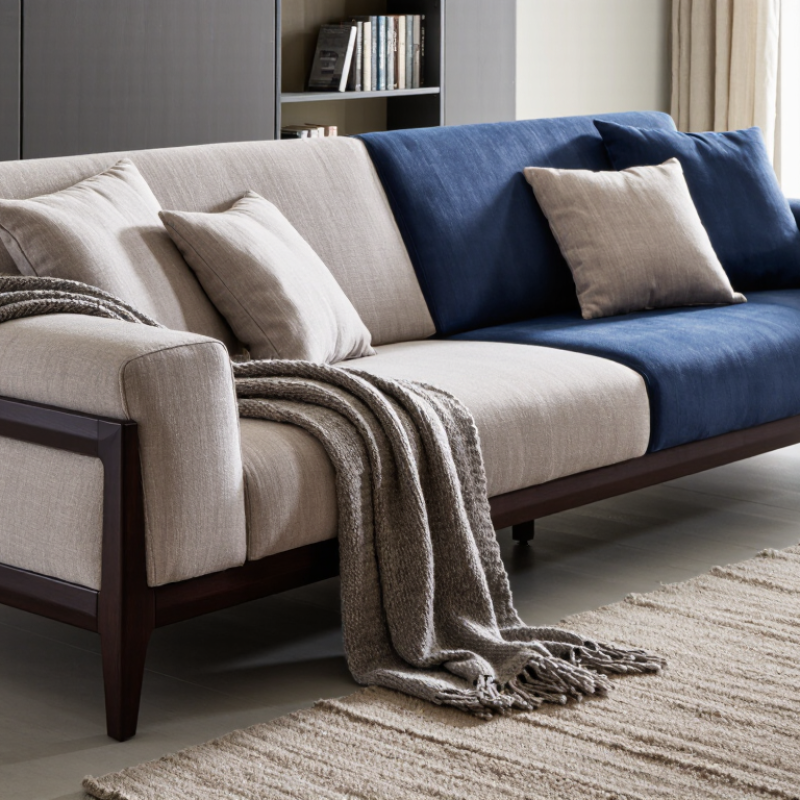
How to Choose Luxury Sofa Fabric?

Understanding the Key Qualities of Luxury Sofa Fabrics

How to Choose Luxury Sofa Fabric?

Understanding the Key Qualities of Luxury Sofa Fabrics

Luxury sofa fabric should feel refined, but appearance is only one part of quality. I examine the fiber, weave, weight, and surface finish before judging its value. A tightly woven fabric usually resists snagging better than a loose, decorative weave. It should also feel balanced, not excessively stiff or slippery.

Comfort matters every day. Natural fibers can offer breathability and a warmer, softer hand. Performance blends may provide stronger stain resistance and easier cleaning. Check the fabric’s abrasion rating, but do not treat one number as absolute proof. Testing methods differ, and real household use can be less predictable.

Lightfastness deserves attention near large windows. Weak color stability may cause uneven fading on exposed cushions. Ask for cleaning instructions before purchasing. Some fabrics tolerate gentle water-based cleaning, while others require professional care. A hidden sample test can reveal shrinkage, color bleeding, or texture changes.

Touch the sample slowly.

I once favored a beautifully textured fabric without checking its maintenance needs. It looked impressive in the showroom, yet its raised surface caught crumbs and showed pressure marks. That mistake changed how I assess luxury materials. Fabric should suit the room’s light, seating habits, pets, and cleaning routine. A perfect-looking sample may be the wrong choice for daily life.

Comparing Natural, Synthetic, and Blended Fabric Options

How to Choose Luxury Sofa Fabric?

Natural fabrics offer tactile richness and visual depth. Linen feels cool, dry, and slightly irregular under the hand. Wool provides warmth, resilience, and strong recovery after pressure. Cotton feels familiar, but it can crease and absorb stains quickly. Silk looks exceptional, yet it is usually too delicate for heavily used seating. The Textile Exchange Materials Market Report 2024 recorded global fiber production at about 124 million tonnes in 2023. Polyester represented 57%, while cotton accounted for 19%. These figures show why synthetic fibers dominate practical upholstery.

Synthetic fabrics are often easier to maintain. High-quality polyester can resist fading, abrasion, and everyday spills. Solution-dyed acrylic performs well in bright rooms, although it may feel less natural. Polyurethane-based performance textiles can imitate suede, but surface peeling remains a concern over time. Do not trust touch alone. Check the fabric’s abrasion, colorfastness, seam-slippage, and cleaning results under the Association for Contract Textiles’ performance guidelines. Laboratory numbers help, but they cannot fully predict a busy household.

Blended fabrics can balance luxury and durability. A linen-polyester blend may preserve linen’s texture while reducing wrinkles and shrinkage. Wool-polyamide blends can improve recovery around seat cushions. The compromise is real. Blends may be harder to recycle, and their exact performance depends on fiber ratios and weaving. Request a large sample. Sit on it. Spill water, brush the surface, and inspect it in daylight. I once preferred a flawless sample, then rejected it after noticing how quickly the weave caught on a ring. Sofa fabric should survive real habits, not just showroom lighting.

Matching Fabric Performance to Your Lifestyle and Room Use

How to Choose Luxury Sofa Fabric?

Luxury fabric should match your daily habits, not only your showroom preference. A formal living room may suit silk blends, brushed wool, or delicate linen. A family sofa needs stronger resistance to abrasion, spills, and repeated sitting. ACT Upholstery Performance Guidelines list 15,000 double rubs for general residential upholstery and 30,000 for high-traffic use. These figures are useful benchmarks, not lifetime promises. Test methods differ, and higher numbers do not always mean better comfort.

Think about the room in real detail. Will children eat crackers on the sofa? Will a dog sleep beside the armrest? Choose tightly woven fabrics for active spaces, because loose loops can catch claws. Performance velvet can provide softness with a dense surface, while treated linen may simplify cleaning. Ask for the exact cleaning code and laboratory test method. Martindale and Wyzenbeek results should not be compared directly, according to ACT guidance.

Sun exposure also matters. AATCC TM16.3 evaluates textile colorfastness to light, helping professionals assess fading risk. Place sensitive fabrics away from south-facing windows, or add lined curtains. I would not trust a high abrasion score alone. That shortcut fails. I once favored a beautiful pale weave, then noticed every crease and mark within days. Fabric samples should be tested at home, under your lighting, beside your flooring. Luxury is not just appearance. It is performance that remains believable after real use.

How to Choose Luxury Sofa Fabric?

Matching Fabric Performance to Your Lifestyle and Room Use

The chart compares common upholstery fabric types using indicative performance scores from 1 to 5. Higher scores represent better typical performance. Performance polyester is generally suitable for high-use family rooms, while velvet and linen blends are often chosen for comfort, appearance, and lower-traffic formal spaces.

Actual results vary with fiber quality, weave density, fabric finish, cleaning method, and laboratory testing. Always check the supplier’s abrasion, stain-resistance, and care specifications before purchase.

Evaluating Color, Texture, Pattern, and Interior Design Compatibility

Luxury sofa fabric should look beautiful, but it must also support the room’s daily rhythm. From upholstery consultations, I have found that color changes dramatically under morning, evening, and artificial light. A warm ivory can appear yellow beside cream walls. Test large swatches near windows, flooring, and curtains. Small samples can mislead.

Texture gives a sofa its visual weight. Bouclé feels soft and sculptural, while velvet reflects light and creates deeper color. Woven linen blends often appear relaxed, though they may show wrinkles more clearly. Consider touch, cleaning habits, and seating frequency before choosing. A fabric that feels luxurious in a showroom may become impractical with children, pets, or frequent entertaining.

Patterns need careful scale. A quiet room can accept a geometric weave or botanical motif, while an already decorated space may need a restrained texture. Match the fabric’s character with the interior style, not just its color. Smooth surfaces suit refined, contemporary rooms; visible fibers support warmer, collected interiors. I once favored a dramatic patterned sample, but it overwhelmed the room after installation. That mistake taught me to view fabric beside every major finish. Check seam placement, pile direction, and how the design bends across cushions. The final decision should feel considered, not merely expensive.


Checking Maintenance Needs, Durability, and Long-Term Value

Choosing luxury sofa fabric requires more than admiring its color under showroom lighting. Maintenance needs shape daily comfort and long-term value. Ask how the fabric reacts to spills, sunlight, pets, and frequent sitting. A removable cover can simplify cleaning, but seams may still need professional care. Always check the manufacturer’s cleaning code before using water or solvents.

Durability depends on fiber, weave, and construction. Tightly woven wool blends often resist everyday wear, while delicate velvet may show pressure marks more easily. Abrasion ratings can help, but they do not predict every home’s experience. A fabric may perform well in testing yet struggle beside a bright window. Not always.

I once preferred a pale linen texture because it looked relaxed and expensive. I underestimated how quickly it revealed fingerprints and drink marks. That mistake changed how I assess upholstery. Request a fabric sample and place it near your sofa’s intended location for several days. Sit on it, brush it, and test a hidden area with approved care methods. Consider whether the material can be repaired, recolored, or reupholstered later. A slightly less dramatic fabric may preserve its appearance longer. That can protect both comfort and investment.

Powder Coat Booths

For those larger-sized parts, or smaller quantity runs, we have 2 independent powder coat booths and ovens. The quality, durability and affordability of today’s powder coating finishes make this the process of choice for world-class companies.

Powder coating advantages over other forms of coating are many. Materials used in the Powder coating process can be metals and non-metals that come in a multitude of thicknesses, textures, colors, etc. Another of Powder coating’s biggest advantages over conventional coatings is its ability to create finishes in many different textures. Powder Coating Booths allow us the ability to apply these advantages to large products.

Wet Paint Line

Tri-State Fabricators runs a full-service conveyor line for painting. Wet painting can provide protection or decoration to many different part styles. From start to finish, every project is easier to undergo random and point-based inspection by our skilled painting team.

Advantages to our Wet Paint Line are these lines start with product prep and ends with a thorough inspection of a high quality finished product. Our ability to complete large and small projects with a superior finish and doing so in a timely and economical fashion. This passes along the savings in production to our customers. When powder coating ins not an option, our Wet Paint Line gets the job done right the first time.

Wet Paint Booths

When the parts get big and heavy we roll-out our custom paint racks and oversize booth. By utilizing our partnerships with all the major paint brands, we can match virtually any color with wet paint.

The advantages of having access to a Wet Paint Booth are many. Large projects of many different shapes can be loaded into the booth. The Wet Paint Booth offers an environment that is much more controlled than a typical parts painting operation.

Not only are they used because of their controlled environment, but they’re are also advantageous when it comes to applying paint to parts that are needed in industries that require specialty coatings such as medical, aerospace, etc.

Military CARC

Our military forces have some very high standards when it comes to the finish of their vehicles and equipment. From the first pre-treatment step to final coat, it takes a great deal of knowledge and experience to protect the men and women of our armed forces. They deserve only the best, and Tri-State Fabricators provides it.

All of our processes are closely monitored by our staff and management teams. Both of which are highly trained in the processes of metal fabrication and finishing. Tri-State Fabricators’ goal is to always fully satisfy each and every customer, including the military. We will always put a 110% into what we do.

Glass-Bead Blasting

Abrasive media blasting is an excellent way to remove old paint, rust, and increase the paint/powder adhesion. Glass beads produce a much smoother and brighter finish than angular abrasives; leaving the part clean yet without any dimensional change. Chemically inert and environmentally friendly, we can recycle our beads approximately 30 times; making them a more preferred method of metal cleaning or surface finishing.

Advantages to Glass Bead Blasting are many. Glass bead blast media is used when a project is needing rough surfaces need to become smooth for applications of coatings such as paint. It is typically used to clean paint and rust from a product surface without deforming the surface it is being used on. Overall, compared to many other blasting media, Glass Bead Blasting is a very economical choice and those savings are always passed on to our customers.

Part Washing

Tri-State Fabricators utilize a zinc phosphate wash to clean and etch the material to ensure the best paint adhesion possible. The unique design of our 3-stage wash system does the work like a 5-stage. From Cleaning and rinsing to conversion coating and post-treatment, Our Part Washing process is a complete service and works throughout the fabrication service and the finishing service.

Along with the previously mentioned benefits, Curing is a vital chemical reaction that leaves the product finish hard and relatively safe from mild abrasion and aggressive corrosion. This process can be done in more than one way; ambient air-dry or in curing ovens at temps that exceed 240°.

Burn-Off Oven

From fixing paint mistakes (someone else’s of course) to simply cleaning our paint line hooks, our burn-off oven is put to good use. After a quick burn-off, a little clean up, and a fresh coat of paint, your parts will look better than new.

Why does our Burn-Off Oven work so well? Because super heating the air around parts turns the materials into ashes. From paint and powder coatings to rubber and machining oils, high temps do the job without degrading the integrity of the part.

Masking

Masking is a vital part of producing high quality products. We have die-cut masking patterns to protect machined surfaces as well as a wide range of plugs and caps to protect threaded holes and bolts. We provide permanent and temporary masking.

Masking allows the selected sections of a product to be protected from a fabrication or finishing service. This can be with both chemicals when etching and tapes, paints when only finishing just a section of the product. Masking is great in aiding the customization process of a project.

Screen Printing

Screen printing is a photographic process that transfers artwork onto a porous nylon screen which allows colored ink to flow through the screen and be deposited on an aluminum or plastic component. We can generally have just about any design created onto a screen for your parts.

Some of the advantages of Screen Printing are, brand recognition for your business displaying on your products, assembly instructions, product warnings/hazards, etc. Tri-State Fabricators produces Screen Printing of the highest quality so you know it’s durable.

Metal Finishing

Metal Finishing is the art of treating the exterior portion of product, often metal but can also be made of other materials, so that the surface is clean and free of any debris. Then the process of applying coats or either paint of powder coat takes place. This coating process improves the quality of the product in both appearance and resistance to wear and corrosion.

Tri-State Fabricators, Inc., understands that a project typically isn’t complete until a high-quality finish has been added to your product. This is why our painting and powder coating teams continuously inspect the products throughout the Metal Finishing process.



