How to Choose the Right Laser Parts for Your Machine?
Choosing the right Laser Parts begins with the machine’s actual working conditions, not a product photograph. Theodore Maiman, widely recognized as the laser’s inventor, once said, “The laser is a solution seeking a problem.” His observation remains useful today. A powerful component can still perform poorly when its wavelength, beam profile, or cooling method does not match the system.
This guide explains how to evaluate Laser Parts with practical judgment. Check the laser source, focusing lens, mirrors, nozzles, protective windows, sensors, cables, and cooling components together. Confirm wavelength compatibility first. Then compare power rating, pulse duration, connector type, mounting dimensions, airflow, and operating temperature. Small mismatches can create scattered beams, unstable cuts, overheated optics, or repeated downtime.
Specifications matter more than appearance. A clean lens may still transmit the wrong wavelength. A low-cost nozzle may fit physically but disturb gas flow. Experienced technicians verify manufacturer datasheets, machine manuals, service records, and replacement intervals before ordering. They also check whether the part is original, approved, or technically equivalent.
Mistakes happen.
Even qualified teams sometimes choose by price alone. That shortcut can become expensive. A thoughtful selection considers the material being processed, production speed, duty cycle, maintenance access, and future availability. It also leaves room for uncertainty. Some machines have undocumented modifications, worn mounts, or calibration issues. Therefore, test-fit critical Laser Parts carefully, record performance changes, and consult a qualified supplier when specifications conflict. The best choice is not always the strongest part. It is the part that works reliably within the entire machine.
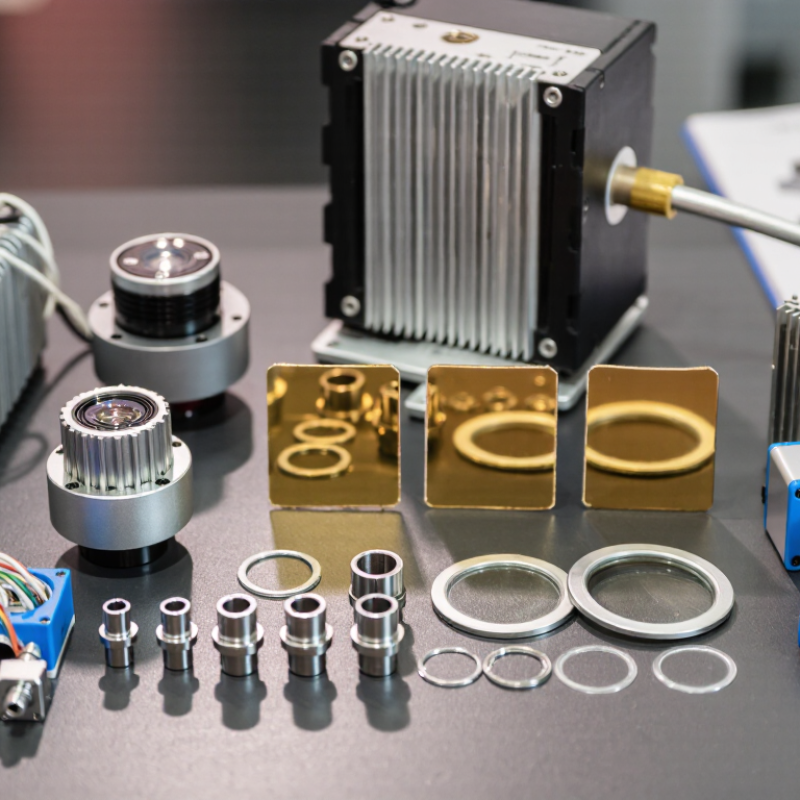
Define Your Machine’s Laser Type and Operating Requirements
How to Choose the Right Laser Parts for Your Machine?
Define your machine’s laser type before selecting replacement parts. A CO2 system usually requires infrared-compatible lenses, mirrors, and beam delivery components. Fiber systems need different optical interfaces, protective windows, and focusing assemblies. Diode machines often use compact modules with simpler beam paths. The wrong wavelength can damage an optic within seconds.
Measure the operating requirements carefully. Record laser power, pulse duration, duty cycle, focal length, beam diameter, and cooling method. Check the part’s wavelength range and maximum power rating, not only its physical size. A lens may fit the holder but still produce blurred edges or uneven cuts. Nozzle height also matters. Small changes can affect airflow, kerf width, and surface quality.
I once selected a focusing lens by diameter alone. It installed correctly, but the working distance was wrong. That mistake caused wasted material and unnecessary adjustments. Now I compare machine drawings, optical data, connector dimensions, and thermal limits before ordering. I also inspect scratches, contamination, and coating damage during routine maintenance. Keep records of alignment results and replacement dates. They make troubleshooting more reliable. Still, specifications do not replace testing. Real performance can change with humidity, vibration, material thickness, and aging power components. Check one variable at a time. Safety interlocks, shielding, and approved operating procedures must remain functional during every test.
Match Core Laser Parts to Power, Wavelength, and Compatibility Needs
How to Choose the Right Laser Parts for Your Machine?
Match Core Laser Parts to Power, Wavelength, and Compatibility Needs
Choosing laser parts begins with the machine’s power and wavelength. A high-power system needs optics with suitable damage thresholds. Low-power components may cloud, crack, or distort the beam. Wavelength matters just as much. A lens designed for 10.6-micrometer radiation will not perform correctly with a near-infrared beam. Check the material coating, focal length, and transmission range before ordering.
Compatibility is more than matching thread size. Inspect the lens holder, mirror mount, nozzle, cooling path, and electrical connectors. Measure them carefully. A difference of one millimeter can create vibration or poor alignment. The controller and power supply must also communicate correctly with replacement parts. Read the machine manual, wiring diagram, and component specifications together. Never rely on a product photograph alone.
In practical maintenance, I once assumed that a similar-looking nozzle would fit. That shortcut was wrong. The opening was slightly different, and cutting quality changed around the edges. Small details matter. Compare beam diameter, focal position, airflow requirements, and mounting dimensions. Keep test records after installation, including power settings and visible beam behavior. If results seem inconsistent, stop and inspect alignment before increasing power. Specifications guide the decision, but real machine testing confirms it. I still leave room for doubt, because aging optics and contamination can change performance unexpectedly.
Evaluate Optics, Motion Components, and Control System Specifications
How to Choose the Right Laser Parts for Your Machine?
Choosing laser parts requires more than matching product dimensions. Start with the laser wavelength, output power, and working distance. Optics must support these values without excessive heating or distortion. Check focal length, lens material, coating range, aperture, and damage threshold. A slightly wrong lens can enlarge the kerf and leave rough edges. Do not trust appearance alone. Measure the beam profile when possible, and inspect the optical path for dust, scratches, or loose mounts.
Motion components directly affect accuracy and repeatability. Compare travel length, positioning accuracy, repeatability, acceleration, payload, and expected duty cycle. Examine backlash in screws, belt tension, and encoder resolution. A strong motor cannot correct poor mechanical alignment. During testing, record corner accuracy, vibration, and stopping behavior at different speeds. I have seen a machine perform well on straight cuts but fail on small circles. That result usually reveals a motion problem.
The control system must communicate clearly with every major component. Verify input and output types, response time, feedback support, emergency stopping, and software compatibility. Control settings should match the motion profile and laser response time. Keep wiring separated from sensitive signal lines to reduce electrical noise. Test interlocks before regular operation. I sometimes focus too much on peak speed, although stable timing matters more in production. Review the supplier’s technical data, request tolerance details, and keep test records. Vague specifications deserve careful questions.
Compare Part Quality, Lifespan, Safety Features, and Maintenance Needs
How to Choose the Right Laser Parts for Your Machine?
Choosing laser parts is not only a price comparison. In practical workshops, part quality often appears in small details, such as clean threads, stable connectors, and accurately finished mounting surfaces. A well-made lens holder should fit without force. Poor alignment can create uneven cuts, excess heat, and repeated rework.
Lifespan depends on more than advertised operating hours. Check the part’s materials, duty cycle, cooling requirements, and resistance to dust or vibration. A mirror may last longer in a clean, temperature-controlled enclosure. It may fail sooner beside an unfiltered cooling fan. I once replaced a seemingly sound component after ignoring its heat history. That mistake was avoidable.
Safety features deserve direct inspection. Look for compatible interlocks, protective shielding, thermal monitoring, and clearly rated optical surfaces. Confirm that connectors match the machine’s voltage and signal requirements. Never assume a replacement part is safe because it physically fits. Maintenance needs should also be realistic. Inspect seals, cables, fasteners, and optical surfaces at scheduled intervals. Keep a simple service log with dates, operating hours, and unusual sounds or temperature changes. Use approved cleaning methods, not improvised solvents. Small habits matter.
Documentation is another quality signal. Reliable suppliers should provide specifications, test information, installation guidance, and traceable part details. Some documents can still be incomplete. Question unclear tolerances and unsupported lifespan claims before ordering.





