How to Choose the Right Fuel Pump in 2026?

Choosing the right Fuel Pump in 2026 starts with the vehicle, not the product photo. A pump that looks identical may use a different connector, pressure range, or mounting arrangement. Check the VIN, engine code, fuel type, and original equipment specifications before comparing listings. Then confirm required flow and pressure against reliable service data, not a seller’s broad “fits most” claim. Small details matter. A weak pump can cause hard starting, hesitation, or loss of power, but those symptoms can also point elsewhere. Battery voltage, wiring, filters, and pressure regulation deserve inspection too.

This guide explains how to match pump type and capacity to a stock or modified engine without buying more than needed. It covers in-tank and external designs, module replacement, electrical compatibility, and fuel quality. For a daily driver, dependable cold starts and stable pressure matter more than an impressive flow number. For a performance build, changes to injectors or engine output can alter pump requirements; estimates should be checked against measured demand and manufacturer guidance. A larger pump is not automatically safer. It may add cost, noise, or electrical load, and it cannot fix a restriction elsewhere. Installation quality counts: clean connections, correct seals, and careful handling help prevent avoidable faults. Specifications vary by model year and market, so verify the exact application. Catalog data can be incomplete, and even a careful match deserves a final check against the service manual. The right choice may be less obvious than a listing suggests. A few minutes with the right records can spare repeated repairs.
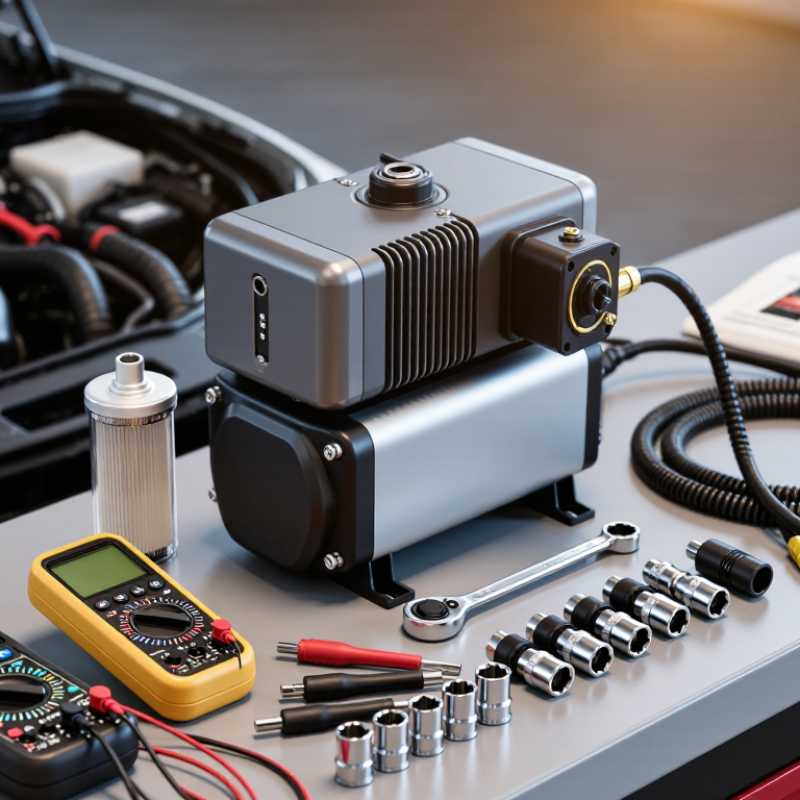
How to Choose the Right Fuel Pump in 2026?

Identify Your Vehicle’s Fuel System and Fuel Pump Type

How to Choose the Right Fuel Pump in 2026?

Identify Your Vehicle’s Fuel System and Fuel Pump Type

Before comparing pumps, identify how your engine delivers fuel. Check the owner’s manual, under-hood emissions label, or service information using the vehicle’s year, model, engine, and VIN. Trim alone may not identify the correct setup.

Many gasoline vehicles use an electric pump inside the tank. Port-injected engines typically need lower pressure than direct-injection systems, which may use an in-tank supply pump and a separate engine-driven high-pressure pump. Diesel vehicles can use lift pumps and high-pressure common-rail equipment. The names sound similar. Their jobs differ. Don’t substitute one type for another.

Confirm the pump’s location and whether you need a bare pump or a complete module with a sender, strainer, and wiring. Compare pressure, flow, connector, and fuel compatibility with reliable service data, not a visual guess. If diagnosing, note whether the engine cranks, starts briefly, or loses power under load. These clues help, but don’t prove the pump has failed. A weak relay, clogged filter, poor ground, or damaged wiring can cause similar symptoms.

Fuel systems may retain pressure after shutdown, so verify the service procedure before opening a line. It’s easy to overlook this: a pump may fit the tank yet deliver the wrong pressure. Double-check the specifications.

Determine the Required Pressure, Flow Rate, and Fuel Compatibility

How to Choose the Right Fuel Pump in 2026?

Determine the Required Pressure, Flow Rate, and Fuel Compatibility

Size the pump for the engine’s actual fuel demand, not its advertised free-flow figure. A pump may deliver less fuel when working against higher pressure or lower voltage. Check its flow curve at your engine’s required pressure and electrical supply. For a rough gasoline estimate, divide horsepower multiplied by brake-specific fuel consumption by about 6.1 pounds per gallon. A 500-horsepower engine at 0.55 lb/hp-hour needs roughly 45 gallons per hour before adding a sensible reserve. The estimate is only a starting point; verify injector demand and regulator setup.

Fuel compatibility matters just as much. The U.S. Department of Energy’s Alternative Fuels Data Center defines E10 as 10% ethanol by volume. Confirm that the pump, seals, and connecting hose are rated for the fuel blend you use; SAE J30 covers performance requirements for fuel and oil hoses. Do not assume a part suits every blend. Small details count, like a softened seal or a restricted filter.

Tips: Record the required rail pressure, fuel blend, and pump voltage before comparing models. Then check flow at that pressure—not at zero restriction. Recheck the system under load; a tidy bench test can still miss a wiring voltage drop.

Compare Pump Designs, Materials, and Installation Requirements

Choosing a fuel pump starts with matching its design to the vehicle’s fuel system. An in-tank electric pump is common in modern vehicles and may run more quietly because fuel surrounds it. An inline pump can be easier to reach, but its location and mounting must suit the system. Older mechanical pumps serve some engines; they are not interchangeable with electric designs. Check the required pressure and flow rate, not just the connector shape. Fit matters.

Materials affect durability. Corrosion-resistant metal housings can help where moisture or road spray is a concern, while compatible plastics may reduce weight. More important, seals and hoses must tolerate the specified fuel and operating temperature. A pump with impressive flow figures can still perform poorly if its pressure does not match the engine’s needs. Bigger is not always better.

Installation details deserve equal attention. Compare inlet and outlet sizes, electrical connectors, mounting points, and the pump’s orientation before buying. A mismatched connector may invite improvised wiring; that is a poor shortcut. Relieve fuel-system pressure and disconnect power as directed by the service manual. Replace clogged filters when the procedure calls for it, inspect the tank for debris, and use suitable seals. I would not assume a new pump fixes every starting problem; restricted wiring or a failing relay can mimic pump trouble. Check the system, then verify for leaks after installation.

Verify Vehicle Fitment and Electrical Specifications

A fuel pump can look right and still be electrically wrong. Match the vehicle’s year, engine, trim, and fuel-tank configuration, then confirm the part number against reliable service information. Two versions of the same model may use different assemblies. Check whether you need a complete module or only the pump.

Compare connector shape, pin count, terminal layout, and specified voltage. A matching plug is not proof. Some vehicles control pump speed electronically, so check the wiring diagram for pulse-width control, polarity, and current requirements. Confirm pressure and flow specifications too; an electrical match alone cannot guarantee correct operation. Don’t guess.

Before installation, inspect the vehicle-side connector for heat damage, corrosion, or loose terminals. A new pump may perform poorly if the wiring or ground is weak. I have seen listings describe fitment broadly, while small engine or production-date differences mattered. That uncertainty is worth checking against the vehicle identification details and service manual. If measurements or wiring diagrams are unclear, pause and ask a qualified technician rather than adapting connections.

Assess Reliability, Warranty, and Long-Term Operating Costs

How to Choose the Right Fuel Pump in 2026?

A fuel pump is easy to judge by its price tag. That can be misleading. A low-cost unit may require another repair sooner, while a higher purchase price does not guarantee longer service. Check that the pump matches your vehicle’s engine and fuel system, then compare documented testing, materials, and warranty terms. Look for clear coverage periods and exclusions. Does the warranty include labor, or only the replacement part? A pump can fail quickly, but installation costs may make a second repair especially painful.

Long-term cost includes the part, installation, and the risk of repeat work. AAA’s 2024 Your Driving Costs report estimates maintenance, repair, and tire expenses at 10.13 cents per mile for new vehicles. That is a broad ownership benchmark, not a fuel-pump failure rate. Still, it helps show why one repair bill should not define “affordable.” Not just price. Compare written quotes, and ask whether diagnosis, tank access, and related seals are included.

Before buying, ask a qualified technician how the pump was tested and what could void its warranty. Keep the receipt and installation record; warranty claims often depend on them. A long warranty sounds reassuring, but read its conditions carefully. I would also weigh parts availability and service access, especially if the vehicle is older. The comparison is imperfect: public cost reports rarely isolate fuel-pump performance. Be cautious with claims that promise a specific lifespan without supporting test data.


Powder Coat Booths

For those larger-sized parts, or smaller quantity runs, we have 2 independent powder coat booths and ovens. The quality, durability and affordability of today’s powder coating finishes make this the process of choice for world-class companies.

Powder coating advantages over other forms of coating are many. Materials used in the Powder coating process can be metals and non-metals that come in a multitude of thicknesses, textures, colors, etc. Another of Powder coating’s biggest advantages over conventional coatings is its ability to create finishes in many different textures. Powder Coating Booths allow us the ability to apply these advantages to large products.

Wet Paint Line

Tri-State Fabricators runs a full-service conveyor line for painting. Wet painting can provide protection or decoration to many different part styles. From start to finish, every project is easier to undergo random and point-based inspection by our skilled painting team.

Advantages to our Wet Paint Line are these lines start with product prep and ends with a thorough inspection of a high quality finished product. Our ability to complete large and small projects with a superior finish and doing so in a timely and economical fashion. This passes along the savings in production to our customers. When powder coating ins not an option, our Wet Paint Line gets the job done right the first time.

Wet Paint Booths

When the parts get big and heavy we roll-out our custom paint racks and oversize booth. By utilizing our partnerships with all the major paint brands, we can match virtually any color with wet paint.

The advantages of having access to a Wet Paint Booth are many. Large projects of many different shapes can be loaded into the booth. The Wet Paint Booth offers an environment that is much more controlled than a typical parts painting operation.

Not only are they used because of their controlled environment, but they’re are also advantageous when it comes to applying paint to parts that are needed in industries that require specialty coatings such as medical, aerospace, etc.

Military CARC

Our military forces have some very high standards when it comes to the finish of their vehicles and equipment. From the first pre-treatment step to final coat, it takes a great deal of knowledge and experience to protect the men and women of our armed forces. They deserve only the best, and Tri-State Fabricators provides it.

All of our processes are closely monitored by our staff and management teams. Both of which are highly trained in the processes of metal fabrication and finishing. Tri-State Fabricators’ goal is to always fully satisfy each and every customer, including the military. We will always put a 110% into what we do.

Glass-Bead Blasting

Abrasive media blasting is an excellent way to remove old paint, rust, and increase the paint/powder adhesion. Glass beads produce a much smoother and brighter finish than angular abrasives; leaving the part clean yet without any dimensional change. Chemically inert and environmentally friendly, we can recycle our beads approximately 30 times; making them a more preferred method of metal cleaning or surface finishing.

Advantages to Glass Bead Blasting are many. Glass bead blast media is used when a project is needing rough surfaces need to become smooth for applications of coatings such as paint. It is typically used to clean paint and rust from a product surface without deforming the surface it is being used on. Overall, compared to many other blasting media, Glass Bead Blasting is a very economical choice and those savings are always passed on to our customers.

Part Washing

Tri-State Fabricators utilize a zinc phosphate wash to clean and etch the material to ensure the best paint adhesion possible. The unique design of our 3-stage wash system does the work like a 5-stage. From Cleaning and rinsing to conversion coating and post-treatment, Our Part Washing process is a complete service and works throughout the fabrication service and the finishing service.

Along with the previously mentioned benefits, Curing is a vital chemical reaction that leaves the product finish hard and relatively safe from mild abrasion and aggressive corrosion. This process can be done in more than one way; ambient air-dry or in curing ovens at temps that exceed 240°.

Burn-Off Oven

From fixing paint mistakes (someone else’s of course) to simply cleaning our paint line hooks, our burn-off oven is put to good use. After a quick burn-off, a little clean up, and a fresh coat of paint, your parts will look better than new.

Why does our Burn-Off Oven work so well? Because super heating the air around parts turns the materials into ashes. From paint and powder coatings to rubber and machining oils, high temps do the job without degrading the integrity of the part.

Masking

Masking is a vital part of producing high quality products. We have die-cut masking patterns to protect machined surfaces as well as a wide range of plugs and caps to protect threaded holes and bolts. We provide permanent and temporary masking.

Masking allows the selected sections of a product to be protected from a fabrication or finishing service. This can be with both chemicals when etching and tapes, paints when only finishing just a section of the product. Masking is great in aiding the customization process of a project.

Screen Printing

Screen printing is a photographic process that transfers artwork onto a porous nylon screen which allows colored ink to flow through the screen and be deposited on an aluminum or plastic component. We can generally have just about any design created onto a screen for your parts.

Some of the advantages of Screen Printing are, brand recognition for your business displaying on your products, assembly instructions, product warnings/hazards, etc. Tri-State Fabricators produces Screen Printing of the highest quality so you know it’s durable.

Metal Finishing

Metal Finishing is the art of treating the exterior portion of product, often metal but can also be made of other materials, so that the surface is clean and free of any debris. Then the process of applying coats or either paint of powder coat takes place. This coating process improves the quality of the product in both appearance and resistance to wear and corrosion.

Tri-State Fabricators, Inc., understands that a project typically isn’t complete until a high-quality finish has been added to your product. This is why our painting and powder coating teams continuously inspect the products throughout the Metal Finishing process.



