


How to Choose the Right Foot Pedal Valve?

Selecting the right Foot Pedal Valve is a small decision with large operational consequences. A dusty workshop floor, wet gloves, or repeated machine cycling can expose a weak choice quickly. The valve must match pressure, flow, port size, actuation force, and the surrounding environment. It should also support safe, predictable control.

Industry research supports this careful approach. Grand View Research’s 2024 analysis of the pneumatic components market identifies manufacturing and process industries as major demand sectors. The report also highlights automation, reliability, and energy efficiency as continuing priorities. MarketsandMarkets’ pneumatic systems research points to growing adoption of compact control components in automated equipment. These findings do not make every forecast equally precise. Market categories often combine hand valves, pedal valves, and wider pneumatic assemblies. That limitation deserves attention.

Eric Lanke, president and CEO of the National Fluid Power Association, has said, “Fluid power is a technology, not just a component.” That perspective is useful here. A Foot Pedal Valve affects operator movement, machine response, maintenance time, and overall system safety. ISO 4414 also stresses that pneumatic systems should be designed, installed, and maintained with safety in mind. Therefore, this guide compares valve functions, materials, spring-return options, flow ratings, and installation details. It also considers real working conditions, not just catalogue specifications. The cheapest valve may fit today. It may fail tomorrow.
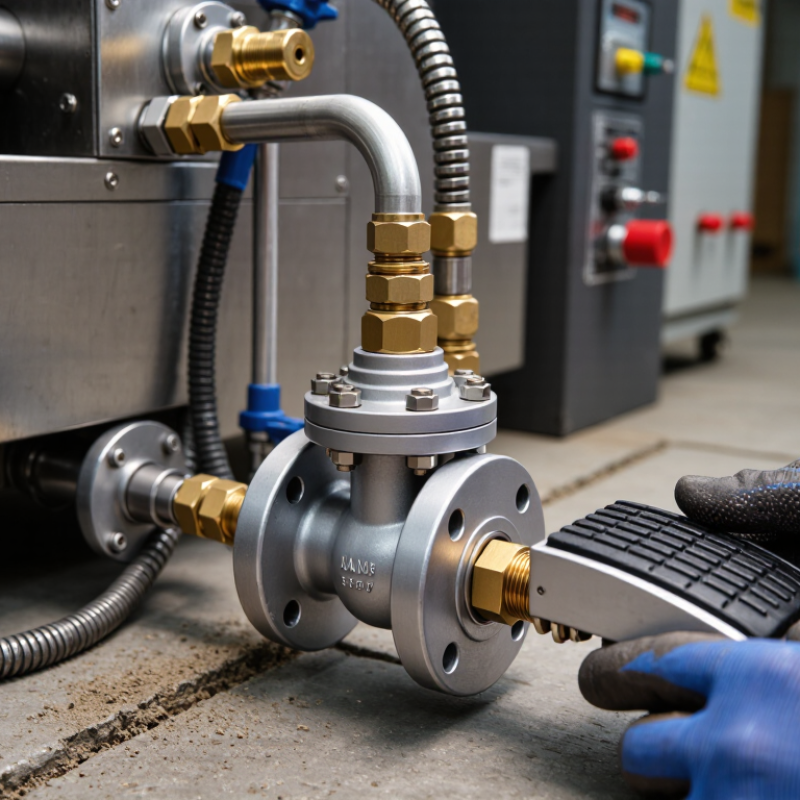
How to Choose the Right Foot Pedal Valve?

Define the Task and Choose 3/2, 5/2, or 4/3 Valve Operation

Choosing a foot pedal valve starts with the actuator, not the pedal shape. A 3/2 valve has three ports and two positions. It suits a single-acting cylinder, air signal, or simple clamp. Pressing the pedal can extend the cylinder. Releasing it can return the actuator through a spring or exhaust path.

A 5/2 valve has five ports and two positions. It controls a double-acting cylinder, sending air to extend and retract sides. Check the cylinder’s port arrangement before ordering. A neat pedal cannot fix incorrect plumbing.

The 4/3 valve has four ports and three positions. It is common in hydraulic circuits and needs careful center-position selection. The center may block flow, release pressure, or connect ports. That choice changes whether the actuator stops, drifts, or relaxes when the pedal returns.

For pneumatic systems, a 5/3 design is often more suitable, although a compatible 4/3 arrangement can work. The U.S. Department of Energy’s Compressed Air Sourcebook reports that compressed air may consume about 10% of industrial electricity. It also estimates that leaks can waste 20–30% of compressor output.

A leaking foot valve wastes energy quietly. Very quietly.

Inspect tubing, exhaust noise, pedal travel, and return force during a real cycle. ISO 4414 also emphasizes controlled exhaust and safe energy isolation in pneumatic systems. I would still test the center condition under load. Catalog diagrams sometimes look clearer than the machine itself.


Match Working Pressure, Flow Rate, and Cv to Cylinder Requirements

How to Choose the Right Foot Pedal Valve?

Match Working Pressure, Flow Rate, and Cv to Cylinder Requirements

Choosing a foot pedal valve starts with the cylinder, not the pedal shape. Confirm the system’s working pressure, then compare it with the valve’s rated range. A valve must tolerate normal pressure and brief operating changes. I check this during commissioning because catalog conditions rarely match a dusty workshop. Small details matter.

Flow rate controls cylinder speed. A cylinder moving slowly may need more airflow, while a small actuator can become unstable with excessive flow. Cv indicates the valve’s flow capacity under defined pressure conditions. Estimate the cylinder’s required air volume, stroke speed, and acceptable pressure drop. Then select a valve with enough Cv for consistent movement. Bigger is not always better. Oversizing can waste air and make motion harder to control.

Tips: Measure actual pressure at the valve inlet. Check both supply and exhaust paths. Confirm port size, tubing length, and fittings. These restrictions can reduce real flow significantly. I once selected a valve using only nominal Cv, and the cylinder stalled under load. The calculation looked correct, but the installation was not. Recheck performance with the cylinder loaded, not empty. Foot travel, return action, and operator comfort also deserve attention. A technically suitable valve can still perform poorly if its pedal requires awkward force or causes accidental actuation.

Select Port Size and Circuit Symbols According to ISO 1219

How to Choose the Right Foot Pedal Valve?

Selecting a foot pedal valve starts with its ISO 1219 circuit symbol, not its appearance. The symbol shows the valve’s function, flow paths, and normal position. A 3/2 symbol, for example, usually controls one single-acting actuator. A 5/2 symbol commonly controls a double-acting actuator. Count the ports carefully. It prevents costly installation errors.

Port size must match the required airflow, tubing, and operating speed. A larger port may reduce pressure loss, but it does not automatically improve performance. Check the valve’s rated flow, working pressure, connection thread, and fluid compatibility.

ISO 1219 helps explain the circuit, but it does not replace the manufacturer’s technical data. One detail is easy to miss: the symbol’s normal position may show the pedal released, not pressed. Misreading this position can reverse the expected machine response. That mistake is surprisingly common.

Tips:

Compare the circuit symbol with the actual port markings. Confirm inlet, outlet, and exhaust connections before assembly. Use a clear diagram at the workstation. If the symbol and product drawing seem inconsistent, stop and verify them. I have found that hurried selections often focus on port diameter alone. That approach feels practical, but it ignores control logic, return method, and real airflow demand. A short functional test at low pressure can reveal misunderstandings before full operation.

Verify Safety Functions and Emergency Release Under ISO 4414

How to Choose the Right Foot Pedal Valve?

A foot pedal valve should support safe control, not merely convenient operation. Under ISO 4414, assess stored pneumatic energy, unexpected movement, and safe exhaust during valve selection. The pedal should return reliably when released. Loss of air pressure must not create an uncontrolled stroke. A guarded pedal can also reduce accidental activation near the operator’s feet.

Emergency release needs practical testing. ISO 13850 treats emergency stop functions as risk-based protective measures, not simple accessories.

Therefore, do not assume every foot pedal is an emergency device. Check whether pressing the release position removes the control signal, vents hazardous pressure, and prevents automatic restart. Test this with the machine loaded, unloaded, cold, and after simulated hose failure. The result may differ from the catalogue description.

HSE’s 2023/24 workplace statistics recorded 604,000 non-fatal injuries and 138 worker deaths in Great Britain. These figures do not prove that foot pedals caused those incidents. They do show why small control details deserve serious review. Choose a valve with visible status, positive return action, and documented maintenance intervals. Confirm compatibility with the cylinder, pressure range, and cycle rate. Inspect heel-release travel and guards during commissioning. It is easy to overestimate a spring’s reliability. Dirt, wear, or poor adjustment can change the response. A competent risk assessment should verify the complete circuit, not just the pedal.

Check IP65 Protection, Temperature Range, and Corrosion Resistance

Choosing a foot pedal valve starts with its environment, not its catalog photograph. An IP65 rating means dust-tight protection and resistance to water jets under IEC 60529. It does not certify immersion, pressure washing, or chemical exposure. Test conditions matter. A pedal near a washdown station needs sealed joints, protected cable entries, and a cover that does not trap grit.

Temperature is equally practical. Compare the valve’s rated range with actual floor temperatures, cleaning cycles, and heat from nearby machinery. IEC 60068 environmental testing shows that temperature cycling can stress seals and connections, even when average temperature looks acceptable. Leave operating margin. A valve rated from -20°C to 60°C may still perform poorly when condensation repeatedly forms inside it. I once treated the published range as a guarantee; that was too optimistic.

Corrosion resistance deserves evidence, not adjectives. ISO 9223 classifies atmospheric corrosivity from C1 to CX, while ISO 9227 salt-spray testing helps compare materials and finishes. Salt-spray hours alone do not predict service life. That limitation is easy to overlook. The NACE IMPACT study estimated global corrosion costs at about US$2.5 trillion annually, roughly 3.4% of global GDP. In coastal, food-processing, or chemical areas, inspect fasteners, springs, and pedal hinges—not only the housing. Choose documented materials, replaceable seals, and test samples under real cleaning conditions.

Powder Coat Booths

For those larger-sized parts, or smaller quantity runs, we have 2 independent powder coat booths and ovens. The quality, durability and affordability of today’s powder coating finishes make this the process of choice for world-class companies.

Powder coating advantages over other forms of coating are many. Materials used in the Powder coating process can be metals and non-metals that come in a multitude of thicknesses, textures, colors, etc. Another of Powder coating’s biggest advantages over conventional coatings is its ability to create finishes in many different textures. Powder Coating Booths allow us the ability to apply these advantages to large products.

Wet Paint Line

Tri-State Fabricators runs a full-service conveyor line for painting. Wet painting can provide protection or decoration to many different part styles. From start to finish, every project is easier to undergo random and point-based inspection by our skilled painting team.

Advantages to our Wet Paint Line are these lines start with product prep and ends with a thorough inspection of a high quality finished product. Our ability to complete large and small projects with a superior finish and doing so in a timely and economical fashion. This passes along the savings in production to our customers. When powder coating ins not an option, our Wet Paint Line gets the job done right the first time.

Wet Paint Booths

When the parts get big and heavy we roll-out our custom paint racks and oversize booth. By utilizing our partnerships with all the major paint brands, we can match virtually any color with wet paint.

The advantages of having access to a Wet Paint Booth are many. Large projects of many different shapes can be loaded into the booth. The Wet Paint Booth offers an environment that is much more controlled than a typical parts painting operation.

Not only are they used because of their controlled environment, but they’re are also advantageous when it comes to applying paint to parts that are needed in industries that require specialty coatings such as medical, aerospace, etc.

Military CARC

Our military forces have some very high standards when it comes to the finish of their vehicles and equipment. From the first pre-treatment step to final coat, it takes a great deal of knowledge and experience to protect the men and women of our armed forces. They deserve only the best, and Tri-State Fabricators provides it.

All of our processes are closely monitored by our staff and management teams. Both of which are highly trained in the processes of metal fabrication and finishing. Tri-State Fabricators’ goal is to always fully satisfy each and every customer, including the military. We will always put a 110% into what we do.

Glass-Bead Blasting

Abrasive media blasting is an excellent way to remove old paint, rust, and increase the paint/powder adhesion. Glass beads produce a much smoother and brighter finish than angular abrasives; leaving the part clean yet without any dimensional change. Chemically inert and environmentally friendly, we can recycle our beads approximately 30 times; making them a more preferred method of metal cleaning or surface finishing.

Advantages to Glass Bead Blasting are many. Glass bead blast media is used when a project is needing rough surfaces need to become smooth for applications of coatings such as paint. It is typically used to clean paint and rust from a product surface without deforming the surface it is being used on. Overall, compared to many other blasting media, Glass Bead Blasting is a very economical choice and those savings are always passed on to our customers.

Part Washing

Tri-State Fabricators utilize a zinc phosphate wash to clean and etch the material to ensure the best paint adhesion possible. The unique design of our 3-stage wash system does the work like a 5-stage. From Cleaning and rinsing to conversion coating and post-treatment, Our Part Washing process is a complete service and works throughout the fabrication service and the finishing service.

Along with the previously mentioned benefits, Curing is a vital chemical reaction that leaves the product finish hard and relatively safe from mild abrasion and aggressive corrosion. This process can be done in more than one way; ambient air-dry or in curing ovens at temps that exceed 240°.

Burn-Off Oven

From fixing paint mistakes (someone else’s of course) to simply cleaning our paint line hooks, our burn-off oven is put to good use. After a quick burn-off, a little clean up, and a fresh coat of paint, your parts will look better than new.

Why does our Burn-Off Oven work so well? Because super heating the air around parts turns the materials into ashes. From paint and powder coatings to rubber and machining oils, high temps do the job without degrading the integrity of the part.

Masking

Masking is a vital part of producing high quality products. We have die-cut masking patterns to protect machined surfaces as well as a wide range of plugs and caps to protect threaded holes and bolts. We provide permanent and temporary masking.

Masking allows the selected sections of a product to be protected from a fabrication or finishing service. This can be with both chemicals when etching and tapes, paints when only finishing just a section of the product. Masking is great in aiding the customization process of a project.

Screen Printing

Screen printing is a photographic process that transfers artwork onto a porous nylon screen which allows colored ink to flow through the screen and be deposited on an aluminum or plastic component. We can generally have just about any design created onto a screen for your parts.

Some of the advantages of Screen Printing are, brand recognition for your business displaying on your products, assembly instructions, product warnings/hazards, etc. Tri-State Fabricators produces Screen Printing of the highest quality so you know it’s durable.

Metal Finishing

Metal Finishing is the art of treating the exterior portion of product, often metal but can also be made of other materials, so that the surface is clean and free of any debris. Then the process of applying coats or either paint of powder coat takes place. This coating process improves the quality of the product in both appearance and resistance to wear and corrosion.

Tri-State Fabricators, Inc., understands that a project typically isn’t complete until a high-quality finish has been added to your product. This is why our painting and powder coating teams continuously inspect the products throughout the Metal Finishing process.
