


2026 How to Choose the Right Drum Melter for Global Sourcing?

Choosing the right Drum Melter for global sourcing requires more than comparing prices and heating capacity. Different materials demand different melting temperatures, flow rates, drum sizes, and control methods. A unit designed for low-viscosity adhesives may perform poorly with asphalt, wax, resin, or high-density compounds.

The right decision begins with the material. Confirm its viscosity, softening range, thermal sensitivity, and required output. Then examine heating technology, insulation quality, pump design, temperature accuracy, and cleaning access. A reliable Drum Melter should provide stable heat without creating local hot spots. Those details matter on a busy production floor, where a blocked hose or unevenly heated drum can stop several operators at once.

Global sourcing adds another layer of responsibility. Buyers should verify supplier experience, factory quality systems, technical documentation, spare-part availability, and after-sales support. Electrical requirements, language settings, packaging strength, and delivery conditions also deserve attention. Certifications should be checked against the destination market and the equipment’s actual configuration.

There is no universal best model. Sometimes, buyers over-specify capacity and pay for unused features. In other cases, they select a low-cost machine that cannot maintain consistent temperature. That mistake is expensive. Practical trials, reference checks, and written performance requirements provide stronger evidence than attractive brochures. A careful comparison can reveal whether the machine is genuinely suitable, serviceable, and dependable for long-term international operations. The final choice should balance performance, safety, maintenance, total ownership cost, and supplier credibility. Hidden costs remain easy to miss.
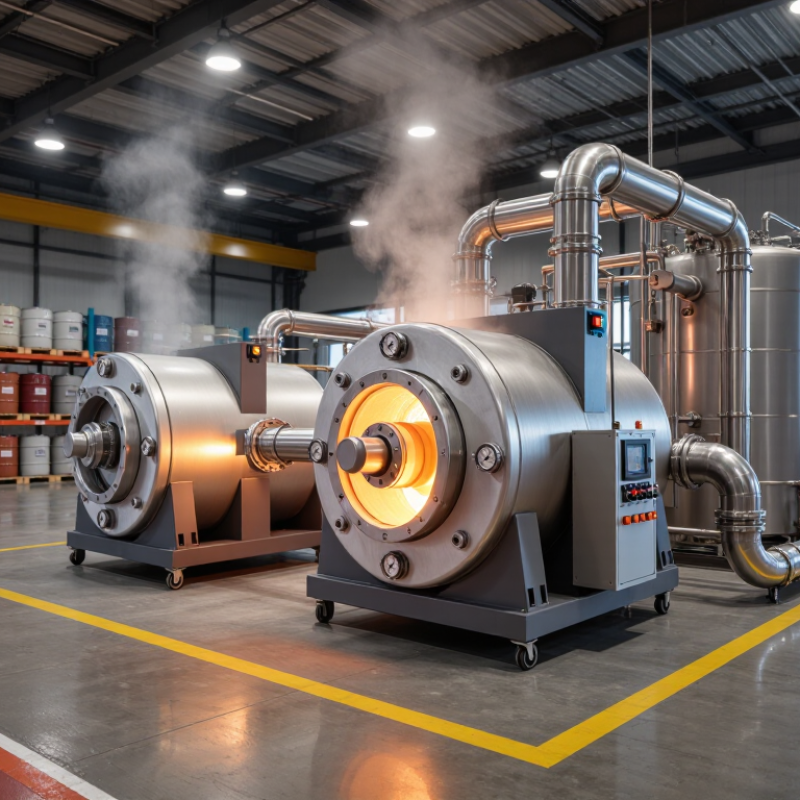
2026 How to Choose the Right Drum Melter for Global Sourcing?

Define Drum Melter Types, Functions, and Industrial Applications

Choosing a drum melter in 2026 requires more than comparing heating power. The equipment must match the material, drum size, production rhythm, and site conditions.

Electric band melters Electric systems suit controlled heating near processing lines.
Jacketed drum melters Jacketed units provide gentler, more even heat for sensitive compounds.
Hydraulic tilting models Hydraulic models help move heavy, fully melted materials with less manual handling.

That difference matters.

A drum melter usually performs three jobs: heating, melting, and transferring. Operators should check temperature range, heating uniformity, pump compatibility, and discharge speed.

Thick adhesives may need positive-displacement pumps. Low-viscosity oils may require simpler gravity drainage. Insulation reduces heat loss around the drum, while a clear temperature display improves process control.

I have found that a powerful heater is not always better.

Excessive heat can darken resins, damage packaging, or create uneven viscosity.

Industrial applications include hot-melt adhesives, wax processing, rubber compounds, asphalt materials, sealants, and selected food-grade ingredients.

Each application needs different contact materials and cleaning procedures. Global sourcing also requires checking voltage, drum dimensions, safety guarding, documentation, and local electrical requirements.

A machine designed for one region may need modification elsewhere. Do not overlook spare seals and heating elements. Small parts can delay production.

Operators should test a sample drum before ordering at scale. That step feels slow, but it often reveals problems that specifications hide.


Match Melting Capacity with Materials, Packaging, and Production Needs

Choosing a drum melter starts with material behavior, not catalog capacity. A viscous resin may need longer soak time than wax, even at the same temperature. Record melting temperature, viscosity, moisture sensitivity, and thermal degradation risk. Then calculate demand: required output equals batch mass divided by available melting time. Add practical headroom, usually 15–25%, but validate it with real drums. A cold 200-liter drum can disrupt production.

Packaging changes the equipment choice. Steel drums, fiber drums, pails, and lined containers transfer heat differently. Platen systems suit controlled contact heating, while jacketed chambers can handle varied container shapes. Check drum diameter, pallet access, liner compatibility, and residue removal.

The U.S. Department of Energy’s Industrial Decarbonization Roadmap highlights process heat as a major industrial energy challenge. The IEA’s Energy Efficiency 2023 report also states that industry used about 37% of global final energy in 2022. Efficient insulation and accurate temperature control therefore affect operating cost, not just comfort.

For global sourcing, specify electrical frequency, voltage, spare-part availability, and documentation before comparing prices. UNIDO’s Industrial Development Report 2024 places global manufacturing value added above 16 trillion U.S. dollars in 2022, showing why scalable equipment matters.

Still, a larger melter is not automatically better. Oversizing can increase warm-up losses and damage heat-sensitive materials. I would request a witnessed factory test using the actual material and packaging. It may reveal an uncomfortable gap between rated throughput and usable production.

Evaluate Heating Methods, Temperature Control, and Energy Efficiency

2026 How to Choose the Right Drum Melter for Global Sourcing?

Heating method affects heat-up time, surface safety, and operating cost. Electric band heaters provide direct contact around the drum. Heating plates transfer heat from the base and suit stable materials. Hot-air systems warm more evenly, but they can lose energy through circulation and leaks. DOE reports that process heating represents about 51% of manufacturing energy use, making thermal design a serious purchasing issue.

Temperature control deserves closer inspection. Ask for independent product and over-temperature sensors, not only a single controller. A PID system can reduce temperature swings, while insulated covers limit heat loss during long holding periods. Record both heat-up time and steady-state consumption. IEA’s Energy Efficiency 2023 report identifies industry as using nearly 40% of global final energy. Even small standby losses can become expensive across multiple sites.

Compare energy use in kWh per drum, not only installed power. Check voltage options, local electrical standards, spare-part access, and calibration procedures before global sourcing. A 10 kW unit may consume less than a 6 kW unit if it reaches temperature faster and cycles efficiently. That comparison is often missed.

Real performance also depends on drum material, fill level, ambient temperature, and operator habits. No catalog figure can fully predict these conditions.

References: U.S. Department of Energy, Industrial Decarbonization Roadmap, 2022; International Energy Agency, Energy Efficiency 2023.

Compare Safety Features, Automation, Maintenance, and Operating Costs

Choosing a drum melter for global sourcing requires more than comparing heating capacity. Safety should come first. Look for guarded heating zones, over-temperature cutoffs, grounded controls, and visible emergency stops. For flammable materials, verify ventilation and electrical classifications against local requirements. OSHA’s lockout/tagout standard, 29 CFR 1910.147, also supports safer cleaning and maintenance procedures.

Automation affects consistency and labor. A useful system records temperature, heating time, alarms, and batch settings. These records help operators identify slow heating or uneven melting before waste increases. Deloitte’s predictive maintenance research reports potential maintenance-cost reductions of 10–20%, although results vary by equipment and data quality. Simple sensors may outperform complex software when operators cannot maintain the system.

Operating cost includes electricity, labor, downtime, insulation quality, and replacement parts. The International Energy Agency reports that industry uses about 37% of global final energy, making thermal efficiency a practical sourcing concern. Compare insulated lids, adjustable power control, standby settings, and recovery time between batches. Ask for service intervals and spare-part availability in the destination country. A cheap melter can become expensive after one failed controller or delayed heating element. This is easy to underestimate. TCO calculations should use local energy prices, duty cycles, and technician rates, not catalogue assumptions. Performance claims need testing under your actual drum material, ambient temperature, and production schedule.

Verify Global Compliance, Supplier Reliability, Shipping, and After-Sales Support

2026 How to Choose the Right Drum Melter for Global Sourcing?
Verify Global Compliance, Supplier Reliability, Shipping, and After-Sales Support

A suitable drum melter must match the destination country’s safety requirements. Request current conformity documents, electrical test reports, and material specifications. Do not accept screenshots alone. Check whether the certificates identify the exact model, voltage, and production site. Requirements can differ between regions, even for similar equipment. A local compliance consultant may prevent an expensive mistake.

Supplier reliability needs evidence, not confident promises. Review factory records, quality procedures, inspection photos, and recent export experience. Ask for a pre-shipment test using your drum size and material. Watch the heating cycle, temperature stability, controls, and emergency shutdown. Small details matter. A delayed spare-part response may reveal more than a polished presentation. I have learned that price comparisons often ignore installation support and replacement components.

Shipping also deserves technical planning. Confirm crate dimensions, gross weight, lifting points, and moisture protection before booking freight. Discuss Incoterms clearly and inspect packaging instructions with the forwarder. For after-sales support, require manuals, wiring diagrams, spare-part lists, warranty terms, and response times. Remote video diagnosis can reduce downtime, but it cannot replace trained local service. That assumption needs testing. A pilot order, documented acceptance criteria, and regular supplier reviews create stronger protection than a single successful shipment.

Powder Coat Booths

For those larger-sized parts, or smaller quantity runs, we have 2 independent powder coat booths and ovens. The quality, durability and affordability of today’s powder coating finishes make this the process of choice for world-class companies.

Powder coating advantages over other forms of coating are many. Materials used in the Powder coating process can be metals and non-metals that come in a multitude of thicknesses, textures, colors, etc. Another of Powder coating’s biggest advantages over conventional coatings is its ability to create finishes in many different textures. Powder Coating Booths allow us the ability to apply these advantages to large products.

Wet Paint Line

Tri-State Fabricators runs a full-service conveyor line for painting. Wet painting can provide protection or decoration to many different part styles. From start to finish, every project is easier to undergo random and point-based inspection by our skilled painting team.

Advantages to our Wet Paint Line are these lines start with product prep and ends with a thorough inspection of a high quality finished product. Our ability to complete large and small projects with a superior finish and doing so in a timely and economical fashion. This passes along the savings in production to our customers. When powder coating ins not an option, our Wet Paint Line gets the job done right the first time.

Wet Paint Booths

When the parts get big and heavy we roll-out our custom paint racks and oversize booth. By utilizing our partnerships with all the major paint brands, we can match virtually any color with wet paint.

The advantages of having access to a Wet Paint Booth are many. Large projects of many different shapes can be loaded into the booth. The Wet Paint Booth offers an environment that is much more controlled than a typical parts painting operation.

Not only are they used because of their controlled environment, but they’re are also advantageous when it comes to applying paint to parts that are needed in industries that require specialty coatings such as medical, aerospace, etc.

Military CARC

Our military forces have some very high standards when it comes to the finish of their vehicles and equipment. From the first pre-treatment step to final coat, it takes a great deal of knowledge and experience to protect the men and women of our armed forces. They deserve only the best, and Tri-State Fabricators provides it.

All of our processes are closely monitored by our staff and management teams. Both of which are highly trained in the processes of metal fabrication and finishing. Tri-State Fabricators’ goal is to always fully satisfy each and every customer, including the military. We will always put a 110% into what we do.

Glass-Bead Blasting

Abrasive media blasting is an excellent way to remove old paint, rust, and increase the paint/powder adhesion. Glass beads produce a much smoother and brighter finish than angular abrasives; leaving the part clean yet without any dimensional change. Chemically inert and environmentally friendly, we can recycle our beads approximately 30 times; making them a more preferred method of metal cleaning or surface finishing.

Advantages to Glass Bead Blasting are many. Glass bead blast media is used when a project is needing rough surfaces need to become smooth for applications of coatings such as paint. It is typically used to clean paint and rust from a product surface without deforming the surface it is being used on. Overall, compared to many other blasting media, Glass Bead Blasting is a very economical choice and those savings are always passed on to our customers.

Part Washing

Tri-State Fabricators utilize a zinc phosphate wash to clean and etch the material to ensure the best paint adhesion possible. The unique design of our 3-stage wash system does the work like a 5-stage. From Cleaning and rinsing to conversion coating and post-treatment, Our Part Washing process is a complete service and works throughout the fabrication service and the finishing service.

Along with the previously mentioned benefits, Curing is a vital chemical reaction that leaves the product finish hard and relatively safe from mild abrasion and aggressive corrosion. This process can be done in more than one way; ambient air-dry or in curing ovens at temps that exceed 240°.

Burn-Off Oven

From fixing paint mistakes (someone else’s of course) to simply cleaning our paint line hooks, our burn-off oven is put to good use. After a quick burn-off, a little clean up, and a fresh coat of paint, your parts will look better than new.

Why does our Burn-Off Oven work so well? Because super heating the air around parts turns the materials into ashes. From paint and powder coatings to rubber and machining oils, high temps do the job without degrading the integrity of the part.

Masking

Masking is a vital part of producing high quality products. We have die-cut masking patterns to protect machined surfaces as well as a wide range of plugs and caps to protect threaded holes and bolts. We provide permanent and temporary masking.

Masking allows the selected sections of a product to be protected from a fabrication or finishing service. This can be with both chemicals when etching and tapes, paints when only finishing just a section of the product. Masking is great in aiding the customization process of a project.

Screen Printing

Screen printing is a photographic process that transfers artwork onto a porous nylon screen which allows colored ink to flow through the screen and be deposited on an aluminum or plastic component. We can generally have just about any design created onto a screen for your parts.

Some of the advantages of Screen Printing are, brand recognition for your business displaying on your products, assembly instructions, product warnings/hazards, etc. Tri-State Fabricators produces Screen Printing of the highest quality so you know it’s durable.

Metal Finishing

Metal Finishing is the art of treating the exterior portion of product, often metal but can also be made of other materials, so that the surface is clean and free of any debris. Then the process of applying coats or either paint of powder coat takes place. This coating process improves the quality of the product in both appearance and resistance to wear and corrosion.

Tri-State Fabricators, Inc., understands that a project typically isn’t complete until a high-quality finish has been added to your product. This is why our painting and powder coating teams continuously inspect the products throughout the Metal Finishing process.
