How to Choose the Right Drilling Rig for Your Project?
Choosing the right Drilling Rig can determine whether a project advances smoothly or struggles from the first meter. The decision is not simply about horsepower, purchase price, or impressive equipment size. It begins with the ground beneath the site. Rock hardness, soil stability, borehole depth, water conditions, and required diameter all influence the correct configuration. A compact rig may suit a restricted urban site. A heavy crawler rig may perform better on steep, unstable terrain.
Drilling engineer and author Robert F. Mitchell offers a practical reminder: “The rig must be selected for the well, not the other way around.” That principle keeps equipment decisions connected to real field conditions. Project managers should compare rated depth, torque, feed force, mast height, mobility, fuel use, and available tooling. Crew experience matters too. A technically capable rig can still underperform when operators lack training or maintenance support. Small details matter, such as transport width, hydraulic response, and the time needed to change drill rods.
No checklist is perfect. Unexpected fractures, wet ground, delayed parts, or changing geological data can challenge even careful planning. That is why experienced teams allow contingency capacity without choosing an unnecessarily large machine. They review previous site records, consult manufacturers, and test assumptions against actual samples. This guide explores those decisions in practical terms. It focuses on matching rig capability with project risk, budget, schedule, and environmental conditions. The right choice is rarely the most powerful one. It is the one that works reliably, safely, and efficiently where the borehole must be created.
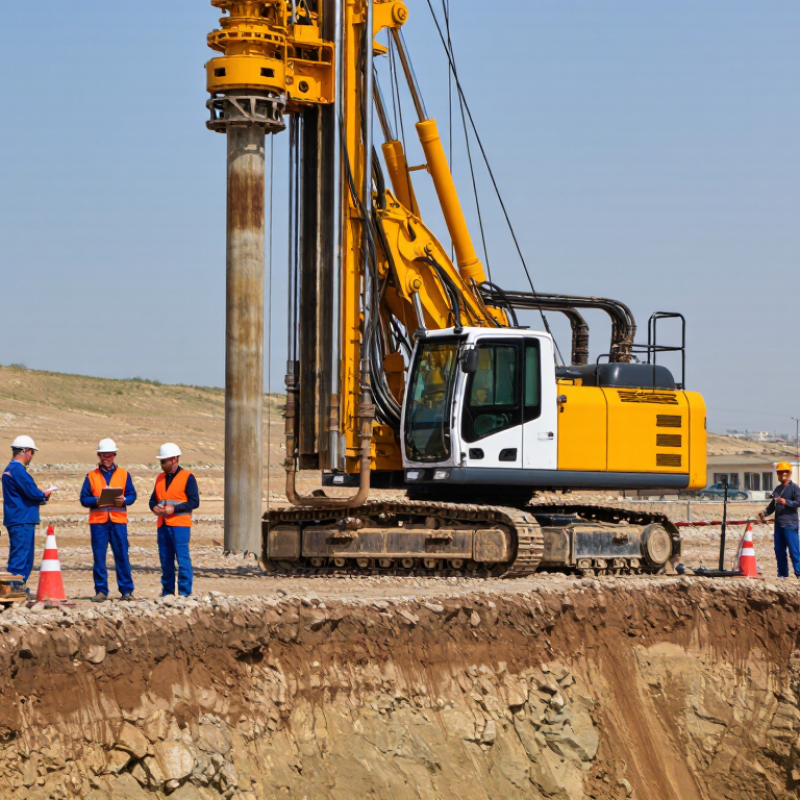
Define Depth, Diameter, Ground Conditions, and Access Limits Before Selection
Before comparing drilling rigs, write down the required hole depth and finished diameter. A 12-inch bore may need different tooling from a narrow monitoring hole, even at the same depth. Include casing size and any planned sampling equipment. These details affect the mast, torque, pullback capacity, and available tools. A rig that reaches the target depth on paper may struggle when the bore requires larger tooling.
Ground conditions can change within a short distance. Review nearby bore logs, then confirm assumptions with a qualified site assessment. Loose sand, gravel, hard rock, and mixed layers each place different demands on the rig and drilling method. Consider groundwater, too. A wet, unstable formation may need casing or fluid support, while solid rock can require suitable cutting tools. Local records are useful, but they are not a guarantee.
Access limits matter just as much as drilling capacity. Measure gate widths, overhead clearance, turning space, and the route from the road to the work area. Check whether the ground can support the rig and delivery vehicle, especially after rain. A compact rig may fit through a narrow gate, but its lower capacity could extend the job. There is no perfect choice every time. Recheck the measurements with the operator before booking; site estimates can be wrong, and I would rather catch that early.
Match Drilling Methods to Formations: Rotary, DTH, Auger, or Core Drilling
Choosing a drilling rig starts with the formation, not the rig catalogue. Soil logs, groundwater records, and core samples should guide the decision. Auger rigs suit shallow, soft soils such as clay, silt, and loose sand. They are efficient for foundation investigations, but unstable walls can collapse quickly. I have seen crews lose time by treating loose sand like firm clay.
Rotary drilling is more adaptable in mixed ground. With suitable drilling fluids, it can penetrate overburden, fractured rock, and deeper formations. It is often practical for water wells and mineral exploration. The International Energy Agency’s Global Critical Minerals Outlook 2024 reported that lithium demand grew by nearly 30% in 2023. That pressure makes reliable exploration important, but deeper drilling does not automatically mean rotary is best.
Hard rock needs different energy. Down-the-hole hammer drilling, or DTH, delivers impact directly near the bit. It performs well in competent granite, basalt, and limestone, especially where fast penetration matters. Dust control and compressed-air management require careful planning. Core drilling is slower, but it produces continuous rock samples for strength, fracture, and mineral analysis. The USGS Mineral Commodity Summaries 2024 estimated global mined copper production at about 22 million metric tons in 2023, increasing the need for dependable geological data. A careless method can create attractive footage but poor evidence. Formation changes may require switching methods halfway through the project.
Size Torque, Hoist Capacity, and Power for the Required Depth and Diameter
Choosing a drilling rig starts with the hole, not the machine. Set the required depth and diameter, then check whether the rig’s rated torque can handle the planned bit and ground conditions. A wider hole generally demands more cutting effort, while deeper work increases the load on the hoisting system. Allow for casing, drill string, and fluid weight—not just the bit. The International Energy Agency’s 2024 report, The Future of Geothermal Energy, notes that drilling can make up 30–50% of geothermal project costs. That makes capacity matching a practical cost decision, not a specification-sheet exercise.
Tips: Compare rated hoist capacity with the heaviest expected suspended load, including a sensible operating margin. Check torque at the working speed; peak torque alone can mislead. Confirm that available power supports simultaneous rotation, hoisting, and circulation at the required depth. A rig that meets each figure separately may struggle when tasks overlap. Ask for performance curves and site-specific calculations, and verify assumptions with an experienced drilling engineer.
Ground conditions still matter. Hard, abrasive formations can raise torque demand and slow penetration; loose layers may call for different tooling and hole support. A tidy spreadsheet won’t capture every change underground. Some estimates will be wrong, so leave room to reassess once drilling begins.
How to Choose the Right Drilling Rig for Your Project
Compare indicative rig classes by typical drilling depth and maximum bore diameter. Actual capacity varies with ground conditions, tooling, and rig configuration.
Treat depth and diameter as a first screening. Then confirm that the rig’s torque matches the required tooling and soil or rock conditions, hoist capacity covers the heaviest drill string or casing load, and available power supports the planned operation. Values below are illustrative planning ranges, not guaranteed limits.
Check Air Demand: DTH Systems Commonly Operate at 100–350 psi
When choosing a drilling rig, check the compressed-air demand of its down-the-hole (DTH) system. Many DTH setups operate at roughly 100–350 psi, but the correct pressure depends on the hammer, bit, depth, and ground conditions. A number on the compressor gauge is not the whole story. Airflow, usually specified in cubic feet per minute, must also meet the tool’s requirements.
Compare the rig’s rated pressure and airflow with the hammer manufacturer’s specifications. Then consider pressure loss through long hoses, narrow fittings, or worn connections.
A system that reaches the target pressure at the compressor may deliver less at the drill. Too little air can reduce flushing and slow progress; too much can exceed equipment limits.
Check operating requirements before drilling, and recheck gauges under load. Small details matter.
Tips:
- Confirm pressure and airflow at the tool, not just at the compressor.
- Inspect hoses and couplings for leaks.
- Allow for site conditions and a practical margin, but do not guess.
- The 100–350 psi range is a useful guide, not a universal setting.
- It is easy to focus on pressure and overlook airflow—that mistake deserves a second look.
Compare Productivity, Fuel Use, Maintenance, and Compliance With API RP 54
Choosing a drilling rig is not just a question of depth or daily output. Compare expected penetration rates with the ground conditions, hole diameter, and required shift hours. A rig that drills quickly in soft soil may lose time in fractured rock. Ask operators for records from comparable projects, not only rated capacity. Small differences matter.
Fuel use should be measured across a full work cycle, including idling, repositioning, and auxiliary equipment. Track liters per drilled meter where practical. Maintenance needs deserve the same scrutiny. Check service intervals, access to filters and hoses, and the time needed for common repairs. A tidy spreadsheet helps, but it can miss delays caused by cramped access or uneven ground. I have seen estimates look precise and still prove optimistic.
Tips: Compare fuel figures under similar conditions. Review maintenance logs before selection. For safety, assess the rig’s guarding, emergency controls, and operating procedures against the applicable edition of API RP 54. Confirm which provisions apply to your work, and verify local requirements separately; the recommended practice is not a substitute for site-specific risk assessment. Keep it practical. Ask the crew to walk through a routine setup and shutdown. Their feedback may expose a detail the specification sheet leaves out.





