Choosing the right Discharge Hose Coupler starts with the job, not the catalog. Identify the fluid, working pressure, temperature range, hose dimensions, and connection type. Then check how the assembly will be handled. A hose dragged across gravel needs different abrasion protection from one fixed beside a pump. Small details matter. A mismatch in thread, seal material, or coupling size can cause leaks, wear, or an unexpected shutdown.
Infrastructure data shows why dependable fluid-handling equipment matters, though it does not measure coupler demand. The U.S. Environmental Protection Agency’s 2022 Clean Watersheds Needs Survey estimated $630.1 billion in wastewater infrastructure needs over 20 years. NAHAD’s Hose Safety Institute guidance also treats the hose, fittings, and assembly practices as parts of a complete system. Use those sources as context, not as substitutes for the manufacturer’s pressure and compatibility specifications. A named expert quotation cannot be verified from the materials provided, so adding one here would risk misattribution. That is a limitation worth stating. Before choosing, compare the coupler’s material and seal with the actual fluid, confirm its rated pressure, and verify that it fits the hose and equipment. A careful check now can prevent a costly failure later.
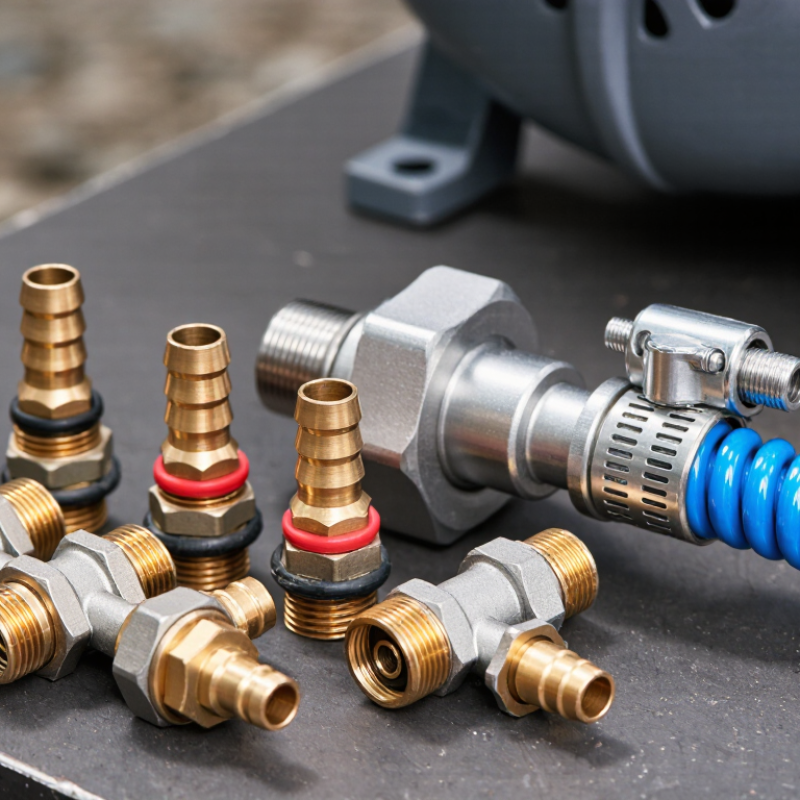
Start with what the hose will carry and where it will operate. Water, slurry, and mild chemicals place different demands on a coupler’s body and seal. Check the fluid’s composition, temperature, and abrasive solids. A seal that works with clean water may swell or wear quickly in another service. If the liquid is uncertain, verify compatibility with the hose and coupler supplier instead of guessing.
Record working pressure, expected surges, flow rate, and whether the line ever experiences suction. The coupler must match the hose’s actual inside diameter and pressure rating, not just its nominal size. Include pump start-ups and valve closures; brief pressure spikes can loosen connections or damage seals. Consider sun, rain, grit, vibration, and how often workers connect and disconnect the line. Wet gloves change the equation. An awkward locking method becomes more than an inconvenience on a muddy worksite. A tidy specification sheet is not the whole story: conditions can shift during a workday. Note those changes, and inspect the seals after early use. Small leaks matter.
How to Choose the Right Discharge Hose Coupler?
Start with the hose’s actual inside diameter, not just its label. A nominal 2-inch hose can vary slightly, and a coupler that is too loose may leak or slip under pressure. Measure the hose opening and check the coupler’s specified size. Then identify the connection type: threaded, cam-and-groove, or another style. For threaded ends, confirm both diameter and thread form, such as NPT, BSPP, or BSPT. Similar threads can look convincing but may not seal correctly. Do not guess. Check the equipment manual or connection markings, and compare the coupler’s pressure rating with the hose system.
Tips: Use a thread gauge when markings are unclear. Check whether the connection seals with a gasket, thread seal, or tapered fit. A quick visual check helps, but it is not enough.
Finally, match the connection standard on both sides of the assembly. A hose-end coupler and pump outlet may share a size but use different standards. Confirm the fluid compatibility and operating pressure, too. If the old fitting is available, bring it for measurement rather than relying on memory. Even experienced operators can overlook thread pitch when replacing a worn part; it is an easy detail to miss. After installation, inspect the joint during a controlled, low-pressure test for movement or leaks.
Start by matching the coupler’s nominal size to the hose, then verify the thread type and connection standard.
How to use this chart: The bars show inch-to-millimeter conversions for common nominal hose sizes (1 in = 25.4 mm). Nominal size is not necessarily the hose’s measured inside diameter, so check the hose and coupler specifications. Also confirm the thread standard: NPT is tapered, while BSPP is parallel and BSPT is tapered. Threads and connection standards are not interchangeable just because their sizes appear similar.
Choosing a discharge hose coupler means matching its material and connection to the fluid, pressure, and worksite. Aluminum is light and easy to handle, but may not suit every corrosive fluid. Stainless steel resists corrosion in many applications; brass can work well with compatible water-based fluids. Polymer couplers reduce weight, though temperature and pressure limits vary. Check the manufacturer’s chemical-compatibility chart before use.
A U.S. Department of Energy pumping-system sourcebook estimates that pumping systems use nearly 20% of global electricity, with some industrial facilities spending 25–50% of their energy on pumping. That figure covers whole systems, not couplers, but it underscores why leaks and restrictions deserve attention.
Connection design matters at the hose end. Cam-and-groove couplers connect quickly, useful when crews change lines often. Threaded connections can provide a firm fit, but mismatched threads or poor sealing can cause leaks. Barbed fittings need a hose with the correct inside diameter and a properly sized clamp. Check the working-pressure rating of the complete assembly, not just the coupler. Small details count.
Tips: Match the coupler to the hose, fluid, and operating pressure. Inspect seals for cuts, and test the connection at low pressure before full flow. Recheck after temperature changes; seals can shift, and a fit that looked right may not stay right.
Start with the fluid. Identify its composition, concentration, and any cleaning agents that may pass through the hose. A coupler material that tolerates water may still swell or weaken when exposed to oils, solvents, or acidic solutions. Check compatibility data for the exact fluid and concentration, not just a broad chemical category. Also consider contact time. A brief transfer and continuous exposure can affect materials differently.
Pressure ratings need careful attention. Compare the coupler’s working-pressure rating with the system’s maximum operating pressure, including pump-start surges and sudden valve closures. The hose, fittings, and coupler should all be rated for the same conditions; one weaker part can become the failure point. A sturdy-looking connection proves little. Small details matter.
Temperature changes the choice, too. Check both the fluid temperature and the surrounding conditions, especially outdoors or near heated equipment. Heat can soften seals, while cold may make some materials less flexible. It is tempting to focus on pressure alone, but that shortcut can miss a real risk. When compatibility charts leave questions, confirm the exact material and operating limits with the supplier before installation. A small test setup can reveal leaks, though it cannot replace verified specifications.
Before fitting a discharge hose coupler, check the hose diameter, connection type, fluid, temperature range, and working-pressure rating. The coupler and hose must be compatible; a close fit is not enough. Inspect the hose end for cracks, flattened areas, or damaged threads. Check the coupler’s sealing surface and gasket for cuts or grit. Small defects matter.
Install it with the system shut down and pressure fully relieved. Clean both connection surfaces, then seat the hose squarely so the seal does not pinch or roll. Use the specified clamp or fastener, tightening it evenly to the maker’s instructions. Over-tightening can deform parts. I have seen rushed installs miss a crooked gasket; it is an easy mistake to make.
Test the connection gradually, keeping people clear of the hose path. Watch for seepage, bulging, movement, or unusual vibration as pressure rises. Stop the flow before adjusting anything. A dry paper towel around the joint can reveal a slow leak that is hard to see. If the coupler shifts or leaks, depressurize the line and inspect the fit again. Don’t guess. Check the rating and installation guidance before putting the hose into regular service.



For those larger-sized parts, or smaller quantity runs, we have 2 independent powder coat booths and ovens. The quality, durability and affordability of today’s powder coating finishes make this the process of choice for world-class companies.
Powder coating advantages over other forms of coating are many. Materials used in the Powder coating process can be metals and non-metals that come in a multitude of thicknesses, textures, colors, etc. Another of Powder coating’s biggest advantages over conventional coatings is its ability to create finishes in many different textures. Powder Coating Booths allow us the ability to apply these advantages to large products.
Tri-State Fabricators runs a full-service conveyor line for painting. Wet painting can provide protection or decoration to many different part styles. From start to finish, every project is easier to undergo random and point-based inspection by our skilled painting team.
Advantages to our Wet Paint Line are these lines start with product prep and ends with a thorough inspection of a high quality finished product. Our ability to complete large and small projects with a superior finish and doing so in a timely and economical fashion. This passes along the savings in production to our customers. When powder coating ins not an option, our Wet Paint Line gets the job done right the first time.
When the parts get big and heavy we roll-out our custom paint racks and oversize booth. By utilizing our partnerships with all the major paint brands, we can match virtually any color with wet paint.
The advantages of having access to a Wet Paint Booth are many. Large projects of many different shapes can be loaded into the booth. The Wet Paint Booth offers an environment that is much more controlled than a typical parts painting operation.
Not only are they used because of their controlled environment, but they’re are also advantageous when it comes to applying paint to parts that are needed in industries that require specialty coatings such as medical, aerospace, etc.
Our military forces have some very high standards when it comes to the finish of their vehicles and equipment. From the first pre-treatment step to final coat, it takes a great deal of knowledge and experience to protect the men and women of our armed forces. They deserve only the best, and Tri-State Fabricators provides it.
All of our processes are closely monitored by our staff and management teams. Both of which are highly trained in the processes of metal fabrication and finishing. Tri-State Fabricators’ goal is to always fully satisfy each and every customer, including the military. We will always put a 110% into what we do.
Abrasive media blasting is an excellent way to remove old paint, rust, and increase the paint/powder adhesion. Glass beads produce a much smoother and brighter finish than angular abrasives; leaving the part clean yet without any dimensional change. Chemically inert and environmentally friendly, we can recycle our beads approximately 30 times; making them a more preferred method of metal cleaning or surface finishing.
Advantages to Glass Bead Blasting are many. Glass bead blast media is used when a project is needing rough surfaces need to become smooth for applications of coatings such as paint. It is typically used to clean paint and rust from a product surface without deforming the surface it is being used on. Overall, compared to many other blasting media, Glass Bead Blasting is a very economical choice and those savings are always passed on to our customers.
Tri-State Fabricators utilize a zinc phosphate wash to clean and etch the material to ensure the best paint adhesion possible. The unique design of our 3-stage wash system does the work like a 5-stage. From Cleaning and rinsing to conversion coating and post-treatment, Our Part Washing process is a complete service and works throughout the fabrication service and the finishing service.
Along with the previously mentioned benefits, Curing is a vital chemical reaction that leaves the product finish hard and relatively safe from mild abrasion and aggressive corrosion. This process can be done in more than one way; ambient air-dry or in curing ovens at temps that exceed 240°.
From fixing paint mistakes (someone else’s of course) to simply cleaning our paint line hooks, our burn-off oven is put to good use. After a quick burn-off, a little clean up, and a fresh coat of paint, your parts will look better than new.
Why does our Burn-Off Oven work so well? Because super heating the air around parts turns the materials into ashes. From paint and powder coatings to rubber and machining oils, high temps do the job without degrading the integrity of the part.
Masking is a vital part of producing high quality products. We have die-cut masking patterns to protect machined surfaces as well as a wide range of plugs and caps to protect threaded holes and bolts. We provide permanent and temporary masking.
Masking allows the selected sections of a product to be protected from a fabrication or finishing service. This can be with both chemicals when etching and tapes, paints when only finishing just a section of the product. Masking is great in aiding the customization process of a project.
Screen printing is a photographic process that transfers artwork onto a porous nylon screen which allows colored ink to flow through the screen and be deposited on an aluminum or plastic component. We can generally have just about any design created onto a screen for your parts.
Some of the advantages of Screen Printing are, brand recognition for your business displaying on your products, assembly instructions, product warnings/hazards, etc. Tri-State Fabricators produces Screen Printing of the highest quality so you know it’s durable.
Metal Finishing is the art of treating the exterior portion of product, often metal but can also be made of other materials, so that the surface is clean and free of any debris. Then the process of applying coats or either paint of powder coat takes place. This coating process improves the quality of the product in both appearance and resistance to wear and corrosion.
Tri-State Fabricators, Inc., understands that a project typically isn’t complete until a high-quality finish has been added to your product. This is why our painting and powder coating teams continuously inspect the products throughout the Metal Finishing process.